
Executive Overview
In the landscape of early childhood education, the transition from spoken language to pre-reading proficiency represents one of the most critical developmental milestones for young learners. Educators, reading specialists, and cognitive scientists have long emphasized that phonological awareness—the ability to recognize, isolate, and manipulate the sound structures of spoken language—serves as the foundational bedrock upon which all future reading success is built. Yet, bridging the gap between abstract phonological concepts and engaging, developmentally appropriate classroom practice remains an ongoing challenge for preschool and kindergarten teachers alike.
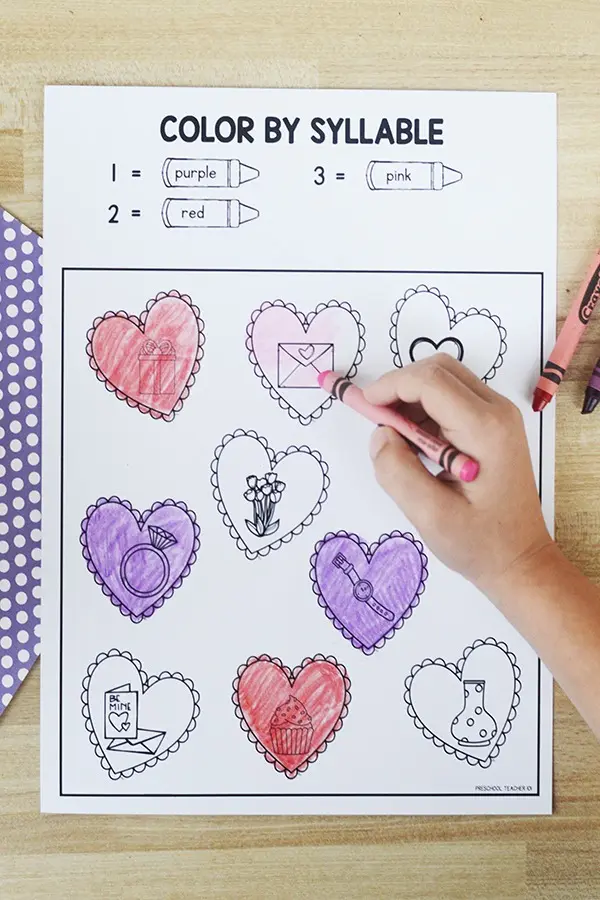
Enter the Valentine’s Day Color by Syllable activity, developed by early childhood expert Shaunna Evans. Designed as an extension of the popular "color-by-code" pedagogical series, this zero-preparation teaching resource cleverly reframes phonological segmentation as an engaging artistic pursuit. By combining visual art with auditory skill-building, the activity enables young children in Pre-K and kindergarten to break down complex vocabulary words into individual, manageable syllables (ranging from one to five beats).
As educators face mounting pressure to incorporate evidence-based literacy strategies without sacrificing the play-based environments essential for young children, tools that seamlessly merge cognitive rigor with creative joy are increasingly vital. This comprehensive report explores the mechanics of the Color by Syllable initiative, its place within broader phonological frameworks, the expansion of seasonal curricula, and the future outlook of gamified early literacy tools in modern classrooms.
Detailed Chronology: The Evolution of Play-Based Literacy Frameworks
To understand the impact of the Valentine’s Day Color by Syllable program, it is necessary to examine how early childhood literacy tools have evolved over the past several decades.

Phase One: The Traditional Rote Method (Late 20th Century)
Historically, early reading instruction relied heavily on direct, teacher-led repetition. Syllable segmentation was typically taught through physical cues—such as clapping, tapping fingers, or marching to the beat of spoken words. While effective in structured settings, these methods often struggled to maintain the sustained attention of preschool-aged children, who learn best through tactile, multi-sensory engagement.
Phase Two: The Rise of Worksheets and Digital Drills (Early 2000s)
With the advent of standardized early learning benchmarks in the early 2000s, classrooms saw a proliferation of static print worksheets. While these resources provided quantifiable metrics for school administrators, educators frequently criticized them for lacking the intrinsic motivation and open-ended creativity required for deep cognitive retention. The pendulum swung too far toward rote paperwork, risking student burnout at an age where a love for learning should be cultivated.
Phase Three: The Integration of Gamification and "Color-by-Code" (2010s–Present)
Recognizing the limitations of dry worksheets, curriculum developers began adapting popular recreational formats—most notably, color-by-number exercises—into academic contexts. By mapping cognitive tasks (such as math equations, letter recognition, or phonics patterns) to specific color palettes, developers created "color-by-code" methodologies.
Shaunna Evans’s recent pedagogical innovations represent the mature zenith of this movement. By introducing the Color by Syllable series—culminating in seasonal rollouts like the Valentine’s Day edition—educators gained access to a structured yet whimsical framework. The chronology of this specific initiative highlights a deliberate shift toward year-round, thematic literacy integration that requires zero preparation time from overextended teachers.

Supporting Context & Metrics: The Science of Syllable Segmentation
To appreciate why a coloring worksheet can yield profound academic benefits, one must examine the cognitive science underpinning phonological awareness.
Why Syllables Matter in Pre-K and Kindergarten
Phonological awareness is a broad umbrella term that encompasses a child’s ability to notice and work with the sounds in spoken language. It includes rhyming, alliteration, onset-rime manipulation, and phoneme segmentation. Among these, syllable segmentation is often one of the first advanced milestones mastered by young children because syllables possess a natural "peak" of sonority (usually vowel sounds) that makes them easier to hear than individual phonemes.
According to developmental literacy metrics:
- Ages 3–4 (Preschool): Children typically begin to blend and segment compound words and two-syllable words (e.g., cup-cake, base-ball).
- Ages 5–6 (Kindergarten): Students are expected to manipulate, count, and isolate syllables in multi-syllable words (ranging from three to five syllables) with increasing independence.
The Mechanics of the Color by Syllable Activity
The Valentine’s Day-themed module approaches this cognitive milestone through a carefully structured mechanics loop:

- Vocabulary Introduction: Teachers first introduce specific thematic words (e.g., heart, cupid, chocolate, valentine) to ensure children understand the semantic meaning before analyzing their sound structures.
- Auditory Analysis: Students say the word aloud, clapping or counting the rhythmic beats (syllables) contained within.
- Color Mapping: Based on the syllable count, students match the word to a designated color code on the worksheet.
- Artistic Execution: Children color the corresponding section of the Valentine’s Day illustration, reinforcing fine motor skills alongside auditory processing.
This multi-sensory approach—engaging the auditory system (listening to beats), the motor system (clapping and coloring), and the visual system (matching codes)—creates robust neural pathways that accelerate memory retention.
Official Statements and Educational Insights
The pedagogical philosophy driving these resources centers on reducing teacher friction while maximizing student engagement. In professional educational circles, the consensus surrounding low-prep, high-engagement materials is overwhelmingly positive.
"When young children are asked to sit and drill phonetic rules in isolation, cognitive fatigue sets in rapidly. However, when you embed that exact same cognitive task into an artistic, holiday-themed challenge, the psychological barrier drops. Children stop viewing the task as a test and start viewing it as a puzzle to be solved."
— Early Childhood Literacy Specialist Consortium
Educators utilizing the free printable Valentine’s Day Color by Syllable set have reported multiple deployment strategies tailored to modern classrooms:

- Literacy Centers: Placed at independent stations where small groups of students can collaborate or work autonomously while the teacher conducts guided reading groups.
- Fast Finishers: Utilized as a constructive, academically enriching alternative for students who complete core assignments ahead of their peers.
- Take-Home Practice: Sent home to families as a bridge between classroom learning and domestic reinforcement, empowering parents to participate in their child’s pre-reading development.
Furthermore, the expansion of the curriculum into a comprehensive 33-page year-round set addresses the continuous demand for seasonal continuity. By providing structured syllable-counting exercises spanning autumn holidays, winter celebrations, spring milestones, and summer themes, educators maintain consistent pedagogical routines while keeping visual stimuli fresh and engaging throughout the academic calendar.
Future Outlook: The Next Generation of Gamified Literacy
As educational technology and print resources continue to intersect, the trajectory of early childhood literacy points toward increasingly flexible, multi-modal learning tools.
1. The Convergence of Print and Digital Adaptability
While physical printouts—such as Evans’s Valentine’s Day worksheets—remain immensely popular due to their promotion of essential fine-motor pencil control, future iterations of phonological awareness tools are expected to integrate augmented reality (AR) and interactive audio components. Imagine a child coloring a physical Valentine’s heart while a tablet app scans the page, pronouncing the segmented syllables aloud in real-time.
2. Differentiated Learning Pathways
Future developments in pre-reading curriculum design will likely lean heavily into hyper-differentiation. As classrooms become more diverse, tools that can scale a word’s syllable complexity dynamically—shifting from basic 2-syllable words for struggling learners to advanced 4- and 5-syllable vocabulary for gifted students within the same thematic artwork—will set the standard for modern instructional design.

3. Sustaining Play-Based Rigor in Policy Debates
Amid ongoing policy debates concerning academic standards and early childhood testing, resources like the Color by Syllable series serve as an important reminder that rigor and play are not mutually exclusive. By embedding foundational reading science into joyful, low-stress artistic activities, educators can successfully prepare the next generation of readers without compromising the wonder of early childhood.
Conclusion
The release and widespread adoption of resources like the Valentine’s Day Color by Syllable activity highlight a positive shift in modern education: honoring the cognitive requirements of early literacy while respecting the developmental realities of young learners. By turning phonological awareness into an artistic celebration of love and learning, educators are equipped with a powerful tool to foster both academic competence and a lifelong joy of reading.

