

Executive Overview
For years, educators and instructional designers have celebrated the immediate engagement sparked by game-based learning platforms. A standard classroom session utilizing Kahoot! is instantly recognizable: screens light up, anticipation builds, and students lean forward in eager competition. Yet, while short-term engagement has always been easy to observe, the ultimate measure of any educational tool—long-term knowledge retention—has remained a persistent challenge to quantify.
Does the energy of a fast-paced digital game translate into durable, long-lasting cognitive gains, or does the knowledge fade as quickly as the final scoreboard?
A landmark empirical study by Sun and Tan (2026) directly addresses this foundational question. Investigating the impact of game-based vocabulary practice on university-level English for Specific Purposes (ESP) students, the researchers set out to determine whether vocabulary acquisition via Kahoot! produces measurable retention weeks after instruction concludes.
The findings offer a definitive affirmative. The study reveals that students who regularly practiced vocabulary using Kahoot! not only outperformed their peers on immediate post-tests but also demonstrated a significantly flatter "forgetting curve" weeks later.
By marrying the cognitive science principles of active retrieval and spaced repetition with a low-stakes, gamified environment, Kahoot! has proven capable of transforming fleeting classroom engagement into enduring linguistic competence. This comprehensive report explores the methodology, cognitive mechanisms, empirical metrics, student testimonials, and broader pedagogical implications of Sun and Tan’s groundbreaking research.
Detailed Chronology & Methodology: Inside the Sun & Tan (2026) Study
To understand the weight of these findings, one must examine the rigorous methodological framework designed by Sun and Tan for their 2026 quasi-experimental investigation.
Setting the Stage and Participant Demographics
The study was conducted within a university setting, focusing on 61 students enrolled in English for Specific Purposes (ESP) courses. ESP curricula are notoriously demanding, requiring learners to master specialized, context-dependent vocabulary that goes far beyond conversational English. Retaining this complex lexicon is a common hurdle for language learners, making it an ideal testing ground for advanced retention strategies.
The 61 participants were divided into two distinct cohorts:
- The Experimental Group: Utilized Kahoot! as an integral, recurring method for vocabulary practice and reinforcement throughout the instructional period.
- The Control Group: Followed conventional, traditional methods of vocabulary instruction and review, such as rote memorization, textbook glossaries, and static worksheet exercises.
The Testing Timeline
To track knowledge acquisition and subsequent decay, Sun and Tan structured the evaluation across three critical temporal milestones:
- Baseline Pre-Test: Administered prior to instruction to ensure both groups started from an equivalent linguistic baseline. Both cohorts demonstrated near-identical entry scores (the Kahoot! group averaging 15.7 and the control group at 15.4 in receptive vocabulary metrics).
- Immediate Post-Test: Administered directly following the conclusion of the instructional unit to measure immediate knowledge uptake.
- Delayed Post-Test: Administered several weeks after instruction ended, specifically designed to capture vocabulary loss and evaluate the durability of the learned material.
Assessing Depth, Not Just Recognition
A notable strength of the Sun and Tan methodology is its refusal to rely solely on superficial recognition tests. In addition to measuring basic receptive vocabulary, the researchers deployed the Vocabulary Knowledge Scale (VKS).
The VKS is a sophisticated diagnostic tool designed to evaluate vocabulary depth. Rather than merely asking a student to match a word to a multiple-choice definition they might have recently encountered, the VKS assesses whether a learner can independently define a term, recognize its nuances, and use it correctly in context.
When the data from the delayed post-test was compiled, the narrative became clear: the group using Kahoot! did not just remember more words—they owned a deeper, more functional command of the language that resisted the natural forces of cognitive decay.
Supporting Context & Metrics: Unpacking the Data
The quantitative data generated by Sun and Tan (2026) provides striking empirical evidence of the power of game-based learning.
The Trajectory of Retention
At the onset of the study, the playing field was level, with both groups registering baseline receptive vocabulary scores hovering around the 15-point mark.
- The Kahoot! Cohort: Following instruction, this group’s scores surged dramatically to an average of 95.6. More importantly, when evaluated during the delayed post-test weeks later, these gains held steady, proving that the encoded information had successfully crossed the threshold from working memory into long-term storage.
- The Control Group: While traditional methods also yielded improvement, the control group peaked at a post-instruction score of 57.1. Crucially, upon reaching the delayed post-test, their scores drifted downward, remaining starkly lower than those of their gamified counterparts.
[Score Trajectory Comparison]
100 |                                       [Kahoot! Group Peak: 95.6 & Held]
    |                                      /------------------------------
 75 |                                     /
    |                                    /
 50 |                  [Control Peak: 57.1]
    |                 /                      ______ [Control Drift]
 25 |                /
    |  [Baseline: ~15]
  0 +------------------------------------------------------------------------>
    Pre-Test        Immediate Post-Test             Delayed Post-Test
The Broader Scientific Consensus
This 2026 study does not exist in a vacuum; it builds upon a robust, decade-long body of educational research evaluating the efficacy of game-based learning platforms.
A vital benchmark in this ongoing conversation is the 2024 meta-analysis conducted by Özdemir, which synthesized the findings of 43 experimental studies. Özdemir’s comprehensive review uncovered a very large positive effect of Kahoot! on learning outcomes, with retention specifically emerging as the strongest signal across all measured variables.
When viewed alongside Özdemir’s meta-analysis, the Sun and Tan study provides contemporary validation that digital game-based learning is a formidable pedagogical instrument, particularly when deployed to combat the universal challenge of vocabulary attrition.
The Cognitive Science Behind the Success
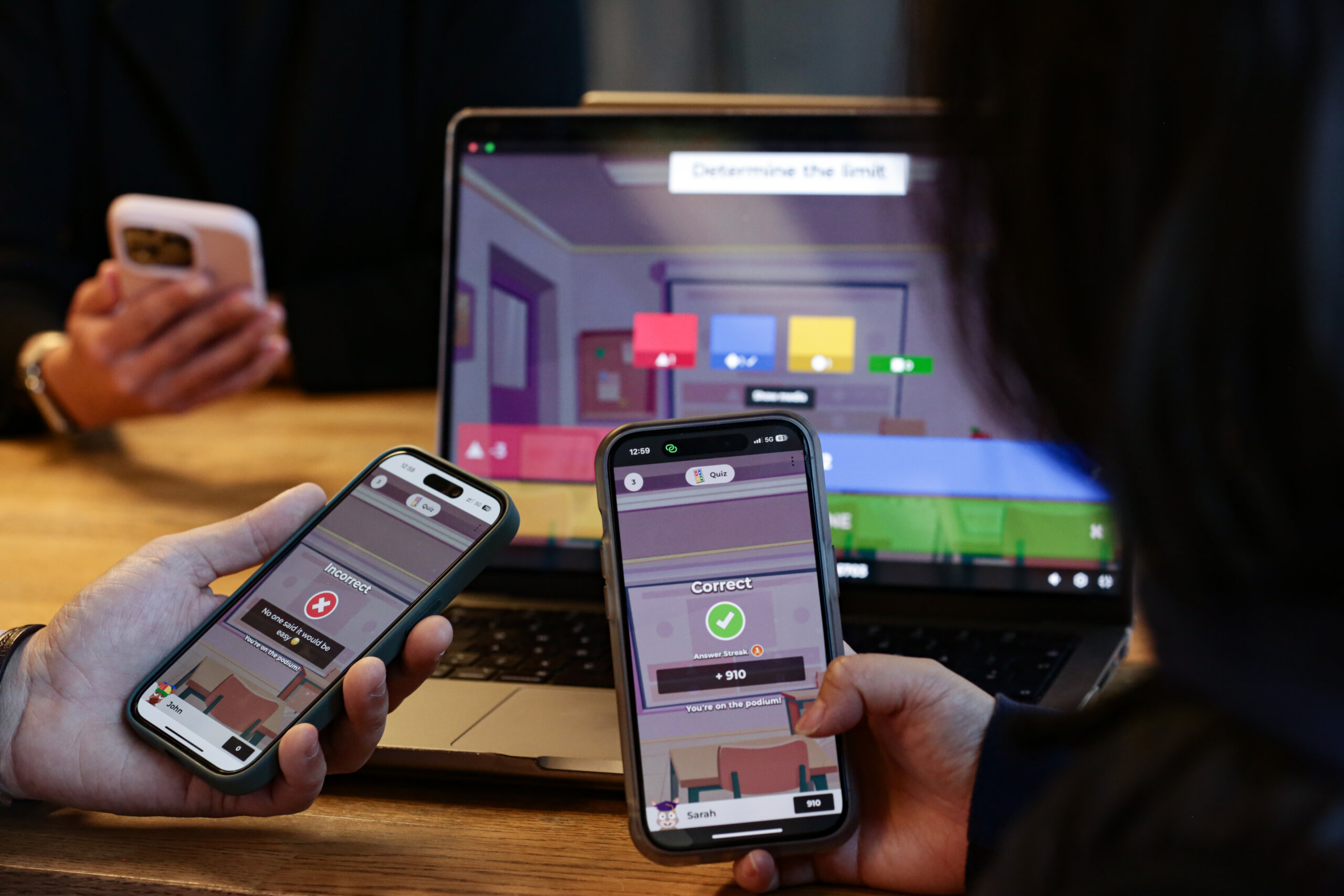
Why did the group using Kahoot! experience such a pronounced flattening of the forgetting curve? According to cognitive science, the answer lies in two fundamental mechanisms: active retrieval practice and spaced repetition, operating within a psychologically safe environment.
Active Retrieval vs. Passive Rereading
Traditional study methods often rely heavily on passive review—rereading textbook definitions, highlighting glossaries, or glancing over flashcards. Cognitive psychologists have long warned that passive review creates an illusion of competence; students feel they know the material because it is visually familiar on the page.
In stark contrast, every round of a Kahoot! session demands active retrieval. Under mild, motivating time constraints, students are repeatedly forced to pull words and definitions from the recesses of their memory banks. This repeated act of reconstruction signals to the brain that the retrieved information is vital, cementing neural pathways and making the memory far more durable over time.
Multimodal Cues and Spaced Practice
The study also highlights the role of visual scaffolding. Kahoot! sessions frequently incorporate images and graphic cues alongside textual vocabulary. As one student participant noted in the qualitative feedback:
"When I remember the pictures, I can recall the words better."
Another student pointed directly to the mechanics of frequency:
"Kahoot! helps me review difficult terms repeatedly, which improves my memory."
By spacing these retrieval challenges across weeks and embedding them within a low-stakes game format, educators inadvertently apply the exact spacing effect proven by cognitive scientists to maximize long-term encoding.
Reducing Anxiety: The Power of Anonymity
For many students, particularly introverts or those experiencing language anxiety, traditional classroom quizzing is fraught with performance pressure. The fear of public failure can freeze cognitive function and impede memory retrieval.
Kahoot! ingeniously circumvents this barrier through the use of nicknames. By allowing students to participate anonymously in front of their peers, the platform dramatically lowers the affective filter. A wrong guess carries zero social penalty.
As one student candidly shared in the study’s qualitative findings:
"I’m an introvert, unwilling to participate, but Kahoot! lets me try."
By decoupling risk from participation, the platform encourages bold, iterative guessing—the precise psychological state required for effective learning and long-term retention.
Future Outlook & Pedagogical Implications
The implications of Sun and Tan (2026) stretch far beyond university-level English for Specific Purposes classrooms. As educational technology matures, empirical research is shifting the conversation from whether tools like Kahoot! are engaging to how they should be strategically integrated into modern curricula.
Moving Beyond the Occasional Warm-Up
For years, digital quiz games have frequently been relegated to the periphery of lesson plans—utilized as Friday afternoon treats, end-of-unit review novelties, or occasional warm-ups to wake up a sleepy classroom.
Sun and Tan’s research suggests that educators should fundamentally rethink this approach. To reap the benefits of flat forgetting curves and deep vocabulary encoding, Kahoot! must be deployed intentionally as a core, recurring practice method integrated throughout the instructional arc. When used systematically over weeks rather than sporadically, the platform acts as an active catalyst for neurological retention.
The Path Forward for Instructional Design
As institutions of higher education and K-12 systems alike grapple with post-pandemic learning recovery and shrinking attention spans, the mandate for evidence-based instructional design has never been higher. Educators no longer have to choose between student engagement and academic rigor. Platforms that successfully merge the neuroscience of active retrieval with playful, low-stakes competition demonstrate that joy and deep learning are not mutually exclusive—they are mutually reinforcing.
For educators seeking to explore the expanding evidentiary foundation underpinning game-based learning, comprehensive resources and further empirical breakdowns remain publicly accessible via the official Kahoot! Research Page.
Ultimately, the message of Sun and Tan (2026) is clear: when game-based learning is anchored in sound cognitive principles, the games we play in class do more than just entertain—they help students remember what matters, long after the final question has been answered.

