In the modern middle and high school classroom, diversity is a defining characteristic—bringing together a vibrant mosaic of backgrounds, perspectives, and personalities. Yet, this rich convergence of unique minds inevitably breeds friction. Whether it is a heated debate over methodology in a collaborative science project, the acute sting of social exclusion during group formations, or feelings of disrespect stemming from interruptions during open discussions, interpersonal friction is an inescapable reality of daily school life.
Historically, institutional responses to student conflict have leaned heavily toward punitive measures: detentions, suspensions, and authoritarian interventions designed to suppress friction. However, modern educational research and social-emotional learning (SEL) frameworks advocate for a paradigm shift. True conflict resolution in adolescence is not about eradicating disagreements entirely; rather, it is about equipping students with the psychological tools, emotional regulation mechanisms, and communicative competencies necessary to manage disputes independently and constructively.
By proactively embedding conflict resolution frameworks into the middle and high school curriculum, educators can transform inevitable classroom tensions into powerful developmental milestones. This comprehensive report examines the underlying neuroscience of adolescent conflict, details actionable strategies for classroom implementation, and explores how cultivating self-advocacy and active listening lays the foundation for lifelong relational success.
Detailed Chronology: The Evolution of Classroom Conflict Management
To understand where modern educational practices stand today, it is vital to examine how disciplinary and conflict management models have evolved over the past several decades.
The Mid-to-Late 20th Century (The Punitive Era): For generations, school discipline operated primarily on a compliance-and-punishment model. When students clashed, authorities stepped in to assign blame, enforce rules, and administer consequences. Little attention was paid to teaching underlying social skills, emotional intelligence, or peer negotiation. Consequently, students learned to avoid conflict in front of adults rather than resolving it organically.
The Turn of the Century (The Rise of Restorative Practices): As educational research expanded, schools began recognizing the limitations of zero-tolerance policies. The introduction of restorative justice and basic mediation programs marked a turning point. Schools started experimenting with peer mediation boards and facilitated dialogues, encouraging students to voice their perspectives rather than simply absorbing penalties.
The 2010s (The Integration of Social-Emotional Learning): SEL transformed from a fringe educational philosophy into a core component of holistic student development. Educators realized that academic achievement is inextricably linked to mental health and social competence. Conflict resolution began shifting from a reactive disciplinary tool to a proactive, classroom-wide instructional strategy.
The Present Day (Proactive, Brain-Based Skill Building): Today, educators approach conflict through the lens of neuroscience and adolescent development. Recognizing that teenage brains are structurally wired for heightened emotional reactivity, modern classrooms utilize daily reflection, mindfulness-based calming strategies, explicit scenario training, and structured relationship-building to head off conflicts before they escalate into disruptive crises.
Supporting Context & Metrics: The Science of Adolescent Friction
Why do middle and high school students struggle so profoundly with peer conflict? To answer this, educators must examine the biological realities of the developing adolescent brain.
When a middle or high school student encounters a stressful disagreement—such as feeling publicly undermined by a classmate or excluded from a peer group—the amygdala, the brain’s emotional and survival center, often hijacks rational thought. This triggers the classic "fight, flight, or freeze" response, rendering the student impulsive, defensive, and reactive. Conversely, the prefrontal cortex—the region responsible for impulse control, long-term planning, and empathetic decision-making—is still undergoing massive structural refinement throughout adolescence.
This neurological vulnerability highlights a critical pedagogical mandate: students cannot access higher-order problem-solving skills while their nervous systems are in a state of alarm.
Educational data consistently underscores the cascading benefits of addressing this developmental gap through explicit conflict resolution training:
Improved Academic Engagement: Classrooms that dedicate time to SEL and conflict resolution report significantly fewer instructional hours lost to behavioral disruptions.
Enhanced Peer Connectedness: Schools utilizing relationship-building circles and collaborative group-work challenges observe lower rates of bullying and social isolation.
Long-Term Resilience: Longitudinal studies indicate that young adults who master conflict negotiation and self-advocacy during secondary school exhibit greater workplace adaptability, healthier personal relationships, and lower rates of anxiety.
Core Strategies for Implementing Conflict Resolution in Secondary Classrooms
Successfully integrating conflict resolution into a rigorous academic environment requires a multi-layered approach. Educators must weave these practices seamlessly into daily routines rather than treating them as standalone lectures.
1. Prioritizing Relational Foundations
The bedrock of effective conflict resolution is mutual trust and connection. It is exponentially harder for students to work through disagreements with individuals they feel alienated from.
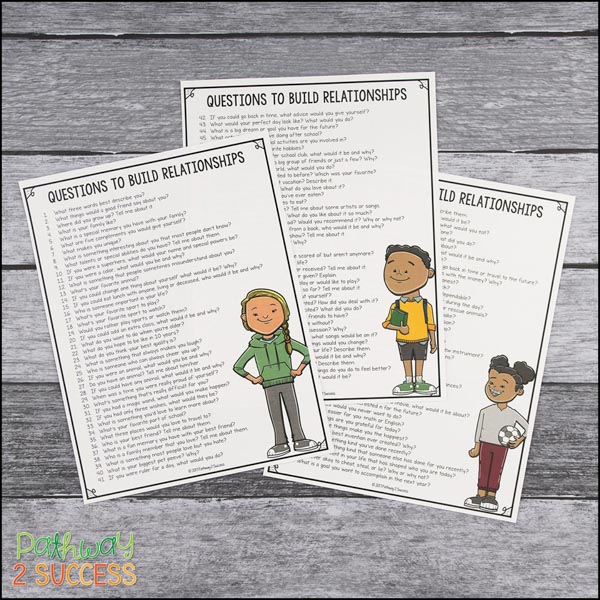
Implementation: Begin units or weeks with intentional relationship-building circles. Utilize open-ended, low-stakes questions to foster dialogue (e.g., What is the most important invention of all time? or Who would be the most interesting historical figure to meet?). These conversations normalize differing opinions in a safe environment, making future academic or social disagreements easier to navigate.
Proactive instruction dismantles the myth that all conflict is inherently negative. Students must be taught that healthy friction is a natural mechanism for understanding personal needs and establishing boundaries.
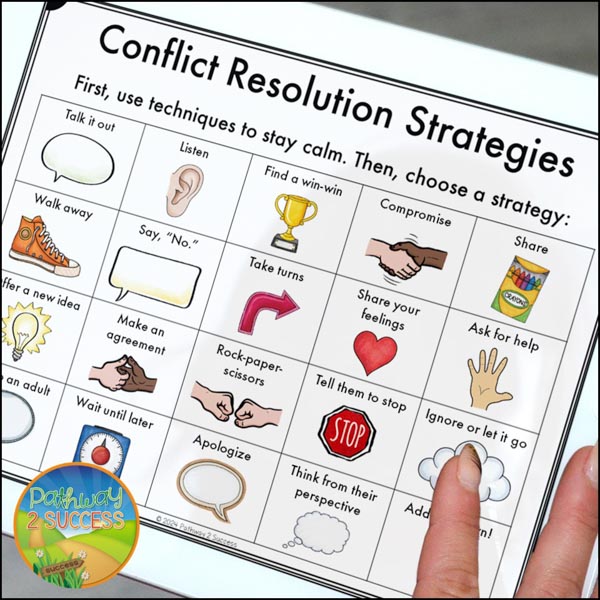
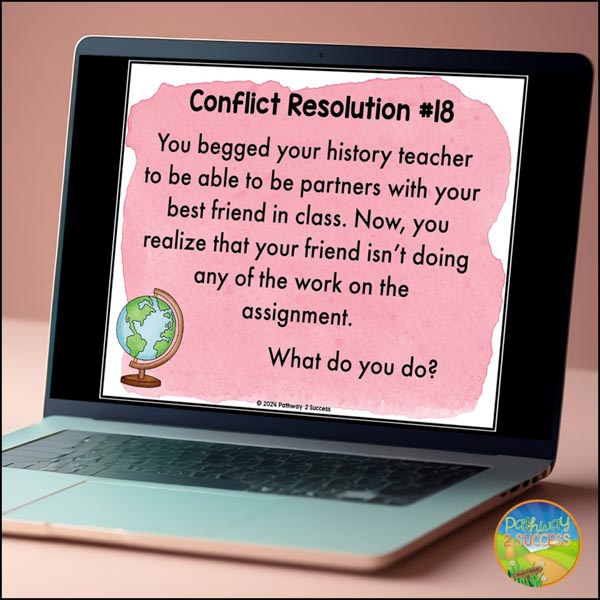
Implementation: Use structured scenario cards depicting realistic middle and high school dilemmas. Guide students through analyzing the problem, brainstorming multiple solutions, and weighing potential outcomes. Emphasize that different scenarios require different tactics—a collaborative group dispute requires active compromise, whereas navigating peer pressure to cheat requires assertive self-advocacy.
3. Cultivating Active Listening
True active listening is the practice of hearing to understand, not merely hearing to reply. In the heat of an argument, adolescents naturally focus on formulating their rebuttal rather than absorbing their peer’s perspective.
Implementation: Embed listening protocols into classroom discussions. Require students to paraphrase a peer’s point before offering their own counter-argument. Integrate listening exercises across subjects, ensuring students feel validated and heard by their peers.
4. Integrating Calming Strategies and Brain Breaks
Because physiological arousal precedes emotional outbursts, calming strategies are an indispensable prerequisite to conflict resolution.
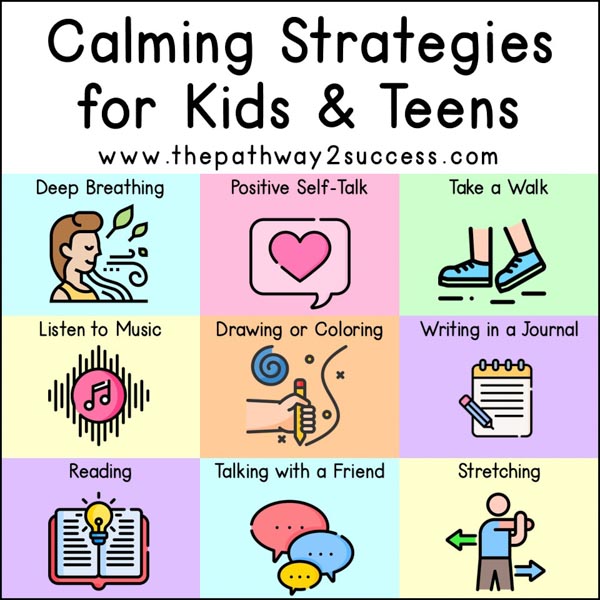
Implementation: Introduce science-backed calming techniques—such as controlled deep breathing, journaling, or quiet drawing—as regular transitions between high-focus tasks. For instance, pausing for two minutes of box breathing before a major assessment or after a group project helps down-regulate the nervous system, bringing the prefrontal cortex back online.
5. Fostering Self-Advocacy
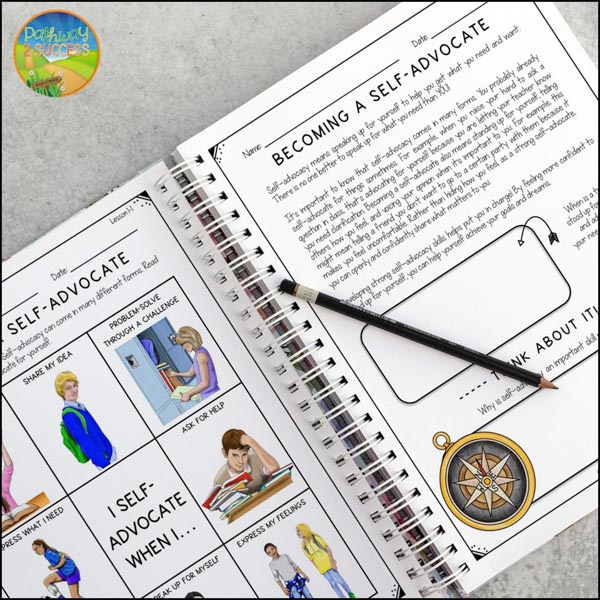
Self-advocacy and conflict resolution are mutually reinforcing competencies. Students must possess the communicative tools to articulate their boundaries and express their needs before a disagreement festers into resentment.
Implementation: Teach students explicit language for self-advocacy, such as respectfully declining an uncomfortable request or asking an instructor for clarification. Pair these lessons with dedicated self-advocacy role-play activities tailored to adolescent social landscapes.
6. Mastering Respectful Disagreements
Disagreements over music, sports, methodologies, and values are inevitable. The goal is not to eliminate these debates, but to civilize them.
Implementation: Provide visual sentence stems and anchor charts around the room featuring phrases for respectful dissent, such as: "I see it a bit differently because…", "Help me understand your perspective on…", or "I agree with your point about X, but what about Y?" Practice these phrases using high-interest, low-stakes debate topics.
7. Daily Reflection and Ownership
Reflection transforms experience into wisdom. Without looking back, students struggle to connect their actions to relational outcomes.
Implementation: Dedicate the final 5 to 10 minutes of the school day or class period to structured reflection. Ask students to write down what worked well in their interactions, where communication broke down, and what they would approach differently tomorrow. This simple habit fosters profound self-awareness and personal accountability.
Official Statements & Expert Perspectives
Educational psychologists and pedagogical leaders have increasingly voiced the necessity of shifting institutional mindsets regarding student disputes.
Dr. Elena Vance, a prominent researcher in adolescent behavioral psychology, emphasizes the neurodevelopmental necessity of these interventions:
"When educators react to student conflict purely through punishment, they miss a profound developmental window. The teenage brain is actively pruning and wiring itself based on lived experience. By teaching young adults how to calm their nervous systems, articulate their boundaries, and listen through a disagreement, we are literally building the neural pathways they will use to navigate marriages, careers, and communities as adults."
Furthermore, school administrators implementing comprehensive SEL frameworks report transformative cultural shifts within their buildings. Marcus Sterling, a veteran high school principal, notes:
"For years, our administration spent hours untangling he-said-she-said drama, handing out suspensions that only fueled resentment. Once we committed to explicitly teaching conflict resolution, active listening, and class-wide restorative habits, our discipline referrals plummeted. Students learned that they had a voice, and more importantly, they learned how to use it responsibly."
Future Outlook: The Long-Term Impact on School Culture
As educational landscapes continue to evolve in an increasingly interconnected and complex world, the ability to resolve conflicts peacefully and empathetically is no longer an auxiliary "soft skill"—it is a core literacy for the 21st century.
The future of secondary education hinges on our willingness to move beyond reactive discipline and embrace systemic, proactive skill-building. When middle and high schools invest time in relationship-building, self-advocacy training, active listening, and emotional regulation, they do more than improve classroom management. They cultivate a generation of emotionally intelligent young adults capable of transforming friction into collaboration, misunderstandings into dialogue, and division into enduring community strength.