
Executive Overview
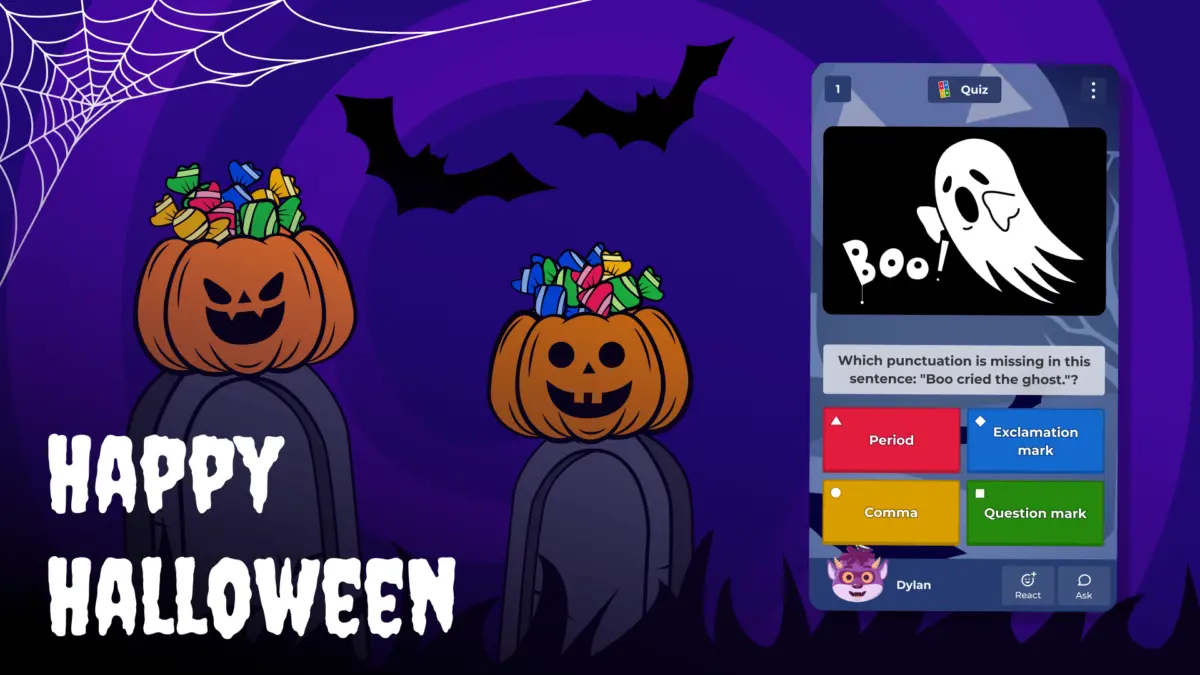
As the autumn leaves fall and the air turns crisp, classrooms, living rooms, and study halls around the world are undergoing a seasonal metamorphosis. Halloween—long celebrated solely with costumes, candy, and haunted houses—has increasingly become a canvas for academic engagement, interactive pedagogy, and social connection. At the vanguard of this movement is Kahoot!, the global game-based learning platform that is redefining how students, teachers, parents, and lifelong learners approach the spookiest time of the year.
By leveraging partnerships with powerhouse entertainment brands, cultural institutions, and educational curators—including Disney, Marvel, Nickelodeon, TED-Ed, the Museum of Science, and the World Wildlife Fund (WWF)—Kahoot! has curated an extensive library of ready-to-play, Halloween-themed educational content. This initiative bridges the gap between entertainment and instruction, proving that core competencies in science, mathematics, literature, and history can be taught just as effectively through the lens of ghoulish legends, cosmic mysteries, and pop-culture icons.
This comprehensive report explores how Kahoot!’s 2025–2026 seasonal campaign is reshaping educational engagement. By examining targeted content offerings for educators, parents, students, and party hosts, we uncover the broader pedagogical implications of gamified learning during seasonal spikes, analyzing how interactive platforms maintain student momentum right on the cusp of the grueling autumn exam season.
Detailed Chronology: The Evolution of Seasonal EdTech Integration
The integration of holiday themes into digital learning platforms did not happen overnight. Over the past decade, educational technology has shifted from static, drill-and-kill software to dynamic, social, and narrative-driven experiences.
Phase One: The Novelty Era (Early 2010s)
In the early days of gamified learning platforms, holiday content was largely restricted to user-generated novelties. Teachers and independent creators would manually design quizzes featuring pumpkin graphics or simple trivia questions about ghosts and goblins. While these early iterations successfully captured student attention, they lacked curriculum alignment, standardized depth, and formal partnership backing. They were treated as "end-of-class rewards" rather than core instructional tools.
Phase Two: Brand Partnerships and Curricular Alignment (Late 2010s to Early 2020s)
As platform ecosystems matured, companies like Kahoot! began forging formal alliances with major media franchises, educational publishers, and non-profit institutions. Curators realized that children and young adults respond more enthusiastically to educational stimuli when paired with familiar intellectual properties (IPs). Seasonal events—specifically Halloween, back-to-school periods, and winter holidays—became strategic milestones for releasing coordinated educational packages. Curricula began to intertwine seamlessly with pop culture, transforming characters like SpongeBob SquarePants or Marvel’s Groot into vectors for mathematical reasoning and scientific inquiry.
Phase Three: Comprehensive Multi-Tiered Ecosystems (Current Landscape)
Today, seasonal educational campaigns are massive, meticulously planned initiatives. The modern Kahoot! Halloween collection represents the pinnacle of this evolution. Rather than offering a monolithic quiz bank, the platform has segmented its seasonal offerings into precise target demographics:
- Educators receive cross-disciplinary modules spanning literature, history, and STEM.
- Parents are provided with foundational skill-builders designed to alleviate math and reading anxiety in young children.
- Students access rigorous, exam-prep-aligned STEM content disguised as spine-tingling science explorations.
- Lifelong Learners enjoy high-level historical and pop-culture trivia tailored for adult gatherings and team-building events.
Supporting Context & Metrics: Why Gamification Works in Autumn
The transition from late summer to late autumn is notoriously difficult for student engagement. Known educationally as the "autumn slump," this period coincides with shortening daylight hours, post-summer adjustment fatigue, and the looming pressure of mid-term examinations. Traditional instructional methods often struggle to maintain attention spans during this stretch.
The Neuroscience of Playful Learning
Cognitive science demonstrates that gamification triggers the brain’s reward pathways, releasing dopamine in response to challenges, achievements, and friendly competition. When integrated with seasonal novelties—such as solving a subtraction puzzle to help Hello Kitty decorate a haunted house, or deciphering the lunar phases alongside SciShow Kids—students experience reduced cognitive anxiety. The "spooky" context reframes high-stakes academic testing into a low-stakes, high-engagement game.
Broadening Curriculum Reach Through Pop Culture
Data from educational technology analysts highlights that student retention rates soar when abstract concepts are anchored to recognizable narratives. For example:
- Literary History: Through TED-Ed’s collaboration on Kahoot!, students trace the historical roots of Dracula and examine the socio-political context of the Salem Witch Trials, bridging creative literature with rigorous historical inquiry.
- Environmental Literacy: The WWF Wild Classroom collection reframes animals traditionally feared on Halloween—such as bats, owls, and spiders—as vital ecological guardians, fostering scientific literacy and empathy toward wildlife.
- Linguistic Enrichment: Wiktonic-backed vocabulary challenges ("Wicked words for Halloween") elevate language arts instruction by introducing high-level, unusual English vocabulary wrapped in a delightfully eerie aesthetic.
Targeted Offerings Across the Ecosystem
To understand the sheer scope of Kahoot!’s seasonal strategy, one must examine how the content is tailored for distinct user groups.
For Teachers: Spell-Binding Cross-Disciplinary Modules
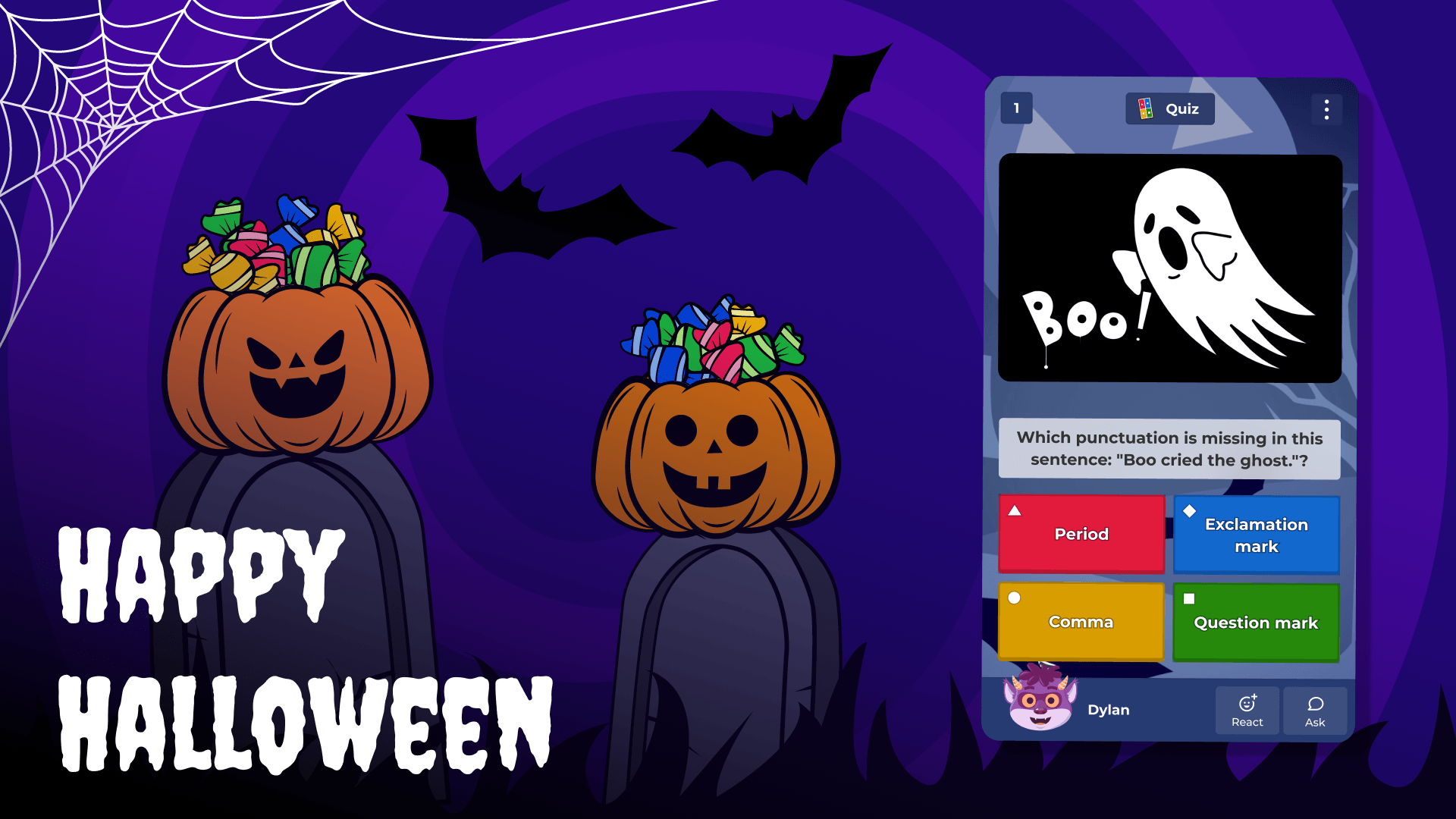
Educators seeking to harness Halloween’s inherent aura of mystery have access to a wealth of structured resources. The platform’s collaboration with TED-Ed allows high school and middle school teachers to explore complex historical and literary themes. Meanwhile, channels dedicated to Nickelodeon and Disney infuse standard math, science, and language arts lessons with beloved characters. Whether exploring marine biology via SpongeBob’s underwater universe or tackling narrative structure with Disney’s classic storytelling tropes, teachers can effortlessly maintain rigorous academic standards without sacrificing seasonal fun.
For Parents: Sweet, Low-Stress Skill Building at Home
For parents navigating the weeks leading up to October 31st, sugar rushes and party planning can make focused study time challenging. Kahoot! addresses this by offering foundational learning modules that feel more like treats than chores.
- Hello Kitty and Friends: Focuses on early cognitive development and basic arithmetic through festive, low-stress mini-games.
- Marvel’s Monster Math: Engages elementary school students with counting, addition, and subtraction challenges starring Groot and fellow galactic heroes.
- Peanuts (
It’s the Great Pumpkin, Charlie Brown): Combines numerical literacy with emotional intelligence, helping younger children process themes of resilience, imagination, and overcoming disappointment.
For Students: High-Momentum Study Sessions for Exam Season
Autumn is universally recognized as the crucible of the academic semester, with mid-term examinations testing students’ endurance. Kahoot! provides a strategic antidote to burnout through its advanced study collections:
- Museum of Science: Explores complex STEM concepts, such as why the moon changes phases (in partnership with SciShow Kids) and the behavioral ecology of insects.
- Advanced Vocabulary: Challenges older students and high schoolers to master obscure, atmospheric English terminology via curated Wiktionary partnerships.
For Lifelong Learners: Frightfully Fun Social Trivia
Learning does not stop at the classroom door. For adults hosting Halloween parties, family gatherings, or workplace team-building exercises, the platform offers sophisticated trivia modules. Wikipedia-backed collections test participants on the authentic historical origins of Halloween traditions, ancient symbols, and global folklore. For sci-fi enthusiasts, the Star Wars "Happy Ghoul-actic Halloween" trivia brings tongue-in-cheek galactic humor to holiday celebrations.
Official Statements and Pedagogical Philosophy
Educational technologists and partner organizations have continuously underscored the value of merging mainstream entertainment with foundational learning frameworks.
"Halloween is a season of imagination, storytelling, and curiosity," notes instructional design specialists working within the digital learning sector. "By tapping into these natural human impulses, we can lower the barriers to entry for complex academic subjects. When a student is laughing at a Star Wars pun or marveling at the ecological importance of a bat, they are actively constructing mental models that endure far beyond the holiday season."
Platform representatives emphasize that the goal of these seasonal campaigns is not merely to entertain, but to ensure continuous learning momentum. By providing verified educators, parents, and students with unlimited access to premium content—particularly through comprehensive tier plans like Kahoot!+ Gold for K-12 schools, higher education students, and personal households—the platform aims to democratize high-quality, interactive education year-round.
Future Outlook: The Trajectory of Seasonal EdTech
As digital learning environments continue to evolve, the boundaries between seasonal celebrations and instructional design will only blur further. The success of multi-platform collaborations during holidays like Halloween points toward a future where education is increasingly modular, narrative-driven, and seamlessly integrated into popular culture.
Looking ahead, we can anticipate several key developments in gamified seasonal learning:
- Immersive Technologies: Integration of augmented reality (AR) and virtual reality (VR) elements into seasonal quizzes, allowing students to virtually explore historical sites like Salem or dissect ecosystems alongside digital avatars.
- Adaptive AI-Driven Pathways: Quizzes that adjust their difficulty dynamically based on real-time performance analytics, ensuring that spooky-themed math or science challenges precisely target a student’s individual learning gaps.
- Expanded Global Collaborations: Deeper partnerships with international cultural institutions to showcase how different cultures commemorate autumn transitions, historical harvest festivals, and folklore traditions around the globe.
Ultimately, initiatives like Kahoot!’s Halloween collection demonstrate that learning and play are not mutually exclusive. By transforming seasonal excitement into an engine for academic curiosity, platforms are proving that education can be profoundly effective, endlessly engaging, and—above all—fa-boo-lous fun.

