
Executive Overview
The holiday shopping season has officially undergone a permanent structural shift. Long gone are the days when parents, educators, and holiday gift-givers had to brave the chaotic, predawn lines outside brick-and-mortar big-box retailers on the Friday following Thanksgiving. Today, the holiday retail engine ignites much earlier, with major e-commerce platforms and toy manufacturers rolling out aggressive, highly anticipated discounts as early as mid-November.
At the forefront of this seasonal retail migration are Science, Technology, Engineering, and Math (STEM) toys and interactive learning kits. As academic standards lean heavier into computational thinking, early coding, and hands-on scientific experimentation, demand for educational toys has skyrocketed. Retailers have responded by prioritizing online-only purchasing structures, offering deep price cuts well ahead of the traditional holiday window.
This comprehensive guide serves as an authoritative investigative roadmap through the noise of early Black Friday and Cyber Monday promotions. We have curated the top 15 STEM toys and learning kits to watch, evaluating each product on its educational merit, durability, engagement factor, and value. Whether you are shopping for an aspiring roboticist, a budding cosmetic chemist, or a tactile builder, this report details everything you need to secure the best educational investments of the season.
Detailed Chronology: The Evolution of the Early Holiday Shopping Window
To understand how Black Friday shopping for educational toys transformed from a single-day event into a month-long e-commerce marathon, one must examine the shifting logistics of modern retail.
Phase One: The Traditional Brick-and-Era (Pre-2010)
Historically, the holiday shopping season operated on a strict calendar. Retailers withheld their steepest discounts until Thanksgiving night or Black Friday morning. For STEM toys—which often command higher price points due to specialized hardware, microcontrollers, and precision engineering—parents faced limited inventory and fierce in-store competition. Specialty learning items frequently sold out weeks before December.
Phase Two: The Rise of Cyber Monday (2010–2018)
As digital infrastructure matured, retailers introduced "Cyber Monday" to capture the online overflow from Black Friday. Concurrently, online giants began launching "Cyber Week" promotions. However, supply chain constraints and physical store bottlenecks still meant that the core discounting period remained tightly coupled with the Thanksgiving holiday weekend.
Phase Three: The Digital-First Paradigm (2020–Present)
The global acceleration toward online-only purchasing fundamentally altered retail psychology. Retailers recognized that foot traffic was volatile, unpredictable, and logistically difficult to manage. Consequently, corporations shifted their capital and promotional efforts entirely toward online-only portals beginning in mid-November.
For STEM toy buyers, this evolution is a distinct advantage. By launching deep discounts weeks before Thanksgiving, retailers allow parents to thoroughly research educational products, cross-reference curriculum standards, and secure bargains without the panic of limited flash-sale windows.
Supporting Context & Metrics: Why STEM Toys Dominate Holiday Wishlists
The surging popularity of educational tech and science kits is not merely a marketing phenomenon; it reflects broader macroeconomic and educational trends. According to market research across the toy sector, educational and STEM-focused categories consistently outperform traditional plush and passive plastic toys.
Several key drivers explain this sustained growth:
- The Remote and Hybrid Learning Carryover: Even as traditional classrooms returned to full-time in-person learning, parents developed a heightened awareness of supplementary home education. Tools that bridge the gap between entertainment and academic skill-building have become household staples.
- Screen-Time Balance: While many STEM toys involve coding, a massive sub-sector focuses on tactile, screen-free engineering—such as marble runs and mechanical hydraulic kits—satisfying parental desires to reduce passive device consumption.
- Early Professional Literacy: Concepts like algorithmic thinking, basic circuitry, and Newtonian physics are no longer reserved for high school or university settings. Introducing these pillars to children as young as four or five builds cognitive frameworks that yield long-term academic benefits.
Top 15 STEM Toys and Learning Kits to Watch
Navigating the vast sea of educational toys can be daunting. Below is an exhaustive breakdown of the top 15 STEM products, categorized by discipline, detailing what makes them exceptional choices for the holiday season.
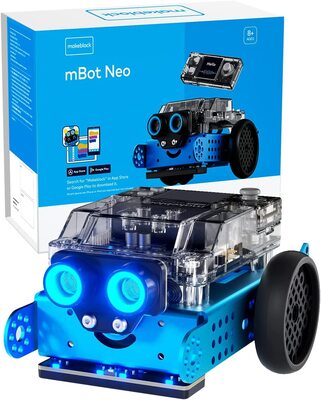
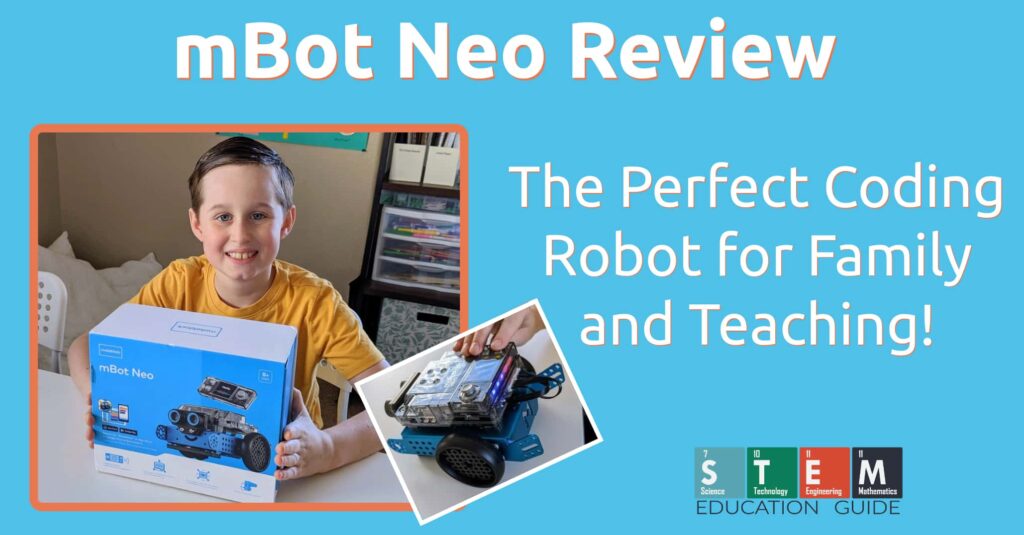
1. mBot Neo (Coding & Robotics)
The mBot Neo is a premier DIY coding robot designed to turn passive tech consumers into active creators. Built from robust aluminum and thick, impact-resistant plastics, this kit requires children to physically assemble the hardware before diving into software development.
Using an intuitive app interface, young learners write code that dictates the robot’s movements, dances, light displays, and audio outputs. For households where traditional coding might feel intimidating, the mBot Neo also features a suite of preprogrammed activities accessible straight out of the box via a physical controller. It stands out as an exceptionally durable, multi-layered entry point into robotics.
2. Sphero BOLT (Advanced Programmable Robotics)
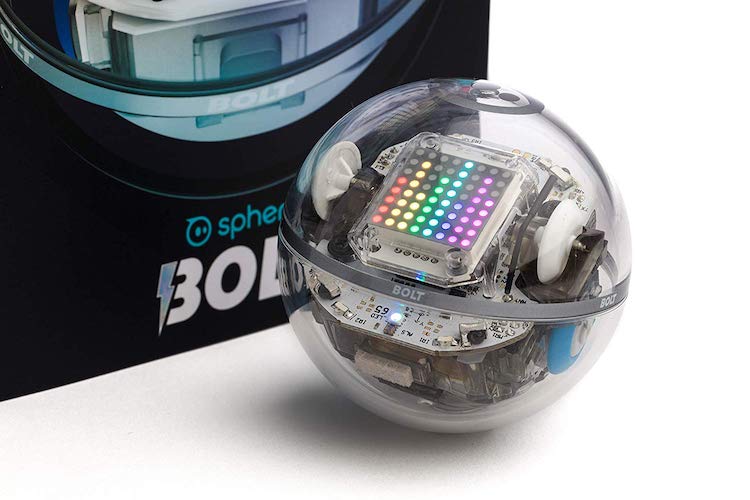
For durability paired with advanced computational capability, the Sphero BOLT remains an industry benchmark. This shock-proof, waterproof, transparent robotic ball allows users to write custom code that dictates its trajectory, speed, and matrix LED light animations.
The accompanying ecosystem offers endless activities, scaling seamlessly from beginner path-drawing challenges to advanced JavaScript programming for older kids. Its rugged exterior ensures it can withstand rough outdoor play, classroom drops, and accidental water splashes.
3. Wonder Workshop Dash (Interactive Junior Coding)
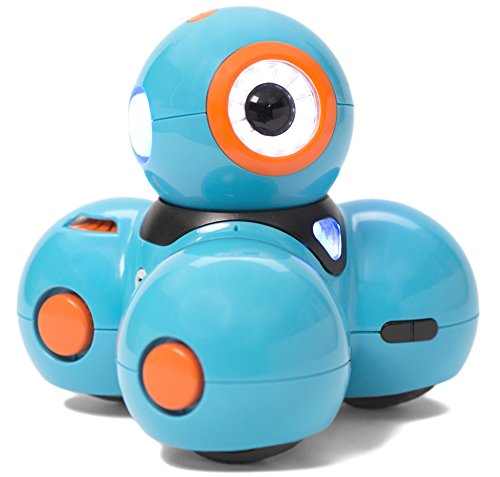
Targeted at children ages 6 and up, the Wonder Workshop Dash is an engaging, fast-moving companion designed to introduce foundational programming concepts. Dash features built-in microphones for interactive audio playback, allowing the robot to respond to voice commands and talk back to its user.
What sets Dash apart in multi-child households or neighborhood settings is its ability to interact dynamically with other Dash bots. Through guided in-app challenges, children learn sequencing, loops, and event-handling without feeling like they are sitting through a formal computer science lecture.
4. Makey Makey (Tactile Invention Kit)
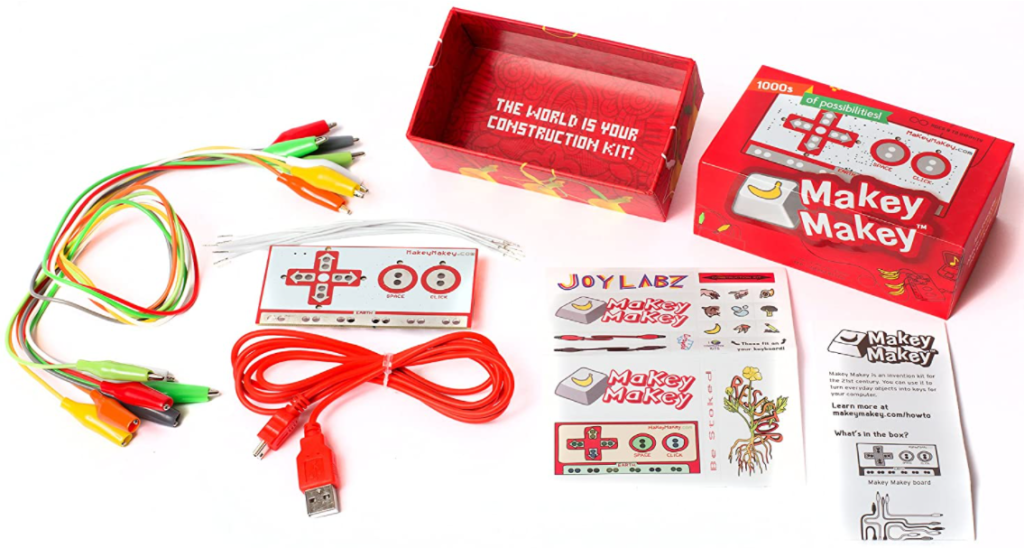
Makey Makey redefines what can be used as a computer interface. By connecting everyday conductive objects—ranging from bananas and playdough to aluminum foil and human bodies—to the Makey Makey circuit board via alligator clips, kids can transform virtually anything into a computer keyboard or game controller.
Requiring zero programming knowledge to start, this kit brilliantly demonstrates electrical conductivity while unleashing boundless imaginative play. It is an ideal tool for bridging tactile arts and crafts with digital technology.
5. Kaboom Explosive Science Lab Kit (Chemistry & Physics)
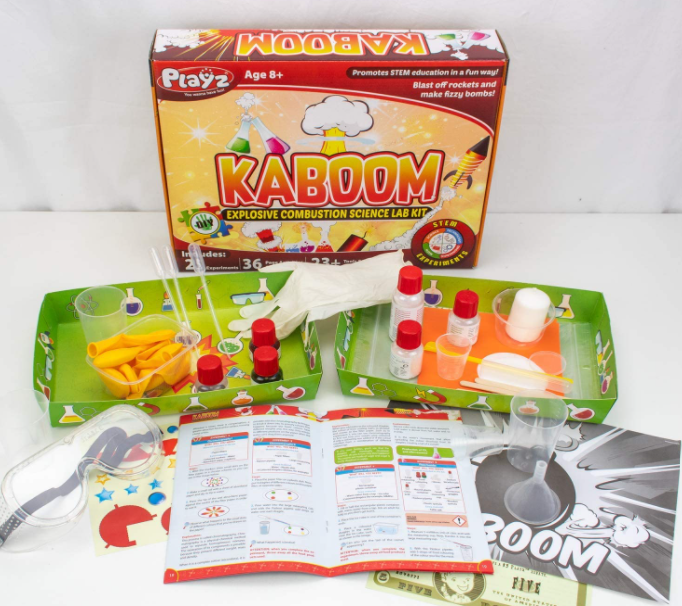
Science education thrives on excitement, and the Kaboom Explosive Science Lab Kit delivers over 25 high-impact, safe combustion and chemical reaction experiments. Children can venture outdoors to launch rockets, build fireproof balloons, and observe explosive volcanic reactions.
Crucially, this kit transcends mere entertainment by emphasizing the scientific method. Parents consistently praise the thorough instructional manuals that explain the "why" behind every chemical transformation, turning explosive fun into genuine, retention-heavy learning.
6. YELLOW SCOPE Foundation Chemistry Kit (Cosmetic & Foundational Science)
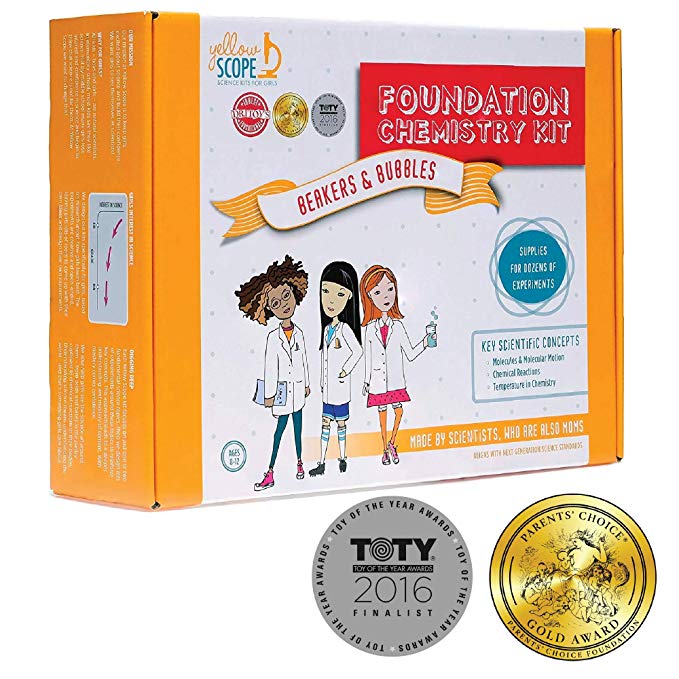
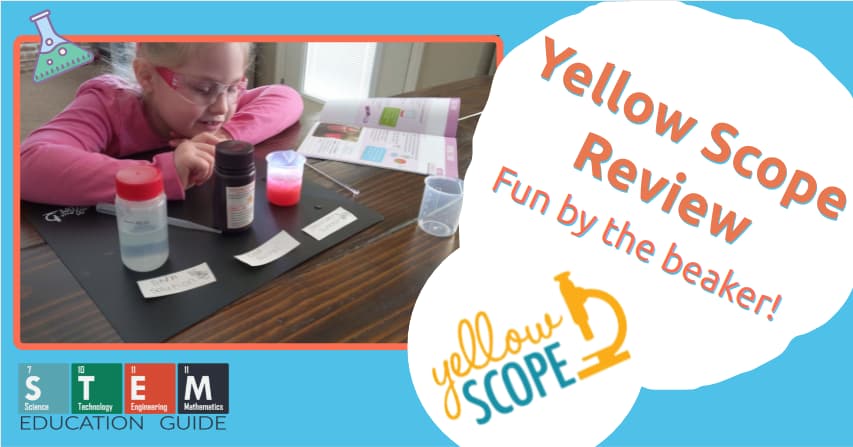
Designed specifically to spark interest among girls and underrepresented demographics in STEM, the YELLOW SCOPE Beakers & Bubbles Chemistry Kit explores applied sciences outside the traditional textbook scope.
By investigating the complex chemistry behind cosmetics, hair care, and body products, this kit connects abstract molecular concepts to tangible everyday items. Rigorously tested and educationally sound, it offers a deeply engaging introduction to laboratory techniques.
7. ThinkFun Gravity Maze Marble Run (Logic & Spatial Reasoning)
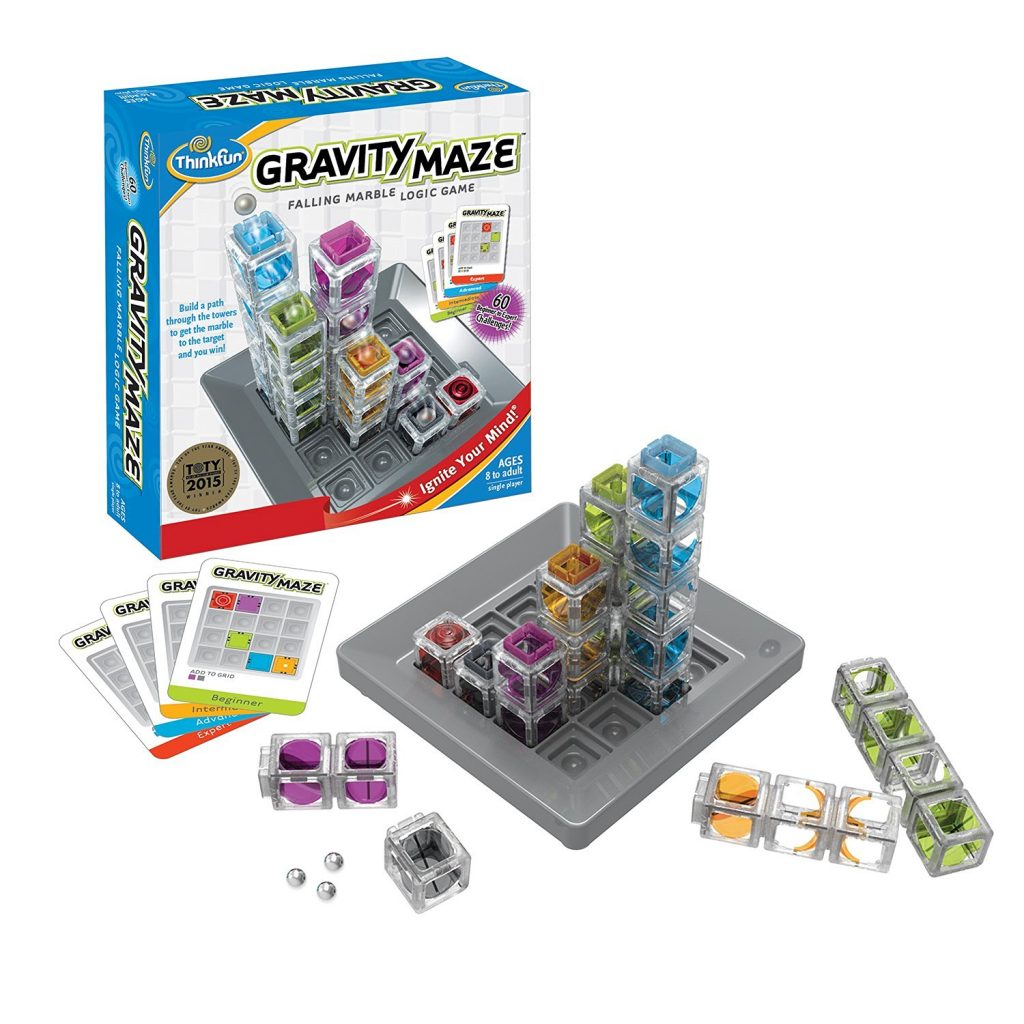
ThinkFun Gravity Maze combines the classic joy of a marble run with rigorous visual-perceptual logic challenges. Players are given specific challenge cards that dictate starting configurations, requiring them to strategically place translucent towers to guide a marble from start to finish via gravity.
With dozens of multi-level challenges, this screen-free puzzle game develops spatial reasoning, engineering logic, and perseverance in children aged eight and older.
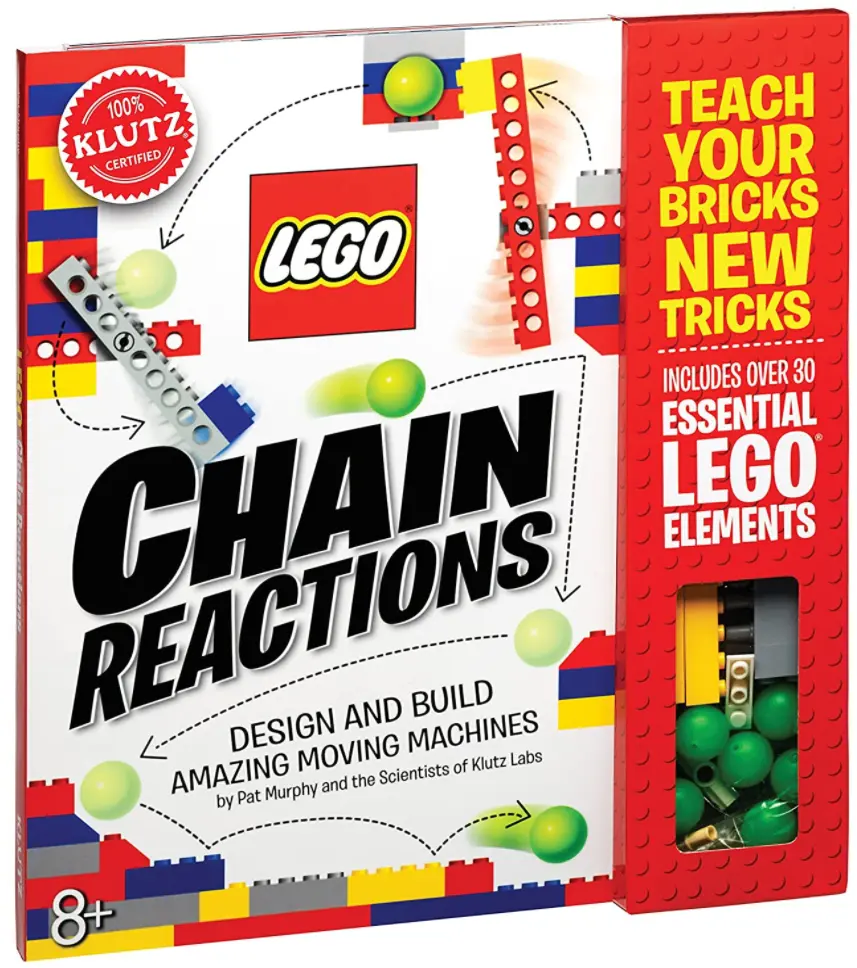
8. LEGO Chain Reactions (Physics & Engineering)
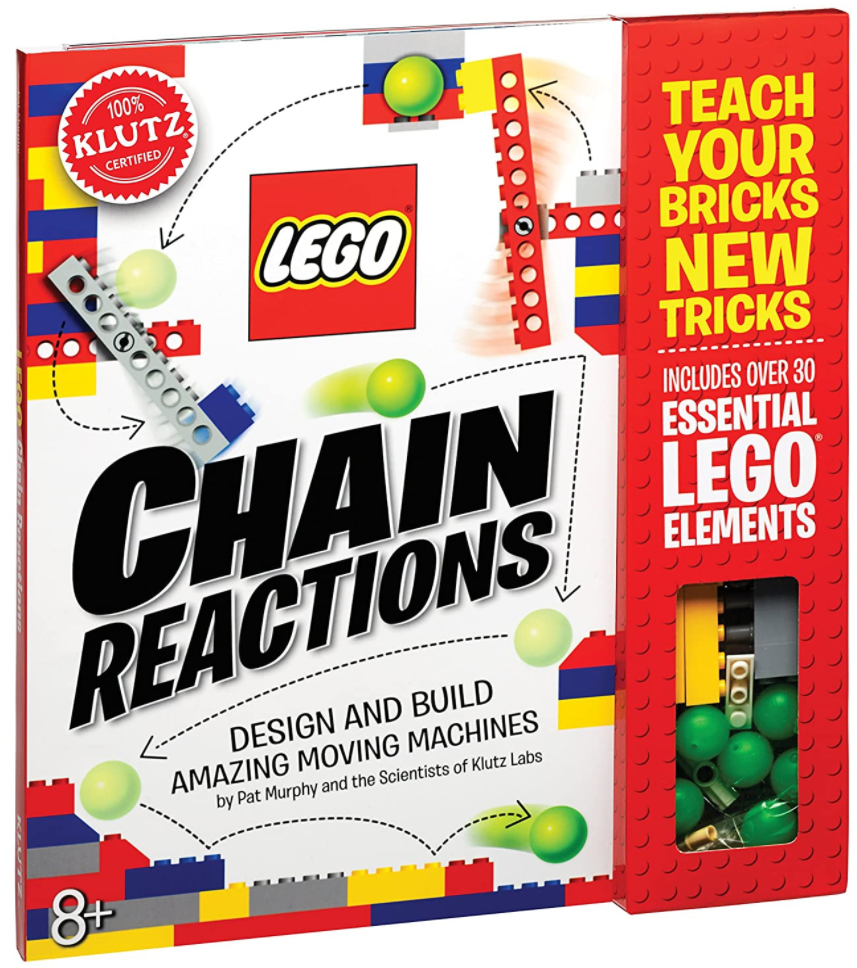
For children fascinated by how things work, LEGO Chain Reactions provides the building blocks to construct complex, multi-step contraptions. Utilizing classic LEGO elements combined with specialized ramps, pendulums, and swing weights, kids learn the principles of kinetic energy, momentum, and cause-and-effect. Seeing a self-built physical contraption successfully execute a synchronized chain reaction instills immense engineering confidence.
9. Snap Circuits 3D Illumination Electronics Exploration Kit (Electrical Engineering)
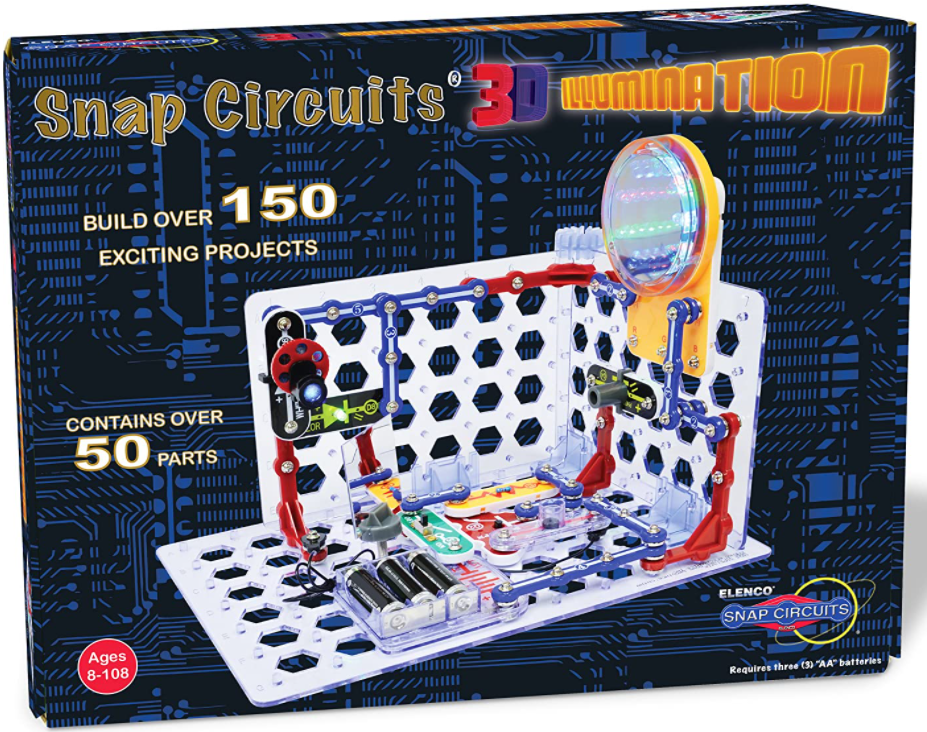
Snap Circuits has long been a gold standard for teaching electronics safely. The 3D Illumination Kit takes circuit-building vertical, allowing students to snap together modular electronic components to build glowing, multi-dimensional structures.
By experimenting with real electrical currents, switches, and LEDs, young learners grasp abstract electrical concepts through hands-on trial and error. It is an invaluable educational asset that demystifies power grids and circuitry.
10. Elenco Teach Tech Hydraulic Kit (Mechanical Engineering)
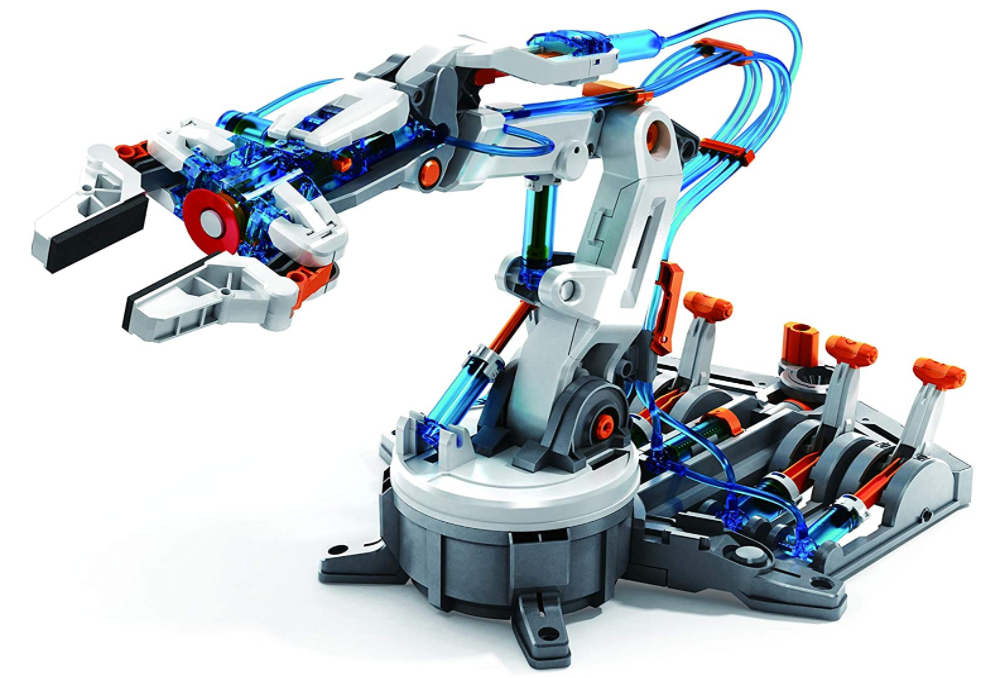
The Elenco Teach Tech HydroBot Arm introduces children to fluid power and mechanical engineering. Utilizing hydraulic plungers rather than motors or batteries, users manipulate levers to control a 270-degree rotating robotic arm capable of gripping, lifting, and twisting objects. It provides an exceptional tactile demonstration of Pascal’s Law and mechanical advantage.
11. Botley The Coding Robot Activity Set (Screen-Free Early Coding)
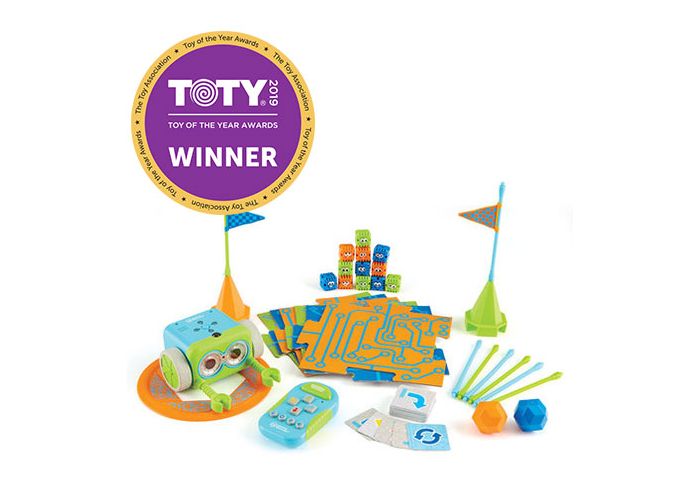
For younger children whose parents wish to limit tablet and computer exposure, Botley offers a fully screen-free coding experience. Using a dedicated remote programmer, kids input directional sequences to guide Botley through custom obstacle courses, teaching core algorithmic logic, debugging, and spatial orientation without a digital display.
12. Elenco TEACH TECH Mech-5 Robot Kit (Mechanical Coding)
Stepping up in complexity, the Mech-5 is a programmable mechanical robot powered entirely by hand-cranked energy and coded via a physical coding wheel. Children plug directional snap-in coding pins directly into the robot’s chassis to program it to kick, throw, lift, and draw. It offers a sophisticated introduction to mechanical logic without requiring electronic displays or software downloads.
13. littleBits Electronic Music Inventor Kit (Creative Audio Engineering)
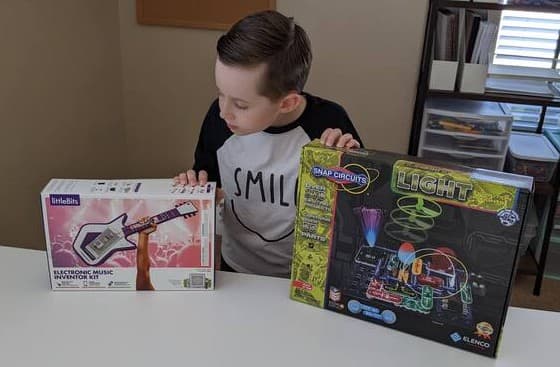
Merging art with engineering, the littleBits Electronic Music Inventor Kit allows kids to build and customize their own operational electronic guitars and sound synthesizers. By snapping together magnetic electronic bits and programming them via a companion app, children explore acoustics, circuit design, and digital audio signal processing.

14. Kid K’NEX Build-A-Bunch Set (Early Construction)
Designed for toddlers and younger builders, Kid K’NEX features soft, chunky, colorful plastic pieces that eliminate the safety hazards of traditional small-part construction sets. By combining stacking mechanics with flexible connection joints, this set helps toddlers develop fine motor skills and early spatial awareness.
15. Ravensburger GraviTrax XXL Marble Run (Modular Physics)
Rounding out our list is the GraviTrax XXL system. Operating entirely without electronics, this modular marble run uses a hexagonal grid system that challenges users to account for gravity, magnetism, and kinetic energy when designing elaborate tracks. Its infinite expandability ensures long-term replay value and deep engineering engagement.

Future Outlook: The Trajectory of Educational Tech
As we look toward future holiday seasons, the boundary between physical toys and digital learning will continue to dissolve. Augmented Reality (AR) integration, artificial intelligence-assisted coding companions, and sustainable, biodegradable materials are poised to dominate the next generation of STEM products.
However, the core principle remains unchanged: toys that foster active problem-solving, critical thinking, and tactile creation will always represent the most valuable investments a parent or educator can make. By capitalizing on early online-only Black Friday and Cyber Monday promotions, shoppers can secure top-tier educational tools while navigating the holiday rush with confidence and financial savvy.

