
Executive Overview
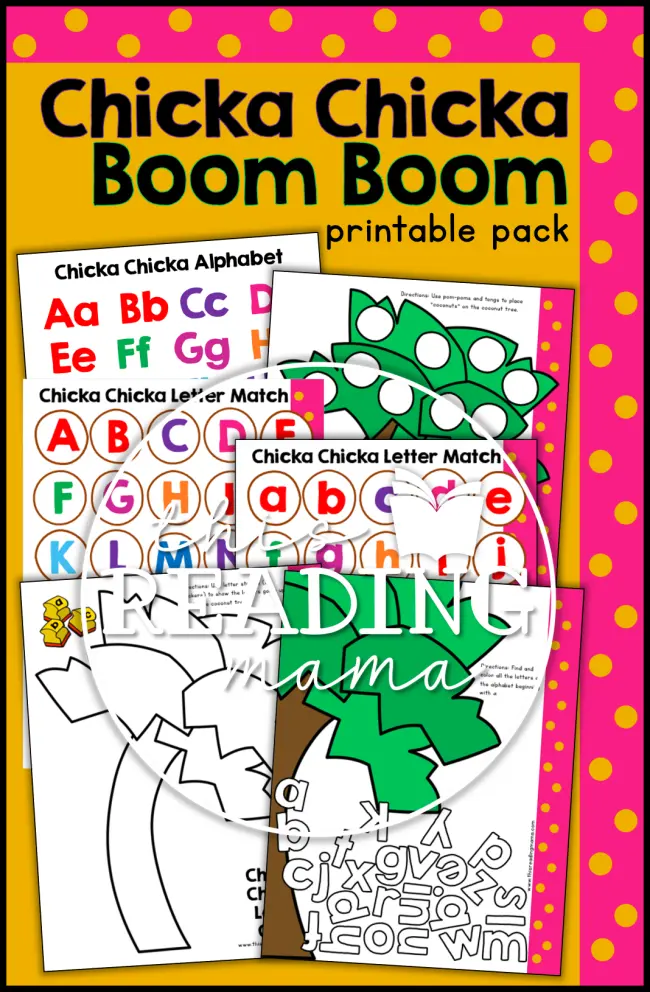
In the landscape of early childhood education, foundational literacy remains the absolute cornerstone of lifelong academic achievement. Recognizing the perennial need for engaging, hands-on, and multisensory instructional materials, veteran educator and literacy specialist Becky has announced the release of a comprehensive, free Chicka Chicka Boom Boom Printable Pack. Designed specifically for preschoolers, kindergarteners, and early homeschool learners, this resource bridges the gap between passive reading and active alphabet mastery.
Rooted in the beloved, rhythmic traditions of Bill Martin Jr. and John Archambault’s classic children’s picture book, Chicka Chicka Boom Boom, the newly released resource targets two critical domains of early development: letter recognition and fine motor skill coordination. As educational institutions and homeschool cooperatives navigate shifting pedagogical standards, the demand for adaptable, low-barrier teaching tools has surged. This release not only provides educators and parents with ready-to-use classroom assets but also underscores the enduring power of thematic, literature-based instruction in fostering early phonological and orthographic awareness.
Detailed Chronology of the Initiative
The journey toward the development and release of this comprehensive printable pack spans several distinct phases of classroom application, iterative design, and digital distribution.

Phase 1: Classroom Integration and Curriculum Development
The initiative began when Becky returned to the physical classroom environment to instruct a preschool literacy class at a local homeschool cooperative. Tasked with engaging young, highly energetic learners in foundational phonics, she turned to Chicka Chicka Boom Boom as a central pedagogical anchor. Recognizing how the rhythmic cadence of the text naturally captivates children, she integrated the book into a broader alphabet-themed curriculum.
Phase 2: Design and Material Creation
Observing how her students interacted with the text, Becky identified an opportunity to extend the learning experience beyond the storybook pages. Over successive weeks of classroom testing, she conceptualized and drafted a series of complementary worksheets and activity sheets. These resources were specifically tailored to reinforce what the children were hearing and seeing during read-aloud sessions, focusing explicitly on tactile engagement, visual letter discrimination, and pencil-control exercises.
Phase 3: Digital Curation and Resource Expansion
Upon refining the activities through practical classroom use, the educator formatted the materials into a cohesive digital bundle. Recognizing that educators and parents worldwide require flexible resources, she made the foundational pack freely available online. Simultaneously, an expanded version featuring blackline printables was archived within "The Library"—an exclusive repository designed to support comprehensive literacy curricula.

Supporting Context & Metrics: The Science of Early Alphabet Mastery
To fully understand the significance of the Chicka Chicka Boom Boom Printable Pack, one must examine the broader educational framework surrounding early childhood literacy development. Alphabet knowledge—encompassing letter recognition, letter naming, and letter-sound association—serves as the single best predictor of a child’s future reading and spelling success.
Multisensory Approaches in Preschool Education
Educational research consistently demonstrates that young children learn best when instruction engages multiple senses simultaneously. Chicka Chicka Boom Boom achieves this naturally through auditory rhythm, but supplemental printables add visual and kinesthetic dimensions.
- Letter Recognition: Activities that require children to match, identify, and sort uppercase and lowercase letters build essential cognitive pathways in the brain’s visual word form area.
- Fine Motor Skills: Before children can master handwriting, they must develop the intrinsic and extrinsic muscles of the hands and fingers. The inclusion of fine motor skill activities—such as tracing, cutting, and manipulating small objects along letter paths—directly supports the dexterity required for future writing proficiency.
The Role of Literature-Based Units
Thematic units anchored by high-interest literature transform abstract concepts into tangible experiences. By tying alphabet lessons to a narrative about coconut trees and adventurous lowercase letters climbing up to the top, children are more likely to retain information. This emotional and narrative connection accelerates cognitive retention, making literacy acquisition an enjoyable rather than arduous process.

Official Insights and Perspectives
While designed primarily for practical classroom utility, the release reflects broader philosophies held by modern early childhood educators regarding accessibility, play-based learning, and foundational skill scaffolding.
According to curriculum specialists who advocate for literature-integrated phonics, resources that cost nothing to download democratize educational quality. Disparities in early educational outcomes often stem from unequal access to high-quality learning materials in the home. By offering free, professionally designed printables, creators like Becky help bridge the readiness gap for children from diverse socioeconomic backgrounds.
Furthermore, educators emphasize the importance of blending structured letter-recognition tasks with open-ended fine motor practice. Children cannot isolate literacy from physical development; the hand and the brain must work in concert. The structured layout of the Chicka Chicka Boom Boom pack addresses this synthesis by ensuring that every cognitive challenge involving letter identification is paired with a corresponding physical coordination task.

Future Outlook: The Evolution of Digital Literacy Resources
As educational paradigms continue to evolve through a hybrid of digital tools and physical, hands-on manipulatives, the demand for specialized, teacher-tested printables is expected to accelerate.
Expanding Accessibility and Community Libraries
The success of initiatives like The Library membership platform points toward a future where educators collaborate on micro-curriculums. Rather than relying solely on monolithic, corporate textbook publishers, modern teachers increasingly turn to peer-reviewed, educator-created resources that can be adapted dynamically to meet the specific needs of diverse learners.
Next Steps for Educators and Parents
For those seeking to implement these resources, the path forward is straightforward:

- Engage with the Text: Begin by reading Chicka Chicka Boom Boom aloud, emphasizing its rhythmic and repetitive cadence to capture student interest.
- Incorporate Hands-On Play: Utilize letter charts and manipulatives to help children physically interact with the alphabet.
- Extend with Printables: Download and integrate complementary letter recognition and fine motor activity sheets to solidify foundational skills.
- Access Extended Archives: Explore comprehensive digital libraries for blackline masters and specialized thematic units that can sustain an entire school year’s worth of alphabet exploration.
Ultimately, tools like the Chicka Chicka Boom Boom Printable Pack prove that effective education does not require complex technology. By marrying a timeless children’s book with intentional, thoughtfully designed print activities, educators can spark a lifelong love of reading and learning in the youngest minds.

