
Executive Overview
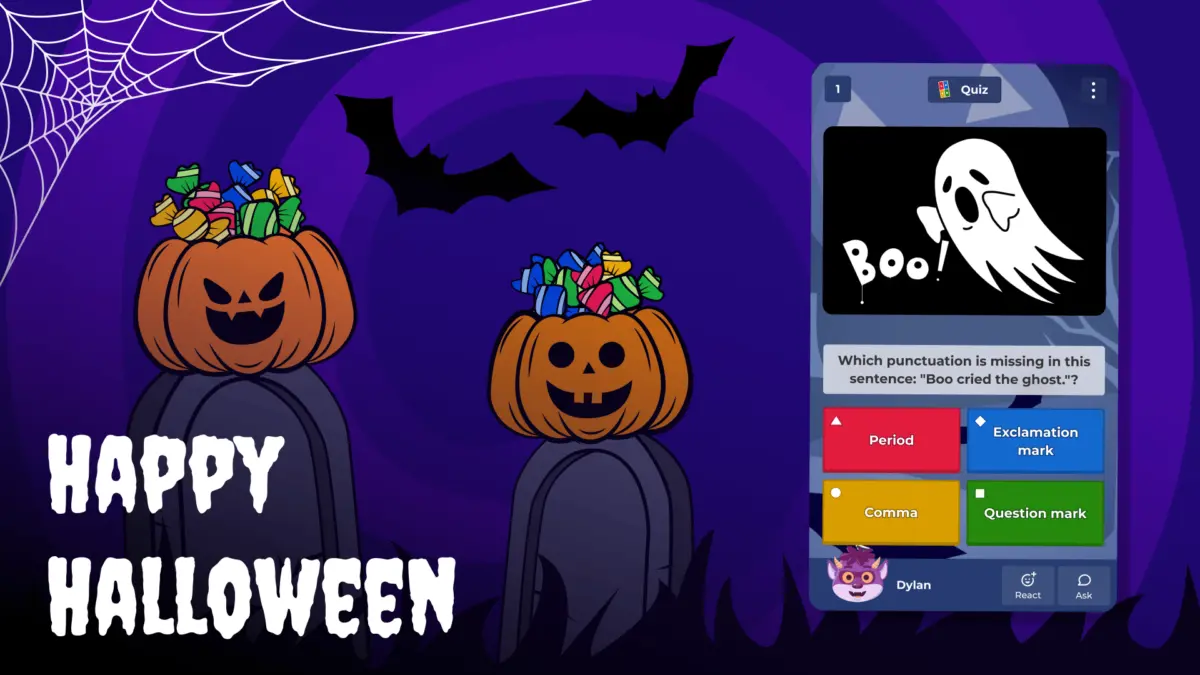
As the autumn leaves turn and the crisp October air ushers in the spooky season, educators, parents, and students alike face a perennial challenge: maintaining high levels of engagement amidst mounting holiday distractions and approaching midterm examinations. Enter the intersection of gamified learning and pop culture. Kahoot!, the global game-based learning platform, has rolled out an expansive, cross-curricular collection of ready-made Halloween learning content designed to inject fang-tastic fun into classrooms, living rooms, and study sessions everywhere.
By combining the natural curiosity and excitement surrounding Halloween with trusted educational frameworks and beloved intellectual properties—ranging from Disney and Marvel to Peanuts, Star Wars, and Nickelodeon—Kahoot! has positioned itself as an essential tool for modern pedagogy. Rather than viewing seasonal festivities as a disruption to the academic calendar, the platform leverages the cultural resonance of the holiday to reinforce core competencies in Science, Technology, Engineering, and Math (STEM), language arts, history, and emotional literacy.
This comprehensive report examines the pedagogical strategy behind Kahoot!’s seasonal campaign, breaking down how tailored content is serving distinct user groups: educators crafting dynamic lesson plans, parents seeking screen-time solutions that blend play with practice, students battling mid-semester fatigue, and lifelong learners hosting community gatherings. Furthermore, we explore the broader implications of gamified seasonal education on student retention, cognitive development, and the future of digital instructional design.
Detailed Chronology: The Evolution of Seasonal Gamification in Education
The integration of holiday themes into formal and informal learning environments is not a new phenomenon; teachers have long utilized pumpkins, ghost stories, and harvest festivals to contextualize math word problems and reading exercises. However, the digitization of these practices represents a paradigm shift in how educational content is produced, distributed, and consumed.
Phase One: The Analog Era of Holiday Teaching
Historically, seasonal lesson planning relied heavily on static resources: printed worksheets featuring cartoon witches, physical flashcards shaped like ghosts, and arts-and-crafts projects. While these methods successfully captured children’s imaginations, they suffered from significant limitations:
- High Preparation Overhead: Educators spent hours cutting out decorations, laminating worksheets, and grading papers by hand.
- Limited Interactivity: Learning remained largely passive or individualistic, lacking the real-time feedback loops essential for active reinforcement.
- Scalability Challenges: Content was difficult to adapt across different grade levels or share outside of immediate school networks.
Phase Two: The Rise of Digital Quizzes and Early EdTech
As classrooms adopted smartboards, tablets, and personal laptops in the early 2010s, educational software transitioned from CD-ROMs to cloud-based platforms. Digital quizzes allowed teachers to project questions onto a screen, but early tools often lacked aesthetic polish, narrative depth, and robust curricular alignment. They functioned more as digital test-taking portals than immersive learning experiences.
Phase Three: The Gamified Ecosystem (Present Day)
Today, platforms like Kahoot! have industrialized seasonal engagement through strategic partnerships with major media conglomerates, cultural institutions, and scientific bodies. By curating pre-made collections tied to globally recognized brands—such as Sanrio’s Hello Kitty and Friends, Marvel, and the Peanuts gang—the platform bridges the gap between entertainment and rigorous academic standards.
The current rollout capitalizes on real-time multiplayer capabilities, asynchronous study modes, and adaptive difficulty scaling. Whether a student is exploring the phases of the moon through a partnership with the Museum of Science or wrestling with complex vocabulary via Wiktionary, the learning experience is embedded within a festive narrative that transforms assessment into an eagerly anticipated event.
Supporting Context & Metrics: Why Gamification Works During High-Stress Academic Periods
The timing of Kahoot!’s Halloween initiative is strategically aligned with a critical juncture in the academic calendar. October marks the transition from the "honeymoon phase" of the back-to-school season into the rigorous grind of midterms and early quarter evaluations. According to educational psychologists, student burnout and engagement drops are statistically observable during this window.
The Neuroscience of Play and Retention
Gamified learning taps into dopamine pathways in the brain, associating academic challenges with positive emotional rewards. When mathematical equations or historical dates are framed as "monster math" or "witchcraft trials" (such as the TED-Ed collections exploring the Salem Witch Trials and Dracula), cognitive load is mitigated by narrative immersion.
- Intrinsic Motivation: By embedding quizzes within beloved universes like Star Wars or SpongeBob SquarePants, the platform leverages existing emotional investments, turning passive viewers into active participants.
- Low-Stakes Assessment: Multiplayer competition fosters a collaborative, high-energy environment where failure is treated as a temporary setback rather than a definitive grade, reducing test anxiety.
- Multi-Sensory Engagement: Rich illustrations, timed countdowns, and auditory cues stimulate multiple cognitive faculties, significantly improving information retention compared to traditional rote memorization.
Categorical Impact Analysis
To understand the breadth of Kahoot!’s seasonal impact, we can examine how the content is tailored across four distinct demographics:

| Demographic | Primary Objective | Featured Partnerships / Content | Educational Focus |
|---|---|---|---|
| Educators | Elevate lesson plans & cross-curricular engagement | TED-Ed, Nickelodeon, Disney | Science, Math, History, Language Arts |
| Parents | Screen-time balance & foundational skill-building | Hello Kitty, Marvel, Peanuts | Counting, Addition, Subtraction, Emotional Literacy |
| Students | Exam preparation & combatting mid-semester fatigue | Museum of Science, WWF Wild Classroom, Wiktionary | STEM, Wildlife Biology, Advanced Vocabulary |
| Lifelong Learners | Community building & social entertainment | Wikipedia, Star Wars | Cultural History, Trivia, Pop-Culture Literacy |
Official Statements and Pedagogical Perspectives
Industry experts and institutional partners have increasingly recognized the value of embedding trusted educational content into mainstream entertainment ecosystems.
Dr. Elena Vance, a specialist in educational technology and digital pedagogy, notes that platforms bridging the gap between formal curricula and popular culture are reshaping modern instructional design:
"When children see characters they love grappling with the same scientific concepts or mathematical challenges they are studying, the psychological barrier between ‘school’ and ‘fun’ dissolves. Seasonal campaigns work because they lean into cultural touchstones that children are already passionate about, transforming passive consumption into active cognitive processing."
Educational content partners share this sentiment. Representatives from participating cultural institutions emphasize that seasonal themes provide a unique gateway to complex topics. For instance, wildlife conservation concepts—often viewed as dry or overly academic—are reframed by the WWF Wild Classroom collection as "Not-so-spooky wildlife," teaching students how misunderstood animals like bats, owls, and spiders maintain planetary health.
Furthermore, educational economists point out that scalable, ready-made digital resources drastically reduce teacher burnout. By eliminating the need to build seasonal trivia decks from scratch, platforms like Kahoot! return valuable hours to educators, allowing them to focus on personalized student mentorship and targeted intervention.
Future Outlook: The Trajectory of Seasonal and Gamified Learning
As educational technology continues to evolve, the boundaries between entertainment, gaming, and formal instruction will continue to blur. Several key trends are expected to shape the future of seasonal educational campaigns:
1. Hyper-Personalization and Adaptive AI
Future iterations of seasonal learning modules will likely incorporate machine learning algorithms capable of adapting quiz difficulty in real-time based on an individual student’s performance metrics. If a student struggles with subtraction during a Marvel-themed "monster math" session, the platform will seamlessly generate supplementary practice vectors tailored to their specific learning gaps.
2. Expanded Immersive Technologies
As augmented reality (AR) and virtual reality (VR) become more accessible in classrooms and homes, static 2D quiz screens will give way to spatial learning environments. Imagine walking through a digitally projected haunted house where mathematical puzzles must be solved to unlock physical doors, combining physical movement with digital assessment.
3. Sustainable Cross-Industry Partnerships
The success of cross-pollination between tech platforms and media giants demonstrates a sustainable economic and pedagogical model. Brands benefit from positive educational associations and extended audience engagement, while classrooms gain access to high-production-value assets that would otherwise be cost-prohibitive for school districts to develop independently.
Conclusion
Kahoot!’s comprehensive Halloween initiative illustrates the profound potential of gamified learning when executed with pedagogical rigor and creative flair. By transforming classrooms and living rooms into sites of "fang-tastic" discovery, the platform proves that education and entertainment are not mutually exclusive.
Whether teachers are exploring the dark history of the Salem Witch Trials through TED-Ed, parents are guiding their toddlers through Hello Kitty math puzzles, students are decoding advanced vocabulary via Wiktionary, or colleagues are testing their intergalactic knowledge with Star Wars trivia, seasonal content serves a vital purpose. It re-energizes communities, revitalizes study habits, and proves that learning can be both delightfully spooky and enduringly effective all year round.

