
Executive Overview
The holiday shopping landscape has undergone a dramatic structural transformation, shifting the traditional frenzy of brick-and-mortar Black Friday stampedes into an early, highly strategic digital marketplace. Nowhere is this evolution more pronounced than in the sector of educational technology and Science, Technology, Engineering, and Math (STEM) products. Driven by supply chain agility, shifting consumer preferences, and a surging demand for developmental toys that blend play with foundational academic skills, major retailers are rolling out deep, highly anticipated discounts on STEM toys as early as mid-November.
Rather than waiting for the traditional post-Thanksgiving weekend, parents, educators, and gift-givers are capitalizing on online-only rollouts to secure top-tier learning robotics, chemistry sets, and logic puzzles. This comprehensive market overview examines the shifting retail paradigms of the holiday shopping season and analyzes the top 15 STEM toys and learning kits to watch during Black Friday and Cyber Monday. By focusing on online-exclusive promotions, this guide provides an authoritative roadmap for navigating the best deals of the season while investing meaningfully in children’s education.
Detailed Chronology: The Shift to Early Digital Shopping Events
The timeline of holiday shopping has accelerated significantly over the past half-decade. Historically, Black Friday operated as a singular 24-hour retail event occurring exclusively the day after Thanksgiving, characterized by long overnight queues and crowded mall aisles. However, the operational realities of modern retail logistics—compounded by a massive pivot toward e-commerce—have fundamentally altered this chronology.
The Mid-November Pivot
Retailers now view November not as a single weekend, but as an extended, month-long promotional window. The modern holiday shopping timeline typically unfurls across distinct phases:
- Early November (Preparation & Teasers): Major online marketplaces and specialized toy retailers begin publishing curated gift guides and early-bird discounts. Consumers are encouraged to build wish lists as retailers test pricing models and inventory levels.
- Mid-November (The Digital Kickoff): Recognizing the logistical hurdles of in-store crowds and the overwhelming preference for e-commerce, retailers officially launch their primary online-only markdowns. This phase sees the earliest and often deepest discounts on high-ticket items like coding robots, advanced chemistry labs, and sophisticated electronic circuit kits.
- Black Friday Week (Peak Promotional Blitz): While traditional media still spotlights the calendar day following Thanksgiving, the digital storefronts have already saturated the market with competitive pricing. Online exclusives peak during this window, ensuring that shoppers can secure items without navigating physical retail bottlenecks.
- Cyber Monday & Beyond (Final Digital Inventory Clearances): The shopping season culminates in Cyber Monday, which serves as a final consolidation of tech-heavy toy discounts, bridging the gap between holiday shopping and year-end inventory management.
This elongated timeline allows parents and educators to methodically research developmental toys, compare specifications, and purchase high-value items at optimal price points without succumbing to last-minute stock shortages.
Supporting Context & Metrics: The Rise of STEM Learning at Home
The commercial explosion of STEM toys is not merely a passing retail trend; it reflects a broader cultural and educational shift toward equipping children with 21st-century competencies. As automation, artificial intelligence, and digital infrastructure reshape the global workforce, educators and parents increasingly recognize that traditional rote memorization is insufficient.
Bridging Play and Practical Competency
STEM toys are engineered to bridge the gap between abstract academic concepts and tangible, hands-on experimentation. Market analysis consistently highlights several key drivers behind the sustained growth of the educational toy sector:
- Screen-Free vs. Digital Balance: Modern parents actively seek products that offer a healthy equilibrium. While coding robots require interaction with tablets, companion applications, or dedicated controllers, physical construction sets (such as marble runs and mechanical engineering kits) emphasize tactile, screen-free spatial reasoning.
- Inclusivity and Gender Equity: Historically, technical toys were marketed disproportionately toward young boys. Today, specialized chemistry kits and engineering sets designed specifically to highlight diverse career paths—such as cosmetic science, environmental engineering, and product design—have successfully engaged a broader demographic of young innovators, particularly girls.
- Long-Term Developmental Value: Unlike conventional toys that may hold a child’s interest for a few days, modular STEM kits—such as programmable robots and open-ended circuit boards—grow with the child. As their coding capabilities and mechanical intuition evolve, the toys offer increasingly complex challenges, delivering a higher return on investment for holiday shoppers.
Curated Market Review: Top 15 STEM Toys and Learning Kits
Navigating the vast ecosystem of educational toys can be daunting. To assist holiday shoppers, we have compiled an authoritative review of the top 15 STEM toys and learning kits featured during this season’s early online sales events.
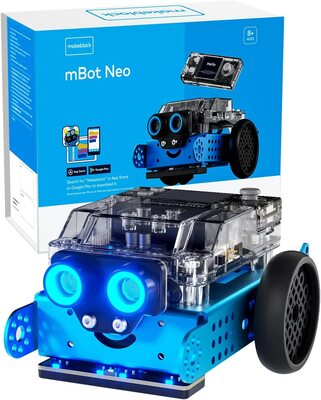
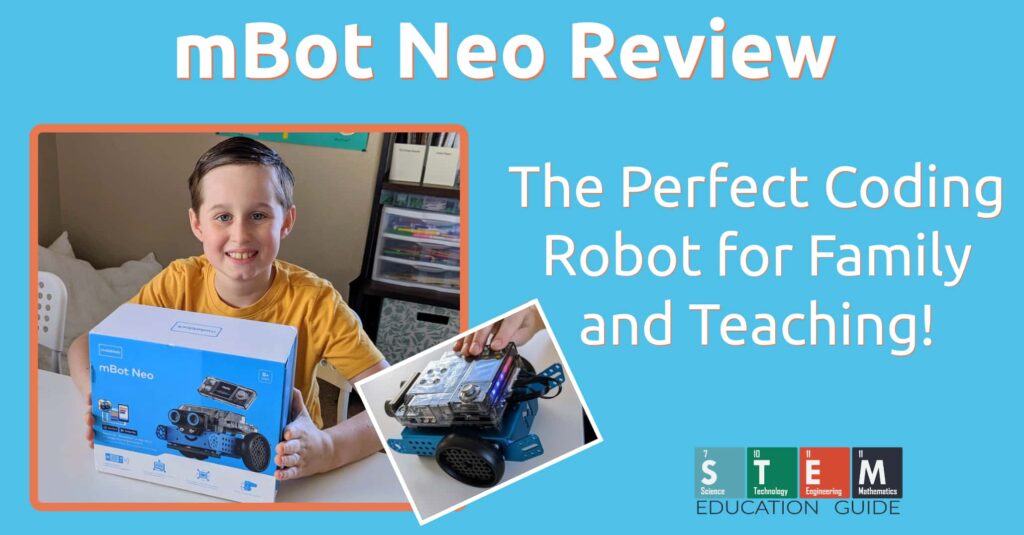
1. mBot Neo
- Category: DIY Coding & Robotics
- Overview: The mBot Neo is a premier DIY coding robot designed to introduce children to the fundamentals of robotics and programming. Constructed from robust aluminum and thick, durable plastics, the kit requires young learners to assemble the physical hardware themselves. Once built, users interface via a companion app to program movements, dance routines, light displays, and vocal responses.
- Key Features: Beyond app-based coding, the mBot Neo includes a robust suite of preprogrammed activities accessible via a dedicated physical controller, making it accessible even for children new to programming. It stands out as an exceptionally durable, multi-faceted introduction to mechanical assembly and software logic.
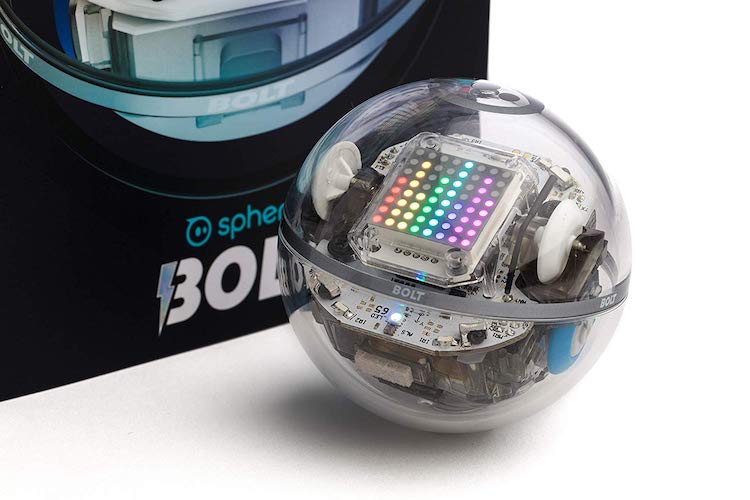
2. Sphero BOLT
- Category: Programmable App-Enabled Robotics
- Overview: The Sphero Bolt is a durable, spherical robotic toy built to withstand rigorous use. It is shock-proof, waterproof, and fully programmable. Children write custom code on compatible devices, and the robotic ball executes complex navigational paths, displays animations via its built-in LED matrix, and responds to environmental variables.
- Key Features: Sphero provides an extensive ecosystem of educational content, ranging from beginner-friendly drawing commands to advanced JavaScript-based programming for older children. Its robust physical design ensures long-term durability across indoor and outdoor environments.
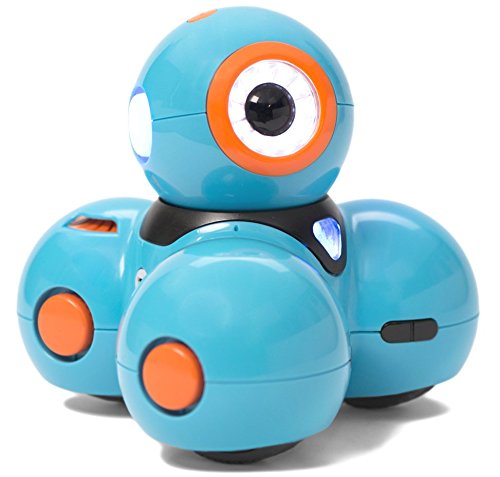
3. Wonder Workshop Dash
- Category: Interactive Robotics for Early Learners
- Overview: Targeted at children ages 6 and up, Wonder Workshop Dash is an agile, highly expressive robot that combines engaging physical design with intuitive software integration.
- Key Features: Dash features built-in microphones for audio playback and voice interaction, allowing the robot to "talk" back to the user. In-app challenges guide children sequentially through coding concepts without requiring prior programming experience on the part of the parent. Furthermore, multiple Dash units can interact with one another, fostering collaborative, multi-user play environments.
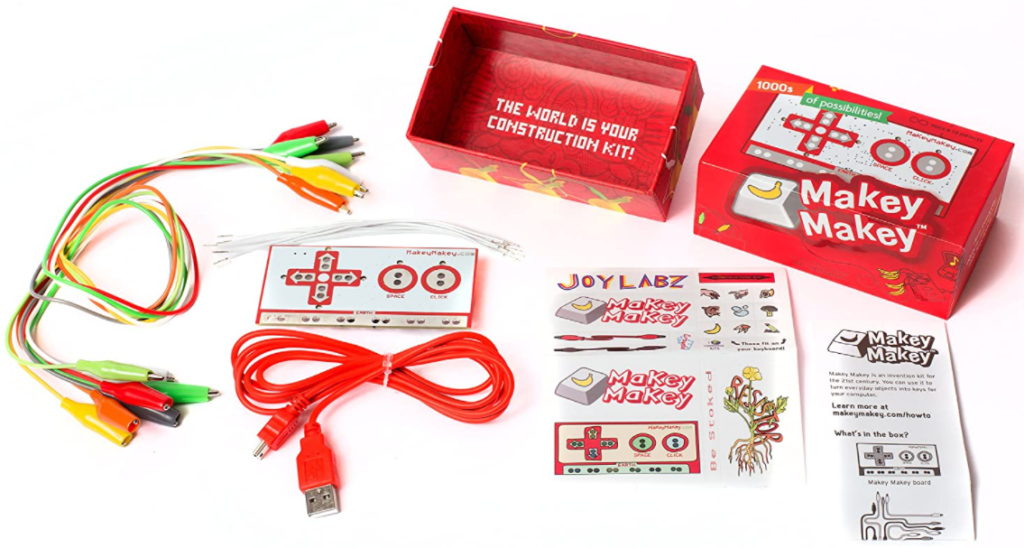
4. Makey Makey
- Category: Invention Kits & Circuitry
- Overview: Makey Makey transforms everyday conductive objects—ranging from bananas and bowls of water to graphite drawings—into touchpads for a computer.
- Key Features: Utilizing a specialized circuit board, alligator clips, and a USB cable, children learn foundational electronics and computer interfacing through pure imagination. Its simplicity and creative open-endedness have made it a staple in modern classrooms and homes.
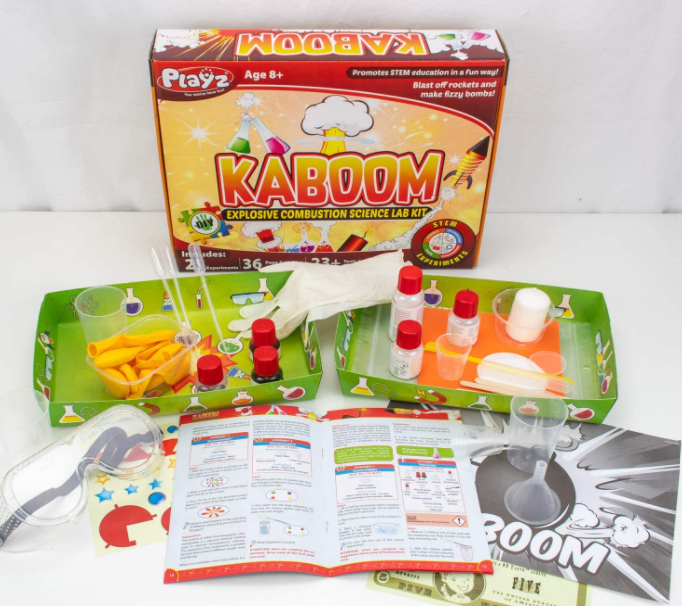
5. Kaboom Explosive Science Lab Kit
- Category: Chemistry & Combustion Science
- Overview: Designed to channel high-energy play into structured scientific inquiry, this kit features over 25 distinct experiments focused on chemical reactions and transformations.
- Key Features: Children can safely build erupting volcanoes, launch miniature outdoor rockets, or construct fireproof balloons. Crucially, the kit emphasizes scientific literacy by clearly explaining the underlying chemical principles ("the why") behind each explosive reaction.
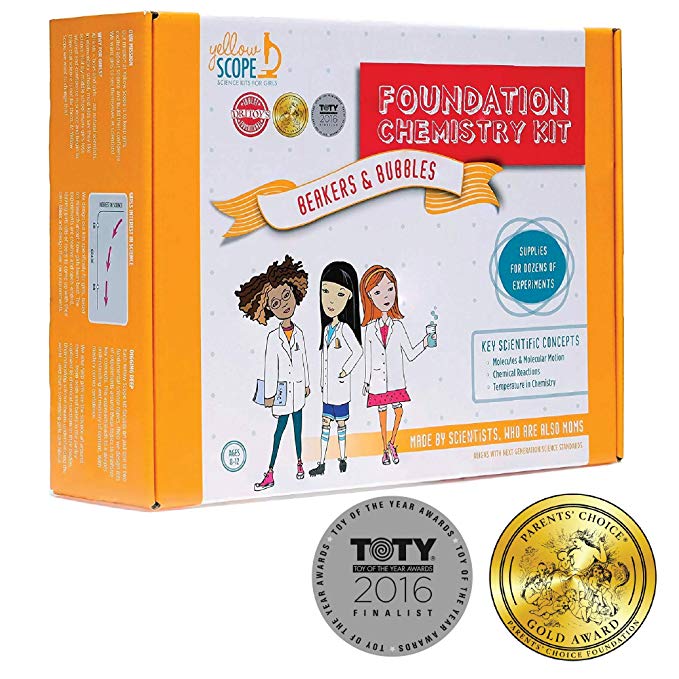
6. YELLOW SCOPE Foundation Chemistry Kit (Beakers & Bubbles)
- Category: Chemistry & Applied Sciences
- Overview: Yellow Scope specializes in rigorous, high-quality science kits designed with inclusivity in mind, making them exceptionally popular among young female scientists.
- Key Features: The Beakers & Bubbles kit explores the fascinating chemistry behind everyday products, introducing children to unconventional STEM career paths such as cosmetic science, formulation chemistry, and product development.
7. ThinkFun Gravity Maze Marble Run
- Category: Logic Games & Spatial Reasoning
- Overview: Blending the classic appeal of a marble run with rigorous challenge-card logic puzzles, ThinkFun Gravity Maze is an exceptional spatial reasoning game.
- Key Features: Players are given specific challenge cards that require them to arrange translucent towers to guide a marble successfully from a starting point to a target. With numerous setup configurations, it offers infinite replay value for children ages 8 and up.
8. LEGO Chain Reactions
- Category: Physics & Mechanical Engineering
- Overview: This Klutz-partnered building set encourages children to design and construct moving contraptions using classic LEGO elements.
- Key Features: By building working physical mechanisms that trigger subsequent actions (Rube Goldberg-style machines), children gain deep confidence in their ability to design physical structures that harness momentum, gravity, and kinetic energy.
9. Snap Circuits 3D Illumination Electronics Exploration Kit
- Category: Electrical Engineering & Circuitry
- Overview: Snap Circuits provides an accessible, solder-free introduction to electronic circuits through color-coded, snap-together plastic modules.
- Key Features: The 3D Illumination edition introduces vertical building structures and dynamic lighting effects, allowing children to visualize electrical currents in three dimensions while exploring fundamental electrical engineering concepts.
10. Elenco Teach Tech Hydraulic Kit (HydroBot Arm)
- Category: Mechanical & Renewable Engineering
- Overview: The HydroBot Arm utilizes hydraulic plungers and water pressure to actuate mechanical movement, offering a direct, hands-on lesson in fluid power.
- Key Features: Featuring a 270-degree arm rotation and gripping capabilities, this kit teaches structural integrity, mechanical advantage, and the physics of hydraulics without requiring batteries or electronic components.
11. Botley The Coding Robot Activity Set
- Category: Screen-Free Early Coding
- Overview: Designed specifically for younger learners, Botley offers a fully screen-free coding experience.
- Key Features: Children program Botley’s movements using a dedicated remote programmer device. Botley can execute complex routines, navigate obstacle courses, and detect objects, teaching algorithmic thinking without relying on tablets or computers.
12. Elenco TEACH TECH Mech-5 Robot Kit
- Category: Advanced Mechanical Coding
- Overview: The Mech-5 is a programmable mechanical robot that introduces older children to advanced coding logic through physical coding wheels rather than software.
- Key Features: By snapping coding cams onto the robot’s mechanical wheel, users can program the machine to kick, throw, draw, lift, and spin, fostering sophisticated problem-solving and mechanical troubleshooting skills.
13. littleBits Electronic Music Inventor Kit
- Category: Creative Technology & Audio Engineering
- Overview: Combining modular electronics with musical creativity, this kit allows children to build their own functioning electronic guitar and program its sound profiles via a companion app.
- Key Features: The modular components encourage collaborative, small-group tinkering, demonstrating how electrical signals translate into acoustic output.
14. Kid K’NEX Build-A-Bunch Set
- Category: Toddler Construction & Spatial Skills
- Overview: Tailored for younger children, Kid K’NEX utilizes large, soft, colorful plastic pieces that eliminate the safety hazards associated with traditional small-scale construction toys.
- Key Features: Children can construct animals, vehicles, and abstract structures, developing early fine motor skills, hand-eye coordination, and a foundational engineering mindset.
15. Ravensburger GraviTrax XXL Marble Run
- Category: Modular Physics & Architectural Design
- Overview: A completely screen-free, modular marble run system built on a unique hexagonal grid foundation.
- Key Features: GraviTrax challenges users to carefully calculate elevation, magnetism, kinetic energy, and momentum to design intricate racing tracks for their marbles, encouraging hours of iterative trial-and-error design.
Future Outlook: The Evolution of Educational Retail
As the digital marketplace matures, the convergence of e-commerce convenience and educational innovation will continue to redefine holiday shopping. Retailers are expected to lean further into predictive analytics, offering personalized STEM toy recommendations tailored to a child’s specific age, developmental milestones, and academic interests. Furthermore, the integration of augmented reality (AR) within physical packaging and companion applications will likely blur the lines between digital and physical play even further.
For consumers, the strategic takeaway is clear: the traditional reliance on post-Thanksgiving shopping excursions has been superseded by an early, digital-first marketplace. By leveraging mid-November online promotions, holiday shoppers can secure high-quality, developmental STEM toys at optimal discounts, ensuring both financial savings and meaningful educational enrichment for the next generation of innovators.

