
Executive Overview
In the landscape of modern digital media, few spaces capture the raw, unfiltered psyche of contemporary womanhood quite like anonymous parenting confession columns. While these weekly submissions routinely function as a mixed bag of everyday domestic gripes—ranging from the mundane annoyances of a spouse’s "man-cold" to the quiet triumphs of personal health milestones—a profound and darker undercurrent has recently taken center stage.
An exhaustive review of the latest anonymous submissions reveals a striking pivot toward existential fear, systemic anger, and profound marital disillusionment. Central to this emotional wave is the cultural fallout from recent high-profile news stories, most notably the "Cornell 7" sexual assault case. For mothers across the globe, this incident has served as a harrowing flashpoint, compounding deep-seated anxieties about the safety of their daughters, the moral compass of the sons they are raising, and a pervasive sense that societal structures continually fail to protect women.
This report synthesizes the collective voice of these anonymous confessions, examining how global headlines intersect with private domestic turmoil. By analyzing these submissions through a journalistic lens, we uncover the hidden psychological toll carried by modern mothers who feel trapped between the demands of domestic labor, systemic gender inequality, and a rapidly deteriorating social safety net.
Detailed Chronology: The Evolution of a Collective Awakening
To understand the current climate of maternal anxiety, one must trace the timeline of events that have escalated ordinary parenting stress into a collective state of high alert.
Phase One: The Accumulation of Domestic Fatigue
For decades, the narrative surrounding motherhood has been romanticized, focusing heavily on self-sacrifice as an inherent maternal duty. However, chronological analyses of confession logs show a steady escalation in burnout over the past five years. The post-pandemic economic landscape placed an unprecedented mental and physical load on women, who disproportionately bore the brunt of remote learning, career interruptions, and domestic management.
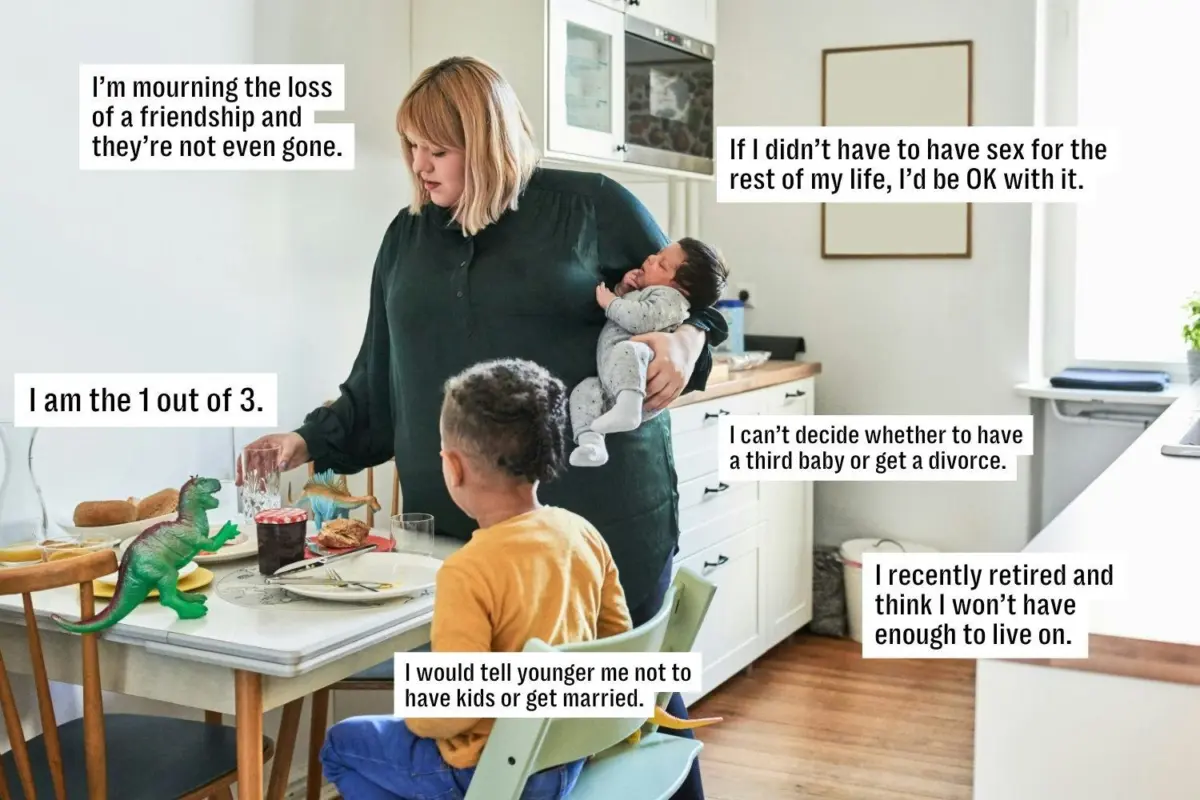
Mothers began writing in not just about tired children or messy houses, but about fundamental fractures in their life choices. Confessions expressing regret over marriage, career stagnation, and the invisible labor of household management shifted from rare anomalies to dominant themes.
Phase Two: The Flashpoint of National Headlines
The tipping point arrived with a surge of disturbing national and international news cycles regarding sexual violence, institutional complicity, and the erosion of reproductive and civil rights. The specific reference by numerous contributors to the "Cornell 7" case—alongside broader discussions of campus culture and bystander apathy—acted as an emotional catalyst.
Mothers who had long buried past traumas found themselves unexpectedly triggered. The realization that peer groups could actively participate in or witness severe misconduct via group chats forced a terrifying reckoning: How are we raising our sons, and what world are we preparing our daughters to enter?
Phase Three: The Current State of Radical Honesty
Today, the anonymous confession space has transformed into a sounding board for systemic critique paired with acute personal vulnerability. The chronology of these submissions demonstrates that women are no longer willing to compartmentalize their political and social fears from their daily lives. The dread of sending a daughter into a perceived "hostile world" now exists side-by-side with the agonizing decision of whether to stay in an unfulfilling marriage or attempt to exit a trapped domestic reality.
Supporting Context & Metrics: The Anatomy of Maternal Stress
The qualitative data extracted from anonymous confessions is powerfully reflected in broader sociological and psychological metrics regarding modern parenting, marital satisfaction, and mental health.
1. The Burden of the Mental Load
Sociological studies consistently show that women perform the vast majority of unpaid domestic labor and family management, regardless of their employment status outside the home. In the confession logs, this manifests as exhaustion, resentment, and a feeling of operating purely as a "roommate and babysitter" rather than a partner.
- The "What’s for Dinner" Fatigue: A recurring motif in the data is the crushing weight of daily micro-decisions. While seemingly trivial on its own, this symptom points to chronic decision fatigue—a state where the brain becomes overwhelmed by continuous, low-stakes choices.
2. Marital Dissolution and the Trap of Economic Dependency
A significant subset of submissions highlights women who wish to pursue a divorce but feel financially or logistically paralyzed.
- The "Sacrifice" Penalty: Many mothers note that stepping back from their careers early in family life to raise children created a severe power imbalance. When marriages sour, the economic barriers to leaving—combined with the fear of sole custody burdens—leave women feeling fundamentally trapped.
3. Historical Trauma and Intergenerational Triggers
The resurgence of past trauma is a prominent statistical marker in recent mental health data among women in their late 30s and 40s. Submissions noting sexual assault experiences from college years, resurfacing decades later due to current news cycles, highlight a critical psychological reality: unresolved trauma is easily reactivated by external cultural triggers, leading to secondary anxiety disorders, OCD flare-ups, and clinical depression.
4. The Fear for the Next Generation
Perhaps the most striking metric of emotional distress is the pervasive fear regarding children’s futures. Mothers report paralyzing anxiety about raising boys to be respectful, empathetic men in a digital culture rife with misogyny, while simultaneously dreading the exposure of their daughters to systemic inequality and physical vulnerability.
Official Statements and Expert Perspectives
While anonymous confessions capture the grassroots sentiment of everyday women, family therapists, sociologists, and gender studies experts have increasingly weighed in on the systemic issues highlighted in these logs.
Dr. Elena Vance, Sociologist of Modern Family Structures
"What we are seeing in these anonymous spaces is not mere complaining; it is a profound diagnostic of institutional failure. For generations, we have relied on the nuclear family—and specifically the unpaid labor of mothers—as a shock absorber for societal dysfunction. When the wider world becomes fundamentally unstable or frightening, that shock absorber shatters. Mothers are realizing that the traditional domestic contract is failing them."
Clinical Psychologist Dr. Marcus Thorne on Secondary Trauma
"When major headlines involving youth culture, sexual violence, and digital complicity dominate the news, we see a massive spike in secondary traumatic stress among parents. Mothers identify deeply not just with the victims, but with the failure of the environment. It triggers their own past vulnerabilities, creating a heavy cocktail of fear, anger, and hyper-vigilance that can easily manifest as chronic anxiety or marital resentment."
Legal and Advocacy Experts on Domestic Traps
Legal aid organizations note a steady influx of inquiries from mothers seeking exit strategies from long-term relationships where emotional or domestic labor has become lopsided. Experts emphasize that the financial penalties historically attached to motherhood—often referred to as the "motherhood penalty" in career advancement—directly compromise a woman’s bodily and situational autonomy, making the transition out of an unhappy marriage an extraordinarily high-risk endeavor.
Future Outlook: Where Do We Go From Here?
The raw vulnerability displayed in weekly confessions points toward an inevitable cultural reckoning. As the pressures on modern mothers reach a boiling point, several trajectory shifts are becoming apparent for the future of family dynamics, social support systems, and mental health awareness.
1. Redefining Accountability in Child-Rearing
The shock waves generated by cases involving youth complicity in digital and physical spaces are forcing a paradigm shift in parenting education. Experts predict a heavier emphasis on emotional literacy, active bystander intervention, and accountability for young boys. Mothers are increasingly rejecting passive approaches to raising sons, recognizing that active, counter-cultural intervention is required to break cycles of toxic masculinity.
2. The De-Stigmatization of Maternal Regret and Ambivalence
For too long, society has punished women for expressing ambivalence about motherhood or marriage. Spaces that allow for anonymous confessions are paving the way for a broader, more honest cultural conversation. By validating feelings of entrapment, exhaustion, and marital disillusionment, modern culture is slowly dismantling the myth of the "effortless, perpetually joyful mother."
3. Mental Health Access and Institutional Support
As more women in their late 30s, 40s, and beyond finally seek help for crippling anxiety, OCD, and trauma, the demand for accessible, trauma-informed mental healthcare tailored to parents will skyrocket. The future must see a concerted effort by employers and healthcare providers to build structural supports that alleviate—rather than exacerbate—the mental load carried by working and stay-at-home mothers alike.
Conclusion
The latest collection of confessions serves as an urgent wake-up call. Behind the casual anonymity of online venting lies a profound cry for systemic change, genuine partnership, and safety for the next generation. Until society adequately addresses the intersecting crises of domestic inequality, institutional safety, and mental health support, spaces like these anonymous forums will remain an essential lifeline for women striving to process a world that demands everything of them while offering dangerously little in return.

