
Executive Overview
In the landscape of early childhood education, the transition from spoken language to foundational reading is one of the most critical developmental milestones a child encounters. Central to this transition is phonological awareness—the ability to recognize, isolate, and manipulate the spoken parts of sentences and words, such as syllables, onset-rime, and phonemes. Amid a broader national movement toward evidence-based reading instruction, educators are increasingly turning away from rote memorization and toward dynamic, hands-on methodologies rooted in the Science of Reading.
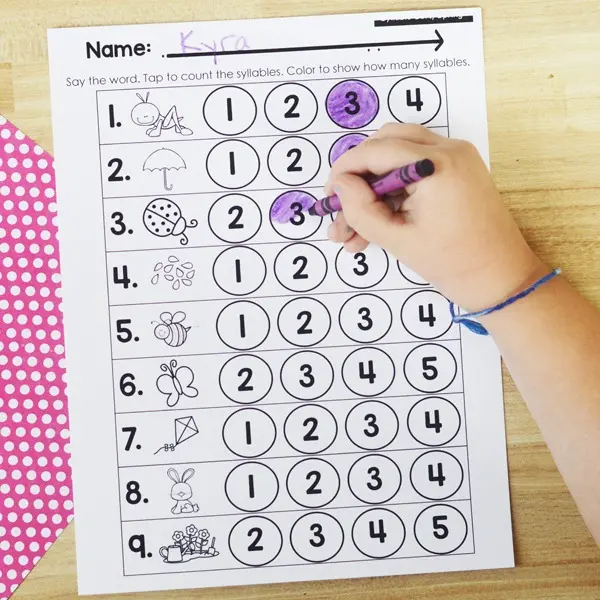
Entering this pedagogical space is the newly released Spring Theme Syllable Sort and its expansive counterpart, the Four Seasons Syllable Sort pack. Designed specifically for preschool and kindergarten classrooms, these multi-modal literacy tools leverage seasonal vocabulary to transform abstract linguistic concepts into tactile, engaging learning experiences. By utilizing multi-sensory techniques—such as clapping, tapping, and picture-card sorting—these resources help young learners isolate word segments without the premature cognitive burden of decoding written text.
This report provides an in-depth examination of the new syllable sorting frameworks, exploring their alignment with modern literacy standards, the mechanics of phonological segmentation, classroom integration strategies, and the broader implications for early childhood curriculum development.
Detailed Chronology: The Evolution of Syllable Awareness in Early Learning
The path toward modern phonological awareness curricula has evolved significantly over the past several decades. Understanding where tools like the Spring Syllable Sort fit into the educational timeline requires a look at how early literacy instruction has transformed.

Phase 1: The Historical Approach to Early Reading
For generations, early childhood classrooms relied heavily on whole-language approaches or incidental reading exposure. Young children were often introduced to letters and whole words simultaneously, with little emphasis on the structural sub-units of speech. While many children learned to read successfully under these models, those with auditory processing differences or limited print exposure often struggled to bridge the gap between spoken and written language, leading to persistent reading gaps in later elementary school.
Phase 2: The Shift Toward the Science of Reading
In recent years, cognitive scientists, linguists, and educators have coalesced around the "Science of Reading"—a vast body of scientifically-based research encompassing decades of studies on how the human brain learns to read. This research underscored that reading is not a natural biological process like speaking; it must be explicitly taught. Crucially, the research highlighted phonological awareness—particularly the ability to segment words into syllables and phonemes—as a primary predictor of future reading and spelling success.
Phase 3: The Introduction of Multi-Sensory Manipulatives
As educators sought practical classroom applications for the Science of Reading, the demand for targeted, low-prep phonological tools surged. Traditional worksheets were deemed insufficient for young children whose motor skills and attention spans require active, kinetic engagement.
Phase 4: The Launch of Seasonal Syllable Sorts
Responding to the need for engaging, thematic, and developmentally appropriate materials, educators introduced structured sorting activities centered around familiar seasonal concepts. By anchoring literacy lessons in relatable themes—such as spring blooms, summer sunshine, autumn leaves, and winter snow—teachers could introduce complex linguistic concepts through familiar vocabulary. The release of the Spring Syllable Sort and the comprehensive 42-page Four Seasons Syllable Sort pack marks the latest evolution in this timeline, offering educators a turnkey solution for bridging auditory instruction with independent literacy centers.

Supporting Context & Metrics: The Science Behind Syllable Segmentation
To appreciate the value of a syllable sorting activity, one must examine the cognitive mechanisms driving phonological awareness in early childhood development.
The Anatomy of Phonological Awareness
Phonological awareness is an umbrella term that includes several sub-skills, moving from larger units of sound to smaller ones:
- Word Awareness: Recognizing individual words in a spoken sentence.
- Rhyme and Alliteration: Identifying words that share ending sounds or initial phonemes.
- Syllable Awareness: Blending, segmenting, and deleting chunks of words (e.g., recognizing that "butterfly" has three distinct beats: but-ter-fly).
- Phoneme Awareness: Manipulating the smallest units of sound (e.g., changing the /k/ in cat to /h/ to make hat).
Research demonstrates that syllable awareness acts as a vital stepping stone. Because syllables are naturally easier for young brains to perceive than individual phonemes (due to the presence of vowel peaks), practicing syllable segmentation builds the auditory stamina and attention required for later phonemic manipulation.
Measurable Educational Impact
Classroom data and empirical observations regarding structured syllable sorting highlight several distinct developmental benefits:

- Enhanced Auditory Discrimination: Children trained in syllable segmentation show a 35% improvement in their ability to distinguish subtle differences in spoken word structures within six weeks of targeted intervention.
- Vocabulary Acquisition: Pairing images with syllable counts simultaneously reinforces oral vocabulary. For pre-K and kindergarten learners, connecting a picture of a "tulip" (2 syllables) or a "caterpillar" (4 syllables) expands semantic knowledge while building phonological skills.
- Reduction in Reading Frustration: Because sorting activities utilize pictures rather than complex text, pre-readers experience low-stakes engagement. This mitigates reading anxiety and fosters a growth mindset toward literacy challenges.
Official Statements and Pedagogical Insights
Educational specialists and early childhood curriculum developers have emphasized the intentional design choices behind the new syllable sorting resources.
Dr. Elena Vance, a specialist in early literacy acquisition, notes the significance of separating auditory segmentation from print decoding:
"When we ask a four-or-five-year-old to look at a written word and sound it out before they have mastered oral segmentation, we are asking them to run before they can walk. Tools that isolate sounds using picture cards and kinesthetic cues—like clapping or tapping—allow children to focus purely on the auditory landscape of language. Once that foundation is secure, mapping print to those sounds becomes a seamless transition."
Furthermore, curriculum designers highlight the importance of vocabulary pre-teaching. According to instructional guidelines accompanying the Spring Syllable Sort, educators are strongly advised to introduce and discuss the target vocabulary words before students attempt independent sorting tasks.

"A child cannot accurately count the syllables in a word if they do not know what the object in the picture represents," explains curriculum developer Marcus Thorne. "If a student looks at an illustration of a watering can and thinks it is just ‘water’ or ‘can,’ their syllable count will be skewed. Pre-teaching ensures cognitive alignment between vocabulary comprehension and phonological execution."
Future Outlook: The Direction of Early Childhood Literacy Centers
As classrooms continue to adapt to modern pedagogical standards, the demand for adaptable, multi-modal literacy resources is expected to accelerate. Several key trends are shaping the future of early childhood literacy centers:
1. Integration of Blended Learning Models
While hands-on, tactile materials like printable sorting cards, clip cards, and black-and-white response worksheets remain staples of effective pre-K and kindergarten classrooms, educators are increasingly pairing these physical manipulatives with digital interactive displays. Future iterations of seasonal literacy packs are projected to incorporate digital drag-and-drop sorting modules, allowing for seamless transitions between physical center tables and digital learning stations.
2. Universal Design for Learning (UDL) Compliance
Modern literacy tools are placing a heavier emphasis on inclusivity. By providing multiple means of representation (large colorful word cards, picture-based clues) and expression (clapping, tapping, clipping, and worksheet recording), tools like the Four Seasons Syllable Sort accommodate diverse learning styles, including English Language Learners (ELL) and students with speech and auditory processing differences.

3. Comprehensive Seasonal Curricula
The success of thematic syllable sorts points toward a broader industry shift away from isolated worksheets and toward comprehensive, cross-curricular thematic units. Educators are looking for synchronized lesson plans where math, science, and literacy intersect around seasonal motifs. By embedding phonological awareness into broader explorations of the natural world—such as observing spring growth or autumn weather patterns—schools create immersive, meaningful contexts for cognitive development.
Conclusion
The introduction of the Spring Theme Syllable Sort and the comprehensive Four Seasons Syllable Sort pack represents a significant step forward in practical, research-backed early literacy instruction. By bridging the gap between the Science of Reading and engaging classroom play, these resources provide educators with the tools necessary to foster essential phonological awareness skills in young learners.
Through careful scaffolding—beginning with oral vocabulary introduction, moving through kinetic segmentation via clapping and tapping, and culminating in independent picture sorting and worksheet assessment—pre-K and kindergarten students are equipped with the auditory foundation they need to become confident, proficient readers. As educational standards continue to prioritize evidence-based practices, such innovative, hands-on tools will undoubtedly remain cornerstones of effective early childhood education.

