
Executive Overview
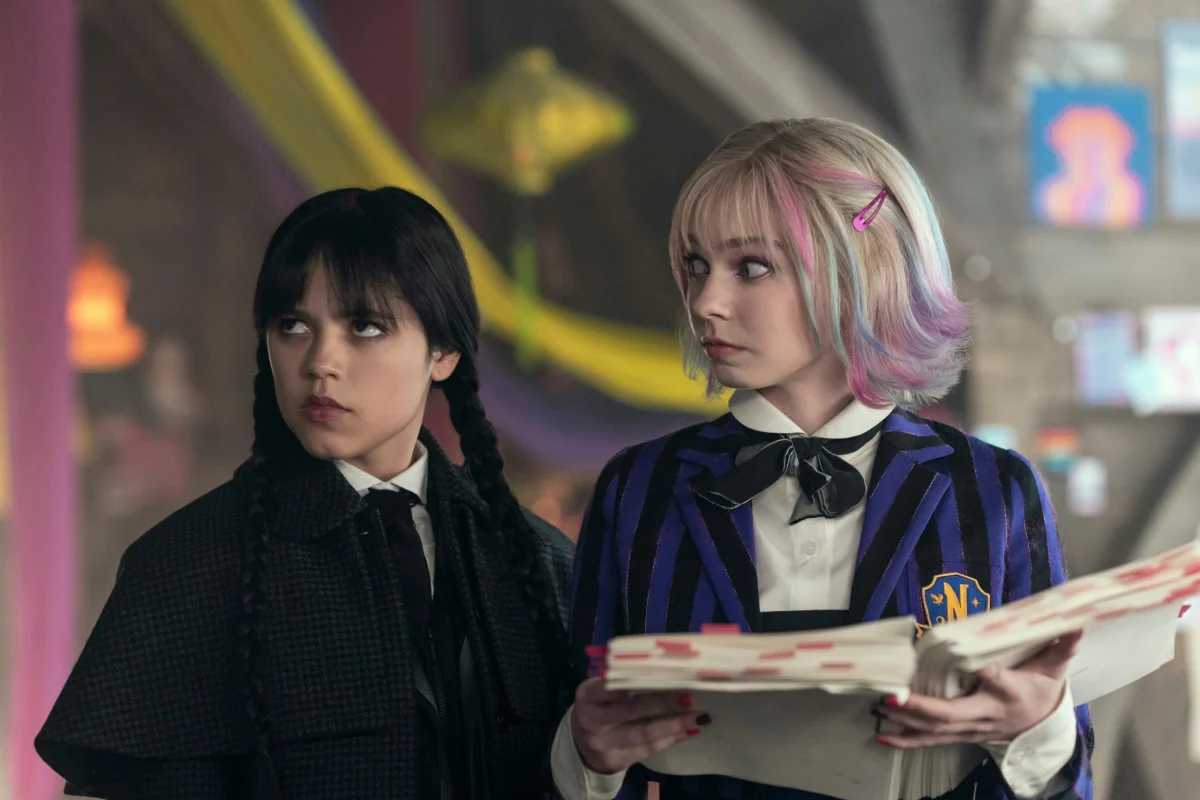
In the modern household, the juxtaposition of childhood is often stark. One moment, a child is immersed in the neon-hued, hyper-extroverted cheerfulness of mainstream children’s media; the next, they are casually discussing the decomposition of dinosaur bones or crafting intricate miniature coffins for their stuffed animals. For fans of Netflix’s hit revival Wednesday—a series defined by the dynamic between the brooding, monochrome-clad Wednesday Addams and her vibrantly colorful roommate, Enid—this duality feels culturally resonant. Millions of parents recognize this hybrid personality in their own offspring.
However, when a child’s interests pivot sharply away from conventional play and toward the macabre—encompassing horror movies, true crime, talk of dismemberment, or an obsession with the afterlife—a wave of parental anxiety invariably follows. Is a child who leans more "Wednesday" than "Enid" displaying early warning signs of behavioral disturbance, or are they simply navigating a normal stage of cognitive and emotional development?
According to leading child psychiatrists, pediatric mental health experts, and licensed clinical social workers, an early fascination with death, darkness, and spooky imagery is, in the vast majority of cases, entirely developmentally appropriate. Far from signaling an intent to cause harm, these interests serve as safe psychological testing grounds. Through imagination, dramatic play, and abstract reasoning, children and adolescents use dark themes to process complex, overwhelming human emotions.
This in-depth investigative report explores the psychological mechanics behind a child’s attraction to the morbid. By consulting top clinical minds, examining the shifts in abstract thinking during adolescence, and establishing clear metrics to differentiate between harmless fantasy and clinical red flags, this article equips parents with the tools to navigate these unnerving conversations with confidence, curiosity, and calm.
Detailed Chronology: The Evolution of Childhood Curiosity Into the Macabre
To understand why a child might pivot from building Lego sets to discussing embalming fluids, it is vital to examine how human curiosity evolves chronologically from early childhood through adolescence.
Early Childhood: Literal Encounters With the Finality of Life
In early childhood—typically spanning ages three to seven—children begin to notice the world around them with stark, literal observations. During museum trips, nature walks, or even encounters with deceased pets and wildlife, children encounter the fundamental realities of biology and mortality.
However, their cognitive frameworks lack the nuance required to fully grasp the permanence or emotional weight of death. When a child asks, “How did the dinosaurs’ bones get out of their bodies?” they are not operating from a place of existential dread. They are executing pure, unvarnished scientific inquiry.
Because young children process the world through play and narrative, they may casually mix these concepts into everyday scenarios. A child might munch on a snack while asking about caskets because, to their developing brain, death is simply another category of factual information waiting to be cataloged.
Middle Childhood and Pre-Adolescence: Testing Boundaries and Identity
As children transition into middle childhood (roughly ages eight to twelve), their imaginative play becomes more sophisticated. This is the prime demographic for gothic characters, spooky folklore, and Halloween-themed aesthetics year-round.
At this stage, children are actively exploring identity. They realize they are separate individuals from their parents, and adopting a "spooky" persona—whether through clothes, music, or stories—is a low-stakes way to test boundaries. It allows them to experiment with being perceived as mysterious, independent, or edgy without stepping outside the bounds of safe, familial supervision.
Adolescence: The Rise of Abstract Thinking and True Crime
The adolescent brain undergoes massive structural and functional rewiring. Teenagers develop the capacity for abstract thought, moving past concrete realities to ponder philosophical questions, existential dread, and the complexities of human morality.
Why are teenagers notoriously drawn to true crime podcasts, horror cinema, and stories involving danger and suspense? Experts note that this attraction is an evolutionary and psychological mechanism. Adolescence is a time of immense internal turbulence; teenagers experience high-stakes emotions regarding identity, social status, and their place in a dangerous world. Engaging with true crime or horror allows them to safely process these overwhelming themes from a distance. It is a controlled environment where they can examine the darkest facets of human nature without facing real-world peril.
Supporting Context & Metrics: What the Research and Clinical Experts Say
Parental anxiety around dark topics is largely driven by a lack of societal dialogue, yet clinical data shows that fascination with the macabre is a universal human developmental milestone.
The Psychology of Safe Proximity to Fear
Psychologists often point to the concept of "safe fear"—the psychological thrill experienced when encountering frightening or morbid stimuli within a secure, controlled context. Whether it is riding a roller coaster or watching a slasher film, the human brain releases adrenaline and dopamine. For children and teens, engaging with the macabre provides a similar neurological rush. It teaches the nervous system how to encounter distress, process it, and return to a state of calm.
The Danger of Silence and Stigmatization
When parents react to dark play or morbid questions with panic, disgust, or harsh reprimands, they inadvertently attach heavy, unnecessary shame to natural human curiosities.
Clinical insights reveal that children who feel judged or silenced by their caregivers do not simply stop wondering about death or violence; they simply stop talking to their parents about it. Instead, they seek out information from peers, social media algorithms, or unfiltered internet searches. This migration away from parental guidance significantly increases the likelihood that children will encounter inaccurate, highly distressing, or age-inappropriate material that they are ill-equipped to process alone.
Official Statements & Expert Perspectives
To provide authoritative guidance, we turn to leading voices in pediatric psychiatry and adolescent mental health who unpack the nuances of these behaviors daily in clinical settings.
Dr. Monika Roots: Demystifying "Big" Ideas
Dr. Monika Roots, a child and adolescent psychiatrist and co-founder of Bend Health, emphasizes that children routinely use dramatic stories and dark humor to wrestle with concepts that feel too large for everyday conversation.
"Kids use imagination and play to explore ideas that feel big, confusing, or emotionally charged," explains Dr. Roots. "That can show up as dramatic stories, dark humor, or pretend scenarios that sound alarming to adults. This can also include interest in gothic characters, spooky imagery, or dark humor as part of identity exploration, especially in later childhood and adolescence."
Dr. Roots stresses that parental alarm is frequently misplaced because adults conflate exploration with intent.
"A child talking about death or dark ideas is often trying to understand concepts they’ve encountered in stories, media, or conversations, not expressing a desire to cause harm," she notes.
When addressing provocative language or dark slogans, Dr. Roots advises patience over panic:
"If a child references something provocative they’ve seen… like a dark slogan or violent-sounding phrase, it’s often more helpful to ask what it means to them before assuming it reflects how they feel. This keeps communication open and reinforces that difficult or uncomfortable topics are safe to talk about at home."
Jillian Amodio: Processing the Complexities of Human Existence
Jillian Amodio, a licensed social worker specializing in adolescent care, points out that curiosity about the dark side of life is a fundamental component of maturing emotional intelligence.
"For teens especially, this is a time of life where they are developing the ability for more abstract thinking," says Amodio. "A focus on or interest in things like true crime, death, and danger or suspense is an excellent and enticing way to explore emotions and process the complexities of human existence. It is a way to safely test boundaries or explore themes that would not be safe or socially acceptable to put into practice."
Amodio shares a telling anecdote from her clinical practice that underscores how easily adult misunderstandings can magnify minor childhood curiosities:
"A client’s parents expressed concern because their child was carrying around a doll and saying it was dead. Turns out the child was watching a lot of cartoons featuring vampires, he knew that vampires were ‘dead,’ and he had decided that his doll was also a vampire. He had no preoccupation with death or dying; he simply was connecting his toy to a cartoon."
Recognizing the Red Flags: When Is It More Than Just a Phase?
While the vast majority of morbid fascinations are harmless outlets for creativity and developmental growth, parents must remain vigilant. Mental health professionals emphasize that context, tone, and behavioral rigidity are the primary indicators separating healthy fantasy from clinical concern.
1. Tone and Flexibility in Play
- Healthy Play: Characterized by fluidity, laughter, smiling, and rapid shifts in narrative themes. A child telling a spooky story while giggling is engaging in fantasy as a form of play and humor.
- Concerning Play: Characterized by rigidity, distress, and an inability to break character or shift focus. If a child appears tense, genuinely fearful, or emotionally "stuck" on a dark theme, it may indicate underlying anxiety or trauma.
2. Curiosity vs. Obsession
- Healthy Interest: Engaging with true crime, gothic aesthetics, or horror as a hobby, conversation topic, or casual media preference.
- Concerning Fixation: When an interest becomes an all-consuming obsession that crowds out other developmental necessities, such as schoolwork, social interactions, self-care, and sleep.
3. Additional Clinical Warning Signs
Parents should consider seeking a professional consultation with a licensed therapist, counselor, or child psychiatrist if they observe any of the following indicators alongside dark or morbid interests:
- Sudden, drastic behavioral changes (e.g., profound withdrawal from family and friends, radical drops in academic performance).
- Expressions of hopelessness, worthlessness, or direct intent to harm oneself or others.
- Inability to distinguish between fantasy and reality well beyond the developmentally appropriate age.
- Persistent sleep disturbances, severe nightmares, or chronic hyper-vigilance.
As Dr. Roots succinctly summarizes:
"A dark aesthetic, a spooky phase, or provocative language doesn’t automatically signal danger. What matters most is how the child feels and functions underneath it."
Future Outlook: Fostering Open Communication in a Complex World
As media landscapes continue to evolve and content becomes increasingly accessible to younger demographics, the presence of dark themes in childhood is unlikely to diminish. Shows like Wednesday, true-crime docuseries, and gothic aesthetics will remain fixtures of youth culture.
The challenge for modern parents is not shielding children from the concept of darkness—an impossible and counterproductive task—but rather acting as calm, non-judgmental guides through it. By fostering an environment where no topic is too taboo to discuss at the dinner table, parents transform potential sources of fear into powerful opportunities for connection, education, and emotional growth.
When a child asks about the inner workings of mortality or builds a cemetery for their plastic toys, take a deep breath, offer a calm explanation, and remember: underneath the morbid exterior is usually just a curious mind trying to make sense of a vast, fascinating, and wonderfully complex world.

