
Executive Overview
As early childhood educators continually seek engaging, research-backed methodologies to bridge the gap between play and foundational literacy, a quiet revolution is taking place in preschool and kindergarten classrooms. At the forefront of this shift is the integration of phonological awareness into daily visual art and fine motor exercises. Among the most promising developments in this space is the "Spring Color by Syllable" initiative, alongside an expansive year-long curriculum set designed to turn fundamental pre-reading concepts into interactive, stress-free learning experiences.
Phonological awareness—the ability to recognize and manipulate the spoken parts of sentences and words, such as syllables, onsets, and rimes—is widely recognized by literacy experts and the Science of Reading framework as a critical precursor to successful decoding and reading comprehension. However, introducing abstract auditory concepts to young children aged three to six often presents a pedagogical challenge. Traditional drill-and-practice methods risk disengaging young learners.
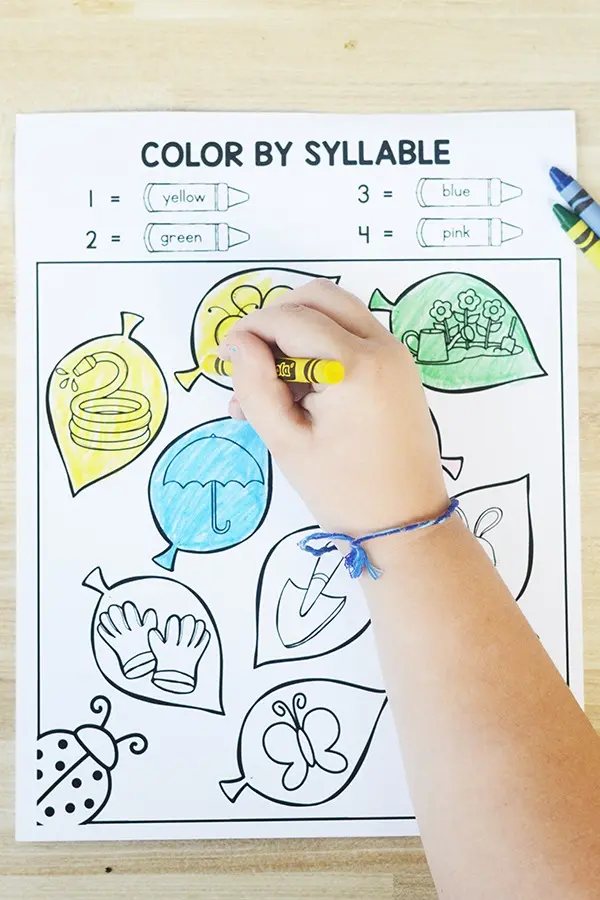
Enter the no-prep "Color by Syllable" methodology. By merging the beloved, tactile mechanics of traditional "color-by-code" worksheets with targeted syllable segmentation exercises (ranging from one to five syllables), educators and parents now have a dynamic tool at their disposal. This comprehensive report examines the pedagogical underpinnings of these activities, explores their implementation in literacy centers and take-home practices, details the expansion of year-long thematic resources, and evaluates the broader future outlook for early childhood reading instruction.
Detailed Chronology of the Literacy Resource Evolution
The journey toward modern, accessible phonological awareness tools has evolved significantly over the past two decades, shifting from rigid, rote memorization drills to flexible, multisensory learning modalities.
Phase 1: The Traditional Approach to Early Phonemic Awareness (Early 2000s)
Historically, phonics and phonological awareness in preschool and kindergarten classrooms relied heavily on verbal clapping games, oral call-and-response exercises, and flashcards. While these methods successfully isolated sounds, they often lacked independent student accountability. Teachers struggled to keep fast finishers engaged while simultaneously providing small-group intervention for students requiring remediation.
Phase 2: The Rise of Visual Differentiation and Color-by-Code (2010–2020)
During the subsequent decade, "color-by-code" activities exploded in popularity across elementary classrooms. Originally utilized primarily for math fluency (identifying numbers, shapes, or basic addition facts) and visual art recognition, educators quickly realized the high-engagement yield of these worksheets. Children naturally gravitated toward the progressive revelation of a hidden picture, transforming what could have been a tedious worksheet into a rewarding puzzle.
Phase 3: Merging Art with the Science of Reading (2020–Present)
As the "Science of Reading" movement gained institutional momentum, early childhood curriculum developers began synthesizing cognitive science with classroom realities. The core realization was clear: young learners process phonological structures more effectively when auditory cues are paired with visual targets and fine motor control.
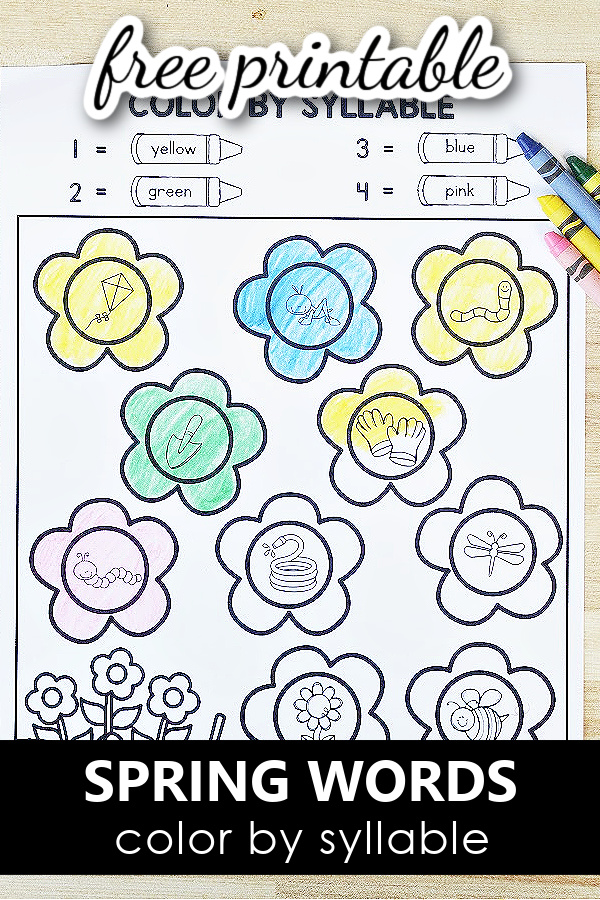
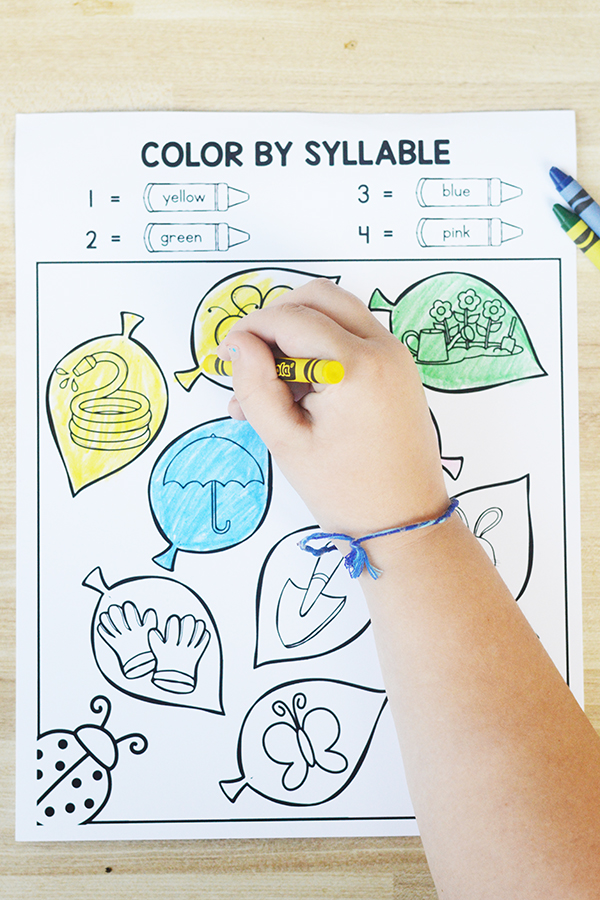
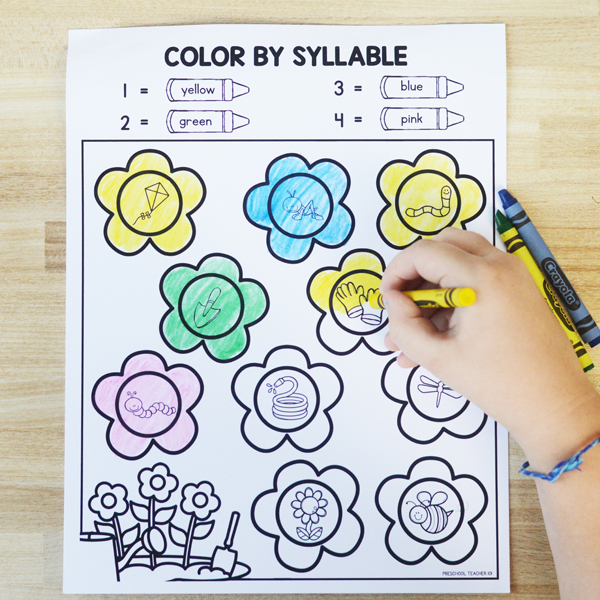
This realization catalyzed the creation of the Color by Syllable series. Beginning with seasonal interventions—such as the Spring-themed literacy modules—developers engineered resources specifically targeted at syllable segmentation. Rather than simply coloring by number, students are required to say a vocabulary word aloud, count or clap its individual syllables, match that count to a specific color key, and meticulously color the corresponding section of a seasonal illustration.
Today, this concept has expanded into comprehensive, year-long 33-page resource packs that cover autumn harvests, winter holidays, spring blossoms, and summer adventures, offering continuous, scaffolded support from preschool through kindergarten.
Supporting Context & Metrics: The Science of Syllable Segmentation
To understand the efficacy of the Color by Syllable framework, one must examine the cognitive milestones associated with early childhood literacy development.
The Hierarchy of Phonological Awareness
Phonological awareness is not a single skill; rather, it exists on a continuum of increasing complexity:
- Listening and Word Awareness: Recognizing individual words in spoken sentences.
- Rhyme and Alliteration: Identifying and producing rhyming words and initial sound matches.
- Syllable Awareness: Blending and segmenting words into word parts or syllables.
- Onset-Rime Manipulation: Splitting single-syllable words into their initial consonant sounds and remaining phonemic chunks.
- Phonemic Awareness: Manipulating individual phonemes (the smallest units of sound).
Syllable segmentation (Phase 3) serves as the crucial stepping stone between broad auditory awareness (rhymes) and intricate phonemic decoding. When children learn to break words like "butter-fly" (three syllables) or "spring" (one syllable) into distinct beats, they develop a mental framework for handling multisyllabic words later in their academic careers.
Classroom Application Metrics and Efficiency
Educators operating in high-density or mixed-ability classrooms face severe time constraints. According to early childhood education surveys, teachers spend an average of 15 to 20 percent of instructional time managing transitions and providing supplementary work for fast finishers.
The integration of no-prep literacy center activities like Color by Syllable yields measurable operational advantages:
- Preparation Time Reduction: Zero-prep printables reduce teacher planning overhead by up to 80 percent compared to hands-on manipulative stations that require extensive sorting and cleanup.
- Engagement Longevity: Observational data from preschool and kindergarten pilots indicate that color-by-code literacy tasks maintain student focus for an average of 12 to 18 minutes—nearly double the duration of traditional worksheet drills.
- Differentiation Flexibility: By offering tiered sheets ranging from simple single-syllable identification to complex five-syllable challenges, classrooms can seamlessly accommodate diverse learning profiles within the same physical workspace.
Official Guidelines and Pedagogical Best Practices
Implementing phonological awareness tools requires deliberate instructional strategy. Early childhood specialists and curriculum architects emphasize that printables should never replace direct instruction, but rather serve as powerful reinforcement mechanisms.
1. Pre-Teaching Vocabulary is Non-Negotiable
A common pitfall in syllable-counting activities is assuming children automatically know the names of the illustrated objects. If a student does not recognize an illustration as a "tulip" or a "caterpillar," they cannot accurately segment its syllables.
"Remember to introduce the vocabulary terms before expecting students to recognize them independently," notes the foundational guidance within the Spring Color by Syllable framework.
Best practices dictate that teachers hold a whole-group picture walk prior to releasing students to independent literacy centers. During this walk, educators name each object, exaggerate its syllable beats using physical claps or drum taps, and have the classroom echo the pronunciation.
2. Multisensory Integration
While worksheets provide visual and fine-motor engagement, teachers are encouraged to anchor these exercises in physical movement. Before picking up a crayon, students should:
- Chin Drops: Place a hand flat beneath their chin. Every time the chin drops to say a vowel sound, it counts as a syllable.
- Clapping Beats: Clap hands rhythmically for each syllable part in unison.
- Stomping Feet: For active learners, stomping out the syllables of seasonal words provides kinesthetic reinforcement.
3. Flexible Deployment Strategies
The adaptability of the Spring Color by Syllable set allows educators to deploy the resources across multiple operational contexts:
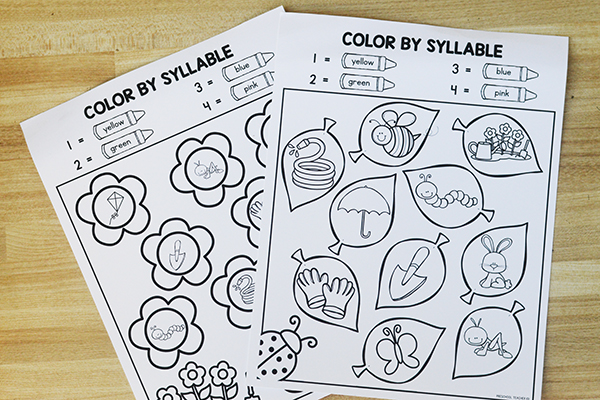
- Literacy Centers: Positioned as an independent station where students rotate in small groups, fostering autonomy and fine-motor dexterity.
- Fast Finisher Tasks: Kept in designated folders for students who complete core assignments ahead of schedule, eliminating downtime and maintaining productive engagement.
- Take-Home Practice: Sent home as family engagement packets, bridging the gap between classroom instruction and parental involvement in early literacy development.
The Year-Long Expansion and Curriculum Integration
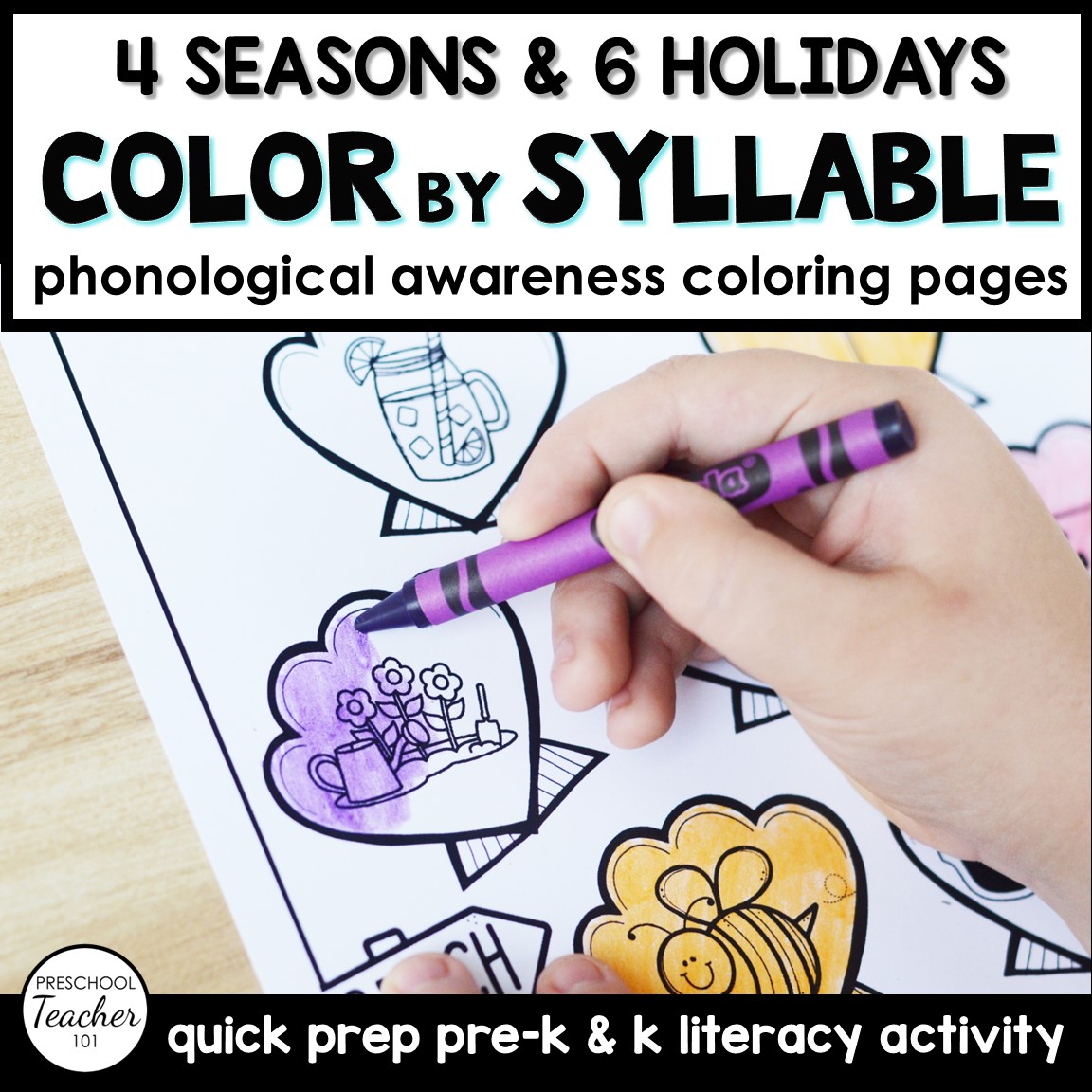
Building upon the immediate success of seasonal modules like the Spring-themed printables, educational developers have rolled out an expansive, year-long 33-page Color by Syllable set. This comprehensive resource ensures that phonological awareness practice remains consistent, engaging, and contextually relevant twelve months a year.
Overview of the Year-Long Curriculum Pack
Designed specifically for preschool and kindergarten learners, the comprehensive bundle covers syllable identification spanning one to five syllables. The instructional architecture incorporates seasonal and holiday motifs to maintain high motivation levels throughout the academic calendar.
The expansive pack features dedicated coloring pages and vocabulary sets covering:
- Fall and Harvest Themes: Back-to-school vocabulary, autumn leaves, pumpkin patches, and harvest celebrations.
- Winter Holidays and Weather: Snowflake formations, winter clothing, holiday traditions, and arctic wildlife.
- Spring Blossoms and Growth: Gardening tools, emerging insects, spring weather patterns, and blooming flora.
- Summer Adventures: Outdoor play, ocean life, camping gear, and sunny weather motifs.
By maintaining a consistent activity format while rotating the underlying vocabulary and thematic illustrations, students experience minimal cognitive friction regarding how to complete the task, allowing 100% of their cognitive load to be directed toward the auditory task of syllable segmentation.
Future Outlook: The Intersection of Play, Print, and Cognitive Science
As the educational landscape looks toward the future, the demand for resources that align with the Science of Reading while preserving the joyful, play-based nature of early childhood education will only intensify.
Trends in Early Literacy Instruction
- Bridging Digital and Analog Modalities: While tactile, paper-and-crayon activities remain unrivaled for developing fine-motor pencil grips in pre-K and kindergarten cohorts, future iterations of phonological tools are increasingly being paired with digital audio-prompted stations where children can listen to target words via headphones before coloring.
- Data-Driven Differentiation: Educators are placing greater emphasis on diagnostic tracking. Tools like Color by Syllable are evolving from simple busy-work alternatives into formative assessment checkpoints. Teachers can quickly scan a completed student sheet to identify whether a child struggles consistently with three-syllable versus two-syllable words, tailoring subsequent small-group interventions accordingly.
- Family-School Partnerships: With a growing emphasis on early intervention, resources that easily transition into home practice—such as free printable seasonal samplers—empower parents to support literacy development without requiring specialized teaching degrees.
Conclusion
The evolution of phonological awareness instruction proves that academic rigor and playful creativity are not mutually exclusive. Through targeted resources like the Spring Color by Syllable printables and the comprehensive year-long curriculum sets, educators and parents are equipped with frictionless, highly engaging tools. By transforming abstract auditory segmentation into a colorful, tactile exploration of language, these activities lay a rock-solid foundation for a lifetime of successful reading and learning.

