Cultivating Concentration: An Investigative Report on Evidence-Based Attention Strategies for Kids and Teens
Iffa Jayyana September 30, 2026 22 views 0 Comments
Executive Overview
In an era defined by relentless digital notifications, hyper-stimulating media, and ubiquitous multitasking, the ability to focus has arguably become one of the most endangered and valuable cognitive assets. For children and adolescents whose prefrontal cortices are still undergoing massive structural development, maintaining sustained attention is a daily battleground. Attention is not merely a personality trait or a measure of compliance; it is the foundational scaffolding upon which all learning, emotional regulation, and executive functioning are built.
When youth struggle to tune out distractions, listen attentively, or persist through challenging academic problems, the typical institutional response has historically relied on behavioral reprimands. However, a growing body of rigorous scientific research reveals a more empathetic and effective paradigm: attention can be systematically taught, strengthened, and restored.
This comprehensive report examines scientifically validated, evidence-based interventions designed to enhance focus among children and teenagers. By analyzing peer-reviewed meta-analyses and empirical studies, educators, parents, and policymakers can look past pop-psychology quick fixes and adopt structured, science-backed strategies ranging from physical exercise and mindfulness to restorative sleep and nature immersion.
Detailed Chronology: The Evolution of Attention Science in Education
To understand where modern educational practices stand, it is essential to trace how researchers and educators have historically approached cognitive focus in youth.
The Mid-to-Late 20th Century: The Era of Behavioral Compliance
For decades, classroom management relied heavily on behaviorist models. Attention was viewed primarily as an act of will. Students who struggled to sit still or concentrate were often labeled as disruptive or lazy, with interventions restricted to punitive measures or rigid seating arrangements. The concept of training attention as an internal, malleable executive skill was largely absent from standard curricula.
The Turn of the Millennium: The Rise of Executive Functioning Research
Entering the 2000s, neuroimaging and cognitive psychology revolutionized the field. Researchers began mapping the prefrontal cortex and identifying executive functions—working memory, cognitive flexibility, and inhibitory control—as the true drivers of attention. Groundbreaking studies (such as Gopher et al., 2000) began unmasking the cognitive costs of multitasking, proving that human brains cannot truly process multiple demanding streams of information simultaneously, but rather rapidly task-switch at a high cognitive cost.
The 2010s: The Integration of Mind-Body Interventions
During this decade, empirical support surged for holistic interventions. Meta-analyses and institutional guidelines—such as the landmark 2013 Institute of Medicine report on physical activity in schools—demonstrated that physical movement, breaks, and mindfulness were not mere "extras," but biological prerequisites for cognitive engagement. Researchers began publishing robust data linking diaphragmatic breathing, yoga, and nature exposure directly to attention restoration and emotional regulation.
The Present Day: Evidence-Based, Direct Skill Instruction
Today, the educational landscape is shifting toward proactive, direct skill instruction. Rather than assuming children intuitively know how to concentrate in high-stimulus environments, modern evidence-based frameworks treat attention as a muscle that requires deliberate conditioning. Utilizing meta-analyses that pool data across hundreds of independent studies, educators now deploy customized toolboxes—incorporating self-monitoring, mono-tasking, structured brainteasers, and optimized sleep hygiene—to fortify the modern young mind.
Supporting Context & Metrics: What the Science Tells Us
What separates an opinion-based tip from an "evidence-based strategy"? In scientific terms, an evidence-based approach is backed by rigorous empirical research, often synthesized through meta-analyses—comprehensive reports that statistically evaluate the pooled results of numerous individual studies to determine true effect sizes.
The data supporting cognitive interventions for youth is both robust and illuminating:
The Power of Physical Movement: A comprehensive meta-analysis by de Greeff et al. (2018) established that regular, sustained physical exercise yields significant positive effects on children’s attention spans and overall academic performance. The greatest cognitive gains were observed when physical activity was maintained consistently over several weeks.
Mindfulness and Focused Attention: A major meta-analysis conducted by Verhaeghen (2021 demonstrated that secular mindfulness and meditation practices produce statistically significant improvements in both focused and sustained attention among practitioners.
The Cognitive Toll of Multitasking: Research into task-switching confirms that attempts to multitask degrade working memory, increase error rates, and accelerate mental fatigue. Mono-tasking—the deliberate commitment to a single cognitive objective—remains the most effective defense against cognitive overload.
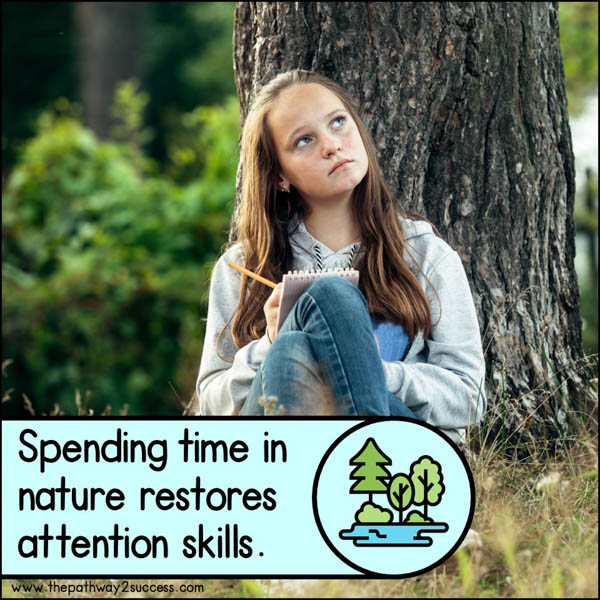
The Restoration of Nature: According to Attention Restoration Theory (ART), natural environments replenish depleted cognitive reserves. A meta-analysis by Stevenson et al. (2018) confirmed that exposure to natural settings significantly enhances working memory, cognitive flexibility, and attention control.
Core Evidence-Based Attention Strategies for Kids and Teens
Implementing these strategies requires understanding not just what to do, but why the science validates it. Below is an exhaustive breakdown of ten scientifically backed interventions for home and classroom integration.
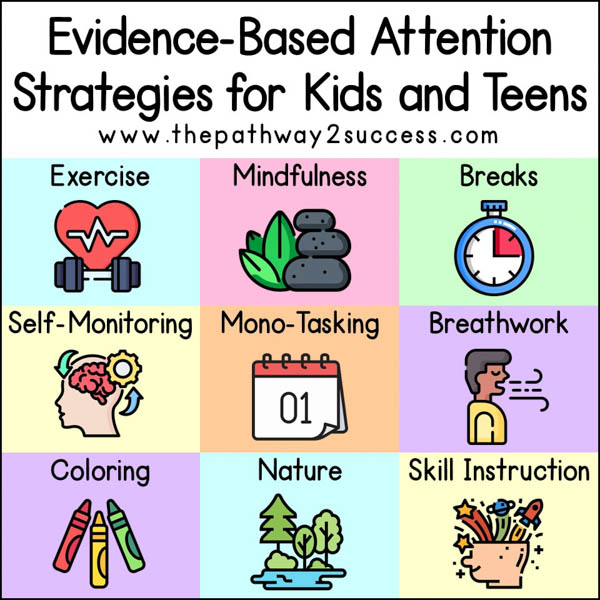
1. Structured Exercise
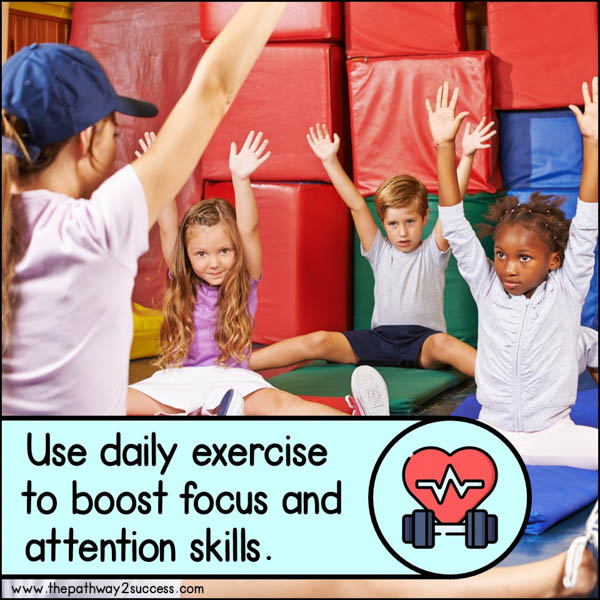
The Science: Physical activity increases the flow of oxygen-rich blood to the brain, stimulates the release of neurotrophic factors (like BDNF) that support neural growth, and optimizes neurotransmitter systems responsible for mood and attention.
Classroom & Home Strategies: Incorporate movement integration during lessons, utilize active transitions between subjects, and establish daily pre-learning exercise routines.
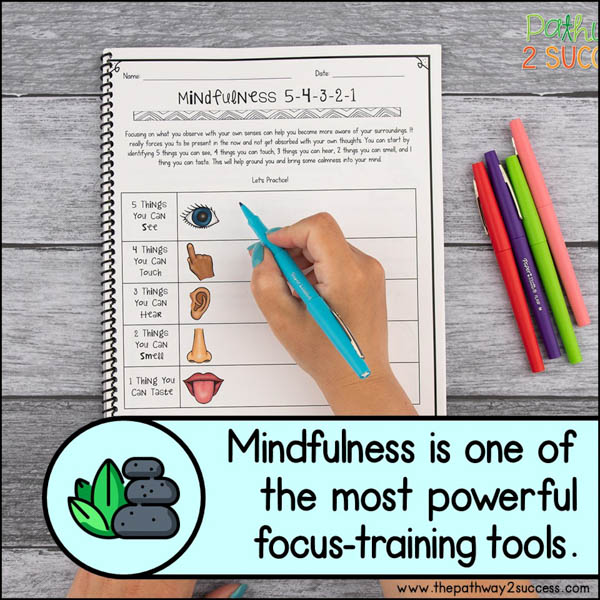
2. Mindfulness and Meditation
The Science: Mindfulness trains the brain to anchor itself in the present moment, reducing emotional reactivity by regulating the amygdala. Research confirms tangible improvements in focused attention following consistent mindfulness routines (Keng et al., 2013; Verhaeghen, 2021).
Classroom & Home Strategies: Practice short, 3-to-5-minute guided body scans, mindful listening exercises, or sensory-grounding checks before tackling high-difficulty tasks.
3. Strategic Brain Breaks
The Science: The human brain operates on ultradian rhythms, typically experiencing drops in focus every 90 to 120 minutes. Planned breaks—whether passive (listening to a narrative) or active (stretching)—allow neural networks to regroup, leading to improved on-task behavior upon return (Janssen et al., 2014).
Classroom & Home Strategies: Implement the Pomodoro technique adjusted for age (e.g., 15 minutes of work followed by a 3-minute structured break) to prevent cognitive burnout.
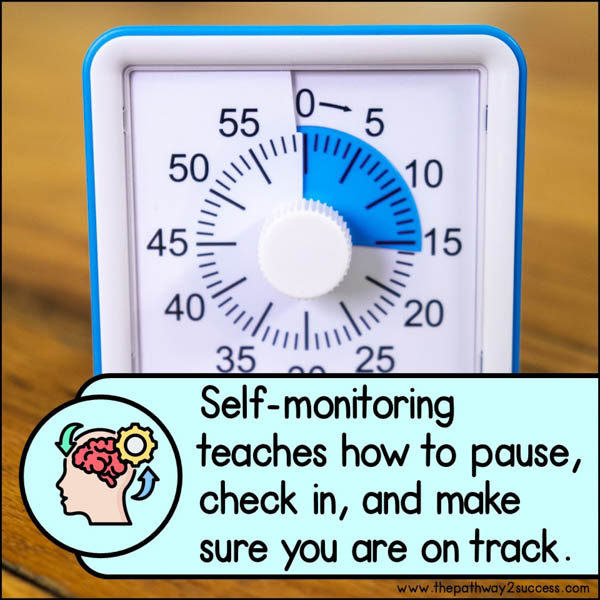
4. Self-Monitoring
The Science: Self-monitoring requires learners to evaluate, assess, and adjust their own behaviors in real time. Meta-analytic reviews (Reid et al., 2005) confirm that teaching students to intermittently check their own attention levels drastically improves performance, particularly for neurodivergent learners.
Classroom & Home Strategies: Use periodic interval timers that prompt students to ask: "Am I currently working on my goal?" accompanied by self-recording checklist logs.
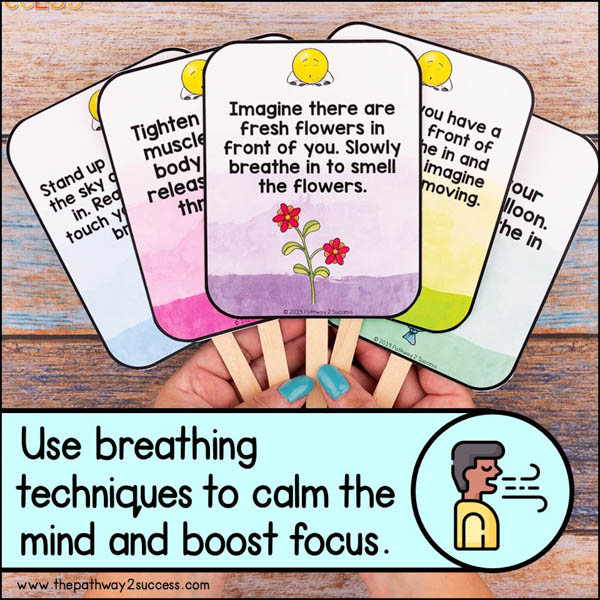
5. Targeted Breathing Techniques
The Science: Controlled diaphragmatic breathing shifts the autonomic nervous system from a sympathetic ("fight-or-flight") state to a parasympathetic ("rest-and-digest") state. Clinical studies show that slow-pace breathing significantly lowers cortisol levels and enhances sustained attention (Ma et al., 2017).
Classroom & Home Strategies: Teach box breathing (inhale for 4, hold for 4, exhale for 4, hold for 4) or "triangle breathing" to de-escalate anxiety and reset focus prior to exams.
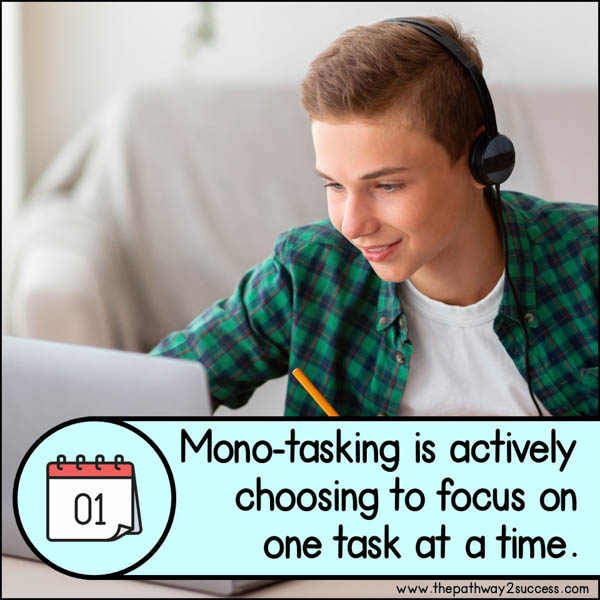
6. Embracing Mono-Tasking
The Science: Human brains cannot perform two complex cognitive tasks simultaneously; they rapidly switch between them. This task-switching tax drains glucose from the prefrontal cortex, causing fatigue and errors (Gopher et al., 2000). Mono-tasking preserves mental energy.
Classroom & Home Strategies: Enforce "digital detox" zones during independent work, remove secondary screens, and encourage students to complete one distinct assignment element before opening a new tab or book.
7. Nature Immersion
The Science: Urban environments demand "directed attention," which actively depletes neural resources. Nature, by contrast, invokes "soft fascination," allowing the brain’s directed attention mechanisms to rest and recover (Stevenson et al., 2018). Even visual or auditory simulations of nature offer restorative benefits (Berman et al., 2008).
Classroom & Home Strategies: Move quiet reading time outdoors, incorporate classroom plants, or play ambient natural soundscapes during independent study blocks.
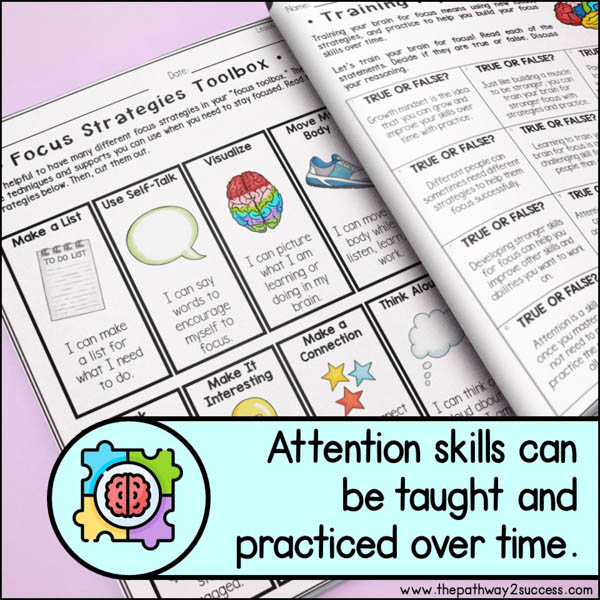
8. Direct Skill Instruction
The Science: Executive functioning and attention skills are not innate traits; they are developmental capabilities that benefit from explicit instruction (Hattie, 2018; Meltzer et al., 2007). Direct instruction provides learners with a metacognitive toolbox.
Classroom & Home Strategies: Dedicate explicit instructional time to teach how to study, how to break down large projects into micro-tasks, and how to organize workspace materials.
9. Mindful Coloring
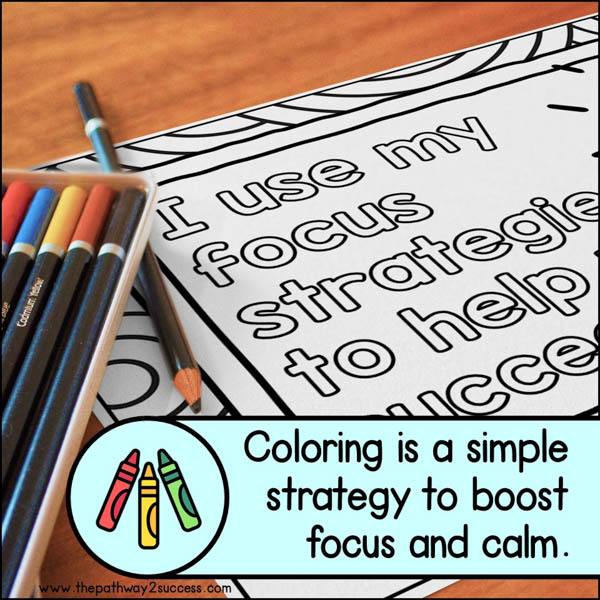
The Science: Complex or repetitive manual tasks like coloring engage selective attention while simultaneously soothing the nervous system. Research confirms that coloring reduces anxiety and bolsters a student’s ability to maintain concentration amidst ambient classroom noise (Holt et al., 2019; Suryagayathri, 2024).
Classroom & Home Strategies: Utilize geometric or mandalic coloring pages as a transitional calm-down activity after high-stress transitions or recess.
10. Optimized Sleep Hygiene
The Science: As neuroscientist Dr. Matthew Walker outlines in Why We Sleep (2017), high-quality sleep is non-negotiable for cognitive functioning. During deep sleep, the brain actively clears metabolic waste, consolidates memories, and repairs prefrontal cortex pathways. Sleep deprivation directly degrades attention spans and slows reaction times.
Classroom & Home Strategies: While implemented at home, educators can support this by advocating for homework policies that do not eat into nocturnal rest, and by educating families on evening blue-light reduction.
Official Statements & Expert Perspectives
Educational psychologists and pediatric specialists emphasize that shifting the cultural conversation around attention from discipline to skill-building is paramount.
"Attention is not an unyielding switch that a child can simply flip on because an adult demands it," notes a leading developmental psychologist specializing in executive function. "It is a fragile, developing cognitive ecosystem. When we treat attention deficits as behavioral failures, we punish children for lacking tools we have never formally taught them how to build. By leaning into evidence-based strategies like movement, mindfulness, and direct instruction, we hand the keys of self-regulation back to the student."
Furthermore, educational researchers emphasize that systemic integration is key. Institutions that isolate mindfulness or brain breaks as sporadic, "one-off" treats fail to capture the cumulative neurological benefits documented in meta-analyses. True cognitive enhancement requires institutional consistency across home and school environments.
Future Outlook: The Road Ahead for Cognitive Health in Youth
As artificial intelligence, algorithmic feeds, and digital distractions continue to evolve at an unprecedented pace, the battle for human attention will only intensify. Looking toward the future, researchers, educators, and public health advocates must collaborate to protect and nurture the cognitive development of the next generation.
Several key developments are anticipated in the coming years:
Curricular Integration of Executive Functioning: Moving forward, evidence-based attention strategies will likely be embedded directly into core K-12 curricula rather than being relegated to specialized special education or tier-two intervention spaces.
Tech-Intentional Classrooms: Schools are expected to adopt more rigorous, science-backed policies regarding digital device usage, prioritizing analog learning formats that protect children from the chronic fragmentation caused by continuous task-switching.
Personalized Cognitive Toolboxes: Recognizing that no two brains are identical, future educational frameworks will empower students to experiment with various evidence-based strategies—discovering whether movement, nature views, or breathwork best serves their unique neurological profile.
Ultimately, helping kids and teens focus is not about imposing rigid control; it is about teaching them how to navigate their internal worlds amidst an increasingly loud external reality. By anchoring our practices in empirical science, we can equip the rising generation with the enduring cognitive resilience they need to thrive.