In the rapidly evolving landscape of 21st-century education, digital literacy has shifted from an elective luxury to a foundational necessity. Yet, for decades, introducing children to computer science has faced a persistent pedagogical hurdle: how to bridge the intimidating gap between abstract syntax and engaging, child-friendly learning environments. Traditional methods—relying on dense textbooks, rigid classroom lectures, or passive YouTube tutorials—frequently fail to capture the imagination of young learners, leading to high attrition rates in early technical education.
Enter CodeMonkey, an award-winning, game-based educational platform that turns real-world programming languages into an intuitive, gamified adventure. Designed to accommodate students ranging from preschoolers to eighth graders, CodeMonkey addresses the core challenges of STEM education by replacing dry syntactical memorization with interactive puzzle-solving. By guiding a virtual monkey through hundreds of challenges to retrieve stolen bananas, students naturally absorb the core tenants of real programming languages such as CoffeeScript, Python, and JavaScript.
Whether deployed in traditional brick-and-mortar classrooms, utilized for virtual learning setups, or integrated into homeschooling curricula, CodeMonkey offers a structured, scalable, and highly motivating pathway to computational thinking. This investigative review explores the mechanical, pedagogical, and structural facets of CodeMonkey, analyzing how it reshapes the modern approach to teaching computer science to the next generation of innovators.
Detailed Chronology & Platform Evolution
To fully understand CodeMonkey’s market position, one must examine its developmental trajectory and pedagogical refinement over time. The platform was engineered to dismantle the barriers that keep children—particularly younger demographics and those without prior technical exposure—from engaging with code.
Phase 1: The Foundations of Gamified Logic (Early Development)
Historically, programming platforms for children relied heavily on generalized block-based interfaces (such as early iterations of Scratch) that, while effective for basic logic, created a massive chasm when students attempted to transition to professional, text-based code. Recognizing this gap, CodeMonkey’s creators designed a scaffolded learning curve.
CoffeeScript and JavaScript Integration: The journey begins with CoffeeScript—a language that compiles down to JavaScript and features a cleaner, more human-readable syntax. This deliberate stepping stone allows students to write authentic text-based code without getting bogged down by hyper-strict punctuation rules characteristic of raw JavaScript.
The "Coding Adventure" Arc: The platform’s flagship course, Coding Adventure, establishes an immediate narrative hook. Students write concise commands to direct a primate across a Cartesian coordinate system, capturing bananas and earning a maximum rating of three stars per puzzle. This immediate feedback loop ensures that trial-and-error becomes an engine for discovery rather than a source of frustration.
Phase 2: Expanding the Age Bracket with CodeMonkey Jr.
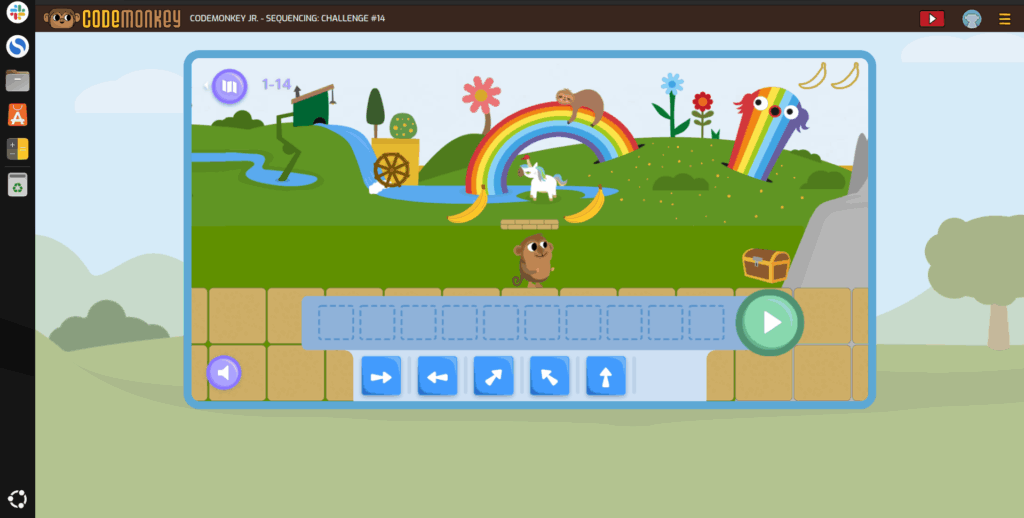
Recognizing that cognitive development dictates how children interact with technology, the platform expanded downward into early childhood education with CodeMonkey Jr.
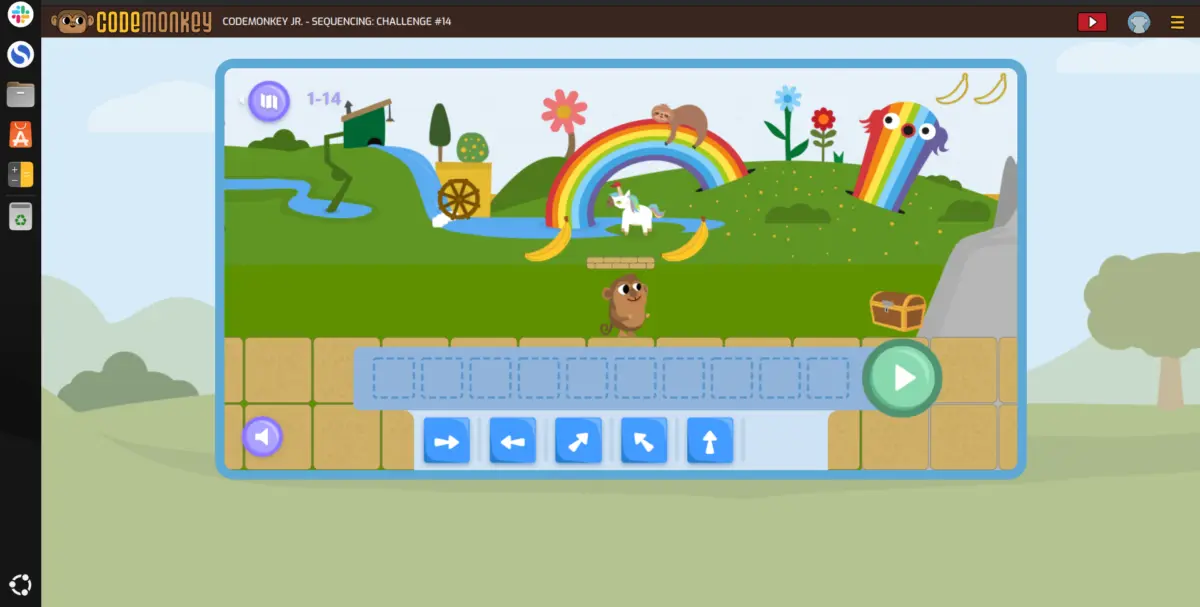
Visual Block Logic for Pre-Readers: Tailored specifically for preschoolers and early elementary students who may not yet possess advanced reading comprehension skills, CodeMonkey Jr. utilizes a simplified, visual block-based architecture.
Stepping Stone Mechanics: This early module introduces fundamental logic gates and algorithmic thinking through visual puzzles. By mastering these concepts early, children build the intuitive spatial and logical foundation necessary to seamlessly transition into text-based coding modules by the time they reach upper elementary and middle school.
Phase 3: Advanced Curricular Expansion and Game Builder
As students mature through the upper tiers of the curriculum (stretching up to the 8th-grade level), the platform introduces sophisticated programming constructs and creative outlets.
Transition to Python: As learners gain confidence, the curriculum introduces Python—one of the most widely utilized and versatile programming languages in the professional tech industry today.
Game Builder Integration: Moving beyond passive consumption and structured puzzle-solving, CodeMonkey introduced the Game Builder tool. This environment empowers students to leverage their newly acquired coding repertoires to design, code, and deploy their own functional video games, fostering a sense of creative ownership and practical application.
Supporting Context & Metrics: Decoding the Curriculum
CodeMonkey’s pedagogical design is built upon nearly 400 meticulously sequenced challenges. These challenges are not merely arbitrary puzzles; they map directly to essential computer science principles utilized by professional software engineers worldwide.
Core Programming Concepts Explored
Loops and Automation: Rather than forcing students to write redundant commands repeatedly (e.g., instructing a character to move forward a hundred individual times), the platform introduces loops. Students learn to compress algorithmic instructions efficiently, mirroring real-world software optimization practices.
Functions and Modular Code: The curriculum teaches learners how to conceptualize and write functions—reusable blocks of code designed to perform specific tasks. This teaches students how to structure clean, readable, and maintainable codebases.
Objects and Arrays: Students are introduced to data structures through relatable mental models. Arrays are framed like lines of students waiting for lunch—where elements can be added, removed, or re-ordered—while objects act as comprehensive containers holding diverse data types.
Variables and Conditional Logic: By introducing boolean conditions (true/false paradigms) and if-else branching structures, CodeMonkey empowers young coders to build programs that make autonomous decisions based on real-time game inputs.
Data Privacy, Session Management, and Accessibility
As an online platform operating across diverse educational and home environments, CodeMonkey maintains strict structural transparency regarding digital infrastructure:
Session Management: The platform utilizes general-purpose platform session cookies strictly for essential website functionality—specifically maintaining student login states and tracking localized educational progress.
Ad-Free Learning: Unlike platforms reliant on third-party behavioral tracking for monetization, CodeMonkey prioritizes a distraction-free, secure environment for children. Families and educators retain the ability to manage or opt-out of standard cookie utilities via browser settings without compromising core learning modules.
Official Statements and Educational Impact
Educators, homeschool parents, and academic researchers have increasingly lauded gamified coding platforms for their ability to democratize technical education.
According to community feedback aggregated from platforms like Trustpilot and prominent STEM education directives, the platform’s primary strength lies in its dual appeal to both independent learners and structured educators.
"CodeMonkey doesn’t just teach programming—it introduces computer science concepts in a fun way. Younger students can see how coding connects to the real world, from building games to understanding how websites use cookies to run." — STEM Education Reviewer
The Instructor and Parent Ecosystem
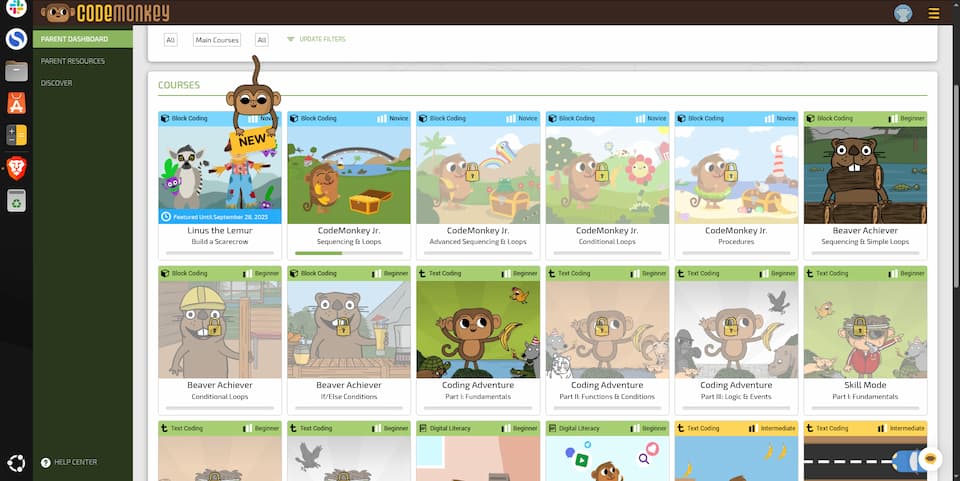
For parents navigating the complexities of homeschooling or remote learning, CodeMonkey offers a comprehensive dashboard system complete with automated grading, progress reports, and specialized skill modes.
Automated Assessment: The platform evaluates student code instantly, eliminating administrative lag and allowing self-paced learners to advance immediately upon mastering a concept.
Built-In Support Infrastructure: When students encounter roadblocks, the platform provides integrated hints, visual debugging tools, and comprehensive video tutorials designed to guide rather than give away solutions. This preserves the cognitive challenge while mitigating learner burnout.
Future Outlook: The Horizon of Gamified STEM Learning
Looking ahead, the integration of gamified platforms like CodeMonkey into mainstream academic standards underscores a broader paradigm shift: programming is the new literacy.
As artificial intelligence, automation, and data analytics continue to reshape the global workforce, early exposure to computational thinking is no longer an enrichment activity—it is a critical survival skill. CodeMonkey’s roadmap points toward deeper integration with cross-curricular subjects, expanding its utility in subjects like mathematics and physical sciences where algorithmic modeling can illuminate complex theories.
Furthermore, the rise of collaborative coding environments and community-driven game sharing within the platform points to a future where children do not just learn code in isolation—they build digital communities, collaborate on shared repositories, and view themselves as active creators of the digital world rather than passive consumers.
For parents, educators, and institutions seeking a proven, scalable, and genuinely engaging entry point into computer science, CodeMonkey remains a gold standard in modern edtech innovation. By transforming daunting syntax into an interactive jungle expedition, it successfully proves that mastering the language of the future can—and should—be an adventure.