

Executive Overview
In the public discourse surrounding American education, rural school districts are frequently reduced to a monolith of underfunded classrooms, struggling to keep pace with an increasingly digital and tech-driven global economy. Yet, beneath the broad generalizations lies a more complex reality: rural STEM education struggles far less from a lack of innate student curiosity than from a crippling deficit in foundational infrastructure. Across the United States—where roughly one in five public school students attends a rural institution—districts are routinely starved of certified educators, advanced laboratory equipment, and the travel budgets required to expose young minds to real-world career paths.
Nowhere is this chasm more visible than in the fertile, dark-earth expanse of Alabama’s Black Belt. Spanning approximately 20 counties characterized by deep historical roots and severe economic challenges, this region represents one of the most economically distressed areas in the United States. In these communities, a single educator might be forced to teach third, fourth, fifth, and sixth-grade science simultaneously. Advanced Placement chemistry or computer science courses are often an impossibility when schools cannot even attract certified math and science teachers to relocate.
Enter the Black Belt STEM Institute at the University of West Alabama (UWA). Headquartered on UWA’s campus in Livingston, Alabama, and led by Director Dr. Chet Nicklas, the Institute represents a localized, highly targeted counter-offensive against rural educational decay. Rather than relying on top-down, one-size-fits-all curriculum redesigns that collapse upon contact with local realities, the Institute builds up from the ground. By supplying credentialed training, math and science coaching, loaned robotics kits, and immersive corporate career exposure, the Institute is proving that rural schools can thrive when educational equity is treated as a collective, community-driven mission.
Detailed Chronology: The Genesis of a Regional Solution
To understand the mechanics of the Black Belt STEM Institute, one must trace the trajectory of its leadership and the systemic pressures that birthed it. For over a decade, Dr. Chet Nicklas worked in secondary science education in Meridian, Mississippi, a city sitting directly adjacent to the Alabama Black Belt. During his 11 years teaching biology, chemistry, and physical science—while also serving in traditional rural educator roles like football coach and bus driver—Dr. Nicklas witnessed firsthand the structural vulnerabilities plaguing the region.
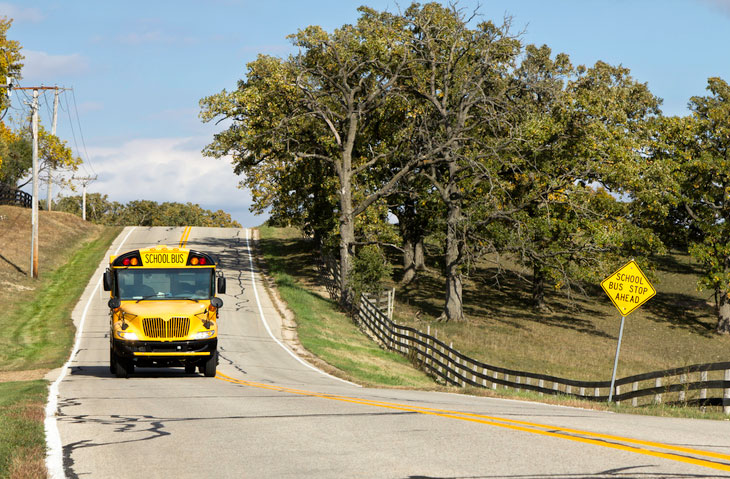
"Some of these areas have large amounts of land with not very many people," Dr. Nicklas observed. "A lot of educators teach elementary all the way through middle school—maybe 3rd, 4th, 5th, and 6th grade all in the same day. So most of the time, nobody’s going to transfer in to teach in our schools. The teachers are home-grown talent. They don’t come from outside."
Recognizing that classroom-level interventions alone could not solve a systemic crisis, Dr. Nicklas pivoted toward organizational leadership. He pursued a Doctor of Education in Rural Education and Organizational Change and Leadership at the University of West Alabama, penning his doctoral dissertation on the devastating impact of inequitable broadband access in rural schools.
In October 2022, Dr. Nicklas returned to his alma mater as the inaugural Director of the Black Belt STEM Institute. His appointment marked a turning point for the initiative, steering it toward a pragmatic, multi-layered approach designed to tackle the region’s acute recruitment, retention, and resource deficits head-on. Under his leadership, the Institute transitioned from an abstract concept into a dynamic operational hub, orchestrating teacher workshops, securing high-tech mobile labs, and forging partnerships with regional heavyweights like NASA and local manufacturing leaders.
Supporting Context & Metrics: The Anatomy of Rural Educational Disadvantage
The hurdles facing Alabama’s Black Belt are neither isolated nor accidental; they are part of a national structural gridlock documented extensively by federal oversight agencies. A comprehensive Government Accountability Office (GAO) review of federal STEM initiatives highlighted that rural districts across states like Alabama, Maine, Nevada, and South Dakota share three insurmountable barriers: an inability to attract certified teachers, a lack of physical and digital classroom materials, and budgetary constraints that make student field trips entirely unaffordable.
The economic profile of the Black Belt compounds these educational hurdles. According to historical Bureau of Economic Analysis (BEA) datasets, the counties comprising this region rank among the most economically disadvantaged in both the state and the nation. These systemic economic pressures directly bleed into the educational workforce.
Data from the Alabama Committee on Economic Stewardship (ACES) reveals a deceptive trend: while Alabama increased its overall teaching workforce by roughly 2,000 educators between 2015 and 2021, over half of these new hires entered the profession via non-traditional, alternative, or emergency certification pathways. While these alternative routes successfully put bodies in classrooms, they introduce new systemic vulnerabilities. Teachers entering through non-traditional avenues often possess robust knowledge in a specific content area but lack formal pedagogical training, leaving them uniquely isolated in hard-to-staff STEM disciplines where mentorship is scarce.

Furthermore, teacher retention remains an ongoing crisis. Four of Alabama’s ten highest-turnover school districts reside within the Black Belt region, with some individual districts experiencing annual turnover rates as high as 32%. When coupled with a historical reliance on emergency credentials, this high turnover creates a revolving door of educators who are expected to teach complex scientific principles without adequate institutional scaffolding.
Official Statements & Structural Responses
Faced with this multilayered crisis, the Black Belt STEM Institute has structured its operational response to map precisely against the barriers identified by regional educators. The Institute utilizes a "collective impact" model, leveraging local assets, university partnerships, and targeted state funding to deliver scalable solutions.
| Barrier | How it Manifests in the Black Belt | The Institute’s Strategic Response |
|---|---|---|
| Recruitment | Geographic isolation prevents incoming teacher transfers; reliance on local talent. | Deep partnerships with UWA faculty, students, and pre-service education majors. |
| Retention | High turnover rates reaching up to 32% in regional districts; teacher burnout. | Deployment of math/science coaches, offering in-person and virtual mentoring. |
| Subject Expertise | Over 50% of recent hires hold non-traditional or emergency credentials. | Subject-specific professional development courses and specialized workshops. |
| Equipment Deficits | Districts lack budgets for robotics kits, microcontrollers, and modern lab materials. | Direct distribution of robots, Microbits, and funded residency programs like Beta Box. |
| Career Exposure | Limited local presence of STEM industries and career role models. | Corporate partnerships, mock interviews, county career tours, and NASA outreach. |
Dr. Nicklas emphasizes that retention must be addressed through continuous, active support rather than one-off seminars. "We’re hiring math and science STEM coaches to help teachers build efficacy," Dr. Nicklas explains. "We hope to facilitate the likelihood that they’re going to remain in the classroom and remain effective. Those sessions are going to be in-person and virtual. And that also comes with virtual mentoring sessions."
These mentoring sessions assist educators in designing rigorous lesson plans, mastering innovative STEM teaching methodologies, and navigating the complexities of multi-grade classrooms. To ensure accessibility, the Institute leverages state-level educational grants—argued effectively on the grounds of Alabama’s historically low national rankings in math and science proficiency—to provide participating teachers with financial stipends. These stipends not only compensate educators for their time but empower them to act as internal change agents within their home districts.
Future Outlook: Scaling the Model for Rural America
The long-term success of the Black Belt STEM Institute hinges on its ability to transcend the traditional walls of the classroom and reframe how students perceive their own economic futures. In a region where children rarely witness advanced STEM industries operating in their immediate neighborhoods, the Institute brings the industry directly to them.

Through strategic partnerships with organizations like Beta Box—which deploys "Skills on Wheels" mobile labs for week-long residencies featuring drone programming and automotive robotics—and If I Had A Hammer, which teaches mathematical scaling through large-scale architectural builds, students interact with STEM concepts tangibly. Furthermore, regular visits from entities like NASA and regional manufacturing executives expose students to high-wage, high-demand career paths that do not require them to abandon their rural roots in search of employment.
"What we try to do first of all is create relationships," Dr. Nicklas reflects. "Relationships go a long way in making a difference. It’s really hard to do it all by yourself."
As the educational landscape evolves, the Black Belt STEM Institute stands as a blueprint for rural revitalization nationwide. While structural challenges like teacher shortages and broadband inequality will not vanish overnight, the Institute demonstrates that targeted regional investment, combined with community-rooted leadership, can systematically dismantle barriers to opportunity. For Alabama’s Black Belt, the initiative is more than an educational program—it is a declaration that zip code should never dictate destiny.

