
Executive Overview
For generations, chemistry education has battled an unfortunate public relations problem. Concepts like molecular structures, ion exchanges, and the pH scale are frequently introduced to students through rote memorization and dense, intimidating textbooks. Among these foundational chemical concepts, acids and bases routinely elicit groans and eye-rolls from young learners. Yet, this dynamic duo of chemistry governs nearly every aspect of our daily lives, from the food we digest to the cleaning products beneath our kitchen sinks.
In response to a growing pedagogical shift toward experiential learning, science educators are spearheading a movement to transform abstract chemical theories into tactile, awe-inspiring investigations. By abandoning static lectures in favor of inquiry-based laboratory projects, parents and teachers can demystify acids and bases, fostering early scientific literacy and critical thinking skills. This comprehensive report explores the fundamental science of pH, examines the pedagogical value of hands-on chemistry, and details five meticulously designed, classroom-tested experiments that prove science education can be as thrilling as it is educational.
Detailed Chronology: The Evolution of Acid-Base Chemistry in Modern Education
To understand why modern STEM educators emphasize hands-on experimentation, one must first look at the historical trajectory of how chemistry has been taught in primary and secondary classrooms.
- The Mid-20th Century (Traditional Memorization): For decades, science instruction relied heavily on the "chalk-and-talk" method. Students were expected to memorize Arrhenius and Brønsted-Lowry definitions of acids and bases without ever observing how these substances behave outside of industrial contexts. Chemistry was viewed as a hazardous subject restricted strictly to high school laboratories under the watchful eye of a teacher.
- The Late 1980s (The Constructivist Revolution): Educational theorists began championing constructivism—the idea that learners construct knowledge actively rather than passively taking in information. This philosophical shift led to the introduction of guided discovery learning, encouraging students to form hypotheses, observe natural phenomena, and draw conclusions based on empirical evidence.
- The Early 2000s (The Rise of STEM Frameworks): With global economic competitiveness increasingly tied to technological and scientific innovation, educators sought ways to engage children in STEM (Science, Technology, Engineering, and Mathematics) disciplines at younger ages. Acids and bases emerged as prime candidates for early intervention because everyday household items could serve as safe, accessible laboratory reagents.
- The Present Day (Inquiry-Based Experiential Learning): Today, the emphasis has shifted entirely toward experiential, project-based learning. Educators utilize common culinary items, natural indicators, and kitchen chemistry to introduce complex electrochemical concepts to elementary and middle school students. The goal is no longer just to pass an exam, but to cultivate a lifelong fascination with the physical world.
Supporting Context & Metrics: What Are Acids and Bases?
To effectively guide children through chemical experiments, educators and parents must first master the underlying science. Far from being exotic laboratory hazards, acids and bases are fundamental components of the natural and domestic world.
Defining the Players: Ions, Tastes, and Textures
At the microscopic level, acids and bases are defined by their interactions with ions—tiny, charged atoms or molecules.
- Acids: Characterized by a high concentration of hydrogen ions ($H^+$). In the culinary world, acids are instantly recognizable by their sharp, tangy, or sour flavor profile. Citrus fruits such as lemons, limes, and oranges, as well as tomatoes and vinegar, owe their distinct zing to acidic solutions.
- Bases: Often referred to as alkaline solutions, bases are characterized by a high concentration of hydroxide ions ($OH^-$). Edible bases tend to exhibit a bitter taste, though tasting unknown chemicals is strictly prohibited in laboratory protocols. When touched (in safe, dilute concentrations), basic solutions often feel slippery, soapy, or slimy. Common household bases include baking soda, bar soap, and chalk.
While many acids and bases are benign or even beneficial—such as the hydrochloric acid in our stomachs that aids in food digestion—others demand profound respect. Concentrated acids, such as sulfuric acid found in automotive batteries, can severely corrode organic tissue and textiles. Similarly, strong bases like ammonia can emit noxious fumes that irritate the respiratory tract, posing particular hazards for individuals with asthma.
The Architecture of the pH Scale
How do scientists quantify the strength of an acid or a base? They rely on the pH scale (potential of Hydrogen), a logarithmic scale ranging from 0 to 14.
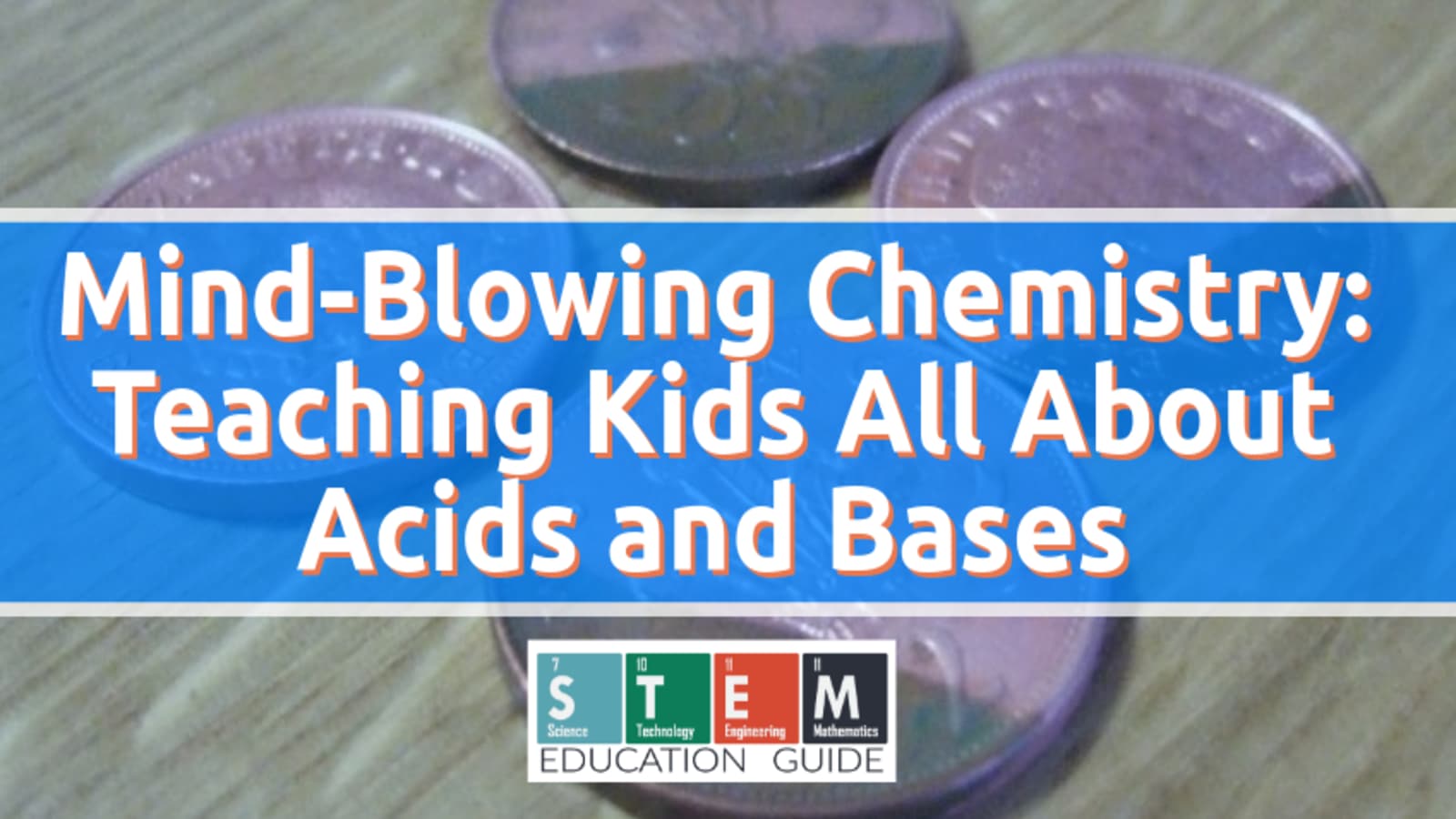
- The Acidic Range (0 to 6.9): Substances with a pH below 7 are classified as acids. The lower the number, the stronger the acid. For instance, battery acid sits near the extreme low end (around 0 to 1), while black coffee and milk hover closer to neutrality (around 5 to 6).
- Neutral (7.0): Pure water sits precisely at 7, representing a neutral state where hydrogen and hydroxide ions are balanced.
- The Basic Range (7.1 to 14): Substances registering above 7 are bases. Baking soda typically measures around 9, while household bleach and drain cleaner occupy the higher end of the scale (11 to 14).
Because humans cannot—and should not—taste or touch every chemical to determine its properties, scientists utilize indicator solutions. These are organic compounds that undergo distinct color transformations when exposed to varying hydrogen ion concentrations. Plant-based indicators, such as the anthocyanins found in red cabbage or commercially produced litmus paper, act as visual translators of the invisible molecular world.
Official Statements and Educational Insights
Prominent educational leaders and science communicators have long advocated for early, hands-on scientific engagement.
Dr. Aris Thorne, a leading curriculum developer in STEM education, emphasizes the psychological importance of early tactile learning: "When a child watches cabbage juice magically shift from purple to neon pink, or observes a chicken eggshell dissolve into a bouncy rubber sphere, they are not merely memorizing scientific facts. They are experiencing the scientific method in real-time. They are hypothesizing, observing, and processing anomalous data. That sense of wonder is the primary catalyst for lifelong scientific literacy."
Furthermore, safety organizations and educational bodies continually stress that inquiry-based learning does not require hazardous industrial chemicals. The American Chemical Society (ACS) notes that utilizing household reagents—such as vinegar, baking soda, red cabbage, and lemon juice—allows students to explore complex stoichiometry and neutralization reactions in entirely safe environments without compromising academic rigor.
5 Hands-On Projects to Master Acids and Bases
To bridge the gap between abstract theory and engaging practice, educators can implement the following five classroom-tested, highly engaging projects. Each activity is designed to reinforce core chemical principles while minimizing preparation time and maximizing student interaction.
1. Red Cabbage pH Indicator: Crafting Custom Litmus Paper
Transforming a humble grocery store vegetable into a precision scientific instrument is one of the most reliable ways to captivate young learners. Red cabbage contains a water-soluble pigment called anthocyanin, which acts as a natural pH indicator.
- The Procedure: Finely chop a head of red cabbage and simmer it in a pot of water for 15 to 20 minutes until the liquid turns a deep, dark purple. Allow the mixture to cool completely, then strain out the plant matter, reserving the vibrant purple juice. (Pro tip: The cooked cabbage can be saved and used in dinner stews).
- Making the Test Strips: Dip plain white coffee filters or heavy index cards into the cooled cabbage juice until saturated. Lay them flat on baking sheets to dry. Once thoroughly dry, cut the paper into narrow testing strips.
- The Experiment: Have students dip their homemade indicator strips into various household liquids—such as milk, pickle juice, apple juice, and soapy water. Before testing, encourage students to guess whether the substance will turn the paper red/pink (indicating an acid) or blue/green (indicating a base). For an alternative visualization, pour the liquid cabbage juice directly into clear glasses and drop in powders or liquids to watch the color transform in real time.
2. Edible Chemical Reactions: Fizzing Sherbet
Chemical reactions are often visualized as violent explosions in flasks, but chemistry can also be a delightfully delicious sensory experience. By combining an edible acid and an edible base, students can experience an endothermic neutralization reaction right on their taste buds.
- The Ingredients:
- 2 tablespoons of baking soda (a base)
- 2 tablespoons of citric acid powder or finely crushed sour candy (an acid)
- 4 tablespoons of powdered sugar (to balance the flavor)
- A pinch of flavored drink mix powder for taste
- The Procedure: Combine all the dry ingredients inside a clean bowl or a sealable plastic sandwich bag. If using a bowl, stir thoroughly with a spoon; if using a bag, seal it tightly and shake vigorously until completely blended.
- The Tasting: Instruct students to sample a tiny pinch of the mixture on their clean fingers or tongues. A distinct "fizzy" sensation will occur as the baking soda reacts with the citric acid in the presence of saliva, releasing carbon dioxide gas. Engage the students in a guided discussion: Which ingredient provided the fizzing base, and which supplied the sour acid?
3. The Great Penny Polish: Investigating Metal Reactivity
Tarnished, dull copper pennies provide an exceptional canvas for investigating how acids and bases interact with metals. Over time, copper reacts with oxygen in the atmosphere to form copper oxide, coating the shiny coin in a dull, brownish patina.
- The Setup: Gather several dirty pennies and a collection of clear plastic cups. Fill each cup with a different liquid solution: plain water (control), fresh lemon juice (acid), a carbonated cola beverage (acid), a dissolved baking soda mixture (base), and liquid dish soap (base).
- The Prediction: Ask students to formulate a hypothesis predicting which liquid will strip away the copper oxide layer most effectively.
- The Observation: Submerge the pennies in their respective solutions and allow them to sit undisturbed for 15 to 30 minutes. Remove the coins and examine the results. Students will quickly discover that acidic solutions (particularly the lemon juice and cola) dissolve the metal oxide layer rapidly, restoring the pennies to a brilliant, shiny finish due to the chemical interaction between hydrogen ions and copper oxides.
4. The Rubber Egg Experiment: Dissolving Calcium Carbonate
This classic experiment never fails to elicit amazement. By utilizing the corrosive properties of household vinegar, students can witness the structural breakdown of a protective shell without harming the delicate interior.
- The Procedure: Carefully place a raw chicken egg into a glass jar or beaker and completely submerge it in white vinegar.
- The Chemical Process: Vinegar contains acetic acid. The eggshell is composed primarily of calcium carbonate. When the acid encounters the calcium carbonate, a chemical reaction occurs, releasing carbon dioxide bubbles (which students will observe clinging to the shell) and dissolving the solid mineral structure.
- The Reveal: Leave the egg undisturbed for 24 to 48 hours. Carefully remove the egg and gently rinse it under tap water. The hard, brittle outer shell will have completely vanished, leaving behind a translucent, bouncy, rubber-like membrane that encapsulates the intact yolk and egg white. (Note: Due to the potential presence of salmonella bacteria on raw eggs, instruct students to wash their hands thoroughly and avoid consuming the experimental specimen).
5. Neutralization Station: Combining Acids and Bases
What happens when an unstoppable acidic force meets an unmovable basic object? They neutralize one another, shifting their combined pH closer to the neutral center of the scale.
- The Procedure: Fill a clear glass halfway with white vinegar (a potent acid). Test the vinegar using a piece of your homemade red cabbage indicator paper or commercial litmus paper, noting the deep red/pink coloration.
- The Reaction: Slowly spoon small quantities of baking soda (a base) into the vinegar. Students will immediately observe vigorous fizzing and bubbling as the acid and base react to neutralize each other, releasing carbon dioxide gas.
- The Post-Test: Once the bubbling subsides, dip a fresh indicator strip into the resulting liquid. Students will observe that the color has shifted away from the extreme acidic spectrum toward a more neutral green or purple tone, proving that the chemical properties of both original substances have been fundamentally altered.
Future Outlook
As educational methodologies continue to evolve, the integration of hands-on STEM curricula into foundational science instruction is no longer viewed as an optional luxury—it is an absolute necessity. Future advancements in educational technology, augmented reality (AR) pH simulations, and portable micro-laboratories will further empower students to explore chemistry beyond the traditional classroom walls.
However, the core tenets of effective science education will remain anchored in tactile, reality-based exploration. By stripping away the intimidation factor of chemistry and replacing it with curiosity, observation, and experimentation, educators can inspire a new generation of scientists, engineers, and critical thinkers.
To support your upcoming classroom experiments or home-school lessons, be sure to download our free Scientific Method Worksheet and explore our comprehensive library of 25 downloadable STEM activities to keep the spirit of inquiry alive.

