
Executive Overview
In the modern K-12 landscape, few words carry as much weight, urgency, and emotional resonance as "bullying." For educators, school administrators, and parents alike, addressing peer victimization is a daily imperative. However, as classrooms become increasingly diverse ecosystems of evolving personalities, a new linguistic and developmental challenge has emerged: the tendency for children—particularly high-energy, extroverted youth—to conflate genuine, targeted harassment with the ordinary, albeit painful, friction of childhood socialization.
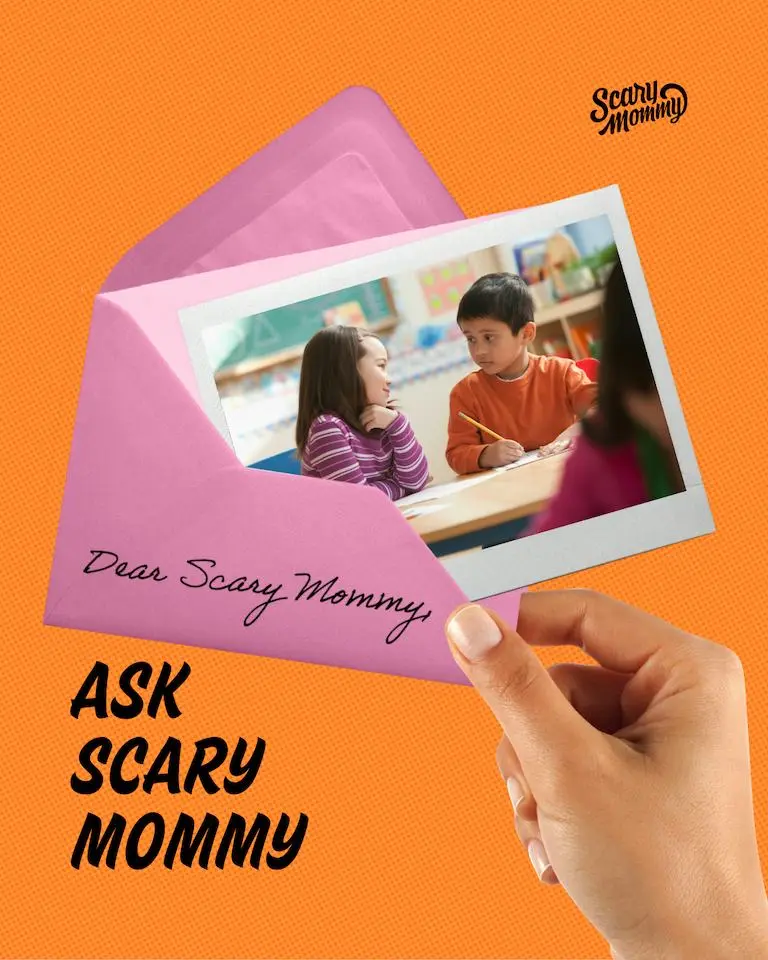
This phenomenon is the focal point of a recent inquiry submitted to the popular parenting advice column Ask Scary Mommy. A frustrated parent, writing under the pseudonym "This Is A Lot," voiced a common dilemma: Their highly extroverted child, who thrives on social connection, consistently returns home from school distraught, labeling everyday social slights, disinterest, or awkward peer interactions as "bullying." When a classmate rolls their eyes at a movie recommendation or curtly shuts down a conversation, the child perceives malicious intent rather than a peer simply establishing a boundary or lacking interest in the topic.
This article explores the psychological mechanics behind this widespread parental challenge. Drawing on insights from child development specialists, educators, and experienced parents, we examine why extroverted children struggle to read social cues, how to accurately define and identify true bullying versus developmental rejection, and actionable strategies families can implement to build resilience. Ultimately, mastering this distinction is not merely about clearing up misunderstandings on the playground; it is a foundational life skill in emotional intelligence, boundary recognition, and interpersonal resilience.
Detailed Chronology: The Evolution of the Peer-Rejection Dilemma
To understand how a child moves from a harmless playground interaction to declaring that they are being "bullied," it is necessary to examine the step-by-step chronology of typical social development, emotional interpretation, and parental intervention.
Phase 1: The Initial Social Spark
The scenario typically begins with unbridled enthusiasm. A child—often possessing an extroverted temperament—discovers a passion, a movie, a video game, or a hobby. Driven by an innate desire to share joy and foster connection, the child approaches a peer or a group of classmates to discuss it. To the extrovert, conversation is the primary currency of friendship.
Phase 2: The Rejection and Misread Cues
Peers, however, operate on a vast spectrum of social bandwidth, varying moods, and differing interests. A classmate may be tired, hyper-focused on an upcoming test, or simply indifferent to the topic being presented. Lacking the fully developed neurological "software" required to read subtle social cues—such as a brief glance away, a lukewarm tone, or a lack of engagement—the extroverted child continues pressing forward.
When the peer eventually responds with bluntness, dismissiveness, or irritation ("Leave me alone about that stupid movie"), the social exchange fractures.
Phase 3: The Internal Narrative of Victimhood
To a child whose self-worth is deeply intertwined with external validation and peer approval, a blunt rejection does not feel like a neutral mismatch of interests; it feels like a personal attack. Because children process emotions intensely and lack the historical context of adult life, the localized sting of embarrassment quickly transforms into a narrative of victimization. Upon walking through the front door at the end of the school day, the child declares: "They were so mean to me! They were bullying me!"
Phase 4: Parental Intervention and De-escalation
This is the critical juncture where parents must step in. As highlighted in the Ask Scary Mommy advisory exchange, parents are tasked with a delicate balancing act: validating their child’s very real emotional pain while simultaneously correcting the inaccurate vocabulary being used.
Parents explain that someone being uninterested, unkind in a momentary lapse of patience, or unwilling to talk does not constitute bullying. However, bridging this gap requires more than a single conversation; it demands a structured, repetitive framework of coaching, role-playing, and shifting linguistic habits at home.
Supporting Context & Metrics: The Science of Social-Emotional Learning
Understanding the gravity of this issue requires looking at the broader psychological and educational landscape surrounding social-emotional learning (SEL) in modern schools.
The Developmental Gap in Social Decoding
Child psychologists note that the prefrontal cortex—the region of the brain responsible for impulse control, empathy, and reading complex social dynamics—continues to develop well into early adulthood. For young children, especially those under the age of ten, egocentrism is a normal developmental stage. They naturally view the world primarily through their own lens.
When an extroverted child loves a movie, they genuinely struggle to comprehend why another human being might not love that same movie. Consequently, when someone rejects the topic, the child’s brain interprets the rejection not as a difference in taste, but as a moral failure or an act of hostility on the part of the peer.
The Danger of Semantic Dilution
Education experts frequently warn about the "dilution" of serious terminology. When the word "bullying" is used to describe everything from a stolen pencil to a missed playground invitation, two negative outcomes occur:
- Desensitization: Adults and administrators may begin to take actual reports of targeted harassment less seriously if the term is constantly overused for minor interpersonal friction.
- Anxiety Amplification: Children who are taught to view every social slight as "bullying" develop heightened anxiety, hyper-vigilance, and an external locus of control, feeling powerless in the face of normal human interactions.
Community Wisdom: Insights from Educators and Parents
The dialogue surrounding the Ask Scary Mommy query brought forth practical, field-tested methodologies utilized by educators and parents navigating these exact trenches:
- Personality Typing and Metaphors: Eleanor Nickras, a middle school teacher, utilizes a fruit-based personality assessment in her classroom. By having students identify with different fruit personalities, she teaches them about inherent differences in temperament, strengths, weaknesses, and communication styles. This foundational work allows students to conceptualize boundaries objectively rather than taking them personally.
- The "Friend" Linguistic Trap: Parent and community contributor Gwen Riccio pointed out a subtle yet powerful linguistic shift: many parents inadvertently set their children up for disappointment by referring to all children in public spaces or schools as "friends." By transitioning terminology to neutral descriptors like "kids," "classmates," or "peers," parents can temper expectations, framing initial meetings not as pre-ordained friendships, but as neutral encounters where compatibility must be discovered organically.
- Establishing Consistent Guardrails: Katie McPherson, associate editor, emphasizes the necessity of repeating foundational definitions daily. By consistently breaking down what bullying actually is—repeated, targeted interactions designed to cause fear, embarrassment, or harm—children slowly build the internal framework needed to weather a class full of diverse, sometimes incompatible personalities.
Official Statements & Expert Perspectives
To further contextualize the challenge of teaching children peer dynamics, educational leaders and child development experts offer critical guidance on how families and schools can collaborate.
Dr. Elizabeth Vance, Child Psychologist and Educational Consultant, notes:
"We are doing a disservice to children when we rush in to rescue them from every single uncomfortable social interaction. Disappointment, rejection, and social friction are the gymnasium weights of emotional resilience. When a child experiences someone not wanting to talk to them, it hurts—there is no denying that. But parents must sit in that discomfort with their children, help them name the feeling accurately, and teach them that not everyone is going to be your fan, and that is entirely okay."
Kate Auletta, Editor-in-Chief of Scary Mommy, emphasizes the long-term necessity of hard conversations:
"This is when I, as a parent, have real talk with my kids. I tell them the actual definition of bullying, and that this is not that. This is just kids not wanting to talk about something and not knowing how to verbalize it. But also! The big takeaway from this for me is laying the groundwork that there will be people in life who are not your people, and maybe this is the first instance of that. It’s a hard pill to swallow, but it’s a necessary one for life."
School Administrator and SEL Coordinator Marcus Holloway adds:
"Teachers see this daily. Extroverted kids are often the social engines of the classroom, but they need coaching on the brake pedals. They need to learn how to check the room’s temperature before diving into a monologue. Teaching children to look for verbal and non-verbal cues—like crossed arms, distracted eyes, or short answers—saves them a lot of heartache and teaches them respect for others’ personal boundaries."
Future Outlook: Preparing Children for a Complex Social Future
As social-emotional learning continues to gain prominence in school curriculums across the globe, the approach to handling peer relationships is evolving. Looking forward, parents, educators, and mental health professionals are leaning toward proactive, preventative strategies rather than reactive damage control.
1. Integrating Boundary Education at an Earlier Age
Future educational frameworks are placing greater emphasis on teaching bodily and conversational autonomy as early as preschool. Children are learning not only how to express their own boundaries ("I need some quiet time right now") but also how to gracefully accept when someone else sets a boundary. This mutual respect reduces the likelihood of children internalizing rejection as bullying.
2. Role-Playing as a Standard Parenting Tool
As demonstrated by experienced educators, role-playing future scenarios ("What are you going to do the next time someone doesn’t want to talk about your favorite movie?") is becoming an essential parenting tool. By rehearsing calm, measured responses and alternative conversational topics in a safe home environment, children build cognitive muscle memory, empowering them to respond with poise rather than panic when real-world social friction occurs.
3. Fostering Diverse Social Circles
For high-energy, extroverted children, learning that their entire social world does not rest on a single peer group is transformative. Encouraging children to cultivate diverse interests and connect across multiple micro-communities (sports teams, art clubs, neighborhood groups, and academic settings) ensures that a single instance of social rejection does not shatter their overall sense of belonging.
Conclusion
Teaching a child the nuanced difference between bullying and everyday social incompatibility is undoubtedly an uphill battle. It requires immense patience, continuous repetition, and a willingness to let children experience the sting of mild disappointment without immediately rushing in to label the world as hostile. By reframing rejection as a normal, healthy part of human interaction—and by instilling a deep respect for personal boundaries—parents can help their children transition from fragile, easily wounded extroverts into resilient, socially adept individuals equipped to navigate the complex social mazes of school, career, and life.

