
Executive Overview
In an era defined by hyper-connectivity, digital media saturation, and an unprecedented democratization of information, the modern Christian church faces a silent, pervasive crisis. While theological resources are more accessible than ever, so too are distortions of core biblical doctrine. False teaching—ranging from subtle theological drift to intentional heresy—has moved from the fringes of academia into mainstream pulpits, bestselling books, and viral social media feeds.
Addressing this critical spiritual vulnerability, hosts Becky and Amy of the Read, Do, & Tell podcast dedicated a multi-part series to examining the mechanics, dangers, and identifiers of unbiblical doctrine. Culminating in Episode 28, "Look out for False Teachers!", the ministry shifts its focus from merely identifying bad actors to equipping believers with the foundational discernment needed to spot spiritual deception in real life and online.
False teaching is not a minor theological disagreement or a matter of stylistic preference; it is a serious issue that directly undermines the pure Gospel revealed in Scripture. By outlining nine distinct behavioral and character red flags, and anchoring their insights in historical and scriptural frameworks, the Read, Do, & Tell hosts provide a masterclass in spiritual vigilance. This report explores the broader context of theological discernment, breaks down the core indicators of spiritual manipulation, and examines how believers can cultivate resilience against wolves in sheep’s clothing.
Detailed Chronology: The Evolution of a Multi-Part Discernment Series
The release of Episode 28 did not occur in a vacuum. It represents the culmination of a deliberate, systematic deep-dive into the state of modern orthodoxy by podcast creators Becky and Amy. Understanding the trajectory of this conversation provides vital context for why Episode 28’s focus on behavioral red flags is so timely and necessary.
Episodes 23 & 24: Establishing the Foundation of Orthodoxy
In the opening phases of this ongoing conversation, Becky and Amy laid the groundwork by defining what orthodoxy—right belief—actually means in contrast to heterodoxy and heresy. They emphasized that God places a high premium on truth. Throughout church history, doctrinal purity has been viewed not as an optional preference for hyper-intellectual believers, but as the bedrock of spiritual life and community preservation. During these foundational episodes, the hosts established that heresy is not merely a misunderstanding of minor biblical points; it is an intentional, systemic distortion of the nature of God, the person of Jesus Christ, and the pure Gospel message.
Episodes 26 & 27: Naming Names and Examining Specific Heresies
Moving from abstract definitions to concrete realities, Episodes 26 and 27 tackled specific instances of false teaching. The hosts engaged in the often uncomfortable, yet biblically mandated, task of identifying prominent trends, movements, and even specific teachers whose public platforms contradict foundational scripture. By naming specific examples—ranging from prosperity gospel variants to progressive theological revisions—Becky and Amy demonstrated that false teaching is not an abstract historical artifact from the early church councils, but an active, contemporary threat operating in mainstream Christian culture.
Episode 28: Equipping the Saints with Behavioral Discerning Tools
Recognizing that simply listing false teachers ("until we’re blue in the face," as Becky notes) is insufficient for long-term protection, Episode 28 shifts the strategic paradigm. Naming individuals helps identify current threats, but it does not prepare a believer for the next false teacher who inevitably arises. Therefore, Episode 28 pivots toward proactive discernment. The hosts present nine distinct character patterns and behavioral red flags characteristic of unbiblical leaders. By teaching believers how to spot manipulative behaviors, psychological control tactics, and interpretive deviations, Episode 28 bridges the gap between theoretical theology and everyday discernment.
Supporting Context & Metrics: The Landscape of Modern Deception
To understand why contemporary media ministries like Read, Do, & Tell are placing such heavy emphasis on discernment, one must examine the broader cultural and religious ecosystem in which modern believers operate.
The Digital Pulpit and the Proliferation of Ideology
The democratization of content creation has revolutionized Christian ministry, allowing independent pastors, authors, and influencers to bypass traditional denominational accountability structures. While this has unlocked incredible avenues for global evangelism and discipleship, it has concurrently created a Wild West of theological commentary.
- Algorithms Favor Novelty: Modern digital algorithms reward engagement, emotional resonance, and sensationalism over nuance, patience, and sound exegesis. False teachers frequently leverage these platforms because sensational claims—such as guaranteed financial wealth, secret spiritual knowledge, or radical re-interpretations of historical texts—generate high user engagement.
- The Erosion of Denominational Guardrails: Historically, local church membership and denominational oversight provided natural filters against aberrant theology. As more believers consume content individualistically through podcasts, YouTube channels, and social media feeds divorced from local church accountability, they become hyper-vulnerable to isolated ideological manipulation.
Defining Heresy vs. Secondary Differences
A crucial metric in theological discernment is distinguishing between primary doctrines (those essential to the Christian faith, such as the deity of Christ, His bodily resurrection, and salvation by grace alone) and secondary or tertiary doctrines (such as modes of baptism, eschatological timelines, or church governance structures).
- False teaching, strictly defined, targets primary doctrines, intentionally distorting or contradicting the pure Gospel as revealed in Scripture.
- Those who persistently and intentionally push these foundational distortions are, in historical and biblical terms, classified as heretics.
The Nine Behavioral Red Flags of False Teachers
While theological errors can sometimes be subtle and cloaked in Christian terminology, behavioral patterns are often much harder for deceptive leaders to mask. In Episode 28, Becky and Amy outline nine core behavioral and character red flags that serve as early warning systems for believers navigating online and offline communities:
- Manipulative Control and Authoritarianism: False teachers often demand absolute loyalty, discouraging independent thought or questioning of their authority.
- Financial Exploitation: An obsessive, unbiblical focus on monetary contributions, seed-faith offerings, or the purchase of exclusive spiritual materials.
- Twisted Scripture (Eisegesis): Reading personal ideas into the text of the Bible rather than drawing the intended meaning out of the text (exegesis).
- Appeals to Sensationalism and Novelty: Claiming to possess "secret" or "new" revelations from God that the global church has somehow missed for two millennia.
- Moral Hypocrisy and Secretive Lifestyles: A distinct gap between public charisma and private character, often marked by a lack of accountability to a local body of elders or peers.
- Undermining the Local Church: Isolating followers from traditional, healthy church communities under the guise that institutional churches are spiritually dead or compromised.
- Flattery and Exploitation of Vulnerabilities: Preying on individuals experiencing emotional, physical, or financial distress by offering simplistic, magical-thinking solutions.
- Dismissal of Historical Orthodoxy: Disregarding the historic creeds and confessions of the global church, treating 2,000 years of Christian theology as irrelevant.
- Lack of Gospel-Centric Fruit: Producing followers who are characterized by pride, division, and legalism rather than the genuine fruit of the Spirit (love, joy, peace, patience, kindness, goodness, faithfulness, gentleness, and self-control).
Official Statements & Ministry Insights
The philosophy driving Read, Do, & Tell is rooted in a deep commitment to scriptural integrity and practical discipleship. In discussing the release of Episode 28, podcast creator Becky emphasized the absolute necessity of moving beyond surface-level consumption of media content into rigorous, active biblical application.
"We can give specific examples of false teaching and even name false teachers until we’re blue in the face. But we want to give you more than that. We desire that you be armed with discernment to recognize them online or in real life!" — Becky, Co-Host of Read, Do, & Tell
This statement encapsulates the core mission of the ministry. It is not enough to be warned; believers must be equipped. The hosts consistently tie their educational initiatives back to biblical models of spiritual leadership and diligence.
Becky further anchors the podcast’s mission in the biblical example of Ezra, a scribe devoted to studying, living, and teaching the Word of God:
"Let’s be determined as Ezra: to read, do and tell the Word of the Lord!"
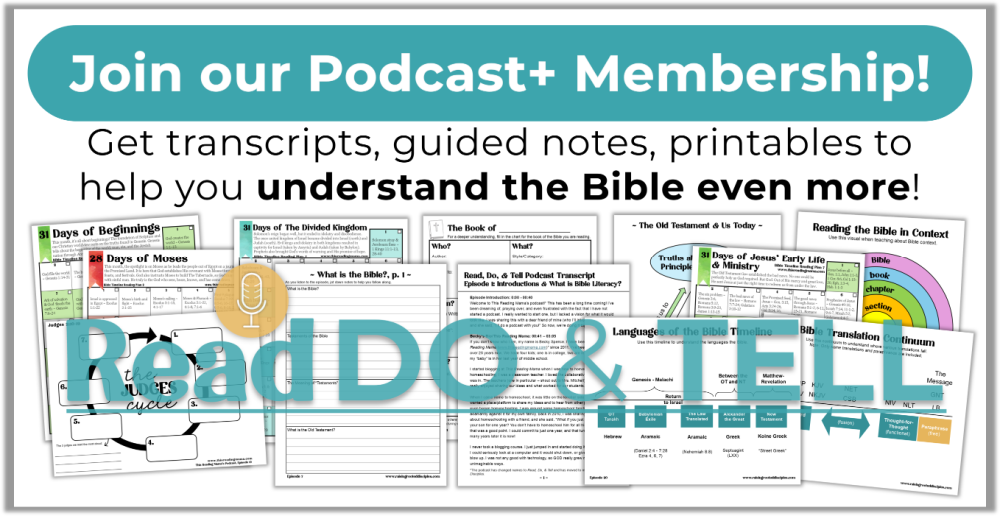
To support this mission, the ministry offers structured educational tools through the Podcast+ Membership, providing subscribers with comprehensive transcripts, guided notes, curated Bible reading plans, and exclusive study printables designed to deepen theological literacy at the grass-roots level.
Future Outlook: Cultivating Discernment in an Age of Deception
As the digital landscape continues to evolve at breakneck speed, the challenge of identifying and resisting false teaching will only intensify. Emerging technologies, including advanced artificial intelligence capable of generating seemingly orthodox sermons, theological essays, and devotionals at scale, present new frontiers for spiritual deception.
The Shift Toward Proactive Discretion
The trajectory established by ministries like Read, Do, & Tell points toward a necessary cultural shift within the modern church: moving away from passive consumption and toward active theological literacy. Future-proofing the faith of the next generation relies heavily on several key practices:
- Rigorous Scriptural Literacy: Believers must move beyond reading isolated memory verses to understanding entire biblical narratives in their proper historical and literary contexts.
- Embracing Community Accountability: Healthy spiritual life requires deep roots in local, accountable church communities where leadership is qualified, transparent, and submitted to biblical standards.
- Valuing Historical Wisdom: Engaging with historic church history, creeds, and orthodox theological frameworks prevents contemporary believers from reinventing destructive heresies under the guise of modern "innovation."
Conclusion
False teaching is not a theoretical annoyance; it is a spiritual hazard that warps lives, divides communities, and obscures the beauty of the true Gospel. Through Episode 28 of the Read, Do, & Tell podcast, Becky and Amy have provided an invaluable roadmap for believers navigating a world saturated with spiritual noise. By learning to recognize the behavioral red flags of deception and anchoring themselves firmly in the timeless truth of Scripture, Christians can confidently stand as discerning, resilient lights in an increasingly complex cultural landscape.

