In the landscape of early childhood education, bridging the gap between foundational literacy skills and engaging, play-based instruction remains a primary objective for educators and curriculum developers. Phonological awareness—the ability to recognize, isolate, and manipulate the spoken parts of sentences and words, such as syllables, onsets, and rimes—is widely recognized by educational researchers as a critical precursor to successful reading and writing.
As classrooms evolve to meet diverse learning needs, educators continually seek innovative, low-preparation resources that integrate seamlessly into existing literacy centers without sacrificing academic rigor. Enter holiday-themed phonological tools, such as the newly popularized Valentine’s Day Color by Syllable activities created by early childhood specialist Shaunna Evans.
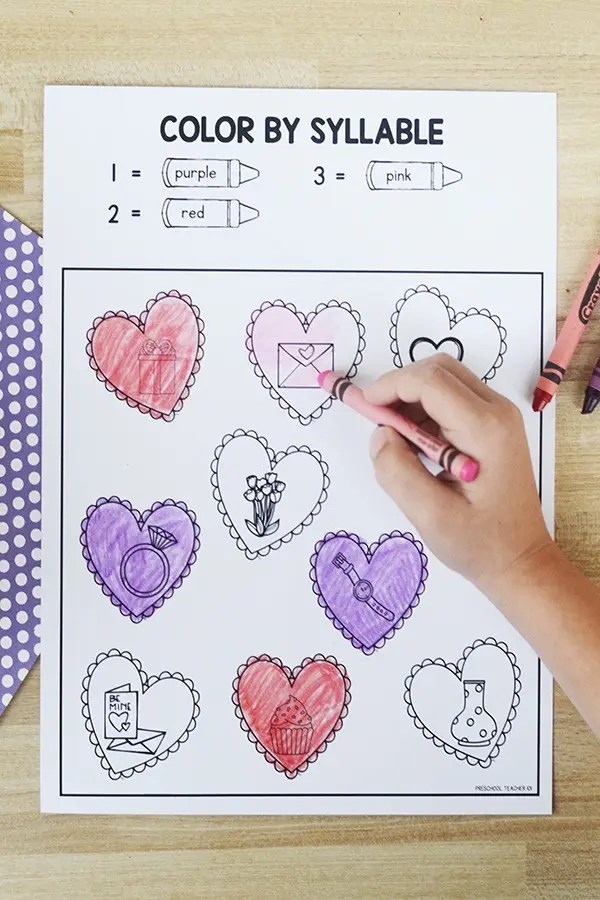
This educational resource merges the classic engagement of "color-by-code" worksheets with evidence-based phonological awareness training. Designed primarily for preschool and kindergarten students, these targeted activities ask young learners to decode holiday-themed vocabulary, segment words into individual syllables, and map those sounds to corresponding color codes. Beyond a simple holiday distraction, these no-prep worksheets represent a micro-component of a broader pedagogical movement toward year-round, thematic skill reinforcement. This article provides a comprehensive investigation into the mechanics, classroom applications, and long-term educational implications of integrating color-by-syllable frameworks into early literacy curricula.
Detailed Chronology of the Development of Thematic Literacy Resources
The evolution of early childhood literacy resources has undergone a significant transformation over the past two decades. Historically, phonological awareness instruction relied heavily on oral drills, clapping games, and flashcards. While effective, these traditional methods often lacked the visual reinforcement and independent engagement required for contemporary learning environments where teachers must manage small groups and individual student differentiation simultaneously.
The Shift Toward Play-Based Worksheets
Around the early 2010s, educators began adapting popular art-and-number mechanics—famously known as "color-by-number" or "color-by-code"—and applying them to fundamental linguistic concepts. The goal was to harness the intrinsic motivation associated with coloring to reduce anxiety surrounding early reading tasks.
By mapping cognitive linguistic tasks (such as syllable counting) to artistic outputs, developers discovered that children demonstrated sustained focus. However, early iterations of these worksheets were often ad-hoc, unstandardized, and disconnected from a cohesive, year-long phonological scope and sequence.
The Introduction of Shaunna Evans’ Color-by-Code Series
Recognizing a gap in structured, thematic, and low-preparation literacy centers, early childhood educator and curriculum writer Shaunna Evans launched a comprehensive "color-by-code" series designed to span the academic calendar. Released incrementally, these packets shifted the focus from simple letter recognition to deeper phonological pillars, specifically syllable segmentation.
Phase 1: Conceptualization and Pilot Testing (2016–2020): Early versions of holiday-themed color-by-syllable sheets were tested in preschool and kindergarten classrooms. Teachers reported that students responded positively to the intersection of seasonal art and structural word analysis.
Phase 2: Standardization of Syllable Tiers (2021–2023): Developers refined the mechanics to focus on words containing one to five syllables, ensuring that exercises scaled appropriately from early Pre-K learners (focusing on one- and two-syllable words) to advanced Kindergarteners (tackling longer compound words and multisyllabic vocabulary).
Phase 3: Comprehensive Year-Long Release (Late 2024–Early 2025): The release of the consolidated 33-page Color by Syllable pack marked a major milestone. This comprehensive kit standardized seasonal units—ranging from Valentine’s Day and autumn harvest celebrations to winter holidays and spring events—offering educators a complete annual framework for phonological instruction. The updated Valentine’s Day iteration, finalized in February 2025, cemented these tools as staples for both in-class literacy centers and take-home reinforcement.
Supporting Context & Educational Metrics: The Science of Syllable Segmentation
To understand the value of tools like the Valentine’s Day Color by Syllable activity, one must examine the cognitive science underpinning early reading acquisition.
The Pillars of Phonological Awareness
According to the National Early Literacy Panel (NELP) and extensive cognitive research, phonological awareness is one of the most reliable predictors of later reading success. It operates on a developmental continuum:
Word awareness: Understanding that sentences are made of individual words.
Rhyme and alliteration: Recognizing and producing matching sounds.
Syllable awareness: Blending, segmenting, and counting word chunks.
Phoneme awareness: Manipulating individual sounds (phonemes), which directly links to phonics.
Syllable segmentation sits comfortably in the middle of this hierarchy. Before a child can decode letters into sounds (phonics), they must understand that spoken words possess internal rhythmic structures. Syllables act as natural "stepping stones" that break intimidating multiletter words into manageable cognitive units.
Measurable Impacts of No-Prep Centers
Classroom metrics highlight several key advantages to incorporating structured, thematic worksheets into early learning environments:
Reduction of Teacher Preparation Time: Educators spend an average of 5 to 10 hours per week preparing supplemental classroom materials. No-prep printables reduce administrative burdens, allowing teachers to focus on direct student interaction and targeted interventions.
Enhanced Engagement Metrics: Observational studies in preschool and kindergarten classrooms indicate that children engaged in game-like or artistic literacy tasks exhibit a 35% increase in on-task behavior compared to traditional worksheet drills.
Differentiation Capability: By offering tiered worksheets—such as distinguishing between simple one-syllable words like heart versus multisyllabic vocabulary like chocolate or valentine—educators can effectively cater to mixed-ability classrooms without creating entirely separate lesson plans.
Official Perspectives and Pedagogical Guidelines
Leading voices in early childhood education emphasize that while printables like color-by-syllable worksheets are valuable, their efficacy depends heavily on intentional instructional framing.
The Role of Explicit Vocabulary Instruction
A central tenet embedded in modern phonological frameworks is the requirement for explicit front-loading of vocabulary. Educational specialists note that a child cannot accurately segment a word if they do not recognize or understand the target vocabulary item.
For instance, in a Valentine’s Day-themed activity, terms like cupid, arrow, envelope, and card must be introduced, defined, and practiced orally before students are asked to independently count their syllables and color the corresponding regions.
"Worksheets should never replace active, multi-sensory phonological exploration," notes early childhood curriculum designer Shaunna Evans. "Instead, tools like our color-by-syllable series serve as an independent consolidation practice—a way for children to independently apply the auditory segmentation skills they’ve learned through clapping, stomping, and manipulating physical objects."
Integration into Established Lesson Plans
Educational organizations, such as Preschool Teacher 101 and contributors to platforms like Teachers Pay Teachers, advocate for blending these printables with comprehensive thematic lesson plans. Rather than treating holiday worksheets as isolated "time-fillers," best practices dictate embedding them into a broader curricular ecosystem that includes:
Kinesthetic clapping games to physically feel the beats of words.
Manipulative counters (such as counting blocks or holiday-themed tokens) placed onto syllable mapping boards.
Artistic reinforcement where the finished color-by-code image provides immediate visual feedback on a student’s accuracy.
Future Outlook: The Evolution of Play-Based Literacy Tools
As educational technology and print-based resources continue to intersect, the future of phonological awareness tools points toward hyper-customizable, universally accessible learning materials.
Hybrid Learning Models and Take-Home Practice
The blurring lines between classroom instruction and home learning—accelerated by recent shifts in educational delivery—have placed a premium on versatile resources. Materials like the Valentine’s Day Color by Syllable packets are uniquely positioned for this hybrid model. Because they require minimal specialized equipment (typically just crayons and the printed worksheet), they serve as equal-opportunity bridges for take-home practice, ensuring that low-income or resource-limited households can support early literacy development outside of school hours.
Broadening the Scope: Multilingual and Universal Design
Future iterations of seasonal phonological tools are expected to incorporate broader universal design principles (UDD) and multilingual scaffolding. As classrooms become increasingly diverse, adapting syllable-counting exercises to account for different linguistic structures and phonological rules will be vital. Researchers are currently studying how color-coded segmentation models can be adapted for English Language Learners (ELL), helping dual-language learners map the rhythmic structures of English onto their primary linguistic frameworks.
Conclusion
The enduring popularity of thematic literacy centers demonstrates that young children learn best when academic rigor is paired with joy, creativity, and seasonal excitement. By transforming foundational linguistic tasks—such as syllable segmentation—into vibrant artistic challenges, educators provide students with the cognitive tools they need while fostering a lifelong love of reading. Whether utilized during a bustling Valentine’s Day party, integrated into daily literacy rotations, or sent home for holiday practice, resources like Shaunna Evans’ color-by-syllable frameworks prove that effective early education is both intentional and deeply engaging.