
Executive Overview
Subscription boxes designed to foster Science, Technology, Engineering, and Mathematics (STEM)—as well as the arts-integrated variant, STEAM—have evolved from a niche market trend into a cornerstone of modern educational enrichment. Led globally by pioneers like KiwiCo, the phenomenon of delivering hands-on, project-based learning directly to family doorsteps has captured the imagination of educators, parents, and children alike.
However, the educational ecosystem is far from monolithic. Children possess vastly different developmental needs, learning curves, and innate passions ranging from biological sciences and mechanical engineering to global geography and environmental stewardship. For families looking beyond the KiwiCo catalog, a rich landscape of specialized subscription services awaits.
This comprehensive investigation examines the top-tier alternatives currently dominating the children’s educational subscription market. By drawing upon extensive, hands-on family testing and analytical evaluations, this report explores how these alternative boxes foster critical thinking, enhance homeschooling structures, reduce screen dependency, and spark intrinsic motivation. Furthermore, this guide provides a strategic framework for parents navigating price points, age brackets, and pedagogical philosophies to choose the optimal educational tool for their children.
Detailed Chronology: The Rise of Project-Based Subscription Learning
The modern direct-to-consumer educational model did not emerge overnight; its roots trace back to broader shifts in pedagogical theory, the expansion of homeschooling networks, and the democratization of consumer logistics.
Phase 1: The Foundations of Alternative Education (Pre-2010s)
Historically, supplemental education was confined to brick-and-mortar tutoring centers, extracurricular weekend programs, or static textbook kits purchased from specialized teacher-supply stores. While these resources provided academic rigor, they frequently lacked the engagement factor necessary to captivate modern children accustomed to dynamic media environments. Traditional science kits available in retail stores were often single-use, messy, and plagued by missing components, leading to high abandonment rates.
Phase 2: The Direct-to-Consumer Boom (2011–2018)
As recurring subscription models revolutionized industries ranging from razors to meal kits, educational entrepreneurs recognized an opening in the children’s market. Companies like KiwiCo and early pioneers such as Little Passports introduced the concept of curated, monthly deliveries. These boxes transformed abstract scientific concepts into tangible, tactile projects. This era established the foundational playbook: pairing high-grade physical materials with clear, age-appropriate instructional design.
Phase 3: Specialization and Niche Mastery (2019–Present)
As the market matured, generic "science and crafts" boxes gave way to hyper-specialized educational frameworks. Founders with distinct institutional and industrial backgrounds—such as former NASA engineers, environmental scientists, and digital educators—began engineering proprietary subscription services. Today’s market features age-specific Montessori boxes for infants, university-grade chemistry kits for high schoolers, and engineering pipelines designed by prominent science communicators. This era represents the current gold standard of subscription learning, where curations are backed by neuroscience, pedagogy, and real-world engineering challenges.
Supporting Context & Metrics: Why STEM Subscriptions Work
To understand the enduring popularity of these services, one must examine the broader pedagogical shift toward experiential, inquiry-based learning.
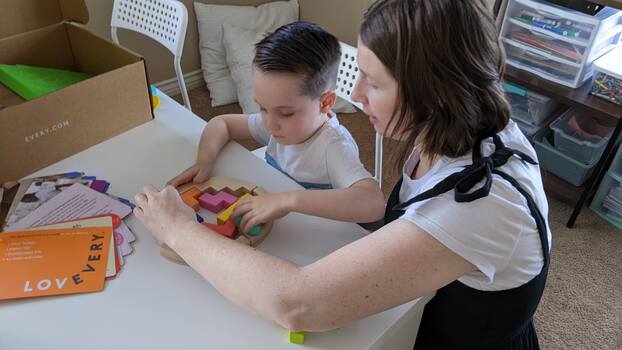
The Value Proposition of STEM/STEAM Education
STEM education transcends rote memorization by embedding real-world problem-solving into the learning process. According to educational research, engaging students through hands-on experimentation stimulates neural pathways associated with creativity, critical analysis, and iterative design. When a child builds a mechanical winch or formulates a chemical reaction, they are not merely following instructions; they are experiencing the scientific method firsthand—hypothesizing, testing, failing, and refining.
| Benefit Category | Impact on Child Development | Operational Advantage for Parents |
|---|---|---|
| Reduced Screen Time | Engages tactile senses, spatial reasoning, and motor skills away from digital displays. | Provides a constructive, offline activity that absorbs children’s attention organically. |
| Prepped & Curated Kits | Eliminates the cognitive load of sourcing obscure craft or scientific materials. | Saves hours of preparation and logistical stress for busy parents. |
| Homeschool & Academic Support | Reinforces school-day concepts through tangible application and structured modules. | Adds predictable, high-value educational structure to daily or weekly lesson plans. |
| Cognitive Autonomy | Builds intrinsic motivation, resilience through failure, and independent problem-solving. | Fosters self-directed learning, freeing up parental bandwidth during execution. |
In-Depth Analysis of KiwiCo Alternatives
Thorough, multi-year family testing reveals that no single subscription box fits every child. Each alternative reviewed below brings a distinct pedagogical philosophy, target demographic, and structural design to the market.
1. CrunchLabs: Engineering Through Invention
- Target Audience: Older children and adolescents interested in mechanics and building.
- Pedagogical Focus: Real-world mechanical engineering, invention, and iterative design.
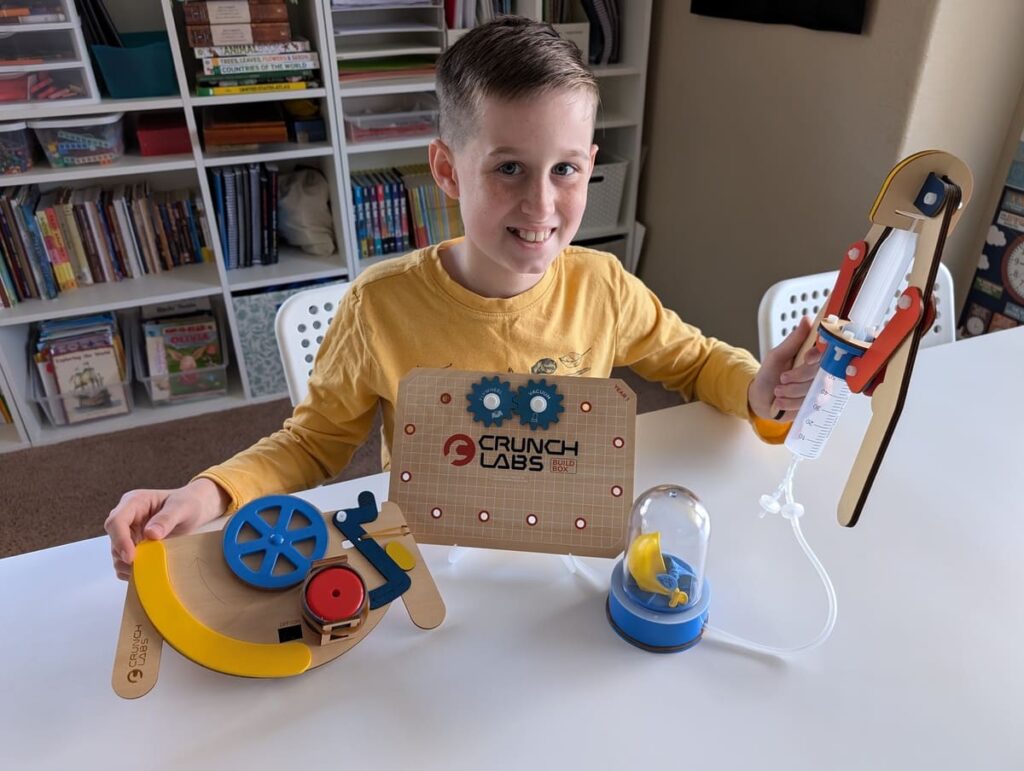
Founded by former NASA engineer and prominent YouTube science creator Mark Rober, CrunchLabs approaches STEM education from the perspective of an inventor. Rather than building static models, subscribers receive components and instructions each month to assemble functional gadgets, mechanical toys, and working machines.
What elevates CrunchLabs is its integration of digital media: every kit includes exclusive, high-production-value video content where Mark Rober deconstructs the underlying engineering principles in an approachable, highly entertaining manner. Often compared to KiwiCo’s Tinker Crate or Eureka Crate, CrunchLabs leans heavily into the mindset of a mechanical inventor, challenging kids to not just assemble a project, but to modify and improve upon it.
2. Lovevery: Montessori-Aligned Play for Early Development
- Target Audience: Infants and toddlers (Ages 0–4).
- Pedagogical Focus: Stage-based play, sensory exploration, and early cognitive architecture.
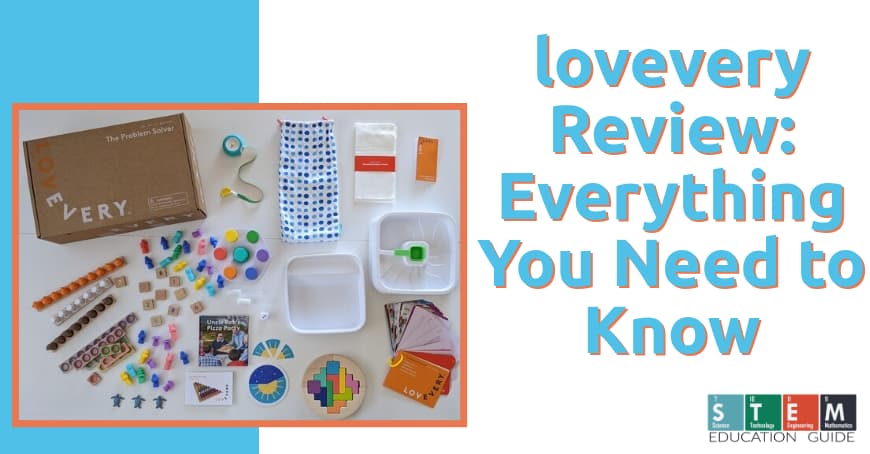
While many STEM boxes target school-aged children, Lovevery (pronounced Love-every) dominates the early-childhood developmental space. Backed by an advisory board ranging from certified positive discipline trainers to professors of human neuroscience, Lovevery delivers stage-based play kits every two months.
Grounded in the Montessori methodology, Lovevery’s toys and puzzles are meticulously researched to match exact developmental windows. Although it lacks the advanced circuitry or chemical components of boxes designed for older kids, its mastery of early childhood cognitive stimulation makes it the premier choice for parents investing in their toddler’s foundational problem-solving abilities.
3. MEL Science: The Gold Standard for Advanced Scientific Inquiry
- Target Audience: School-aged children through high school.
- Pedagogical Focus: Chemistry, physics, medicine, coding, and rigorous scientific methodology.
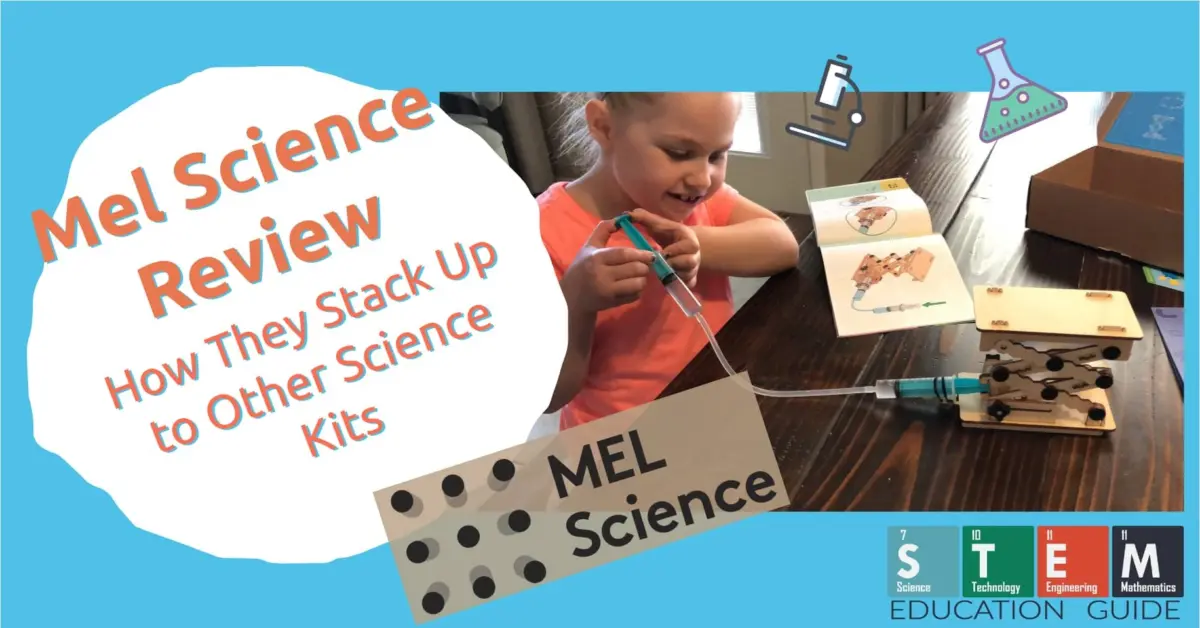
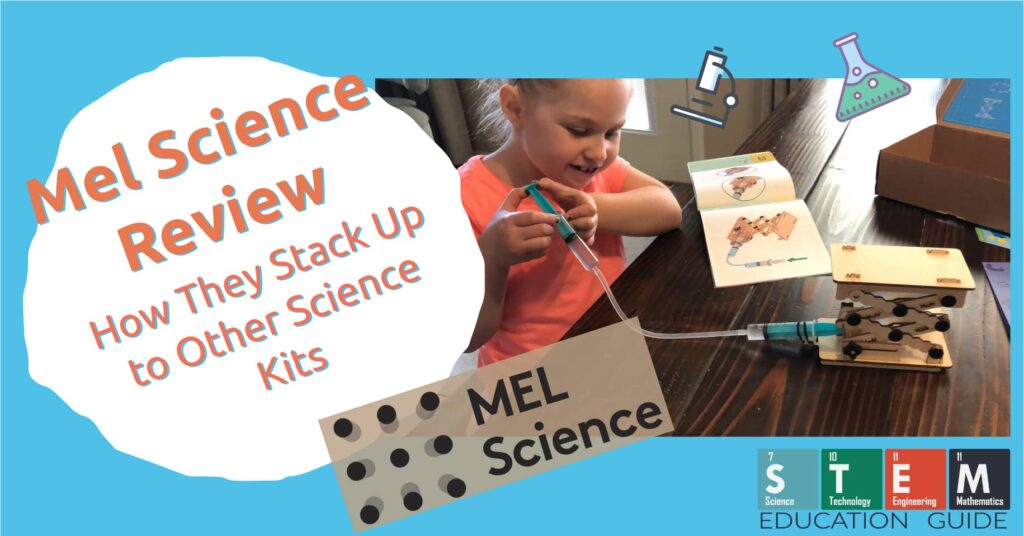
For families seeking a true one-to-one alternative to KiwiCo with a heavier emphasis on hard sciences, MEL Science is unmatched. MEL Science operates with a mission to make fundamental sciences exciting and accessible to all students, moving far beyond standard baking-soda-and-vinegar experiments.
Their curriculum is cleanly organized by scientific discipline—spanning physics, chemistry, coding, mathematics, and even introductory medicine. MEL Science pairs physical, high-tech kits (including safe chemical reagents and VR-enabled lessons) with engaging digital modules, making it exceptionally popular among homeschooling families looking for a comprehensive science curriculum.
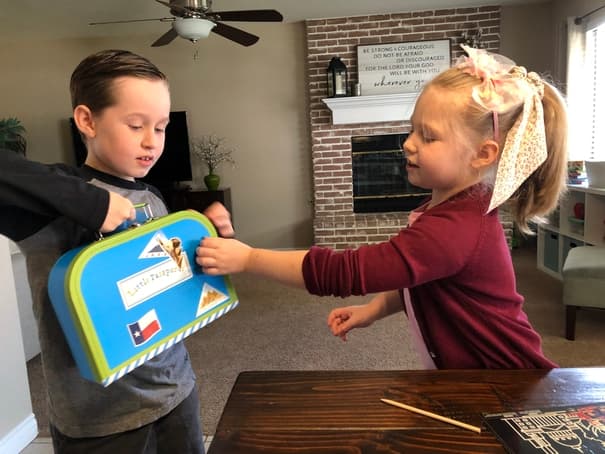
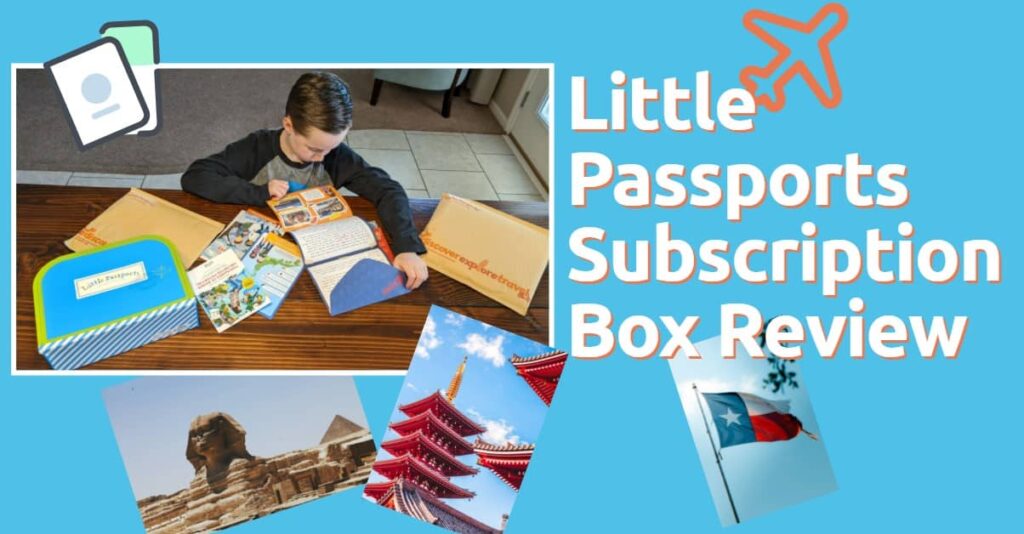
4. Little Passports: Cultural Geography and Global Citizenship
- Target Audience: Children ages 3–10.
- Pedagogical Focus: Global cultures, geography, storytelling, and early science exploration.
Little Passports was among the first subscription services to enter the market, establishing a legacy of excellence in educational travel. Their core mission centers on fostering global citizenship and cultural appreciation.
For ages 3 to 10, the service provides monthly deliveries featuring stamps for a child’s personal passport, fictional stories from around the globe, and related art and science activities. Over time, Little Passports has expanded its catalog to include specialized STEM iterations, such as the Science Expedition box, the Space box, and the Animals Wild box. It remains one of the most organized and visually appealing subscriptions available.
5. Green Kid Crafts: Bridging STEM and the Arts (STEAM)
- Target Audience: Children of varying elementary age groups.
- Pedagogical Focus: Environmental science, conservation, and arts integration (STEAM).
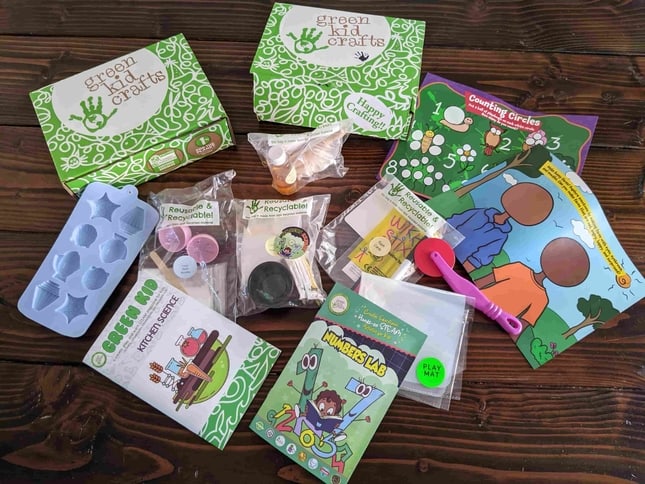
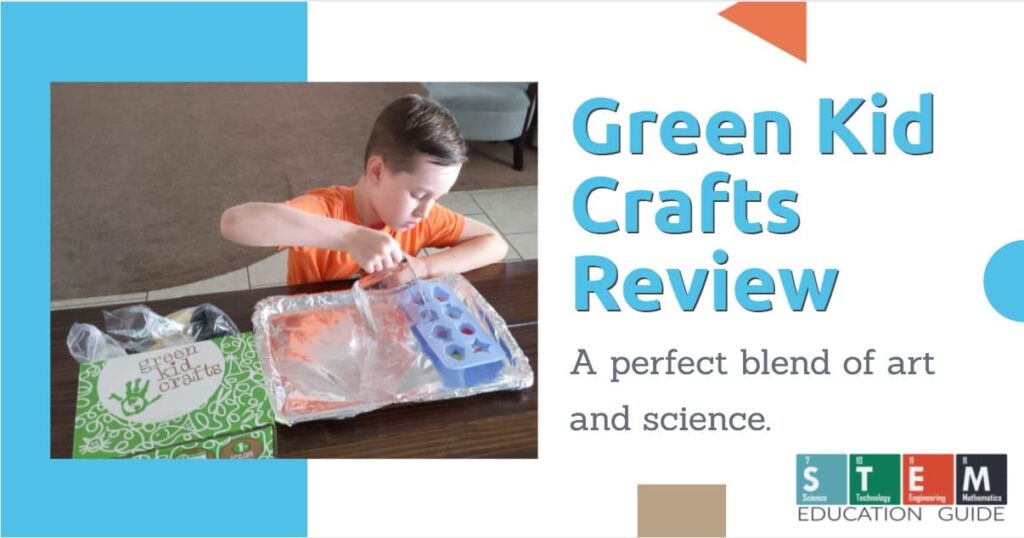
Founded by an environmental scientist and mother, Green Kid Crafts integrates ecological awareness with creative arts. By emphasizing the "A" in STEAM (Art), this subscription blends scientific inquiry with creative expression.
Each themed box focuses on earth-friendly themes, exploring natural sciences, conservation, and renewable energy through hands-on crafts and experiments. It serves as an ideal solution for children who require a creative, artistic outlet alongside traditional analytical problem-solving.
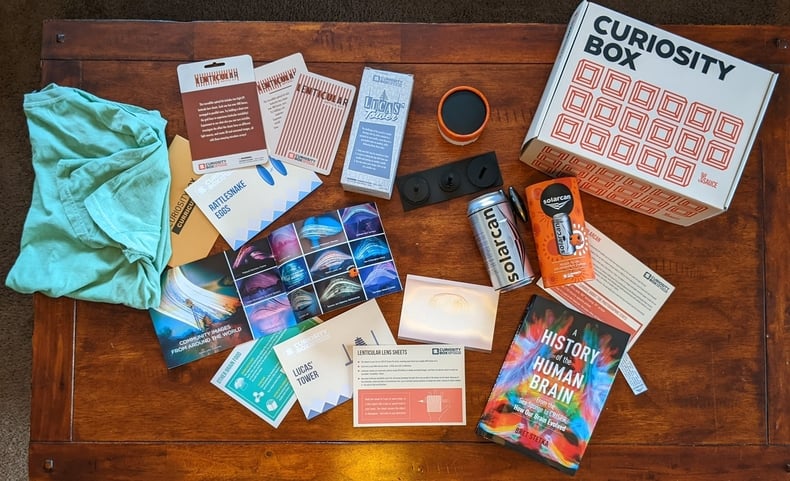
6. The Curiosity Box: High-End Science for Teens
- Target Audience: Adolescents ages 13 and up.
- Pedagogical Focus: Advanced physics, optical illusions, mathematical curiosities, and intellectual inquiry.
Created by Vsauce, one of the world’s leading science education networks with billions of cumulative views, The Curiosity Box is tailored specifically for teenagers and science enthusiasts.
Operating on a quarterly (seasonal) schedule rather than monthly, this subscription delivers high-end, premium scientific instruments and curiosities—ranging from professional-grade plasma orbs and Newton’s cradles to complex anamorphic kits and puzzle locks. This extended timeline allows older kids and young adults to deeply engage with sophisticated scientific principles without feeling rushed.
7. Womple Box: Story-Driven Geography and Science
- Target Audience: Ages 3 to 11 (split into Dinobox for younger children and Womple Box for older elementary students).
- Pedagogical Focus: World geography, cultural anthropology, and hands-on STEAM projects.
Womple Box combines narrative storytelling with geography and science. Subscribers follow a character named Womple on global adventures, exploring distinct countries, cultural traditions, indigenous foods, and regional ecosystems through project-based learning. For younger explorers, their sensory-rich Dinobox provides early science exploration tailored to dinosaur enthusiasts.
Future Outlook: The Trajectory of Home-Based STEM Education
As the direct-to-consumer educational landscape continues to mature, several key trends are poised to shape the future of STEM and STEAM subscription boxes:
- Integration of Augmented and Virtual Reality (AR/VR): Companies are increasingly moving beyond printed instruction manuals. By integrating AR and VR components—as seen with advanced platforms like MEL Science—children can visualize molecular structures, gravitational fields, and historical environments in three dimensions, bridging the physical-digital divide safely.
- Hyper-Personalization and Adaptive Learning: Future subscription models will likely utilize diagnostic onboarding quizzes to tailor box complexity and thematic focus directly to a child’s evolving psychological and academic profile, ensuring optimal engagement and zero frustration.
- Sustainability and Eco-Consciousness: With consumers growing more environmentally aware, subscription providers are facing mounting pressure to eliminate single-use plastics from their packaging, shifting toward biodegradable polymers, sustainably sourced wood, and recyclable cardboard engineering.
- Mainstream Adoption in Institutional Settings: Beyond home use, progressive school districts and public libraries are increasingly partnering with subscription box curators to supplement classroom curricula, validating the institutional efficacy of tactile, project-based learning.
Conclusion: How to Choose the Right Subscription for Your Child
Navigating the multitude of educational subscription boxes ultimately boils down to aligning product offerings with your child’s innate curiosity and developmental stage.
- For Toddlers (Ages 0–4): Prioritize sensory development and motor skills through Montessori-aligned frameworks like Lovevery.
- For Elementary Explorers (Ages 5–10): Look toward narrative-driven or multidisciplinary options like Little Passports, Womple Box, or Green Kid Crafts.
- For Hard-Science Enthusiasts: Invest in curriculum-aligned kits such as MEL Science.
- For Aspiring Engineers and Builders: Choose challenge-oriented, mechanical subscriptions like CrunchLabs.
- For Adolescents (Ages 13+): Provide sophisticated, high-concept scientific instruments via The Curiosity Box.
By selecting the right partner for your child’s educational journey, subscription boxes cease to be mere toys and transform into powerful catalysts for lifelong learning, critical thinking, and shared family discovery. Always review cancellation policies and trial terms before subscribing, and most importantly, dive into the projects alongside your children—because the most valuable metric of all is the shared joy of discovery.

