
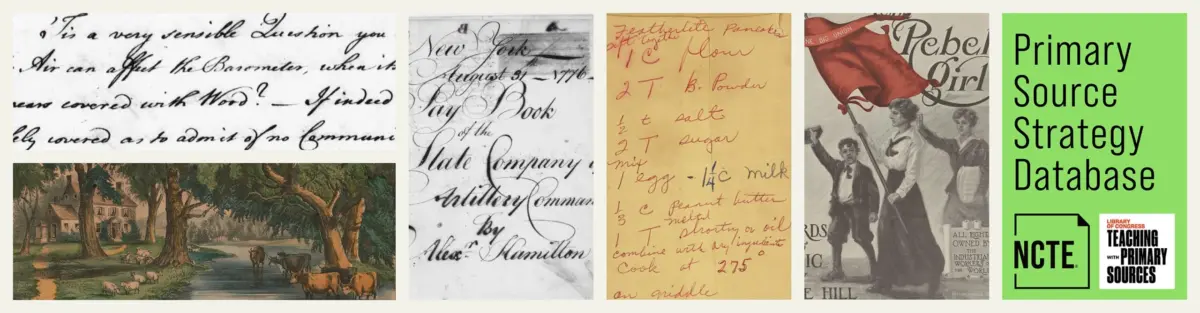
In an era defined by a relentless drive toward digital literacy and historical inclusivity, educators are continually searching for pedagogical tools that bridge the gap between textbook summaries and the raw, unvarnished voices of the past. Recognizing this critical need, the National Council of Teachers of English (NCTE) has deepened its collaborative footprint with the Library of Congress. Operating as an active participant in the prestigious Teaching with Primary Sources (TPS) Consortium, the NCTE has rolled out a robust, searchable database designed to fundamentally transform how literacy teachers and students integrate primary historical artifacts into their everyday classrooms.
This ambitious initiative features expert-crafted instructional strategies for more than 150 specific items culled directly from the Library of Congress’s vast digitized collections. Conceptualized and refined by more than two dozen distinguished English language arts (ELA) educators and curriculum leaders, these resources do far more than merely summarize historical events. They articulate the explicit literacy merit of each document, mapping them directly to modern curriculum frameworks, thematic units, and state standards. Users can easily navigate this dynamic repository using targeted tags such as picturebook, argument, government, law, and politics.
Among the most compelling artifacts highlighted within this database is a deeply moving, seventeenth-century petition penned by ten imprisoned women awaiting trial during the height of the Salem Witch Trials hysteria. Far from standard historical documentation, this primary source offers an intimate, heartbreaking window into the resilience, desperation, and rhetorical sophistication of those marginalized by systemic power structures. By spotlighting such underrepresented perspectives, the NCTE and the Library of Congress are not only reshaping the teaching of American history but are also providing ELA educators with sophisticated frameworks to foster critical thinking, historical empathy, and advanced argumentative analysis in the modern classroom.
Detailed Chronology: The Historical Genesis of the Ipswich Petition
To fully comprehend the instructional value of the primary source featured in the NCTE database, one must step back into the dark and tumultuous winter of 1692–1693. While the collective cultural memory of the Salem Witch Trials generally centers on the geographic boundaries of Salem Village and Salem Town, the hysteria cast a chilling net across the entirety of the Massachusetts Bay Colony.
The Winter of 1692: Desperation Behind Bars
During the height of the panic, numerous individuals—predominantly women whose non-conformity, financial independence, or social vulnerability made them prime targets—were accused of witchcraft. As the machinery of the colonial court system bogged down, scores of accused citizens languished for months in makeshift, unheated, and unsanitary provincial jails.
Among these holding facilities was the jail in Ipswich, Massachusetts. By the bleak winter months, a cohort of ten women had been imprisoned there for months, their trials indefinitely delayed. Recognizing that the severe New England winter threatened their lives—with several inmates suffering from acute illness and others heavily pregnant—these ten women took an extraordinary step. They drafted a collective petition addressed to the colonial authorities, pleading not for an immediate overturning of their dubious charges, but for the fundamental mercy of release on bail until the spring courts could reconvene.
The Anatomy of the Appeal
The petition stands as a remarkable piece of early American rhetoric. Written under extreme duress, the document details the physical toll of their confinement: freezing temperatures, rampant sickness, and the looming certainty of death by exposure rather than by the gallows. By requesting release on bail with the explicit promise to return for trial in the spring, the petitioners demonstrated a strategic understanding of legal terminology and civic process, even while stripped of their basic liberties.
Mainstream historical narratives of the period have historically relied upon the journals of magistrates, the prosecution notes of Cotton Mather, or the sensationalized accounts of courtroom proceedings—documents written almost exclusively by those holding systemic power. In stark contrast, the Ipswich petition presents a rare, unfiltered primary source generated directly by the accused. It captures their collective voice, their desperation, and their insistence on their right to humane treatment under the law.
Supporting Context & Metrics: Transforming Literacy Education
The integration of artifacts like the Ipswich petition into modern classrooms represents a paradigm shift in how English language arts and social studies are taught across the United States. Through its partnership with the Library of Congress TPS Consortium, the NCTE is addressing a long-standing challenge in education: how to make primary sources accessible, pedagogically sound, and directly relevant to literacy skill development.
Database Architecture and Usability
The newly expanded NCTE-Library of Congress database is meticulously engineered to support contemporary educators. Key structural features include:
- Curated Instructional Strategies: Developed by more than 25 leading ELA practitioners, ensuring that every strategy is field-tested and classroom-ready.
- Granular Tagging System: Educators can filter content using specific parameters, including argument, informational text, picturebook, and thematic keywords.
- Standard Alignment: Every resource is explicitly cross-referenced with national frameworks, providing seamless integration for lesson planning.
Standards Connections and Pedagogical Frameworks
The instructional value of utilizing documents such as the Ipswich petition extends deeply into national educational standards. Specifically, the resource aligns with core tenets established by both the NCTE and the Common Core State Standards (CCSS):
- NCTE Standard 1: Students read a wide range of print and nonprint texts to build an understanding of texts, of themselves, and of the cultures of the United States and the world; to acquire new information; to respond to the needs and demands of society and the workplace; and for personal fulfillment. The Ipswich petition challenges students to engage with archaic syntax and emotional nonprint/print artifacts, expanding their cultural and historical literacy.
- NCTE Standard 2: Students read a wide range of literature from many periods in many genres to build an understanding of the many dimensions (e.g., philosophical, ethical, aesthetic) of human experience. Evaluating a prisoner’s plea for survival forces students to grapple with deep ethical and philosophical questions regarding justice, state power, and human rights.
- Common Core Standard L.9-10.3: Apply knowledge of language to understand how language functions in different contexts, to make effective choices for meaning or style, and to comprehend more fully when reading or listening. Analyzing the rhetorical strategies employed by the imprisoned women allows high school students to dissect how language is deployed to persuade hostile authorities under conditions of extreme duress.
Official Statements and Institutional Vision
Leaders from both the National Council of Teachers of English and the Library of Congress have continually emphasized the transformative potential of merging historical archives with literacy instruction.
In position papers and consortium briefs outlining the partnership, representatives have stressed that primary sources should not be treated as mere decorative illustrations in textbooks. Instead, they must serve as the central text around which inquiry-based learning is built.
"When students interact directly with primary sources created by individuals who lived through monumental historical shifts—especially those whose voices were historically silenced or marginalized—they stop being passive consumers of history and begin active critical inquiry," notes curriculum framework documentation issued through the TPS Consortium. "Literacy is fundamentally about decoding human experience across time and medium. By pairing the archival depth of the Library of Congress with the pedagogical expertise of the NCTE, we are giving teachers the exact tools they need to cultivate analytical rigor, empathy, and advanced argumentative skills in the next generation."
Furthermore, educational researchers collaborating on the database emphasize that the inclusion of marginalized perspectives—such as the women of the Ipswich jail—directly supports modern educational equity goals. By examining how disenfranchised groups utilized written petitions to negotiate with patriarchal and judicial institutions, students gain a nuanced understanding of civic engagement, legal rights, and the evolution of American democratic principles.
Future Outlook: The Next Phase of Digital Literacy Integration
As the educational landscape continues to adapt to rapid technological advancements and evolving curriculum standards, the NCTE and the Library of Congress are looking toward the future with an expanded vision for their collaborative partnership.
Scaling the Repository
Plans are currently underway to expand the searchable database beyond its initial milestone of 150 items. As more educators contribute field-tested strategies, the repository will grow into an increasingly comprehensive ecosystem for interdisciplinary learning. Future updates will focus on incorporating enhanced digital tools, interactive annotation interfaces for students, and multimedia companion resources that link historical documents with contemporary social justice movements.
Professional Development and Teacher Empowerment
A core component of the upcoming strategic phase involves scaling professional development workshops nationwide. Through webinars, regional conferences, and online modules, the NCTE will train thousands of additional ELA and social studies teachers on how to effectively deploy Library of Congress digital archives in inquiry-based classrooms. Special emphasis will be placed on guiding educators through potentially sensitive or challenging historical topics—such as the Salem Witch Trials—ensuring that classrooms remain safe, intellectually rigorous spaces for open discussion.
Ultimately, this initiative signals a permanent evolution in instructional design. By anchoring literacy instruction in the authentic, challenging, and profoundly human documents of our past, the NCTE and the Library of Congress are equipping students not only to read the world, but to critically interrogate and thoughtfully shape its future.

