The cybersecurity paradigm is undergoing a profound and rapid transformation, driven not by the emergence of entirely novel attack vectors, but by the unprecedented velocity and operational scale injected by artificial intelligence. Released in conjunction with the Black Hat USA 2026 conference, a series of groundbreaking research studies and technical analyses reveal that AI is actively supercharging traditional cyber threats. Rather than replacing the methods that security defenders have battled for years—such as phishing, credential theft, system misconfigurations, and software supply-chain vulnerabilities—AI is turbocharging them. The result is a hyper-efficient threat ecosystem where adversaries can locate, exploit, and traverse corporate networks faster than ever before.
Among the most striking revelations from this wave of research is the deployment of autonomous vulnerability-research systems capable of mapping out codebases at machine speed. For instance, Palo Alto Networks Unit 42 unveiled data from NOVA, an autonomous system that analyzed thousands of open-source projects in a matter of weeks, confirming tens of thousands of previously unknown flaws. Concurrently, other industry investigations underscore a collapsing defense window: attacker breakout times are now routinely dropping below thirty minutes, identity and privilege management are central to three-quarters of completed investigations, and sophisticated malware is increasingly relying on direct-to-IP communications to bypass traditional domain-name-system (DNS) monitoring.
For enterprise security teams, cloud architects, and infrastructure administrators, the message is clear. The operational gap between defensive patching cycles and offensive execution is shrinking toward zero. This comprehensive report synthesizes the primary findings released around Black Hat USA 2026, breaking down how automated vulnerability discovery operates at scale, examining the evolution of evasive malware tactics, and charting the strategic roadmap organizations must adopt to survive the AI threat acceleration era.
Detailed Chronology: The Evolution of Threats at Black Hat USA 2026
The cybersecurity landscape presented at Black Hat USA 2026 did not point to a sudden sci-fi dystopia of rogue artificial superintelligences inventing impossible physics-breaking exploits. Instead, it painted a far more pragmatic and dangerous picture: the industrialization of existing attack strategies via machine learning automation.
The Lead-Up to Black Hat 2026
In the months leading up to the conference, security researchers observed an inflection point in how threat actors utilize automation. While security vendors have long deployed AI to triage alerts and sift through telemetry logs, offensive actors have closed the technological gap. The focus shifted from conceptual scripts to fully autonomous vulnerability-discovery loops. These systems do not merely suggest lines of vulnerable code; they crawl, parse, test, and verify exploits across entire software ecosystems without human intervention.
The Conference Unveiling
During the event itself, leading threat intelligence groups—most notably Palo Alto Networks’ Unit 42—released a suite of reports documenting this automated expansion. The findings shocked even seasoned practitioners. The traditional manual discovery phase of software security, which typically took security researchers or malicious actors weeks or months of meticulous code-auditing, has been compressed into automated bursts lasting mere hours.
Furthermore, the chronology of post-exploitation phases has accelerated. Security investigations highlighted that once an initial breach occurs—often through compromised credentials, exposed remote services, or phishing—the transition from initial access to lateral movement (known as the breakout time) frequently occurs in under 30 minutes. This leaves human security operations center (SOC) analysts with virtually zero room for error, mandating automated response frameworks simply to keep pace with machine-speed attacks.
Supporting Context & Metrics: The Numbers Behind AI Acceleration
To truly grasp the gravity of the 2026 research findings, one must examine the empirical data published across multiple technical analyses. The numbers reveal an alarming escalation in vulnerability density, evasion tactics, and the weaponization of enterprise architectures.
Autonomous Vulnerability Research at Scale
Palo Alto Networks Unit 42 published landmark results from its frontier AI vulnerability study concerning NOVA, an advanced autonomous vulnerability research system.
Scope of Analysis: Over a rigorous two-month testing period, NOVA thoroughly evaluated 3,915 open-source software projects.
Confirmed Flaws: The system successfully identified and confirmed 14,090 distinct vulnerabilities.
Novelty Rate: A staggering 99.4% of these identified vulnerabilities had never been previously reported or cataloged in public vulnerability databases.
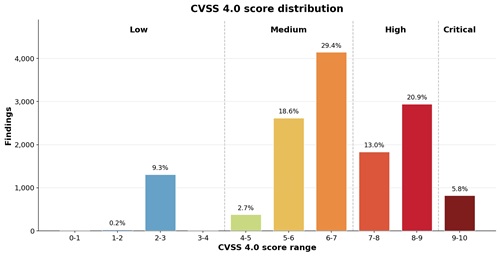
Severity Distribution: Out of the total confirmed flaws, 39.7% were formally rated as either High or Critical under the Common Vulnerability Scoring System (CVSS) version 4.0 framework.
[ NOVA Autonomous Vulnerability Study Metrics ]
+-----------------------------------+----------------+
| Metric Parameter                  | Recorded Data  |
+-----------------------------------+----------------+
| Open-Source Projects Analyzed     | 3,915          |
| Confirmed Vulnerabilities         | 14,090         |
| Previously Unreported Flaws       | 99.4%          |
| High / Critical (CVSS 4.0) Rating | 39.7%          |
+-----------------------------------+----------------+
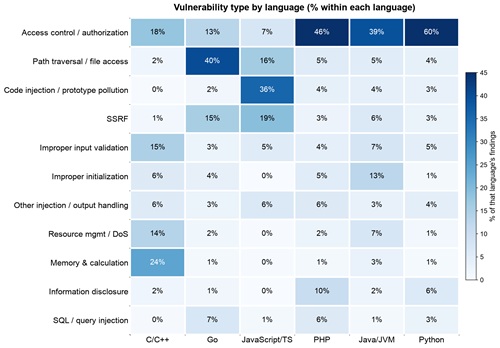
Unit 42’s analysis further demonstrated that vulnerability patterns were heavily dependent on the underlying programming-language ecosystem. Different languages exhibited distinct propensities for specific security weaknesses, including access-control flaws, path traversal vulnerabilities, code injection vectors, prototype pollution, and server-side request forgery (SSRF).
Evasive Malware and Direct-to-IP Communications
Beyond software-level vulnerability discovery, security researchers examined how modern malware evades perimeter defenses. Traditional threat detection heavily relies on monitoring DNS queries to identify when infected endpoints communicate with command-and-control (C2) servers.
To circumvent this, modern malware families are increasingly utilizing direct-to-IP connections. A separate Unit 42 study analyzed more than 4 million dynamic-analysis reports to quantify this evasion technique:
Among malware samples actively communicating with C2 infrastructure, 45.32% executed at least one direct-to-IP connection.
Even after filtering out bulk scanning noise, the adjusted figure remained remarkably high at 41.97%.
In total aggregate telemetry, direct-to-IP traffic accounted for 23.17% of all C2 connection attempts observed in the study.
Identity, Privileges, and Cloud Infrastructure
The metrics surrounding modern intrusions reinforce that attackers prefer climbing through front doors left slightly ajar rather than breaking down reinforced concrete walls:
75% of completed forensic investigations highlighted identity or privilege mismanagement as a core vector or facilitating factor.
Cloud-aware criminal activity has surged, with threat actors actively abusing enterprise AI infrastructure, poisoning software dependencies, and weaponizing legitimate authentication mechanisms to establish persistent unauthorized access.
Official Statements and Industry Insights
Security leaders speaking around the Black Hat USA 2026 conference emphasized that the cybersecurity industry faces a watershed moment. The democratization of artificial intelligence means that advanced offensive capabilities are no longer restricted to elite nation-state Advanced Persistent Threat (APT) groups; they are increasingly accessible to cybercriminal syndicates and script kiddies alike.
"The research confirms that AI is not inventing a brand-new playbook; rather, it is executing the existing playbook at a scale and velocity that human defenders simply cannot match manually," noted an enterprise threat intelligence lead during the event briefings. "When an autonomous system can validate thousands of zero-day vulnerabilities across open-source projects in sixty days, the traditional disclosure and patching model breaks down entirely."
Another technical analyst highlighted the danger of treating AI as a silver bullet for defense while ignoring foundational hygiene:
"Organizations are rushing to deploy enterprise AI solutions without hardening the underlying infrastructure. Attackers are turning these very AI tools and enterprise integrations against corporations, using automated loops to find misconfigurations in cloud environments before the security team has even finished onboarding the asset."
The consensus among industry authorities is definitive: efficiency is no longer the exclusive domain of the security department. Threat actors are utilizing AI to streamline their operations, reduce dwell times, and maximize the return on investment for every phishing campaign, credential stuffing attack, and software supply-chain compromise.
Future Outlook: Navigating the Post-Acceleration Threat Landscape
As the digital ecosystem moves deeper into the post-Black Hat 2026 reality, organizations must strategically adapt to a world where AI-accelerated attacks are the baseline standard. The traditional reactive security posture—waiting for an alert, manually analyzing telemetry, and applying patches on a monthly cycle—is officially obsolete.
1. Embracing Autonomous Defense
To counter automated offense, organizations must adopt automated defense. Security operations must integrate machine learning models capable of operating at machine speed. Automated remediation, real-time behavioral baselining, and continuous exposure management are no longer luxury features; they are mandatory survival requirements.
2. Securing the Identity Perimeter
Because three-quarters of investigations trace back to identity and privilege abuse, Zero Trust Architecture (ZTA) must be rigorously enforced. Organizations must implement continuous identity verification, strict least-privilege access controls, and advanced behavioral monitoring to detect when legitimate authentication tokens are weaponized by unauthorized entities.
3. Hardening the Software Supply Chain
With autonomous systems discovering tens of thousands of vulnerabilities in open-source projects, software bill of materials (SBOMs) and automated dependency scanning must be integrated directly into CI/CD pipelines. Developers must assume that external libraries contain undiscovered flaws and implement robust container isolation and runtime security controls.
4. Mitigating Network Evasion
Given the widespread adoption of direct-to-IP C2 communications, security teams must evolve beyond traditional DNS-centric monitoring. Network visibility tools must incorporate advanced heuristic traffic analysis, deep packet inspection (DPI), and anomaly detection capable of flagging unauthorized outbound IP connections regardless of whether a DNS query was initiated.
Ultimately, the acceleration of cyber threats via artificial intelligence signals the end of security through obscurity. As attackers utilize AI to scale their operations, enterprise resilience will be measured not by how many walls are built, but by how rapidly systems can detect, adapt, and heal themselves in real time.