

Executive Overview
The conversation surrounding enterprise artificial intelligence has undergone a fundamental, paradigm-shifting transformation. For the past several years, corporate boardrooms, chief technology officers, and engineering leads have been primarily absorbed by a singular, foundational question: Can generative artificial intelligence deliver measurable business value? Today, that exploratory phase has officially drawn to a close. Organizations have largely moved past proof-of-concept sandboxes and preliminary pilots, plunging headfirst into a new, highly operational era defined by agentic AI.
According to new research from Caylent—an AI-focused Amazon Web Services (AWS) Premier Tier Services Partner—enterprises are actively deploying autonomous AI agents directly into production environments. However, this rapid acceleration toward machine-driven execution has triggered a secondary, high-stakes challenge: governance. As software systems transition from passive, text-generating assistants to active, decision-making agents capable of executing commands, organizations are quickly realizing that autonomy without accountability is an unacceptable business risk.
The new bottleneck in enterprise technology is no longer the raw intelligence of foundational models; rather, it is trust. Enterprises are not necessarily waiting for smarter algorithms; they are waiting for robust, foolproof control systems and regulatory guardrails. This comprehensive report explores the findings of the Enterprise Readiness for Agentic Engineering & Autonomous Cloud Operations Survey Report, examining how North American enterprises are navigating the fine line between operational velocity and strict algorithmic oversight, and what this means for the future of enterprise software engineering and cloud operations.
Detailed Chronology: From Generative Novelty to Autonomous Production
To understand the current state of agentic AI, it is essential to trace the rapid chronological evolution of enterprise AI adoption over the past half-decade.
Phase 1: The Generative Boom (2022–2023)
When consumer-facing and enterprise-grade generative AI tools burst onto the mainstream scene, organizations rushed to adopt them. This initial wave was characterized by curiosity, experimentation, and isolated proofs-of-concept (PoCs). Companies experimented with writing code snippets, summarizing lengthy documentation, and drafting internal communications. During this period, human-in-the-loop interaction was mandatory at every single step. AI was treated as an advanced autocomplete or a creative sounding board rather than a dependable system of action.
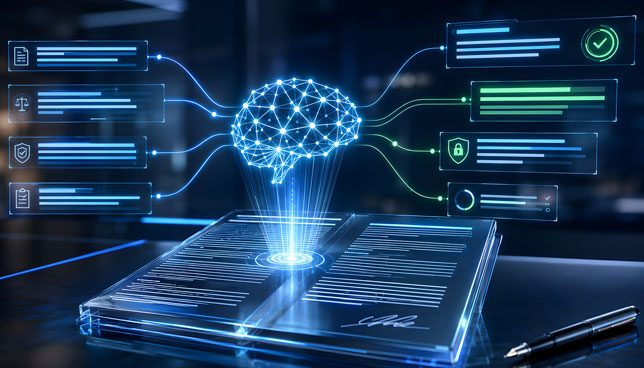
Phase 2: Workflow Integration and Point Solutions (2023–2024)
As foundational models matured, organizations began integrating large language models (LLMs) into specific, structured workflows. Retrieval-Augmented Generation (RAG) architectures allowed companies to connect AI models to internal knowledge bases, significantly reducing hallucinations and improving output relevance. During this phase, software engineering teams began utilizing AI coding assistants (such as GitHub Copilot), while cloud operations teams began exploring automated anomaly detection and log analysis. However, these tools remained largely advisory—they suggested solutions, but human engineers retained absolute authority over execution.
Phase 3: The Rise of Agentic AI and Autonomous Operations (Late 2024–Present)
The current phase represents a quantum leap forward. Unlike traditional generative models that simply respond to a prompt and stop, AI agents are designed to pursue complex, multi-step goals autonomously. Given an objective—such as debugging a cloud infrastructure failure, optimizing database queries, or refactoring microservices—an agentic system can plan, execute, evaluate its own progress, correct its mistakes, and complete the task with minimal human intervention.
Caylent’s new research indicates that this transition is no longer theoretical. A striking 59.5% of enterprise leaders report that they are already running AI agents autonomously in production environments. This milestone marks the definitive death of the "pilot-only" era of enterprise AI. Corporations are no longer just testing the waters; they are anchoring autonomous agents directly into their core operational workflows.
Supporting Context & Metrics: Inside the Caylent Research Report
Conducted by prominent research firm Censuswide on behalf of Caylent, the Enterprise Readiness for Agentic Engineering & Autonomous Cloud Operations Survey Report provides an empirical window into this industrial shift. The survey polled 200 senior enterprise leaders across organizations in the United States and Canada, ensuring a high-level executive perspective on the state of autonomous systems. Crucially, 100% of the respondents reported that their organizations are actively exploring or deploying agentic AI within their engineering or cloud operations divisions.
Breaking Down the Production Numbers
The survey data dismantles the assumption that AI agents are trapped in isolated development environments. Among the respondents currently utilizing autonomous agents:

- 36% reported operating agents within strictly defined guardrails inside live production environments.
- 23.5% reported an even deeper integration, noting that agents are broadly and systematically deployed across complex engineering and operations workflows.
This combined 59.5% adoption rate in production signals that enterprise trust in agentic capabilities has crossed a critical psychological threshold. Organizations are actively trusting software agents to interact with live systems, manage cloud infrastructure, and streamline engineering pipelines.
The Granularity of Trust: The 98% Rule
Perhaps the most revealing statistic to emerge from the research centers on enterprise risk appetite. When enterprise leaders were asked if they would allow AI agents to execute changes in production autonomously, an overwhelming 98% answered in the affirmative—provided specific conditions and safeguards were met.
Only 2% of respondents stated that no level of safeguards would ever make autonomous production execution acceptable to their organization.
This metric is profoundly significant. It proves that executive resistance to AI autonomy is not rooted in techno-pessimism or a stubborn refusal to modernize. Rather, it is a pragmatic demand for risk mitigation. Enterprise leaders want the massive efficiency gains that agentic AI promises; they simply refuse to compromise security, system stability, and compliance to get them.
Model Intelligence vs. Guardrails
For years, the artificial intelligence industry has been obsessed with scaling laws—building larger models with more parameters, greater reasoning capabilities, and expanded context windows. However, Caylent’s research suggests that the market’s immediate priorities have shifted.

When asked what factors would most effectively accelerate the broader adoption of agentic AI, 83% of respondents placed stronger guardrails on equal or higher footing than raw model intelligence.
In the eyes of enterprise leadership, a slightly less intelligent model equipped with unbreakable safety parameters, comprehensive audit trails, and strict policy enforcement is infinitely more valuable—and much safer to deploy—than a hyper-intelligent model that operates as an unpredictable black box. The primary competitive advantage for AI platform providers is no longer just raw cognitive horsepower; it is governance infrastructure.
Official Perspectives and Industry Implications
The rapid migration of agentic AI from the sandbox to the production line has profound implications for the future of enterprise architecture, cybersecurity, and corporate governance. Industry leaders and technical experts are increasingly vocal about the necessity of bridging the gap between autonomous capability and structural control.
Shifting Focus: From "Can It Work?" to "Who Is Responsible?"
In the early days of enterprise AI deployments, proof-of-concept projects were judged primarily on technical feasibility. Can the model write this script? Can it summarize this report accurately?
Today, compliance officers, CISOs, and Chief Information Officers are asking entirely different sets of questions:

- If an autonomous agent misconfigures a cloud security group, causing a data leak, who assumes legal and operational liability?
- How can an enterprise maintain a tamper-proof audit trail of every decision an agent makes during a high-pressure incident response?
- What circuit breakers exist to instantly halt an agentic loop if it begins executing destructive commands?
These questions underscore why governance has taken center stage. As software systems are granted the autonomy to read, write, and execute code in live environments, traditional access control models (such as Role-Based Access Control) must evolve into dynamic, intent-aware authorization frameworks designed specifically for non-human workers.
The Evolution of Engineering Roles
The rise of agentic AI is also fundamentally redefining the day-to-day responsibilities of software engineers and DevOps professionals. Rather than spending hours manually writing boilerplate code, configuring CI/CD pipelines, or troubleshooting routine server errors, human engineers are increasingly transitioning into the role of AI supervisors and architects.
In this new paradigm, human professionals write high-level intents, define operational constraints, and review pull requests generated by autonomous agents. Engineering excellence is no longer measured solely by lines of code written per day, but by the sophistication and resilience of the governance frameworks built to manage autonomous systems.
Future Outlook: The Road Ahead for Agentic Enterprise AI
As we look toward the horizon of enterprise technology, the trajectory of agentic AI is clear. The technology will continue to mature, scaling across larger organizations and penetrating deeper into mission-critical business units. However, the speed and scale of this expansion will be dictated entirely by how quickly the industry can solve the governance puzzle.
1. The Standardization of AI Guardrails
Just as cybersecurity standards (such as SOC 2, ISO 27001, and GDPR compliance) became non-negotiable prerequisites for cloud computing and SaaS adoption, the market will soon demand standardized frameworks for AI agent governance. We can anticipate the emergence of dedicated "Agentic Governance Platforms" designed to monitor, audit, and constrain AI behavior in real-time.
2. Deep Integration with Cloud-Native Security
Because a significant portion of early agentic deployments focuses on cloud operations and engineering workflows, integration with cloud-native security tools is paramount. Future AI agents will operate within tightly sandboxed environments where their permissions are dynamically adjusted based on the sensitivity of the task at hand, utilizing ephemeral credentials that expire the moment a workflow concludes.
3. Moving from Narrow Autonomy to Collaborative Multi-Agent Systems
While current deployments largely focus on narrow, well-defined workflows (such as automated testing, log analysis, and minor code refactoring), the next frontier will involve collaborative multi-agent systems. In these environments, specialized AI agents—a security agent, a database optimization agent, and a compliance agent—will communicate, negotiate, and execute complex operational tasks collaboratively, all while remaining tethered to strict, centralized human-defined governance policies.
Conclusion
The research from Caylent and Censuswide serves as a definitive wake-up call for the enterprise technology sector. The era of passive, experimental generative AI is officially over. Agentic AI is here, it is operating in production, and it is actively reshaping the enterprise landscape.
For organizations hoping to maintain a competitive edge, the path forward does not lie in slowing down innovation to prioritize safety, nor does it lie in racing toward unbridled autonomy without a safety net. The future belongs to enterprises that master the delicate art of balancing autonomous velocity with rigorous, unyielding governance—ensuring that as artificial intelligence takes the wheel, humanity retains the map, the brakes, and the ultimate destination.

