
Executive Overview
In the modern educational landscape, the most precious commodity in any classroom is not technology, funding, or specialized curriculum—it is time. Educators continually face the daunting challenge of balancing an ever-expanding syllabus within a rigidly fixed number of instructional minutes. Traditional pedagogical structures often result in precious time being squandered on passive review, re-teaching foundational concepts, or lecturing to a room of mixed comprehension levels.
To combat this inefficiency, modern instructional design increasingly champions the "flipped classroom" model—a methodology that shifts direct instruction outside the group learning space and moves the application of concepts into the interactive group space. However, for many educators, the prospect of entirely overhauling a curriculum to flip a classroom is a bridge too far. The fear of complete curricular disruption often leads teachers to abandon innovative structural changes before they even begin.
Enter the classroom micro-experiment: a low-risk, high-yield pedagogical strategy. Rather than committing to a radical overhaul, teachers introduce small, deliberate changes over a short, fixed window, focusing on a single, measurable outcome.
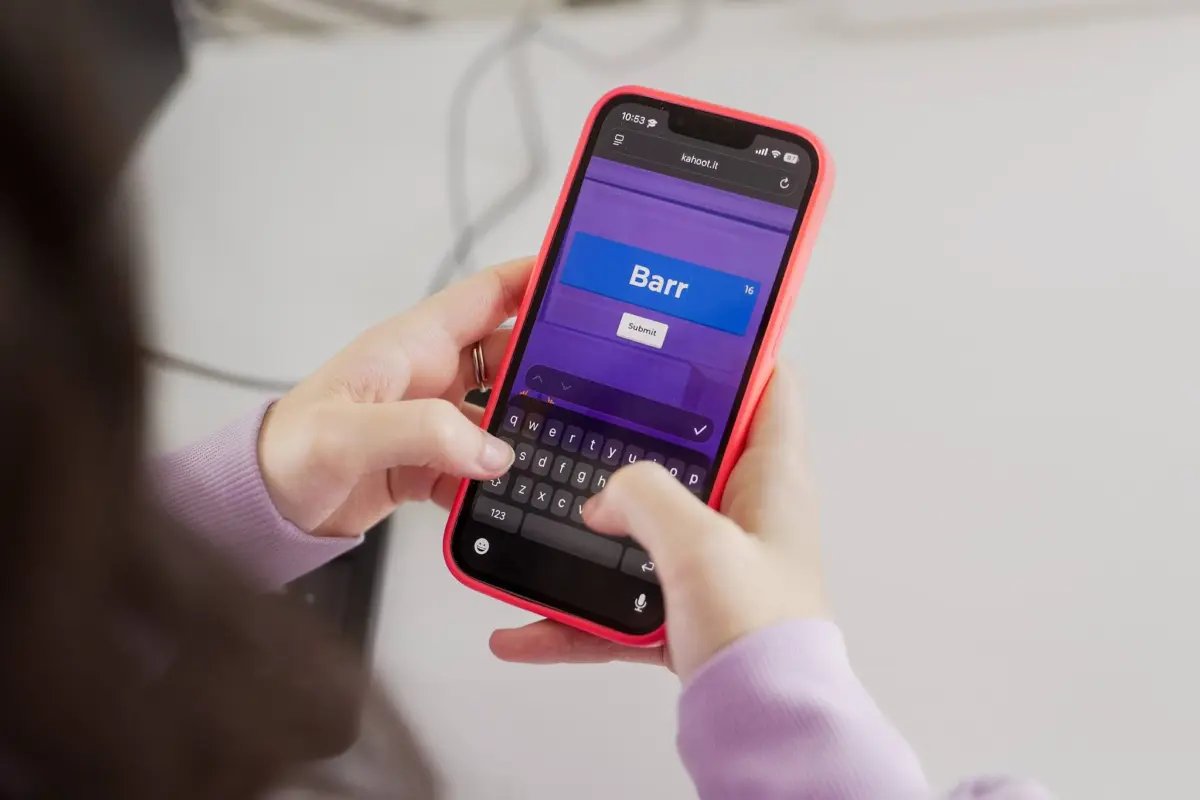
This installment—the fourth in an ongoing Back to School series exploring classroom micro-experiments—focuses on a powerful yet simple intervention: using a pre-class digital assessment to buy back instructional minutes, surface misconceptions early, and pivot lesson plans based on real-time student data. By assigning a brief, low-stakes digital check (such as a Kahoot!) prior to arrival, educators can fundamentally transform the architecture of their class time, turning passive listeners into active participants.
Detailed Chronology: The Evolution of the Classroom Micro-Experiment Series
To understand the trajectory of this pedagogical framework, it is vital to examine the preceding phases of the micro-experiment series. Each installment builds incrementally upon the last, shifting the locus of control and cognitive load progressively toward the students.
Part 1: The Weekly Formative Check
The series began by establishing the baseline of the micro-experiment methodology: the weekly formative check. Instead of waiting for high-stakes midterms or unit exams to evaluate comprehension, educators introduced a brief, weekly data-gathering mechanism. This phase demonstrated that small, frequent evaluations provide immediate feedback loops, allowing teachers to course-correct minor misunderstandings before they metastasize into major academic gaps.
Part 2: Student-Built Review Sessions
Building on the foundation of formative assessment, Part 2 handed the reins of question creation directly to the students. By requiring learners to author their own review questions, the pedagogical burden shifted from rote memorization to higher-order cognitive processing. Students had to deeply understand the material well enough to construct plausible distractors and accurate answers, fostering metacognition and collaborative peer critique.
Part 3: Team Play and Peer Discussion
Part 3 introduced social dynamics into the equation by transforming individual review into team-based play. This structural shift forced students out of passive answering patterns and into active, verbalized explanations. When teams had to reach a consensus on a question under time pressure, learners were compelled to articulate why an answer was correct, converting quiet recollection into robust, conceptual debate.
Part 4: The Pre-Class Knowledge Check (The Current Focus)
This brings us to the current phase of the journey. Having optimized formative checking, student-led content creation, and collaborative team discussions, Part 4 looks upstream at when learning preparation occurs. By moving preliminary content acquisition and basic comprehension checks outside of class time via a pre-class digital assignment, educators clear the runway for deeper, richer, and more complex in-person engagement.
Supporting Context & Metrics: Reclaiming the First Ten Minutes
The Anatomy of a Wasted Lesson Opening
In a standard 50-minute class period, the first ten to fifteen minutes are frequently consumed by administrative housekeeping, low-level retrieval practice, and lecturing over assigned readings or foundational concepts. While these activities have traditional utility, they represent a significant opportunity cost.
If a teacher spends ten minutes reviewing a basic concept that 80% of the class already mastered independently over the weekend, those are ten minutes stolen from collaborative problem-solving, Socratic dialogue, or hands-on experimentation. Conversely, if the entire class struggled with a reading but the teacher presses ahead with the pre-planned lecture anyway, the lesson falls flat on deaf ears.
The Flipped Classroom Reimagined as a Micro-Experiment
The flipped classroom is not a novel concept; educators have experimented with out-of-class readings and video lectures for decades. However, the traditional iteration of the flipped model often suffered from a fatal flaw: accountability and compliance. If students failed to complete the pre-class reading or video, the in-class collaborative activity collapsed because the foundational knowledge was missing.
Integrating a micro-experiment approach solves this friction point. By utilizing a brief, interactive, game-based pre-class check (such as a 5-minute Kahoot!), educators achieve two critical objectives:
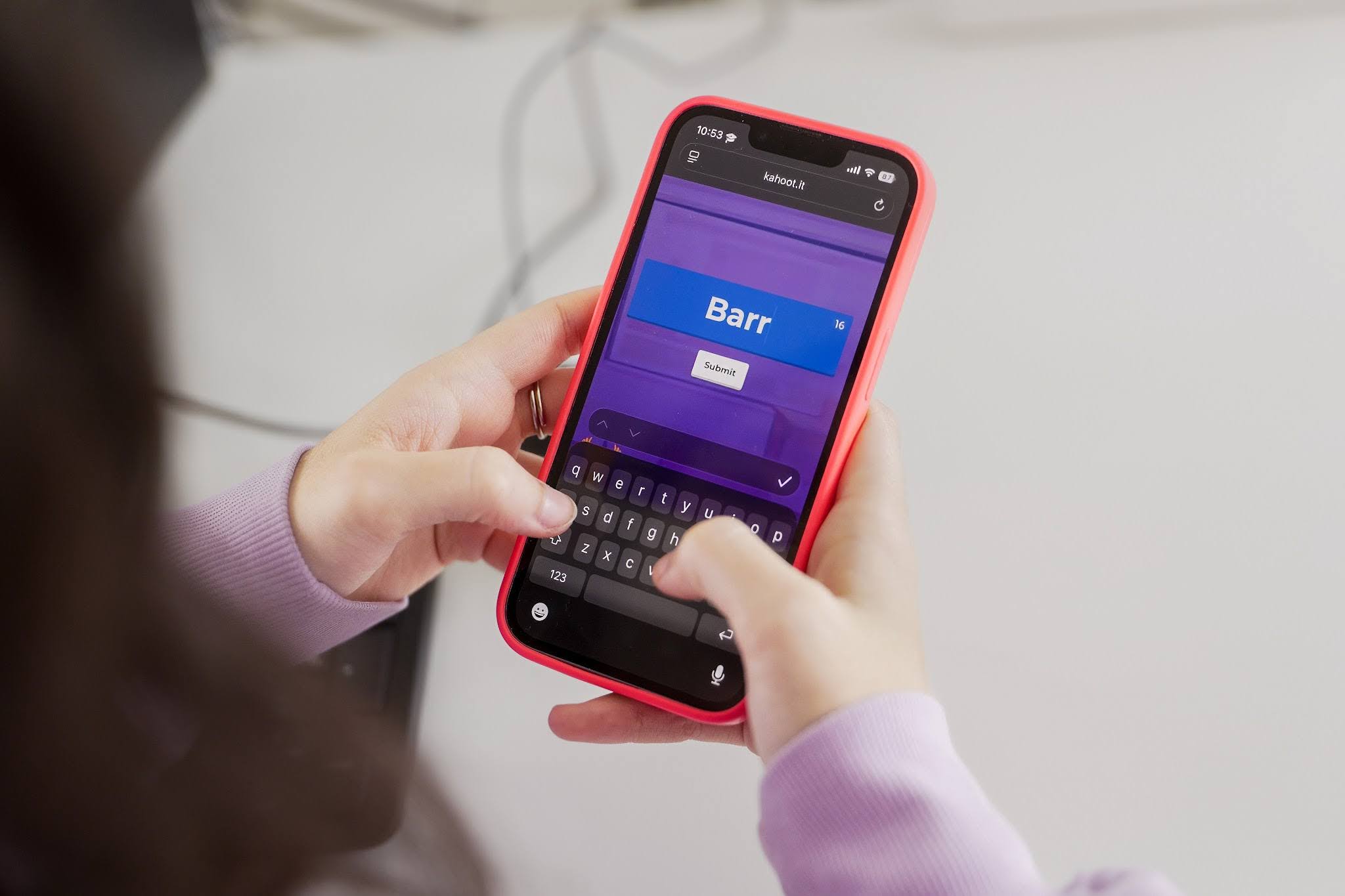
- Incentivized Preparation: Students engage with the pre-class material because the format is low-stakes, engaging, and accessible via personal devices.
- Actionable Analytics: The teacher receives an instant, aggregated data dashboard before walking into the classroom or logging onto a video call.
Empirical Insights on Pre-Class Diagnostics
Educational research consistently demonstrates that retrieval practice—the act of recalling information from memory—significantly enhances long-term retention compared to passive review. When a pre-class digital assessment is deployed, it functions simultaneously as a diagnostic tool for the instructor and a potent retrieval exercise for the student.
Furthermore, data analytics generated by pre-class platforms allow for responsive teaching. Instead of designing a static lesson plan in a vacuum, the instructor becomes a data-informed facilitator. If analytics indicate that Question 3 had a 90% failure rate, the educator immediately knows to discard the planned introduction and dedicate the first 15 minutes to targeted small-group remediation on that specific concept.
Official Guidelines: How to Execute the Four-Week Pre-Class Micro-Experiment
Implementing this strategy does not require rewriting an entire curriculum. To test the efficacy of a pre-class knowledge check, educators are encouraged to run a disciplined, four-week micro-experiment using the following blueprint.
Step-by-Step Implementation Framework
+-------------------------------------------------------------------+
|               THE FOUR-WEEK MICRO-EXPERIMENT TIMELINE             |
+-------------------------------------------------------------------+
|  Week 1: Baseline Establishment                                   |
|          - Select 1 lesson per week to flip.                    |
|          - Create a 5-question pre-class Kahoot!.                 |
|          - Set a strict completion deadline (e.g., 8:00 AM).      |
+-------------------------------------------------------------------+
|  Week 2: Data-Driven Pivoting                                     |
|          - Review analytics prior to class.                       |
|          - Modify lesson pacing based on knowledge gaps.          |
|          - Track student completion rates.                        |
+-------------------------------------------------------------------+
|  Week 3: Refinement & Scaffolding                                 |
|          - Adjust question difficulty based on Week 1 & 2 data.  |
|          - Address recurring misconceptions openly in class.      |
+-------------------------------------------------------------------+
|  Week 4: Evaluation & Reflection                                  |
|          - Administer a low-stakes retention check.               |
|          - Poll students on perceived preparedness.               |
|          - Decide: Scale up, modify, or pivot to a new strategy.  |
+-------------------------------------------------------------------+
1. Select the Scope
Choose one specific recurring lesson or topic each week for four consecutive weeks. Do not attempt to flip every single module; focus exclusively on a consistent touchpoint (e.g., every Tuesday lecture or every chemistry unit introduction).
2. Design the Pre-Class Check
Draft a concise, 5-question digital check covering the assigned reading, introductory video, or foundational text. Keep questions focused on core ideas and common misconceptions rather than trivial minutiae.
3. Establish Clear Deadlines
Set a firm completion window—for instance, requiring students to complete the assignment by 8:00 AM on the morning of the class. This ensures you have adequate time to review the data dashboard before instruction begins.
4. Analyze and Adapt
Review the results over your morning coffee. Identify the outliers:
- Where did students excel? (Skip or fast-track the review).
- Where did students stumble? (Design targeted intervention strategies).
5. Measure the Impact at the Month’s End
At the conclusion of the four-week period, evaluate the experiment through two lenses:
- Retention: Did a final retrieval check show improved long-term mastery compared to traditional units?
- Perception: Did a quick, anonymous student poll indicate that learners felt more confident and prepared for class activities?
Helpful Best Practices for Crafting Effective Pre-Class Assignments
To ensure your pre-class micro-experiment yields high completion rates and accurate diagnostic data, keep the following professional tips in mind:
- Keep It Brief and Low-Stakes: Never grade pre-class checks on accuracy for a high percentage of the final grade. Grade for completion or participation. The goal is diagnostic honesty, not academic anxiety; if students fear a low score, they may resort to guessing or cheating, which corrupts your diagnostic data.
- Align Directly with Class Objectives: The questions asked before class must directly mirror the concepts you intend to explore or build upon during class. If students complete a pre-check on topic A and spend class time on topic B, the psychological contract of preparation is broken.
- Explicitly Connect Prep to Class Time: During the first week, explicitly show students why the data mattered. Say to them: "Based on our pre-class check, 70% of you struggled with concept X. Because of that, we are skipping the introductory lecture and diving straight into a hands-on lab to clear this up." When students see that their preparation directly alters and improves their classroom experience, compliance rates naturally rise.
Future Outlook: The Scalable Classroom of Tomorrow
As educational institutions increasingly embrace hybrid, blended, and data-driven learning environments, the role of the educator is undergoing a profound transformation. Teachers are moving away from the industrial-era model of being sole purveyors of information and stepping into the role of diagnostic learning architects.
The beauty of the classroom micro-experiment lies in its sustainability. By breaking pedagogical innovation down into bite-sized, four-week testing blocks, teachers protect themselves against burnout. You are never committing to a permanent systemic overhaul; you are merely running a short test, looking honestly at the empirical results, and deciding your next move.
If a pre-class knowledge check reveals that students arrive better prepared, discussions run deeper, and conceptual misunderstandings are caught early, the routine earns a permanent place in your instructional toolkit. If completion rates are low or class time fails to improve, you discard the experiment without guilt and pivot to something new.
Ultimately, the future of effective teaching is iterative. By treating your classroom as a laboratory of small, deliberate changes, you model the very scientific inquiry and intellectual agility we hope to instill in our students. Start small, watch the signals, and let the data guide your path forward this academic year.

