
Executive Overview
As artificial intelligence and emerging technologies fundamentally reshape the modern workplace, the definition of a "ready" workforce is undergoing a massive transformation. According to the World Economic Forum’s Future of Jobs Report, resilience, flexibility, and agility rank among the most in-demand core skills in today’s professional landscape. These attributes are the hallmarks of the lifelong learner—an individual equipped with the confidence to continuously experiment, expand their knowledge base, and drive innovation.
However, a glaring discrepancy exists between the rapid pace of technological innovation and the foundational preparedness of the emerging workforce. Data indicates that a staggering 82% of company leaders in the United States view entry-level workers as unprepared for their roles, primarily due to a deficit in essential soft skills. This apprehension is mirrored by the workforce itself: only 39% of Generation Z employees report feeling fully prepared for their job responsibilities—a sharp 20-point drop from the previous year.
Driven by feelings of inadequacy and a lack of institutional support, over two-thirds of Gen Z employees admit to feeling chronically out of their depth. In an attempt to bridge this competency gap, many have turned to generative AI tools, with 59% utilizing AI to complete day-to-day work tasks simply because they feel undertrained.
While AI serves as a powerful productivity catalyst, it presents a critical paradox: human soft skills—rooted in emotional intelligence, mindset, and authentic interpersonal communication—cannot be automated. To cultivate a workforce capable of sustainable performance, forward-thinking leaders must fundamentally overhaul their learning and development (L&D) paradigms. By championing a three-pillared strategy—leveraging AI for cognitive enhancement rather than replacement, embedding soft skills training into everyday workflows, and fostering peer-to-peer and mutual mentoring ecosystems—organizations can turn the tide on the soft skills crisis and successfully integrate the incoming generation of workers.
Detailed Chronology: The Evolution of Workplace Readiness
To fully grasp the current crisis in early-career preparedness, it is vital to trace how the demands of the workplace have outpaced traditional educational models and onboarding pipelines over the past decade.
Phase One: The Pre-Pandemic Baseline (2015–2019)
For years, corporate training pipelines operated on a largely linear model. Entry-level professionals were hired primarily for their hard skills and technical certifications, with the expectation that soft skills—such as teamwork, conflict resolution, and public speaking—would be picked up organically through in-person office socialization and mentorship. During this era, the corporate office functioned as an immersive finishing school where junior staff absorbed professional norms simply by being present in a shared physical environment.
Phase Two: The Remote Disruption and the Education-Workplace Gap (2020–2023)
The sudden shift to remote and hybrid work environments fundamentally fractured traditional professional socialization. As universities transitioned to virtual classrooms and early-career professionals launched their careers from home bedrooms, the incidental, face-to-face moments of mentorship evaporated.
Graduating classes during this period entered the workforce with unprecedented digital literacy but pronounced gaps in collaboration, emotional intelligence, and workplace etiquette. Leaders began noticing that younger employees struggled significantly with navigating ambiguous professional situations, managing difficult conversations, or advocating for themselves without digital intermediaries.
Phase Three: The Generative AI Boom and the Soft Skills Deficit (2024–Present)
The widespread commercialization of generative AI in late 2022 and 2023 accelerated the pace of business transformation. Organizations rushed to integrate automation into daily operations, leading to an environment where technical skills have an increasingly short shelf-life.
Rather than easing the burden on entry-level employees, this technological acceleration amplified feelings of imposter syndrome. With technical requirements changing monthly, young workers began relying heavily on AI chatbots not just as assistants, but as crutches to offset their lack of confidence and formal training. This dynamic created a vicious cycle: by offloading analytical and creative tasks to AI, employees missed crucial developmental milestones in critical thinking and problem-solving, widening the very soft skills gap that organizational leaders lament today.
Supporting Context & Metrics: Understanding the Gen Z Workforce Crisis
Quantitative data underscores the urgency of this crisis. The challenges facing Gen Z are not merely matters of perception; they represent systemic shifts in workforce confidence, preparedness, and training efficacy.
- The Leadership Perspective: Just 18% of US company leaders believe that entry-level workers are very or completely prepared for the demands of their roles. The vast majority attribute this shortfall to a lack of core soft skills, rather than technical deficiencies.
- The Confidence Plunge: According to TriNet insights, only 39% of Gen Z workers report feeling fully prepared for their current job roles—a dramatic 20-percentage-point decline year-over-year.
- The Overwhelm Factor: Over two-thirds (66%+) of Gen Z employees openly admit to feeling out of their depth at work. This chronic under-preparation breeds widespread workplace anxiety and drives early-career turnover.
- The AI Reliance: In an effort to cope with inadequate training, 59% of Gen Z professionals admit to utilizing AI tools to complete core work tasks. While this temporarily boosts output, it risks stunting genuine skill acquisition.
- The Fear of Inquiry: Interpersonal anxieties run deep within the youngest demographic of workers. Research highlighted by Fortune indicates that 55% of Gen Z employees fear asking "dumb questions" due to a lack of sufficient interpersonal and communication training. This hesitation frequently results in damaging miscommunications, costly mistakes, and stifled innovation.
Official Statements and Industry Insights
Workforce experts and human resources authorities have increasingly raised alarms regarding the disconnect between modern training methodologies and the needs of a changing labor force.
Industry analysts emphasize that technical proficiency alone is no longer a sustainable competitive advantage. Because technical stacks evolve at a breakneck speed, companies that invest exclusively in software training find their workforce obsolete within a matter of years. Instead, resilience, curiosity, and adaptability are the true pillars of corporate longevity.
Furthermore, thought leaders in organizational psychology point out that confidence is a prerequisite for competence. When young workers are thrust into remote or fast-paced hybrid environments without robust interpersonal frameworks, their psychological safety erodes.
As noted in recent workplace studies from Gallup and Workhuman, regular, constructive feedback is an indispensable catalyst for talent retention and engagement. Employees who receive consistent guidance regarding their strengths and areas for development are far more likely to feel supported and invested in their company’s long-term mission.
Future Outlook: A Three-Pillared Strategic Framework for L&D Leaders
Within the decade, Generation Z is projected to become the largest demographic cohort in the global workforce. Organizations that fail to invest meaningfully in their development risk severe talent drain, diminished productivity, and institutional stagnation.
To future-proof their operations and empower the next generation of leaders, workforce strategists must redesign learning and development programs around three foundational pillars:
+-----------------------------------------------------------------+
|               STRATEGIC L&D PILLARS FOR THE FUTURE OF WORK        |
+-----------------------------------------------------------------+
|  1. Harness AI for Cognitive Growth (Prompt, Don't Replace)     |
|  2. Embed Soft Skills via Gamified & Interactive Training       |
|  3. Foster Peer-to-Peer Learning & Mutual Mentorship            |
+-----------------------------------------------------------------+
1. Harness AI to Improve Learning and Creativity
Artificial intelligence must be repositioned within the corporate training ecosystem. Rather than utilizing AI to entirely offload analytical thinking or creative problem-solving—which academic research shows can atrophy critical thinking skills—organizations should leverage AI as an interactive cognitive partner.
Trainers can deploy AI tools within learning modules to prompt employees with thought-provoking questions, case studies, and discussion starters, rather than feeding them pre-packaged answers. This approach streamlines the administrative burden of designing personalized learning experiences while actively challenging employees to flex their mental muscles and sharpen their independent reasoning.
2. Integrate Soft Skills Development Throughout Workforce Training
Soft skills cannot be taught effectively through passive lectures or static compliance modules. They must be woven into the fabric of daily operational training through experiential learning models.
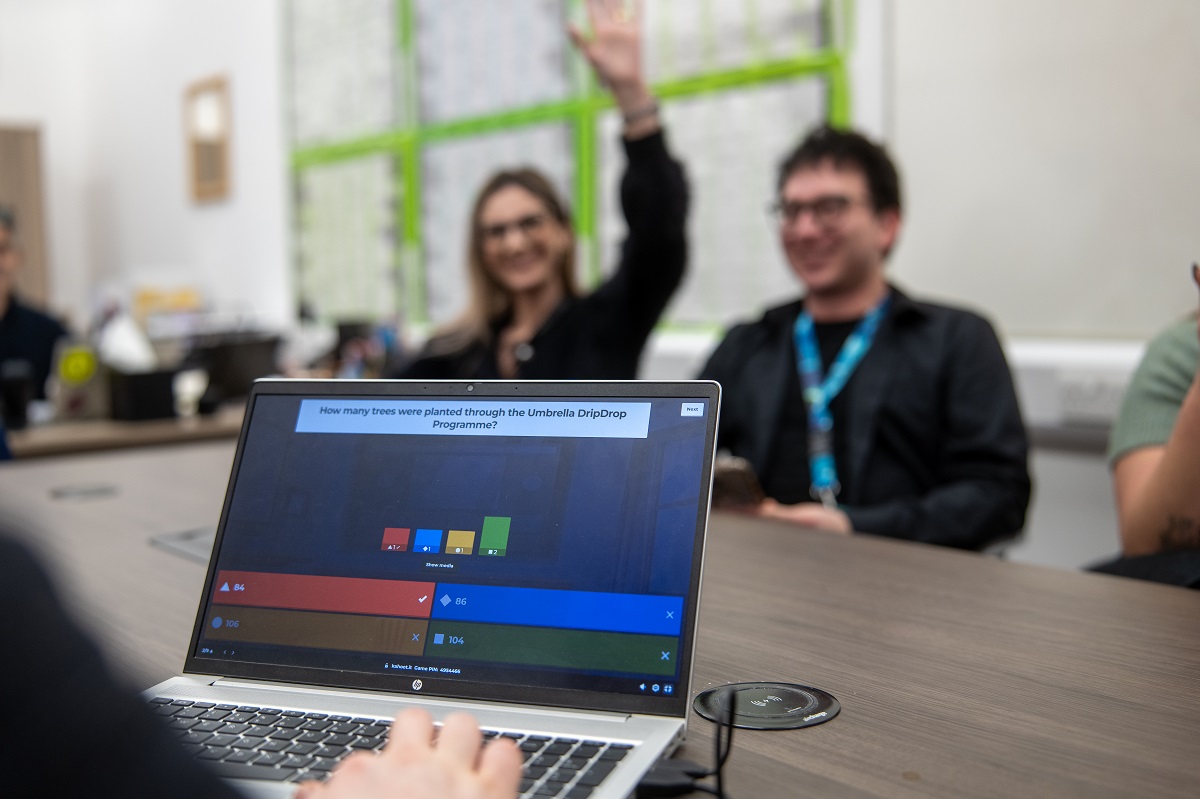
Team-based gamified learning challenges—which consistently rank as highly engaging methodologies for digital natives—provide a low-stakes environment for employees to practice collaboration, active listening, negotiation, and creative problem-solving. Furthermore, integrating digital interactive platforms into training allows for instantaneous, real-time feedback. Fulfilling the insights from Gallup and Workhuman, this immediate positive reinforcement and guidance helps young professionals course-correct quickly and builds lasting professional confidence.
3. Pair Training and Team Building with Peer-to-Peer Learning
Traditional top-down hierarchies often intimidate junior staff, reinforcing the fear of asking fundamental questions. Peer-to-peer learning models break down these barriers by turning learners into active knowledge-sharers and leaders.
- Cross-Departmental Knowledge Exchanges: Junior employees can participate in collaborative forums where they exchange insights across different departments, building a broader understanding of the enterprise ecosystem.
- Mutual Mentoring Programs: Organizations can pair younger employees with seasoned veterans in a reciprocal mentoring dynamic. While Gen Z workers help senior colleagues navigate emerging software and digital platforms, older employees share invaluable institutional knowledge, strategic vision, and broader professional networks.
By normalizing inquiry through safe, interactive spaces—such as live Q&A sessions and collaborative workshops—organizations can eliminate the fear of asking "dumb questions." When young professionals feel secure in voicing their perspectives, they not only avoid costly miscommunications but also unlock their capacity to contribute bold, innovative ideas.
Conclusion
The future of work belongs to the lifelong learner. As Gen Z prepares to anchor the global workforce, organizations face a clear choice: continue relying on outdated, static onboarding models that widen the soft skills gap, or invest in dynamic, human-centric learning strategies.
By thoughtfully integrating AI as a cognitive catalyst, embedding soft skills practice into daily workflows via interactive platforms like Kahoot! 360, and fostering inclusive peer-to-peer learning environments, companies can build a resilient, confident, and highly adaptable workforce ready to thrive today and for decades to come.

