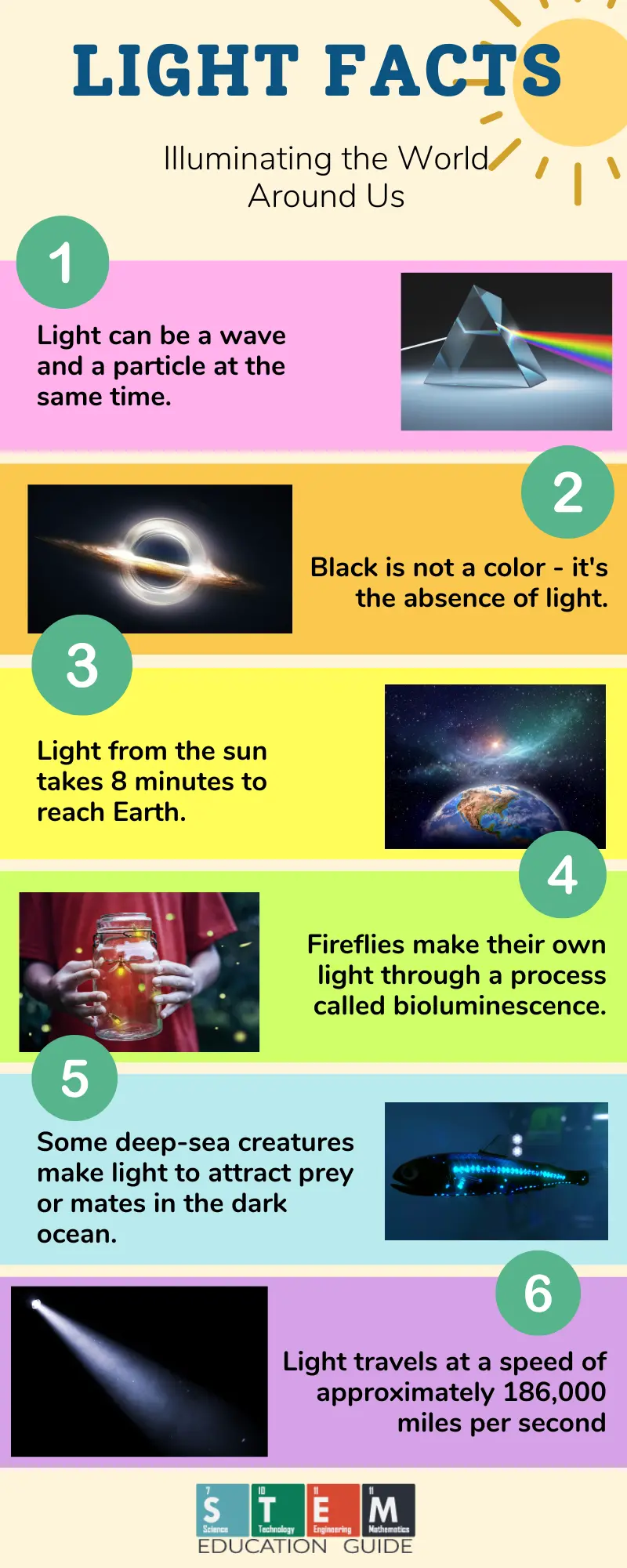
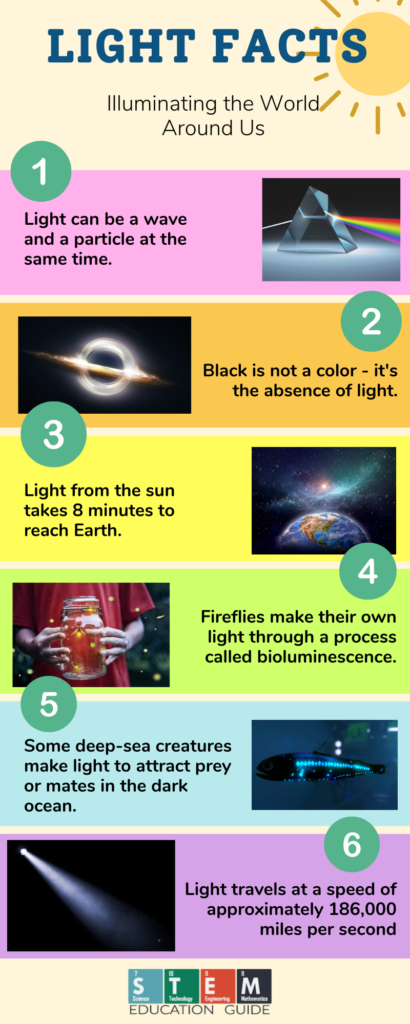
Light is the foundational architectural element of our universe, governing everything from the fundamental biology of life on Earth to the transmission of digital data across global networks. Far more than a simple visual medium that permits human sight, light is a complex manifestation of electromagnetic energy—exhibiting properties of both continuous waves and discrete packets known as photons. Traveling at a staggering velocity of approximately 186,000 miles per second (299,792 kilometers per second), light bridges cosmic distances, carrying news of stellar evolution across the vacuum of space in just over eight minutes from our Sun, and across billions of years from deep-space galaxies.
In contemporary scientific research and technological development, light occupies a critical frontier. From the principles of classical optics and laser engineering to quantum dots and fiber-optic communication infrastructures, our mastery of light dictates the speed of global connectivity and the precision of modern medicine. This report provides an exhaustive investigation into the nature of light, detailing its physical properties, natural phenomena, historical milestones, practical applications, and the trajectory of future optical technologies.
Detailed Chronology: Milestones in Optical Science
The human understanding of light has evolved over centuries, shaped by rigorous experimentation, mathematical formulation, and paradigm-shifting theoretical breakthroughs. The historical trajectory of optics reveals how iterative discoveries transformed our comprehension of the electromagnetic spectrum.
[17th Century] ➔ [19th Century] ➔ [20th Century] ➔ [21st Century]
  Newton &          Maxwell &        Quantum         Quantum Dots
  Huygens: Waves    Hertz: EM        Mechanics:      & Advanced
  vs. Particles     Spectrum         Photons         Photonics
The 17th Century: The Genesis of Modern Optics
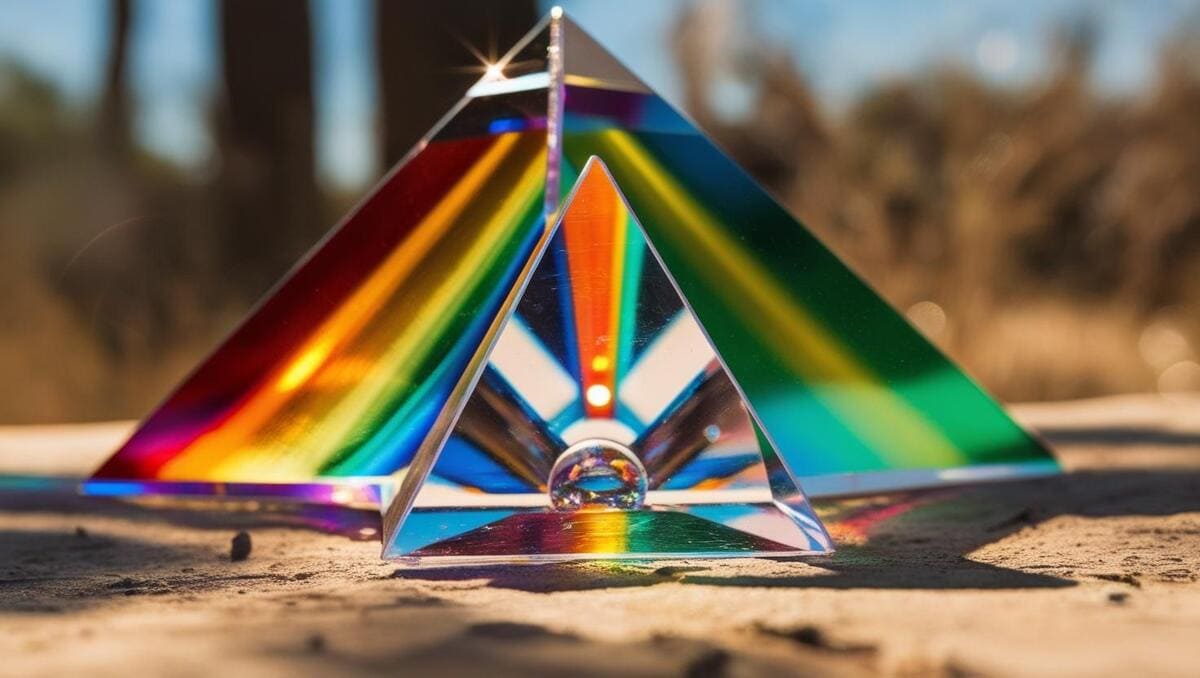
1665–1672 (Sir Isaac Newton): Newton conducted his seminal prism experiments, demonstrating that white sunlight is not a monolithic entity but rather a composite spectrum of various colors. By passing light through a prism and refracting it, he proved that individual colors possess distinct refrangibility. Concurrently, Newton advocated for a corpuscular (particle) theory of light.
1678 (Christiaan Huygens): Dutch physicist Christiaan Huygens formulated the wave theory of light. Proposing that light propagates via a longitudinal wave front, Huygens successfully explained reflection and refraction, setting the stage for centuries of debate regarding the dual nature of light.
The 19th Century: Unifying Electricity and Magnetism
1801 (Thomas Young): Young performed the landmark double-slit experiment, providing undeniable empirical evidence for the wave nature of light through interference patterns.
1865 (James Clerk Maxwell): Maxwell published his dynamical theory of the electromagnetic field, famously known as Maxwell’s Equations. He mathematically proved that light is an electromagnetic wave traveling at a constant speed, unifying electricity, magnetism, and optics into a single theoretical framework.
1887 (Heinrich Hertz): Hertz empirically validated Maxwell’s equations by generating and detecting radio waves, and subsequently observed the photoelectric effect, which would later challenge classical physics.
The 20th Century: The Quantum Revolution
1905 (Albert Einstein): Einstein published his revolutionary paper on the photoelectric effect, proposing that light exists as discrete quanta of energy (later named photons). This work earned him the 1921 Nobel Prize in Physics and laid the groundwork for quantum mechanics.
1960 (Theodore Maiman): Maiman successfully operated the first working laser (Light Amplification by Stimulated Emission of Radiation), initiating a new era of coherent light applications in medicine, manufacturing, and telecommunications.
Supporting Context & Metrics: Properties and Behavior of Light
To comprehend how light operates within our physical reality, scientists categorize its behaviors into specific measurable properties, interactions with matter, and localized manifestations.
Electromagnetic Spectrum and Wavelengths
Visible light constitutes only a narrow slice of the broader electromagnetic spectrum, spanning wavelengths from approximately 380 nanometers (violet) to 750 nanometers (red). Beyond these human-perceptible bounds lie ultraviolet (UV) radiation, X-rays, and gamma rays on the short-wavelength, high-frequency end, and infrared (IR) radiation, microwaves, and radio waves on the long-wavelength, low-frequency end.
Color
Wavelength Range (nm)
Frequency Range (THz)
Prominent Natural Example
Red
620 – 750
400 – 484
Atmospheric scattering in sunsets
Orange
590 – 620
484 – 508
Deciduous autumn foliage
Yellow
570 – 590
508 – 526
Solar radiation peak / Sunflowers
Green
495 – 570
526 – 606
Chlorophyll absorption in terrestrial flora
Blue
450 – 495
606 – 668
Rayleigh scattering in the daytime sky
Violet
380 – 450
668 – 789
High-energy floral pigmentation
Fundamental Optical Behaviors
When light encounters different physical mediums, it exhibits three primary interactions:
Reflection: The bouncing of light waves off a surface. Specular reflection (as seen in polished mirrors) preserves the image, while diffuse reflection scatters light across rough surfaces.
Refraction: The bending of light as it passes obliquely from one transparent medium into another of differing density (e.g., from air into water). This phenomenon is governed by Snell’s Law, which relates the angles of incidence and refraction to the refractive indices of the materials.
Diffraction and Interference: The bending and spreading of light waves around obstacles or through small apertures, creating complex constructive and destructive interference patterns.
Official Statements and Scientific Consensus
The international scientific community, spearheaded by physics institutions and optical societies worldwide, maintains a robust consensus regarding the dual wave-particle nature of light, codified as wave-particle duality within quantum field theory.
"Light exhibits a profound duality that challenges classical human intuition. In macroscopic propagation, it behaves impeccably as an electromagnetic wave governed by Maxwell’s equations. Yet, upon interacting with matter at the atomic scale, it reveals its quantized particulate nature through discrete photon exchanges. Understanding this duality is not merely an academic exercise; it is the absolute prerequisite for engineering advanced technologies such as quantum cryptography, ultrafast computing, and high-precision laser interferometry."
— International Commission for Optics (ICO), Consensus Statement on Modern Photonics and Quantum Optics
Furthermore, metrological standards established by the General Conference on Weights and Measures (CGPM) define the speed of light in a vacuum ($c$) as an exact, unvarying constant: $299,792,458text meters per second$. This constant serves as the bedrock for modern physics, anchoring the definition of the meter and defining the relativistic limits of causality in the universe.
Natural Phenomena Driven by Light
Light acts as the primary artist and energy source across terrestrial and cosmic ecosystems, producing breathtaking natural displays and sustaining biological processes.
Atmospheric and Celestial Optics
Rainbows: Formed through the combined effects of refraction, internal reflection, and dispersion. When white sunlight enters spherical raindrops, it refracts upon entry, reflects off the back inner surface of the droplet, and refracts again upon exiting, separating into its constituent spectral colors.
Aurorae (Northern and Southern Lights): Luminous celestial displays occurring near the Earth’s magnetic poles. High-energy charged particles from solar wind collide with oxygen and nitrogen molecules in the upper atmosphere, exciting these gases and causing them to emit photons of brilliant green, pink, and violet light.
Rayleigh Scattering: The selective scattering of shorter wavelengths of light (blue and violet) by nitrogen and oxygen molecules in the Earth’s atmosphere. This phenomenon explains why the daytime sky appears blue, while the longer path length of sunlight at sunset shifts the visible palette toward warm reds and oranges.
Biological Luminescence
Beyond abiotic sources, living organisms have evolved mechanisms to produce light internally without generating heat—a process known as bioluminescence. Utilizing specialized chemical reactions involving a light-emitting molecule (luciferin) and an enzyme (luciferase), organisms ranging from terrestrial fireflies (Lampyridae) to deep-sea anglerfish and dinoflagellates generate light for communication, predation defense, and mate attraction. Similarly, phosphorescence allows specific materials and marine organisms to absorb high-energy light and slowly re-emit it over extended periods.
Future Outlook: The Next Frontier of Light Technology
As we look toward the horizon of the 21st century, the application of light is transitioning from traditional optics (lenses, mirrors, and glass bulbs) to quantum photonics and sub-wavelength engineering.
Quantum Dots and Advanced Display Technologies
Quantum dots—semiconductor nanocrystals possessing unique electronic and optical properties—represent a revolutionary leap in display technology and solar energy harvesting. Because their optical emission is tightly tuned by their physical size, quantum dots can emit exceptionally pure, saturated colors when excited by a light source. This capability is currently transforming ultra-high-definition television screens, medical imaging probes, and next-generation photovoltaic cells.
Ultrafast Optical Communications and Fiber Optics
The demand for infinite bandwidth continues to drive innovations in fiber-optic infrastructure. Modern telecommunications rely on total internal reflection within ultra-pure silica glass fibers to transmit petabytes of data across oceanic trenches and continental landmasses at near-light speeds. Future research focuses on spatial division multiplexing and photonic integrated circuits, which promise to multiply data transmission capacities exponentially while reducing thermal energy dissipation.
The Pursuit of Invisibility and Metamaterials
Perhaps one of the most fascinating speculative engineering frontiers involves optical metamaterials—artificial structures engineered to manipulate light in ways unattainable in nature. By utilizing sub-wavelength metallic and dielectric architectures, researchers have successfully demonstrated negative refractive indices and preliminary cloaking devices capable of bending light entirely around microscopic objects. While macroscopic optical invisibility remains largely theoretical, the principles derived from metamaterial research are already yielding highly efficient flat lenses, advanced optical sensors, and hyper-directional antennas.
As theoretical physicists continue to probe the quantum vacuum and engineers refine photonic microchips, light remains our most versatile scientific tool and our most reliable window into the fundamental laws of the cosmos.