
Executive Overview
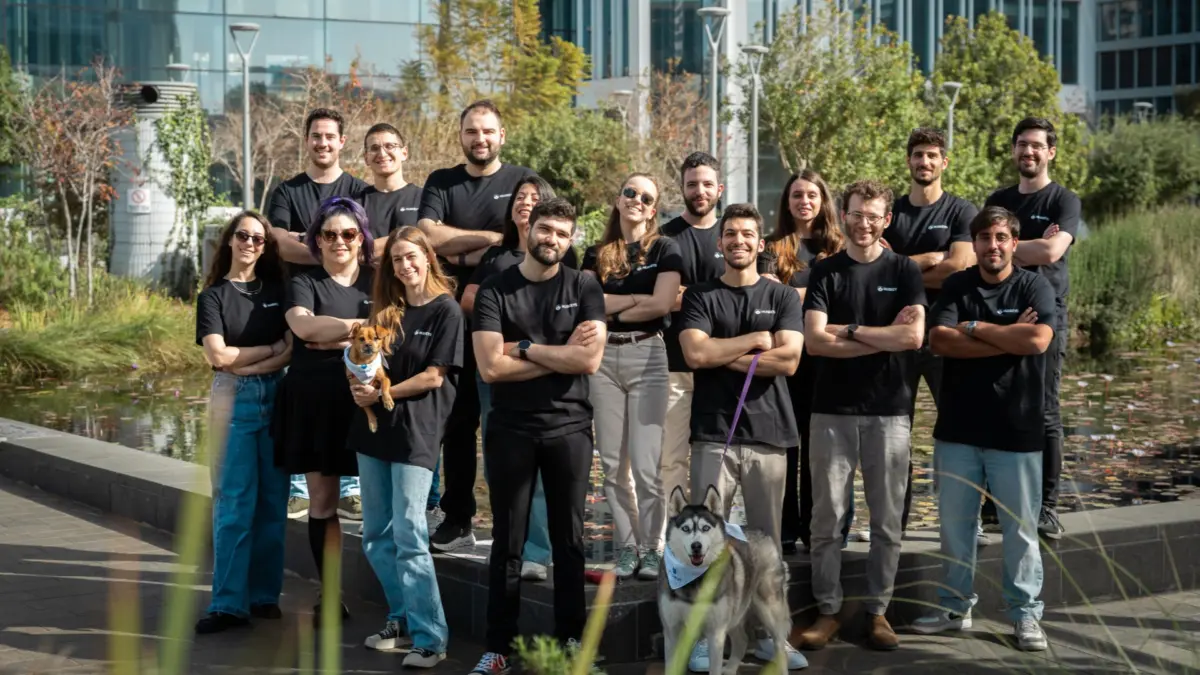
The rapid proliferation of generative artificial intelligence and autonomous software agents is fundamentally redrawing the boundaries of the digital world. As bots, scrapers, and automated workflows increasingly rival—and soon threaten to outpace—human web traffic, enterprise cybersecurity architectures are buckling under the strain. Into this volatile landscape steps Huskeys, a nascent yet fast-rising cybersecurity startup founded by veterans of Israel’s elite Unit 8200.
In a powerful validation of its technological thesis, Huskeys has successfully closed a $27 million Series A funding round led by Blackstone Innovations Investments. The new influx of capital brings Huskeys’ total funding to $35 million, following an initial $8 million seed round, and pushes the company’s post-money valuation past the $100 million threshold, according to reports by The Wall Street Journal.
The Series A financing drew a formidable roster of institutional backers and industry titans, including Merlin Ventures, Skinos Ventures, Zscaler Ventures, Okta Ventures, Bright Pixel Capital, and SV Angel. Furthermore, the round attracted prominent cybersecurity executives and founders from industry-defining organizations such as Palo Alto Networks, Cloudflare, Check Point, Amazon Web Services (AWS), Google, Microsoft, and Intel.
Huskeys was established in 2025 by co-founders Itai Gafni and Roy Weisfeld to address a structural vulnerability in modern digital infrastructure: the fragmentation of cloud-native networking and the overwhelming deluge of unstructured, machine-generated traffic. Rather than asking enterprises to rip and replace their existing investments in content delivery networks (CDNs), web application firewalls (WAFs), and cloud load balancers, Huskeys introduces an intelligent orchestration layer known as Network Edge Security Management (NESM). This platform acts as a unified control plane, sitting above existing security products to continuously map posture, recommend policy adjustments, execute virtual patching, and automate policy lifecycles across diverse vendor environments.
With enterprise deployments already analyzing upwards of one trillion web requests and thousands of network configurations daily—for high-profile clients including TikTok, Merlin Entertainments (LEGOLAND), Ro, Blackstone, and Hugging Face—Huskeys is positioning itself as essential infrastructure for an internet increasingly dominated by autonomous machines.
Detailed Chronology: From Unit 8200 Roots to a $100M Valuation
The genesis of Huskeys is deeply rooted in the operational philosophies of Israel’s renowned Unit 8200, an intelligence corps known for producing generational tech founders. In early 2025, Itai Gafni and Roy Weisfeld recognized that the traditional paradigms of enterprise network defense were breaking down. The friction points were no longer restricted to traditional perimeter breaches or isolated malware injections; instead, organizations were drowning in configuration complexity at the network edge.
By mid-2025, the founders had conceptualized the Network Edge Security Management (NESM) architecture. They understood that enterprises were caught in a trap of multi-cloud fragmentation. Modern web applications rarely traverse a single security gatekeeper. A typical request might clear a CDN, pass through a cloud-native WAF, hit a regional load balancer, and navigate multiple virtual private clouds (VPCs) before ever executing application code. Each of these products operates on proprietary syntax, isolated dashboards, and disparate logging systems.
Recognizing that organizations could not sustainably manage this sprawling web of security tools manually, Gafni and Weisfeld built a prototype designed to translate policies and configurations from multiple vendors into a single, cohesive semantic model.
The Strategic Raise
By late 2025 and into early 2026, Huskeys transitioned from stealth development to commercial validation. The company’s ability to demonstrate immediate ROI—such as slashing false-positive WAF blocks by 80% for enterprise clients like LEGOLAND—caught the attention of strategic investors.
Blackstone Innovations Investments stepped forward to lead the Series A round in early 2026. The investment thesis was clear: Blackstone’s vast portfolio of global enterprises required a scalable way to govern multi-vendor security footprints without undertaking costly, high-risk architectural overhauls. The participation of corporate venture arms like Zscaler Ventures and Okta Ventures further signaled industry-wide consensus that edge orchestration is the natural evolution of cloud security.
With $27 million in fresh capital, Huskeys has outlined an aggressive roadmap for global expansion, engineering talent acquisition, and the deeper development of its core orchestration and virtual patching capabilities.
Supporting Context & Metrics: The Edge Fragmentation and AI Traffic Crisis
To understand why Huskeys has achieved a $100M valuation months after its founding, one must examine the macro-economic and technological shifts straining modern web infrastructure.
The Rise of Autonomous and Agentic Traffic
For decades, cybersecurity tooling was built around a binary assumption: traffic was either human or it was a bot. Automated traffic was systematically categorized as malicious (such as credential stuffers, scraping scripts, and DDoS vectors) or benign (such as search engine crawlers).
The advent of generative AI and autonomous agents has completely obliterated this binary model. Today, automated web traffic frequently represents legitimate business operations—AI shopping assistants, enterprise-to-enterprise data synchronization pipelines, automated customer service agents, and automated workflows operating directly on behalf of verified users.
Industry leaders have sounded the alarm regarding the sheer scale of this shift. Cloudflare CEO Matthew Prince has publicly predicted that AI-driven bot traffic could eclipse human-generated web traffic by as early as 2027.
For corporate security teams, this introduces an unprecedented classification nightmare. It is no longer enough to simply ask whether a request is automated; defenders must determine whether an autonomous agent’s behavior is legitimate, malicious, or unpredictably erratic. When millions of AI agents begin autonomously interacting with corporate APIs, traditional rule-based WAFs routinely stumble, either letting malicious autonomous threats pass through or erroneously blocking legitimate business traffic.
The Economics of Misconfiguration: A Case Study in False Positives
Edge security misconfigurations carry a steep financial penalty. A web application firewall tuned too aggressively will block legitimate customers just as effectively as it blocks hackers, directly harming revenue generation and digital brand equity.
Huskeys highlighted this dynamic in a deployment case study featuring Merlin Entertainments, the global entertainment giant operating attractions like LEGOLAND. Prior to deploying Huskeys, Merlin’s digital properties suffered from overly rigid, legacy WAF rules that inadvertently flagged and blocked legitimate consumers attempting to complete bookings and checkouts during high-traffic marketing campaigns.
By utilizing Huskeys’ continuous edge posture management, Merlin was able to audit its managed WAF rules across disparate systems. The result was a staggering 80% reduction in false positives across critical booking funnels, safeguarding revenue while maintaining robust defensive postures.
Machine-Speed Exploits and the Necessity of Virtual Patching
Compounding the traffic crisis is the weaponization of artificial intelligence by malicious threat actors. AI tools have drastically lowered the cost and technical barrier required to scan applications, discover zero-day vulnerabilities, and automate the initial phases of exploitation. This dynamic drastically compresses the "mean time to exploitation"—the window between when a vulnerability is publicly disclosed and when attackers begin actively targeting it.
While traditional software patching remains the gold standard for long-term remediation, the reality of enterprise software development means that writing, testing, and deploying application patches can take days, weeks, or even months. During this interim window, organizations sit as sitting ducks.
Huskeys addresses this vulnerability gap through advanced virtual patching. When a critical vulnerability is identified in frameworks or libraries (such as a remote-code-execution flaw in React Server Components), Huskeys’ platform can instantaneously generate and coordinate network-level mitigation rules across disparate edge vendors—including Cloudflare, AWS, Akamai, and Microsoft Azure.
This capability was put to the test publicly when Huskeys detailed cross-platform mitigations for critical React vulnerabilities, successfully protecting corporate environments even in instances where vendor-native coverage was delayed or entirely unavailable. This ability to deploy temporary, highly synchronized network defenses in a matter of minutes—while developers work on permanent code fixes—represents a paradigm shift in threat mitigation speed.
Official Statements and Industry Perspectives
The investment community and technical leadership have been vocal about the strategic imperative driving Huskeys’ market entry.
Industry analysts note that as enterprises adopt multi-cloud strategies, the perimeter has dissolved into an amorphous network edge. By positioning its NESM architecture as a non-invasive orchestration layer, Huskeys sidesteps the traditional enterprise reluctance to replace core security appliances.
"Modern enterprises are trapped in a maze of fragmented cloud infrastructure, multi-vendor security point products, and an incoming tsunami of autonomous AI traffic," noted industry observers tracking the Series A round. "Huskeys isn’t asking companies to throw out what they’ve already built; they are building the intelligent nervous system that allows those disparate tools to finally communicate and act as one."
Investors from Blackstone Innovations Investments emphasized that the decision to back Huskeys stemmed from a rigorous evaluation of enterprise pain points. CISOs across Blackstone’s global portfolio repeatedly cited tool sprawl and configuration fatigue as critical vulnerabilities. By automating policy lifecycles, traffic simulation, versioning, and staged rollbacks, Huskeys reduces human error—historically the root cause of the vast majority of cloud security breaches.
Co-founders Itai Gafni and Roy Weisfeld have continually reinforced their foundational philosophy: security operations must evolve from reactive dashboard-hopping to proactive, system-wide orchestration.
"We are moving into an era where machines talk to machines at speeds human operators cannot manually govern," technical leadership at Huskeys has articulated. "Our platform provides the necessary intelligence layer to ensure that every security control—regardless of vendor—understands and responds to traffic in real time."
Future Outlook: The Autonomous Internet and Beyond
As Huskeys deploys its $27 million war chest, the company’s trajectory offers a compelling lens through which to view the future of enterprise cybersecurity.
The internet is inexorably marching toward a decentralized, machine-driven ecosystem. In this new frontier, applications are distributed across hybrid clouds, interactions are heavily mediated by autonomous AI agents, and cyberattacks are orchestrated at machine speed by adaptive algorithms. In such an environment, treating the network edge as a static collection of isolated firewalls, CDNs, and load balancers is a recipe for operational failure.
Huskeys’ core thesis—that enterprises require a dedicated, vendor-agnostic control plane to govern edge security—is rapidly transitioning from a novel concept to an enterprise necessity. With systems already processing over a trillion web requests daily and backing from elite institutional investors and cyber pioneers, Huskeys is well-positioned to define the standard for network edge security management.
Over the coming years, the central question facing Chief Information Security Officers (CISOs) will likely pivot away from which individual security vendor to deploy, and toward how effectively all of those security systems can be orchestrated to understand, reason about, and respond to traffic as a unified, intelligent organism. Through its innovative orchestration layer and virtual patching capabilities, Huskeys has firmly established itself as an indispensable pioneer in securing the autonomous web.

