
Executive Overview
In the modern educational landscape, the integration of Science, Technology, Engineering, and Mathematics (STEM) forms the bedrock of critical thinking and analytical problem-solving. Among the foundational pillars of physical science is the study of simple machines—the primary mechanical devices that alter the magnitude or direction of force. Defined fundamentally as tools with few or no moving parts that make work easier, simple machines are categorized into six classic archetypes: the lever, the inclined plane, the wedge, the screw, the wheel and axle, and the pulley.
Far from being obsolete theoretical concepts, these mechanical building blocks are the underlying architecture of virtually every complex device in human history. When combined, they form compound machines capable of monumental structural and industrial feats. For educators and parents alike, introducing these concepts through experiential, hands-on learning transforms abstract physics into tangible reality. By exploring the true definition of physical work, dismantling common misconceptions regarding mechanical advantage and friction, and executing targeted classroom or at-home projects, students develop an intuitive, lifelong foundation in engineering design.
Detailed Chronology and Pedagogical Evolution
The history of simple machines dates back to ancient antiquity, where Greek philosophers and engineers such as Archimedes first formally categorized them. Over centuries, the pedagogical approach to teaching these mechanical principles has evolved from rote memorization of textbook definitions to dynamic, inquiry-based exploration.
Phase 1: Brainstorming and Conceptual Mapping
Modern STEM curricula typically initiate the study of simple machines with an open-ended brainstorming session. Educators encourage students to look around their immediate environment—classrooms, kitchens, and playgrounds—to identify everyday items that utilize wedges (doors and doorstops), levers (scissors and seesaws), and wheels and axles (bicycles and rolling chairs). This observational phase bridges the gap between the physical world and academic theory, prompting students to imagine the sheer impossibility of daily tasks without these foundational tools.
Phase 2: Defining Physical Work
Before building physical models, students must grasp the physics definition of "work," which diverges significantly from colloquial usage. In physics, work ($W$) is mathematically defined as the amount of force ($F$) applied to an object multiplied by the distance ($d$) over which that force is applied, expressed by the equation:
$$W = F times d$$
Simple machines do not reduce the total amount of work required to complete a task; rather, they provide a mechanical advantage. They allow humans to trade force for distance—spreading effort out over a longer path or time to make daunting physical tasks manageable. For instance, lifting a heavy elevator shaft manually to the top of a skyscraper is a physical impossibility for a single human; however, a pulley system redistributes the load, transforming an impossible feat into an achievable operation.
Phase 3: Hands-On Prototyping and Experimentation
The pedagogical chronology culminates in physical execution. Students transition from theoretical equations to crafting operational models. Whether working in collaborative classroom groups or constructing projects at home, young engineers test mechanical hypotheses by building pulleys, inclined racecourses, lever scales, and recycled vehicles.
Supporting Context & Core Mechanical Projects
To effectively communicate the mechanics of simple machines, educators rely on interactive demonstrations. Below are six foundational projects, designed to isolate and illustrate each of the six simple machine types.
1. The Pulley: Lifting Beyond Natural Limits
- Concept: Pulleys use grooved wheels and ropes to change the direction of an applied force, making the elevation of heavy weights vastly easier.
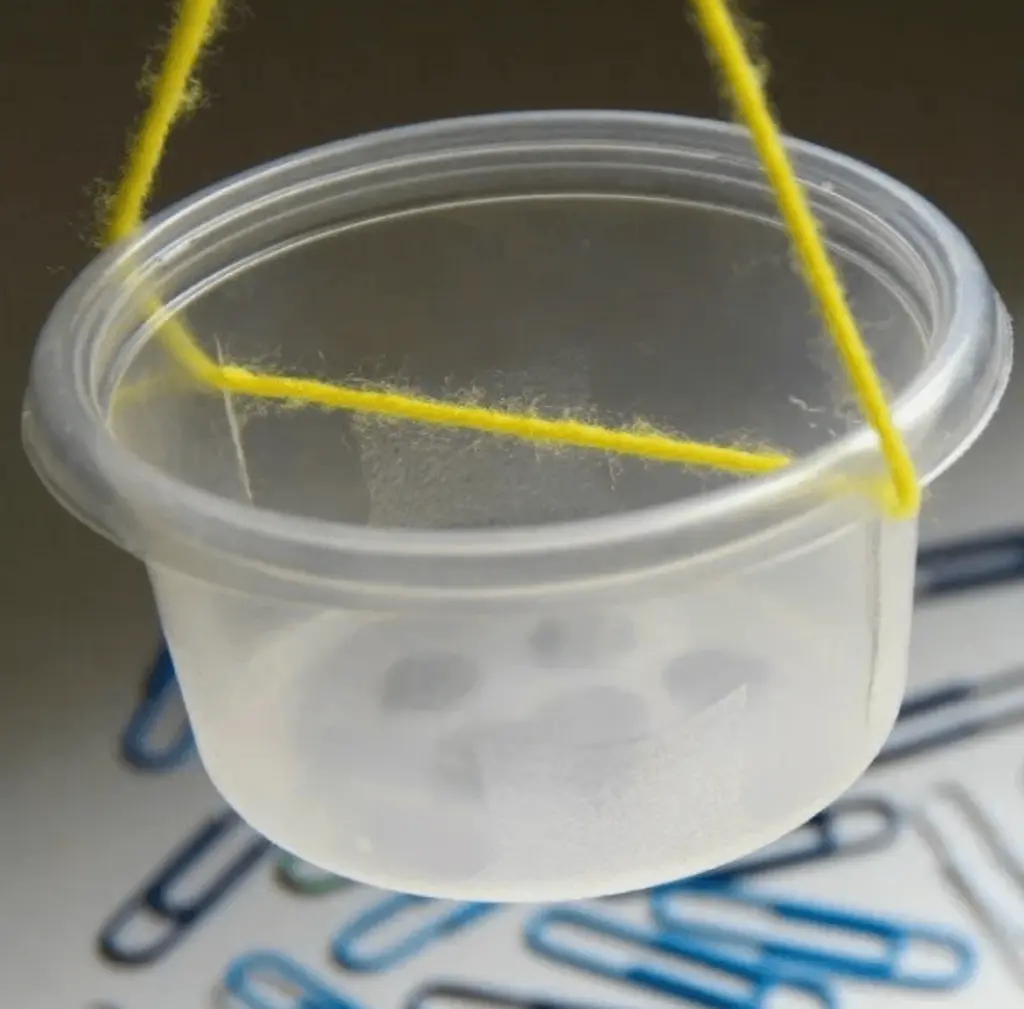
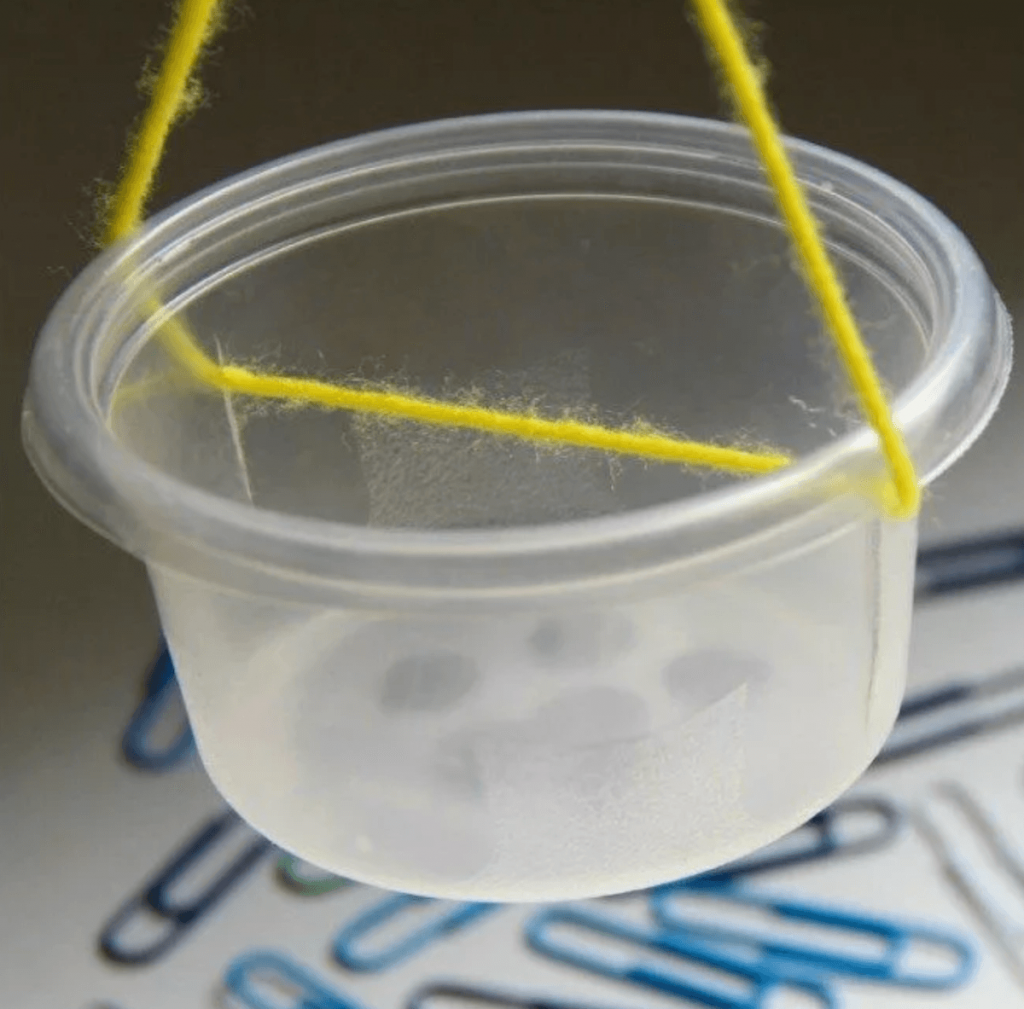
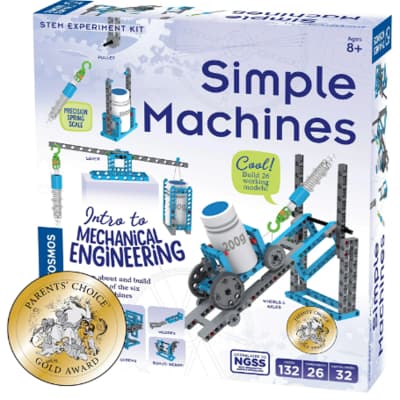
- Project Implementation: Using materials such as spools, twine, and small containers, students can construct a DIY pulley system (as highlighted by educational resources like Carrots are Orange). By attaching weights to the line, students measure the effort required to lift objects vertically versus pulling them across alternative paths. For those seeking standardized kits, the Simple Machines Science Experiment & Model Building Kit offers pre-engineered components for deeper structural analysis.
2. The Inclined Plane: Conquering Elevation
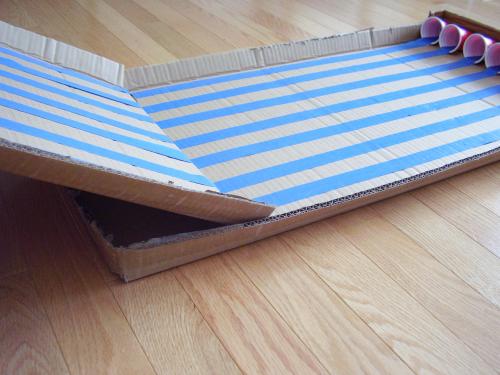
- Concept: An inclined plane—or ramp—reduces the immediate force needed to raise an object by increasing the distance over which it travels.
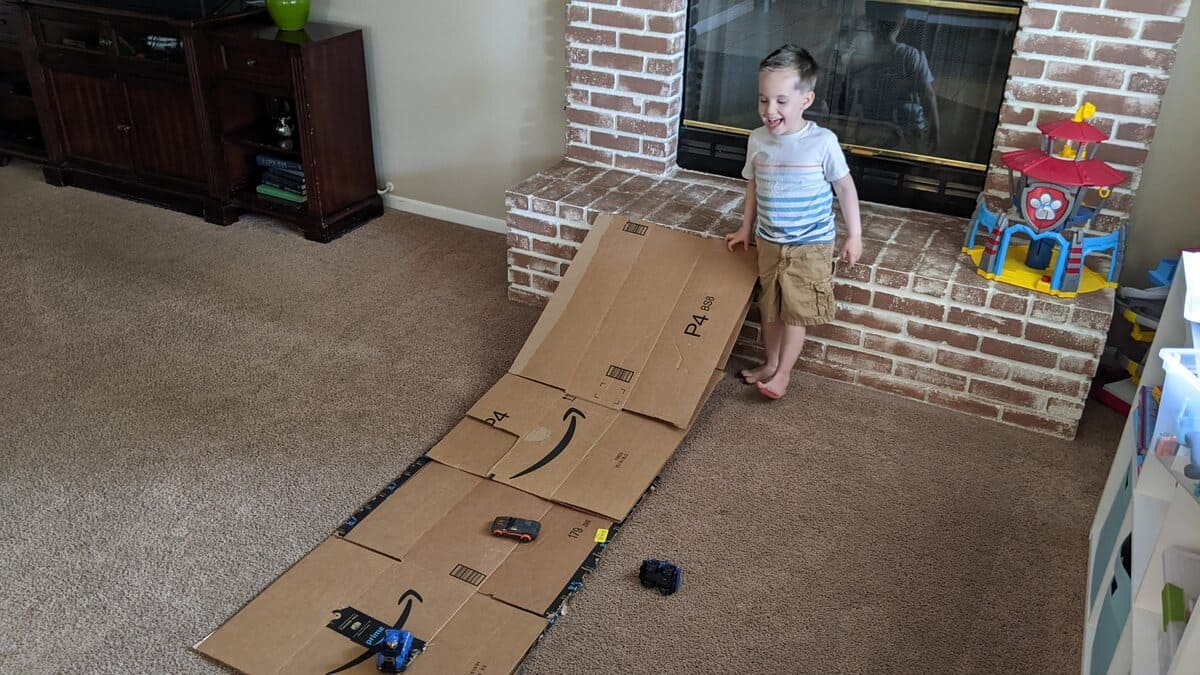
- Project Implementation: Transforming a standard inclined plane into a marble or toy car racecourse engages students in comparative physics. By adjusting the slope of the plane, students observe how a gradual incline decreases the effort needed to move objects uphill compared to vertical lifting.
3. The Lever: The Fulcrum Principle
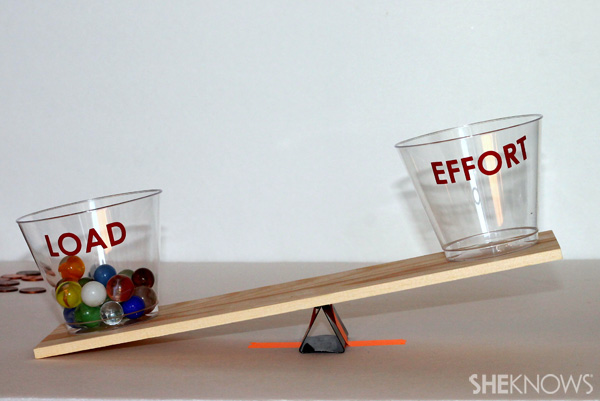
- Concept: Levers consist of a rigid beam pivoted on a fixed point called a fulcrum, allowing a small force at one end to lift a heavy load at the other.
- Project Implementation: A simple binder clip, a craft stick, and a small weight can create an operational first-class lever. Educators can have students identify the load, effort, and fulcrum points, physically demonstrating how shifting the fulcrum alters the mechanical advantage required to lift the load.
4. The Wedge: Splitting and Securing Matter
- Concept: A wedge is essentially a moving inclined plane used to split objects, cut materials, or hold items in place through frictional resistance.
- Project Implementation: While traditional wedges include axes and knives—tools hazardous for young children—play dough serves as a safe proxy. Students can mold play dough into "logs" and attempt to cut them with the flat of their hand (failing due to lack of concentration force), then successfully split the material using triangular wedge blocks.
5. The Screw: Inlined Planes Wrapped in Spirals
- Concept: A screw is an inclined plane wrapped around a central cylinder, transforming rotational force into linear force.
- Project Implementation: Demonstrating screws requires simple exploratory tests: students attempt to push a metal nail directly into a dense block of wood using manual force alone (which is nearly impossible). Following this, they utilize a threaded screw and screwdriver, observing how the helical inclined plane effortlessly guides the fastener deep into the material.
6. The Wheel and Axle: Reducing Kinetic Friction
- Concept: The wheel and axle system consists of a round wheel attached to a smaller shaft (axle), where a force applied to one causes the other to rotate, dramatically reducing surface friction during transit.
- Project Implementation: Utilizing recycled cardboard tubes, plastic bottle caps, and straws or chopsticks as axles, students design and construct miniature rolling vehicles. Testing an empty cardboard tube against one weighted down and mounted on a wheel-and-axle chassis vividly illustrates the efficiency gained in transportation.
Common Misconceptions About Simple Machines
Even though simple machines are conceptually straightforward, several persistent misconceptions can derail advanced scientific comprehension. Educators and mentors must actively clarify these points.
Misconception 1: All Levers Operate Identically
A frequent error is assuming that all levers function the same way regardless of their geometry. In reality, levers are categorized into three distinct classes based on the relative positioning of the fulcrum ($F$), the load ($L$), and the effort ($E$):
- First-Class Levers: The fulcrum is positioned between the effort and the load (e.g., seesaws, crowbars).
- Second-Class Levers: The load is positioned between the fulcrum and the effort (e.g., wheelbarrows, nutcrackers).
- Third-Class Levers: The effort is applied between the fulcrum and the load (e.g., tweezers, brooms, human arms).
Recognizing these distinctions allows students to map mechanical principles to real-world biological and industrial machinery.
Misconception 2: Friction Is Always an Obstacle
In many early physics contexts, friction is taught exclusively as a resistive force that opposes motion and wastes energy. However, simple machines often rely fundamentally on friction to operate correctly.
- A doorstop (which is a wedge) stays in place exclusively because of static friction between the wedge and the floor.
- A wheel and axle would experience catastrophic slippage without the necessary traction and friction between the rolling tire and the ground surface.
Thus, friction is not merely an adversary to engineering; it is an essential variable in mechanical design.
Misconception 3: Simple Machines Reduce the Total Amount of Work
Perhaps the most widespread misunderstanding is that simple machines reduce the absolute quantity of work required to complete a job. According to the conservation of energy, the total work ($W = F times d$) remains constant. Simple machines do not diminish work; they merely trade high force over a short distance for low force over a long distance, yielding a net mechanical advantage.
Future Outlook: Building Toward Complex Engineering
As educational frameworks increasingly emphasize early STEM literacy, the study of simple machines remains more critical than ever. Far from being isolated classroom crafts, these six mechanical devices are the stepping stones toward advanced robotics, structural architecture, and complex mechanical systems.
When children master the physics of pulleys, levers, and inclined planes, they unlock the conceptual vocabulary necessary to design sophisticated engineering projects—ranging from intricate Rube Goldberg apparatuses to automated industrial robotics. By encouraging ongoing curiosity, supporting tactile experimentation with curated building kits, and anchoring theoretical math in physical reality, parents and educators empower the next generation of engineers to reshape the world around them.

