By Nicole C. Lehmann-Haupt | Updated August 19, 2026
Executive Overview
For modern parents navigating the labyrinth of early childhood, the marketplace offers an overwhelming array of technological solutions designed to optimize, track, and mitigate every conceivable risk. From smart bassinets that mimic womb-like rhythms to high-tech booties tracking vital signs and complex algorithms determining optimal wake windows, contemporary parenting has increasingly mirrored the key performance indicator (KPI) frameworks of the tech startup world.
Yet, beneath the glossy veneer of data-driven optimization lies a rising tide of parental anxiety. When every minute variable—from room temperature to sleep sack TOG ratings—is treated as a metric to be mastered, the natural intuition of caregiving is frequently crowded out by the pursuit of algorithmic perfection.
This article explores the collision between high-tech optimization culture and the raw, unquantifiable reality of early motherhood. Through the personal journey of a tech marketer who traded data charts for presence, we examine the broader psychological phenomenon of "over-parenting by dashboard," the illusion of control peddled by the baby tech industry, and the profound relief that comes from shifting our focus away from data patterns and toward the human being right in front of us.
Detailed Chronology: The Metrics of Midnight
Two months after welcoming her daughter into the world, Nicole C. Lehmann-Haupt found herself wide awake in the suffocating stillness of a San Francisco night. Clutching her iPhone like a lifeline, she was frantically analyzing thermal resistance charts—specifically Thermal Overall Grade (TOG) ratings—in the dark.
The immediate catalyst was an unseasonal heatwave. San Francisco’s microclimate had failed to deliver its customary evening cool-down, leaving the nursery hovering at a warm 72 degrees Fahrenheit. Meanwhile, the sleep sack her daughter wore carried a TOG rating of two, a specification optimized for a much cooler room ranging between 64 and 68 degrees.
Panic set in. Was she overheating?
As is often the case with modern anxiety, the single query instantly multiplied into an overwhelming backlog of algorithmic queries:
Is this even the correct TOG chart?
How can I accurately tell if my baby is running cold or hot?
Am I supposed to check her hands, her forehead, or her core temperature?
What physiological consequences will a fraction of a degree have on her development?
The existential weight of the moment quickly ballooned. If something as fundamentally basic as dressing an infant for sleep required this level of intense investigation, cross-referencing, and visceral dread, how was she ever going to survive, let alone master, the entirety of motherhood?
The Startup Mindset Meets the Nursery
As a professional growth marketer, Lehmann-Haupt had spent her entire career operating under a deeply ingrained professional ethos: Almost any problem can be solved with enough data, rigorous focus, and creative iteration.
In the tech sector, the roadmap to success is mechanical and predictable:
Measure the baseline.
Establish a controlled test environment.
Deploy the intervention and measure the resulting metrics.
Isolate and modify a single variable, redeploy, and analyze.
Iterate until the desired outcome is achieved.
Looking back, she confesses to the hubris of believing this agile framework could be seamlessly ported over to human development. When she and her husband prepared for their daughter’s arrival, they invested heavily in the modern tech-parent toolkit. They outfitted the nursery with an elite tier of baby-tech machinery:
A smart bassinet engineered to sway with micro-movements mimicking the womb.
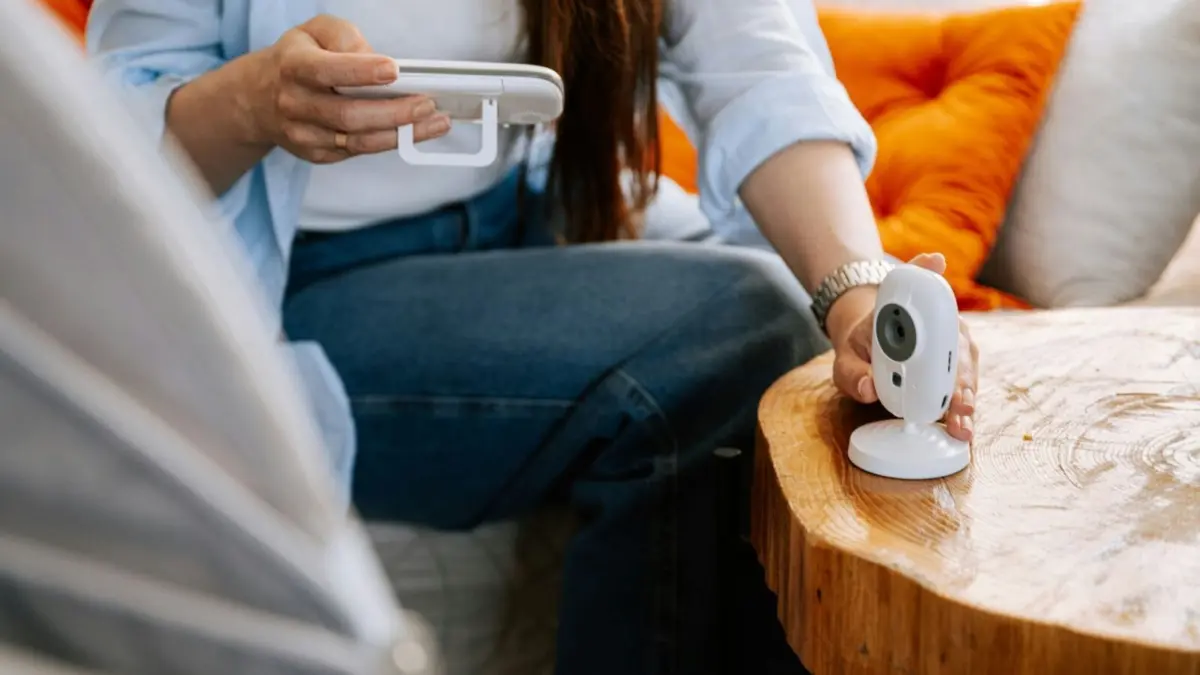
An advanced nursery camera designed to analyze sleep cues and track developmental milestones.
A wearable biometric bootie tracking real-time heart rate and oxygen saturation.
An automated formula dispenser programmed to heat water to the exact decimal degree.
A premium app subscription dedicated to logging every ounce, minute, and output of the daily routine.
Yet, as veteran parents frequently caution, declaring oneself "prepared" for a child is conceptually identical to declaring oneself prepared to jump off a cliff. You can interview those who have made the leap before you, and you can purchase the finest safety gear available. But eventually, gravity takes over, and you simply have to jump.
The Turning Point: Stripping Away the Screens
The illusion of total control finally shattered on a cold, messy Tuesday evening.
Her daughter contracted a standard seasonal virus, resulting in an uncomfortable chest cold and persistent nasal congestion. The congestion made it nearly impossible for the infant to sleep flat in her state-of-the-art, data-logging bassinet. She could only find relief—and breathe clearly—when held upright against her mother’s chest.
Yielding to raw exhaustion rather than algorithmic optimization, Lehmann-Haupt settled into the simple, un-smart recliner in the nursery and held her sick child. She rocked her through the fever spikes and the shallow breaths until deep sleep finally took hold.
For the first time in months, she didn’t look at her phone. She didn’t need an app to calculate how many minutes of REM sleep had elapsed. She didn’t need to check a chart to know when the baby had last fed.
She knew all of it because she was right there.
As her daughter rested peacefully against her collarbone, Lehmann-Haupt gazed out the nursery window at the San Francisco night sky. She felt a profound mixture of physical exhaustion and deep, unadulterated gratitude. It was in that quiet stillness that the paradigm shift occurred: she realized she had spent months obsessing over thermal ratings and sleep metrics while entirely missing the reality unfolding in her arms.
Supporting Context & Metrics: The Rise of the Quantified Baby
Lehmann-Haupt’s experience is far from an isolated incident. Over the past decade, the global baby-tech market has exploded into a multi-billion-dollar industry, fueled by venture capital investments and targeted marketing directed at anxious, high-achieving millennial and Gen-Z parents.
The Psychology of Parental Data Loops
According to child psychologists and family therapists, the integration of consumer health tracking and automated scheduling apps into early parenting has fundamentally altered the psychological landscape of the "fourth trimester."
The Illusion of Control: In an environment defined by the chaotic unpredictability of a newborn, dashboards and metrics provide a soothing psychological placebo. They trick the parental brain into believing that uncertainty can be engineered out of existence.
The Outsourcing of Intuition: When parents rely on a device or an app to tell them why a baby is crying or whether they are getting enough sleep, they gradually erode their own biological and intuitive confidence.
The Comparison Trap: Data-sharing features on parenting apps create peer-pressure loops, where parents unconsciously benchmark their infant’s digestive output and sleep cycles against anonymous averages, generating entirely artificial anxieties.
The Shift Toward Mindful Presence
Sociological data indicates a growing counter-movement among modern mothers—often characterized as a return to "slow parenting." Experts emphasize that while technology offers genuine safety interventions (such as monitors for Sudden Infant Death Syndrome prevention), the over-quantification of daily comfort metrics correlates directly with elevated rates of postpartum anxiety and maternal burnout.
Expert Perspectives
Child development specialists and pediatric clinicians frequently weigh in on the delicate balance between utilizing modern safety tools and preserving maternal mental health.
"Parents today are subjected to an unprecedented firehose of conflicting, highly monetized advice," notes Dr. Elena Vance, a developmental pediatrician based in Chicago. "When you teach a mother to look at her phone to interpret her child’s state instead of looking at the child’s face, you disrupt a primal communicative loop. The baby doesn’t need a optimized environment; the baby needs a regulated, present caregiver."
Executive coaches specializing in working mothers echo similar sentiments, noting that high-achieving women frequently fall into the trap of treating motherhood as a corporate ladder to be climbed or a project to be successfully managed.
"You cannot optimize a human relationship," explains leadership coach Marcus Thorne. "Efficiency is for spreadsheets. Empathy, resilience, and secure attachment require inefficiency, downtime, and the willingness to sit in the messy unknowns of human growth."
Future Outlook: Embracing the Chaos of Toddlerdom
As Lehmann-Haupt’s daughter transitioned from infancy into the unpredictable chaos of toddlerhood, the lessons learned during those sleepless nights proved foundational.
While she admits that her innate personality—one that naturally craves information, structure, and research—has not entirely vanished, her relationship with that data has fundamentally transformed. She has learned precisely when the digital firehose stops being a tool and starts becoming a source of noise.
The realization that she cannot purchase her way out of parenting challenges through targeted e-commerce solutions has brought a liberating sense of calm.
A recent Saturday morning offered a clear snapshot of this evolving philosophy. There were no tracking apps open, no smartwatches calculating active calories, and no schedules dictating the timeline. Mother and daughter simply sat together on the living room floor, reading dog-eared board books, dancing awkwardly to improvised music, and playing games of patty-cake with zero agenda and nothing to measure.
Both of them were entirely happy.
For parents drowning in the digital noise of modern child-rearing, the prescription is remarkably simple: When the anxiety of optimization begins to close in, put down the smartphone, take off the tracking wearable, and join your child right where they are.