
Executive Overview
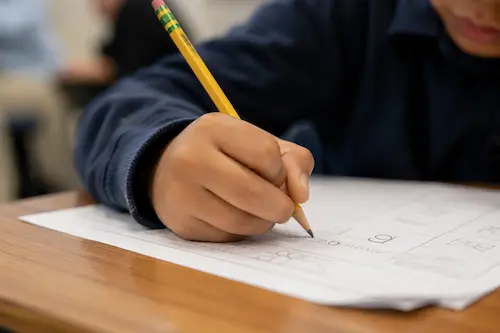
Across elementary schools nationwide, educators are voicing an increasingly urgent concern: while young students can navigate touchscreens, swipe through interfaces, and operate digital devices with intuitive ease, a growing majority struggle with basic physical tasks. Teachers report that children frequently find it difficult to hold a pencil correctly, form legible letters, or sustain physical writing for more than a few minutes without suffering from hand fatigue and frustration.
This mechanical deficit is not merely an aesthetic or mechanical issue of poor penmanship. Handwriting is a foundational pillar of cognitive development and early literacy. Neurological research demonstrates that when handwriting becomes automatic, a child’s working memory is liberated. Instead of expending mental energy on the physical mechanics of forming a letter, students can redirect their cognitive capacity toward spelling, sentence structure, vocabulary selection, and complex idea generation.
The movement toward a classroom "digital detox"—driven by concerns over shrinking attention spans, mental fatigue, and screen saturation—has exposed an underlying crisis: the degradation of fine and gross motor skills in young learners. As schools reassess the balance between screen-based tools and physical learning, address missing motor foundations, and re-introduce explicit handwriting instruction, educators are realizing that long-term literacy depends heavily on the physical act of writing.
Detailed Chronology
  [Pre-2020]            [2020-2021]               [2022-2023]             [2024 & Beyond]
Balanced Instruction  ---> Emergency EdTech Expansion ---> Emergence of Motor Deficits ---> The Digital Detox & Recalibration
Digital tools adopted  1-to-1 device deployment   Widespread stamina decline   Structured reintroduction of physical
as supplemental.       replaces physical print.   and fine motor friction.    writing & explicit motor training.
The Pre-2020 Baseline: Emerging Digital Transitions
Prior to 2020, elementary education was gradually integrating educational technology into daily routines. While interactive whiteboards and digital learning games were growing in popularity, physical print, paper-and-pencil activities, and tactile play (such as using playdough, scissors, and building blocks) remained the dominant modes of instruction in early childhood and primary classrooms. Handwriting instruction, though declining in instructional time over prior decades, still retained a regular presence in early literacy schedules.
2020–2021: The Emergency Shift to Screen-Dominant Learning
The onset of the COVID-19 pandemic forced an unprecedented transformation in K-12 education. To maintain instructional continuity during remote and hybrid learning, school districts rapidly expanded one-to-one device initiatives. Tablets and laptops became the primary interface for reading, completing assignments, and interacting with teachers.
Physical worksheets, tactile manipulatives, and handwriting practice were largely replaced by software applications featuring tap, drag-and-drop, and point-and-click interactions. While this digital pivot served as a vital educational lifeline, it unintentionally removed the daily physical experiences required to build hand strength, grip stability, and physical writing stamina in young children.
2022–2023: The Return to the Classroom and Unmasking the Deficit
As students returned to full-time, in-person instruction, educators began observing widespread developmental delays in fine motor control and physical writing endurance. Kindergartners, first-graders, and second-graders exhibited weak pincer grips, abnormal pencil holds, and physical discomfort during writing tasks.
Concurrently, teachers observed an decline in written output; students struggled to translate their spoken thoughts onto paper, hindered by the physical effort required to write. During this period, the cognitive toll of constant connectivity became apparent through reduced attention spans, elevated mental fatigue, and reliance on digital feedback loops.
2024 and Beyond: The Digital Detox Counter-Movement
Today, the educational community is undergoing a structural recalibration. Concerns over excessive screen time have sparked a push for classroom "digital detoxes." This movement advocates for a strategic reduction of screen reliance in favor of tactile, hands-on, and movement-based learning experiences.
What began as a push to improve student focus and mental wellness has evolved into a broader effort to rebuild physical developmental foundations. Districts are increasingly re-evaluating instructional time to ensure that handwriting, fine motor exercises, and gross motor activities are formally restored to the primary curriculum.
Supporting Context & Metrics
The Physiology of Writing: Fine and Gross Motor Interdependence
The ability to produce fluent handwriting requires a complex sequence of physical and neurological actions. Fine motor dexterity does not exist in isolation; it depends heavily on gross motor stability.
       [ Core Strength & Postural Control ]
                        │
                        ▼
         [ Shoulder & Arm Stability ]
                        │
                        ▼
      [ Fine Motor Grip & Wrist Flexibility ]
                        │
                        ▼
[ Automatic Letter Formation & Cognitive Freeing ]- Gross Motor Foundations: Proper seating posture, core muscle engagement, and shoulder girdle stability provide the necessary physical anchor for manual control. Without strong core and shoulder support, a child’s arm fatigues quickly, placing excessive pressure on the hand and fingers.
- Fine Motor Execution: Holding a pencil requires a mature tripod grip, web-space stability, and isolated movement of the thumb, index, and middle fingers. When children lack tactile exposure to manipulative play, their intrinsic hand muscles remain underdeveloped, resulting in dynamic grips that cause joint strain and premature physical exhaustion.
Neurological Impact: Orthographic Mapping and Cognitive Load
Cognitive science demonstrates that handwriting plays a distinct role in brain development and literacy acquisition compared to typing or tapping a screen.
+-------------------------------------------------------------------------+
|                         THE WRITING COGNITIVE LOOP                      |
|                                                                         |
|   Visual Processing  ───►  Motor Execution  ───►  Language Processing   |
|   (Recognizing Shape)      (Forming Letter)       (Associating Sound)   |
|                                                                         |
|   Result: Strengthens Orthographic Mapping & Long-Term Word Retention   |
+-------------------------------------------------------------------------+- Orthographic Mapping: The physical act of tracing and forming letters engages motor control centers in the brain that keyboarding does not activate. This motor-visual integration strengthens orthographic mapping—the process the brain uses to store written words for automatic retrieval—thereby directly reinforcing reading fluency and spelling accuracy.
- Cognitive Load Theory: Human working memory has limited capacity. When a child must consciously process letter shapes, line alignment, and pencil control, their cognitive capacity becomes consumed by mechanics. Once letter formation becomes automatic, working memory is freed for higher-order tasks: composing complex sentences, organizing paragraphs, selecting precise vocabulary, and refining arguments.
Evidence-Based Frameworks
Educational research underscores the necessity of direct handwriting instruction. The Institute of Education Sciences (IES), the independent research arm of the U.S. Department of Education, published a foundational practice guide titled Teaching Elementary School Students to Be Effective Writers. The guide identifies handwriting fluency as a core foundational skill for effective writing instruction, emphasizing that early mechanical fluency directly correlates with writing quality, length, and narrative complexity in later academic years.
Official Statements & Expert Analysis
Prominent educational research supports the necessity of re-establishing fine motor development and explicit handwriting instruction in elementary education.
Dr. Cheryl Lundy Swift, Director of Professional Learning and Academic Partnerships at Learning Without Tears and host of the Literacy Matters: Empowered Conversations podcast, highlights the underlying mechanics of written expression challenges:
"When educators talk about handwriting challenges, they are talking about the deep connection between physical stamina and cognitive focus. A child who struggles to hold a pencil comfortably spends immense physical energy just gripping the tool, leaving less mental energy for composition. Ultimately, what appears to be a struggle with written expression, academic performance or even motivation may actually reflect underdeveloped motor skills."
Dr. Swift emphasizes that handwriting should not be viewed as an innate capability that children passively absorb through independent practice or repetitive worksheets, but rather as a complex motor skill requiring deliberate pedagogical support:
"Like reading, it benefits from direct instruction. Students need to watch letter formation, practice with guidance, receive immediate feedback, and gradually build independence. A simple ‘I do, we do, you do’ approach provides the modeling and repetition that many learners need."
Addressing the broader structural shift toward multisensory learning, Dr. Swift notes:
"Building letters with manipulatives, tracing formations on tactile surfaces, using movement before writing, rehearsing ideas aloud, and incorporating hands-on activities all strengthen learning by activating multiple pathways in the brain… Before children can fully thrive in a digital world, they must first develop the physical, cognitive, and language foundations that make learning possible."
Future Outlook & Strategic Roadmap
To bridge the gap between digital fluency and physical literacy, education systems must adopt an integrated instructional model. Rather than eliminating digital tools entirely, forward-thinking districts are establishing structured strategies that align screen use with physical developmental milestones.
1. Implementation of Explicit, Short-Burst Handwriting Instruction
Schools do not need to rewrite their daily schedules to integrate handwriting. Research shows that brief, targeted instructional blocks yield high returns.
- Duration: 10 to 15 minutes daily of explicit, direct instruction.
- Methodology: Utilizing explicit teacher modeling ("I do"), guided collaborative practice ("We do"), and monitored independent execution ("You do").
- Cross-Curricular Application: Reinforcing letter formation directly within science logs, social studies response journals, and math reasoning tasks to build contextual fluency.
+----------------------------------------------------------------------+
|                     EVIDENCED-BASED LESSON STRUCTURE                 |
|                                                                      |
|  [1] Explicit Modeling (3-5 min)   -> Teacher demonstrates stroke.   |
|  [2] Guided Practice (5 min)       -> Tactile trace & direct feedback|
|  [3] Content Integration (5 min)   -> Application in Science/English |
+----------------------------------------------------------------------+
2. Adoption of Multisensory Learning Environments
To engage modern learners who are accustomed to dynamic media, physical instruction must leverage kinesthetic and multisensory techniques:
- Tactile Manipulatives: Incorporating clay, wood pieces, sand trays, and textured cards to build muscle memory and sensory awareness before pencil-on-paper work.
- Integrated Physical Activity: Incorporating gross motor exercises—such as shoulder presses, wall push-ups, and core stability games—into morning routines to strengthen the upper-body stability necessary for writing.
- Oral Rehearsal: Encouraging students to speak their ideas aloud before attempting to write them down, decoupling language production from motor execution during drafting.
3. Clear Differentiation: Keyboarding vs. Physical Writing
Educational leadership must establish clear boundaries regarding when keyboarding and handwriting are introduced and utilized:
| Instructional Focus | Recommended Grade Levels | Primary Pedagogical Objective |
|---|---|---|
| Physical Handwriting | Pre-K through Grade 3 | Motor development, orthographic mapping, letter recognition, early literacy. |
| Hybrid Application | Grades 3 through 5 | Transitioning to longer drafts while maintaining handwriting fluency across subjects. |
| Formal Keyboarding | Grade 3 and Above | Digital composition, research proficiency, technical computer literacy. |
4. Family and Community Engagement
Schools are increasingly expanding outreach to help parents understand the vital role of physical play in digital-era child development.
- Home Motor Exercises: Educating families on simple non-screen activities that foster grip strength, such as cooking, using safety scissors, playing with building blocks, and drawing.
- Communicating the ‘Why’: Explaining to parents that writing difficulties are often rooted in physical stamina issues rather than academic ability, empowering families to support fine motor growth at home.
Conclusion
As modern education navigates the balance between technological innovation and human development, the classroom "digital detox" serves as an important corrective measure. While technology remains a critical tool for modern research and communication, it cannot replace the physical, neurological, and cognitive benefits derived from physical handwriting. By prioritizing explicit motor instruction, tactile learning, and intentional instructional design, schools can ensure students develop the foundational physical and mental capabilities required to become proficient writers, confident readers, and critical thinkers in an increasingly digital world.

