
EXECUTIVE OVERVIEW
In the modern educational landscape, foundational literacy instruction is undergoing a quiet yet profound revolution. Educators, cognitive scientists, and curriculum developers increasingly recognize that early reading success is not merely a product of rote memorization, but of deep, intuitive phonological awareness. At the vanguard of this pedagogical shift is an innovative, no-prep instructional tool designed specifically for preschool and kindergarten learners: the Color by Syllable framework.
Spearheaded by early childhood education specialist Shaunna Evans through platforms like Fantastic Fun and Learning, this creative intervention merges the classic, beloved format of "color-by-code" worksheets with rigorous, evidence-based phonological awareness training. Designed to help young children break down spoken words into individual syllables, segment sounds, and recognize rhythmic patterns, the activity has rapidly gained traction in literacy centers, homeschooling environments, and take-home practice modules nationwide.

As school districts grapple with post-pandemic learning gaps and a heightened focus on the "Science of Reading," accessible, engaging, and structurally sound printables have become essential. This report provides an investigative and authoritative examination of the Color by Syllable methodology, exploring its underlying pedagogical mechanics, structural integration within early childhood classrooms, and its expansion into a comprehensive, year-round literacy curriculum.
The Pedagogical Imperative: Understanding Phonological Awareness in Early Childhood
To comprehend the significance of the Color by Syllable initiative, one must first examine the cognitive milestones of early childhood literacy. Phonological awareness—the ability to recognize and manipulate the spoken parts of sentences and words, such as syllables, onsets, and rimes—is widely acknowledged by reading researchers as a primary predictor of future reading and spelling proficiency.
Before children can successfully map sounds to letters (phonics), they must first be able to hear and isolate the structural building blocks of spoken language. Syllabification serves as the natural bridge in this developmental progression. Words like val-en-tine (three syllables) or heart (one syllable) possess auditory rhythms that young learners can physically feel and clap out.

However, translating abstract auditory concepts into concrete, manageable tasks for four- and five-year-olds presents a distinct pedagogical challenge. Traditional flashcards and drill-based worksheets frequently lead to cognitive fatigue and disengagement among pre-K and kindergarten students. The Color by Syllable intervention solves this dilemma by gamifying the auditory segmentation process. By tying syllable counts to color-coded visual outputs, the activity engages multiple sensory pathways simultaneously, transforming a dry phonological exercise into an immersive artistic puzzle.
Detailed Chronology and Evolution of the Color by Syllable Series
The development of the Color by Syllable framework did not happen overnight; it represents the culmination of years of iterative classroom testing and digital resource distribution tailored to the evolving needs of early educators.
Phase 1: Conceptualization and Initial Pilot Testing
Initially conceptualized as a minor supplement to existing holiday-themed lesson plans, early iterations of color-by-code literacy activities focused primarily on letter recognition and basic sight words. However, classroom observations revealed a critical gap: while visual letter identification was being adequately addressed, students struggled significantly with the auditory manipulation of words. Evans and fellow curriculum developers began experimenting with syllable-based color codes during seasonal units, specifically targeting pre-K and kindergarten students.

Phase 2: The Valentine’s Day Expansion
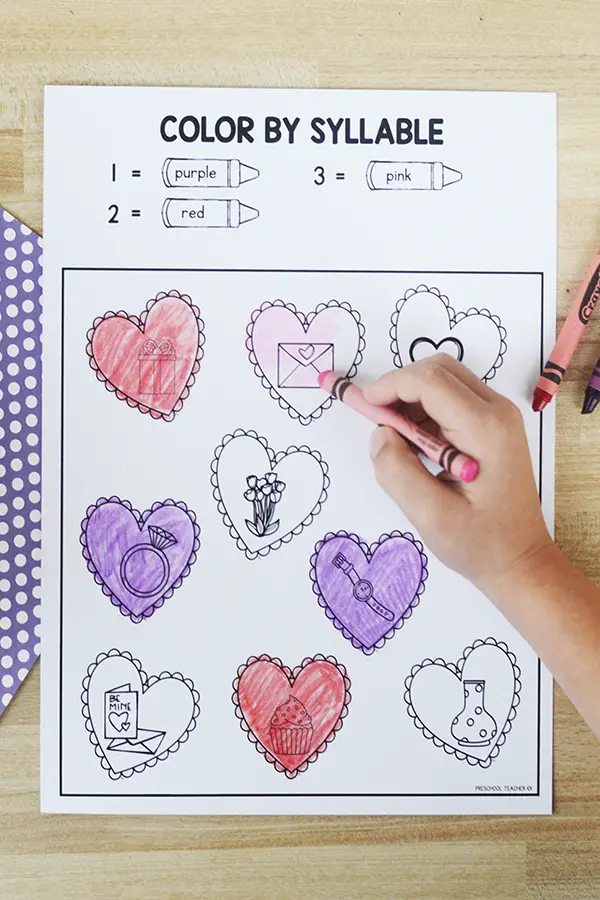
As the framework was refined, seasonal thematic units emerged as ideal delivery mechanisms for foundational skills. The introduction of the Valentine’s Day Color by Syllable printable marked a major milestone in the series’ public adoption. Released strategically to align with February literacy centers, the Valentine’s-themed packet provided a timely, low-stress resource for educators facing mid-year instructional burnout. Featuring affectionate imagery and accessible vocabulary words, the free printable offered differentiated sheets that allowed teachers to tailor syllable-counting exercises (ranging from one to five syllables) to individual student capability levels.
Phase 3: Scaling into a Comprehensive Year-Long Curriculum
Buoyed by widespread positive feedback from educators utilizing the free seasonal samplers, the initiative expanded into a comprehensive, 33-page year-long color-by-syllable set. This milestone transformed a scattered collection of holiday printables into a cohesive, systematic phonological awareness curriculum spanning the entire academic calendar. Today, the complete set is distributed through prominent educational marketplaces, including Teachers Pay Teachers and specialized preschool curriculum providers, cementing its status as a staple resource in modern early childhood education.
Supporting Context, Operational Mechanics, and Classroom Integration
The operational brilliance of the Color by Syllable framework lies in its absolute dedication to "no-prep" utility. In an era where educators face severe time constraints and administrative burdens, the ability to print and immediately implement a scientifically grounded literacy center is invaluable.

How the Mechanism Works
The mechanics of the activity are deceptively simple yet instructionally rigorous:
- Vocabulary Introduction: Prior to independent execution, educators introduce the target vocabulary terms associated with the worksheet images, ensuring that students are not struggling with unfamiliar semantic definitions while attempting phonological tasks.
- Auditory Segmentation: Students speak the target word aloud, clapping, tapping, or counting on their fingers to isolate the individual syllables (e.g., cup-id = 2 syllables).
- Code Matching: Learners match the determined syllable count to the designated color key provided on the worksheet.
- Artistic Execution: Students color the corresponding section of the image, producing a self-checking visual mosaic that instantly alerts the educator to any comprehension errors.
Flexible Implementation Strategies
The versatility of the printable packets allows them to be deployed across diverse educational settings:
- Literacy Centers: Operating as an independent station where students rotate through small-group activities while the teacher conducts targeted guided reading.
- Fast Finishers: Serving as a productive, academically enriching anchor activity for students who complete core assignments ahead of schedule.
- Take-Home Practice: Bridging the gap between the classroom and the living room, empowering parents to actively participate in their child’s phonological development through structured, stress-free play.
Official Perspectives and Expert Endorsements
Educational leaders and curriculum specialists have increasingly lauded resources that balance academic rigor with creative expression. Shaunna Evans, the creator behind the series, emphasizes the intentionality built into every page of the curriculum.

"Phonological awareness is the bedrock upon which all future literacy is built," Evans notes in her curriculum documentation. "When we break down words into individual syllables through engaging, low-stress formats like color-by-code activities, we aren’t just keeping kids busy—we are actively rewiring their brains to hear, segment, and master the structural sounds of language without the intimidation factor of traditional testing."
Furthermore, early childhood literacy advocates point out that activities incorporating fine motor skill development (such as coloring and spatial coordination) alongside cognitive processing yield superior engagement metrics. By merging art therapy concepts with phonics foundations, the Color by Syllable model aligns closely with holistic, child-centered educational philosophies championed by Montessori and Reggio Emilia frameworks, while remaining fully adaptable to standard public school kindergarten benchmarks.
Future Outlook: The Trajectory of Play-Based Literacy Interventions
As educational technology continues to evolve alongside traditional print media, the demand for high-quality, tactile literacy interventions remains surprisingly robust. While digital tablets and phonics apps dominate certain segments of the ed-tech market, early childhood educators consistently report superior cognitive retention and focus when students interact with physical, paper-based manipulatives and coloring tools.
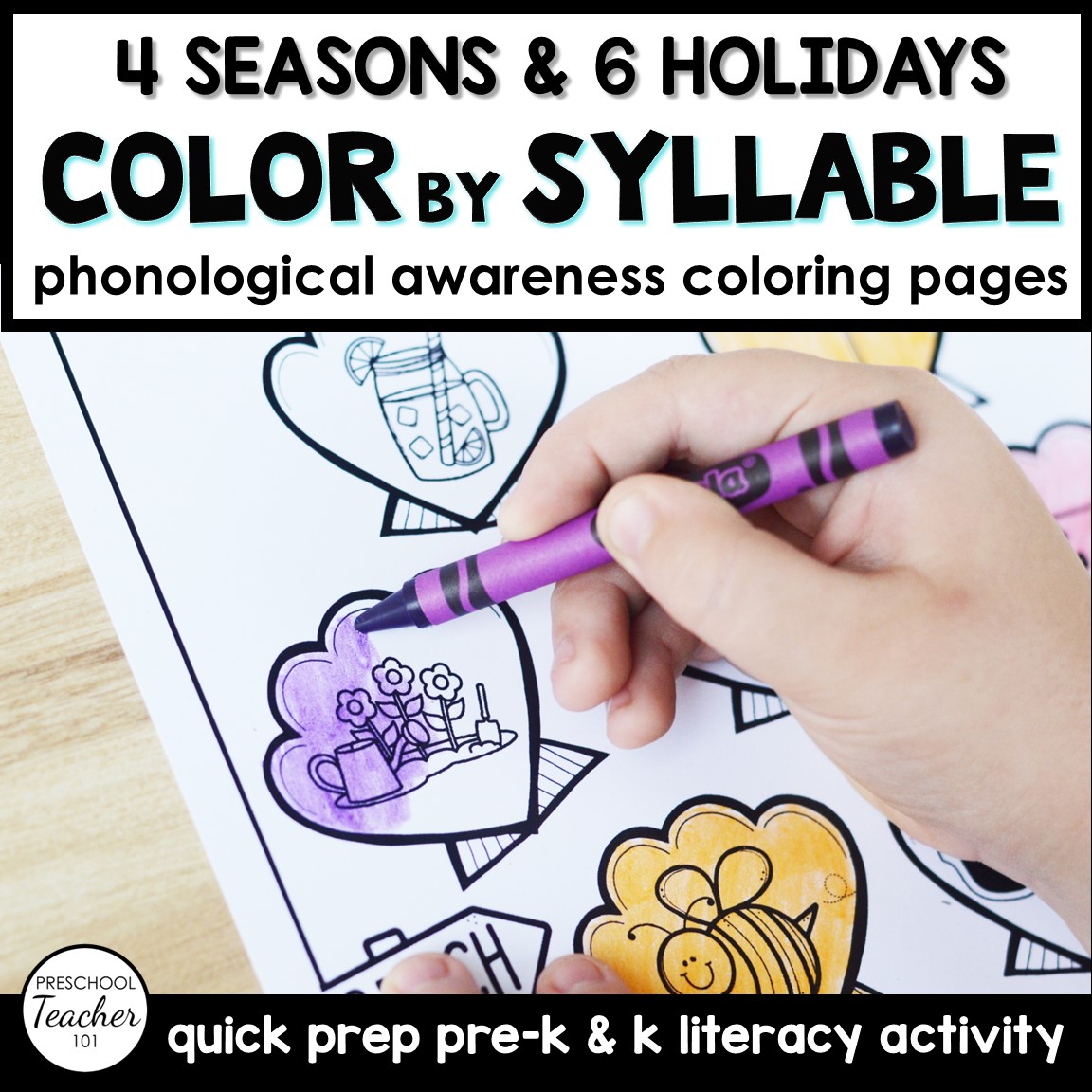
Looking forward, the expansion of comprehensive phonetic print sets—ranging from autumn harvest themes to spring and winter holiday units—signals a permanent shift toward thematic, cross-curricular literacy instruction. Educators are moving away from isolated drill sheets in favor of interconnected thematic units that weave language arts seamlessly into seasonal celebrations.
For pre-K and kindergarten classrooms navigating the complexities of early reading instruction, tools like the Color by Syllable series offer a reliable, scalable, and joyful pathway forward. By demystifying the mechanics of syllabification and wrapping foundational skill practice in the vibrant colors of seasonal celebration, these resources ensure that the journey toward literacy begins not with frustration, but with creativity, confidence, and enthusiasm.

