
Executive Overview
As the autumn leaves begin to turn and the crisp air of October sweeps across classrooms and living rooms worldwide, educators, parents, and students face a familiar seasonal challenge: maintaining academic momentum amidst the mounting excitement of Halloween. For generations, October has been viewed by teachers as a pedagogical hurdle—a month where the impending sugar rush of trick-or-treating and the distraction of costumes threaten to derail study sessions and lesson plans.
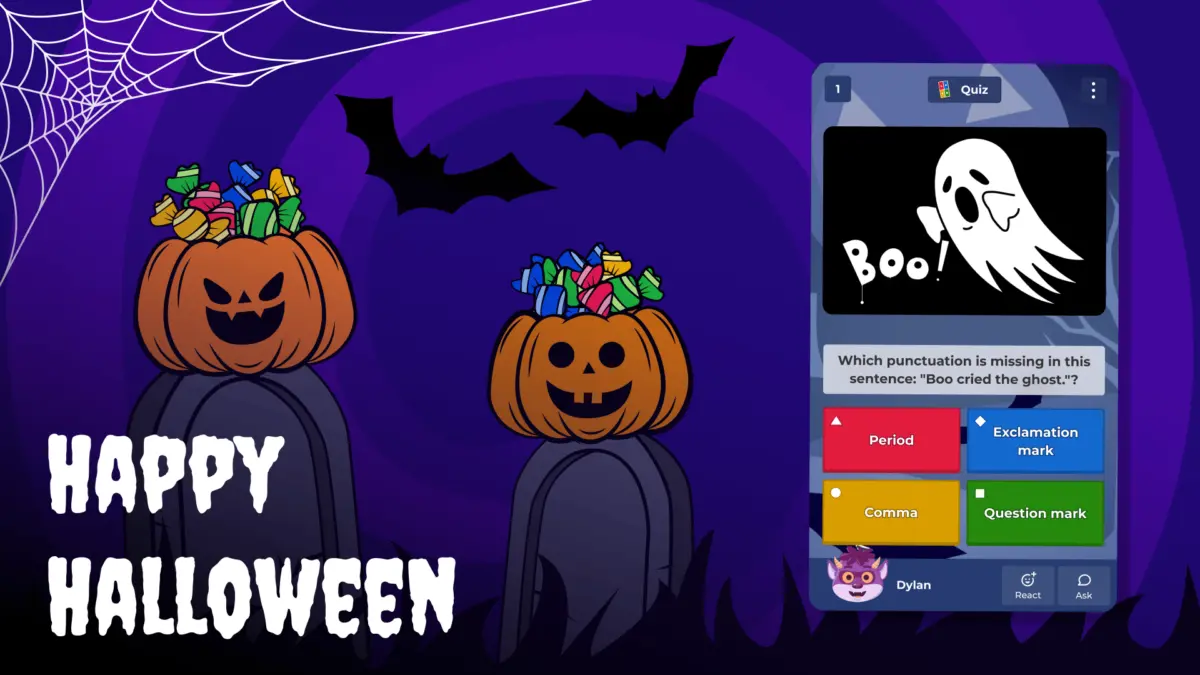
However, a paradigm shift is currently underway in digital pedagogy. Rather than fighting the cultural current of the spooky season, learning platforms are increasingly leveraging it. At the forefront of this movement is Kahoot!, the global game-based learning platform. By blending curriculum-aligned educational content with pop culture icons, historical mysteries, and festive themes, Kahoot! has released a comprehensive suite of ready-to-make and pre-built Halloween learning content.
This initiative is not merely about adding decorative pumpkins to digital quizzes. It represents a sophisticated, multi-tiered approach to student engagement that spans early childhood development, K-12 core subjects, standardized exam preparation, and adult lifelong learning. Through strategic partnerships with heavy-hitting cultural and scientific institutions—ranging from TED-Ed, Disney, and Marvel to the Museum of Science, Wikipedia, and the World Wildlife Fund (WWF)—Kahoot! has engineered an ecosystem where learning is as irresistible as Halloween candy.
This report provides an in-depth examination of Kahoot!’s 2026 seasonal educational rollout, analyzing how gamification transforms seasonal distractions into powerful cognitive milestones across classrooms, homes, and study groups.
Detailed Chronology and Ecosystem Evolution
The integration of seasonal pop-culture milestones into digital learning environments did not happen overnight. It represents a decade-long evolution in how EdTech platforms design for emotional resonance and intrinsic motivation.
Phase One: The Rise of Gamified Assessment (Early 2010s)
When Kahoot! launched, its primary innovation was turning the classroom into a game show. By utilizing smartphones and web browsers as student response systems, the platform capitalized on rapid-fire competition, leaderboards, and instant feedback. However, in its earliest iterations, content was largely user-generated and focused on straightforward quiz-and-recall mechanics. Seasonal content was sporadic, relying on individual teachers to manually design Halloween or winter-holiday quizzes.
Phase Two: Strategic Content Partnerships (Late 2010s – Early 2020s)
Recognizing the power of trusted media and educational brands, Kahoot! began curating verified channels. Collaborations with organizations like National Geographic, Disney, and Marvel allowed the platform to move beyond basic trivia into rich, narrative-driven educational experiences. Content creators could suddenly deploy lessons backed by institutional authority and globally recognized characters.
Phase Three: The Comprehensive Seasonal Suite (Current Landscape)
Today, seasonal rollouts like the Halloween learning content collection represent fully integrated pedagogical campaigns. Rather than treating October 31st as a single-day event, Kahoot! has structured a multi-week educational journey. The timeline of engagement is mapped across four distinct demographics:
- The Classroom Educator (Early October): Bringing cross-curricular mystery, literature, and STEM into daily lessons to anchor student attention.
- The Domestic Parent (Mid-October): Providing low-stress, character-driven math and literacy reinforcement at home.
- The Stressed Student (Late October): Supplying high-level STEM and vocabulary challenges to combat pre-exam fatigue.
- The Lifelong Learner/Party Host (Halt-to-Halloween): Deploying deep-dive historical and pop-culture trivia for social gatherings.
Supporting Context & Metrics: The Science of Spooky Engagement
To understand why a Halloween-themed math puzzle featuring Groot or a historical breakdown of the Salem Witch Trials via TED-Ed works so effectively, one must examine the intersection of cognitive psychology and game-based learning.
The Reduction of Cognitive Anxiety
Educational psychologists have long noted that high-stakes testing and abstract subjects like algebra or complex syntax can trigger anxiety responses in students. By wrapping these core competencies in a festive, low-stakes narrative—such as Spooky Season with Hello Kitty and Friends or Marvel’s Midnight Monster Math—the perceived threat level of the task drops significantly. The brain processes the activity as play rather than evaluation, lowering cortisol levels and fostering a psychological safety net that encourages risk-taking and trial-and-error problem solving.
Emotional Literacy and Narrative Immersion
Learning retention skyrockets when information is anchored to a story. Through partnerships with classic franchises like Charles Schulz’s Peanuts (It’s the Great Pumpkin, Charlie Brown), Kahoot! taps into emotional literacy. Students are not just counting objects or practicing addition; they are exploring themes of resilience, emotional processing (overcoming disappointment), and imaginative wonder alongside characters they trust.
STEM Enrichment Through Seasonal Curiosity
October naturally invites questions about the natural world: Why do bats behave the way they do? What are the phases of the moon during a harvest moon? Why do certain animals give us goosebumps? By aligning with the Museum of Science, SciShow Kids, and the WWF Wild Classroom, Kahoot! transforms seasonal folklore into rigorous scientific inquiry.

- Why Does the Moon Change? directly addresses foundational earth and space sciences (NGSS standard 1-ESS1-1).
- Not-so-spooky wildlife dismantles ecological phobias by teaching children about the vital ecological roles played by misunderstood creatures like owls and insects.
Categorized Breakdown of the Halloween Collection
Kahoot!’s expansive seasonal library is meticulously segmented to meet the distinct needs of various user groups. Below is an exhaustive breakdown of the offerings available for educators, parents, students, and lifelong learners.
1. For Teachers: Spell-Binding Academics in the Classroom
Classroom management during October can test the patience of even the most seasoned educators. Kahoot! mitigates this by transforming core subjects into theatrical, inquiry-driven adventures.
- TED-Ed’s Historical Mysteries: Teachers can lead students through legendary narratives, exploring the historical realities behind figures like Vlad the Impaler (Dracula) and the socio-political pressures that fueled the Salem Witch Trials. These kahoots bridge history, literature, and critical thinking.
- Nickelodeon’s Pop Culture Curriculum: By utilizing characters like SpongeBob SquarePants and the Teenage Mutant Ninja Turtles, educators can inject familiar faces into mathematics, science, and language arts exercises, ensuring high participation rates even among reluctant learners.
- Disney’s Enchanted Learning: The Disney: Happy Halloween! channel offers cross-disciplinary modules that blend magical storytelling with foundational academic standards, making abstract concepts accessible and entertaining.
2. For Parents: Sweet Treats for Home-Based Learning
Parents often struggle to keep children engaged in academic skill-building outside of school hours, particularly when homework feels like a chore. Kahoot! provides an alternative that is "sweeter than candy."
- Hello Kitty and Friends: Designed for younger learners, the Spooky Season with Hello Kitty And Friends collection guides children through decorating haunted houses while secretly testing foundational cognition and early math skills.
- Marvel’s Midnight Monster Math: For kids who need extra practice with counting, addition, and subtraction, Marvel’s collection featuring Groot and friends turns arithmetic into superhero training around a glowing cauldron.
- The Peanuts Gang: Moving beyond basic math, the Peanuts collection supports emotional development. As children join Charlie Brown and Snoopy on the hunt for the Great Pumpkin, parents can use the accompanying prompts to discuss emotional literacy, patience, and optimism.
3. For Students: Surviving Exam Season with Spooktacular Study Sessions
Autumn marks the midway point of the first semester in many academic calendars, often coinciding with midterm examinations and rising academic fatigue.
- Museum of Science & SciShow Kids: The Why Does the Moon Change? module helps middle and upper-elementary students master lunar cycles and celestial mechanics through interactive visualization.
- WWF Wild Classroom: Biology and environmental science students can test their ecological knowledge with Not-so-spooky wildlife, learning about biodiversity and habitat preservation.
- Wiktionary’s Wicked Words: For high school and advanced students looking to expand their lexicons, the Wicked Words for Halloween (hard) collection challenges players with rare, obscure, and delightfully eerie English vocabulary derived from Wiktionary’s linguistic archives.
4. For Lifelong Learners and Party Hosts: Frightfully Fun Social Trivia
Learning does not stop at graduation. Adults, corporate teams, and friend groups frequently host Halloween gatherings, and trivia has become a staple of modern social entertainment.
- Wikipedia’s Historical & Cultural Deep Dive: For trivia buffs, the Wikipedia-backed Halloween History and Traditions collection tests knowledge on the pagan origins of Samhain, the evolution of seasonal symbols, and global folklore.
- Star Wars’ Ghoul-actic Trivia: Blending sci-fi lore with spooky humor, the Star Wars: Happy Ghoul-actic Halloween kahoot tests whether participants truly understand the ways of the Force—and which Jedi or Padawan can survive a spooky galactic encounter.
Official Statements and Pedagogical Philosophy
While specific executive quotes from the 2026 product release cycle emphasize accessibility and engagement, the underlying philosophy of Kahoot!’s seasonal strategy remains anchored in the company’s core mission: making learning awesome.
"Educational technology fails when it treats engagement as an afterthought," notes product development literature from Kahoot!. "By aligning our platform with cultural touchstones that children and adults already love—whether that is Marvel, Disney, or historical folklore—we remove the friction of learning. October is not a month to be written off as lost instructional time; it is an invitation to explore the science of mystery, the history of myth, and the joy of shared play."
Educational strategists working with the platform have repeatedly pointed out that gamification acts as a bridge between passive media consumption and active cognitive processing. When a student plays a Wiktionary vocabulary game or a Museum of Science astronomy quiz, they are not merely guessing answers; they are constructing mental models under conditions of high emotional arousal and positive social reinforcement.
Future Outlook: The Trajectory of Seasonal Gamification in EdTech
As digital learning platforms continue to evolve, the success of campaigns like Kahoot!’s Halloween collection points toward several key trends in the future of education:
- Hyper-Personalized Seasonal Curricula: We can expect future iterations of seasonal content to integrate adaptive AI algorithms, tailoring the difficulty of spooky math puzzles or scientific inquiries in real-time to match the exact proficiency level of the individual student.
- Immersive and Cross-Platform Expansion: As augmented reality (AR) and virtual reality (VR) technologies become more common in classrooms, static 2D illustrations of jack-o-lanterns and moon phases will likely evolve into fully immersive 3D spatial quizzes where students can physically interact with virtual artifacts.
- Institutional Partnerships as Standard Practice: The blurring lines between entertainment media (Disney, Marvel, Nickelodeon) and authoritative educational institutions (TED-Ed, WWF, Museum of Science) will solidify. EdTech will increasingly serve as the primary bridge where commercial intellectual property and rigorous academic standards merge seamlessly.
- Holistic Wellness Integration: Future seasonal modules will likely lean even heavier into emotional literacy, blending cognitive skill drills with mindfulness exercises designed to help students navigate seasonal stress, anxiety, and behavioral shifts.
Conclusion
Kahoot!’s comprehensive 2026 Halloween rollout demonstrates that education and entertainment are not mutually exclusive adversaries, but rather mutually reinforcing partners. By transforming history, STEM, language arts, and mathematics into a series of spectral adventures, the platform has equipped teachers, parents, students, and party hosts with the tools they need to turn October into a month of profound, joyous discovery.
For those looking to unlock unlimited access to these premium, verified learning experiences year-round, institutional and personal subscriptions—such as the Kahoot!+ Gold plan for K-12 schools, students, and home users—continue to provide a gateway into an ever-expanding universe of gamified knowledge. Whether you are navigating the phases of the moon, decoding archaic English vocabulary, or helping Groot count cosmic candy, the message of the season is clear: learning has never been so delightfully alive.

