
EXECUTIVE SUMMARY
In the landscape of early childhood education, the transition from spoken language to foundational literacy remains one of the most critical milestones for young learners. As early childhood frameworks increasingly align with the Science of Reading, educators are shifting away from passive memorization toward active, multisensory instructional strategies. Enter the Spring Syllable Sort and its comprehensive extension, the Four Seasons Syllable Sort—two innovative pedagogical tools designed to bolster phonological awareness in preschool and kindergarten classrooms.
Developed as interactive, play-based literacy centers, these resources target a fundamental building block of reading readiness: the ability to hear, isolate, segment, and count syllables within spoken words. By blending seasonal themes with evidence-based phonological practices, educators can transform abstract linguistic concepts into concrete, tactile experiences. This report provides an in-depth examination of the mechanics, educational philosophy, structural components, and long-term implications of implementing seasonal syllable sorts in modern early education settings.
1. Executive Overview: The Science of Reading Meets Seasonal Play
The Science of Reading has fundamentally reshaped how educators approach early literacy instruction. Phonological awareness—the broad ability to recognize and manipulate the spoken parts of sentences and words, such as syllables, onset-rime, and phonemes—is widely recognized as a primary predictor of future reading success. Children who struggle with phonological awareness often experience persistent hurdles in decoding and reading comprehension later in life.

Despite the proven necessity of phonological training, keeping young children engaged in repetitive literacy drills can be a formidable challenge for educators. Traditional worksheets often fail to capture the short attention spans of Pre-K and kindergarten students. To bridge this gap, curriculum developers have increasingly turned toward thematic, hands-on learning units that leverage children’s natural curiosity about the world around them.
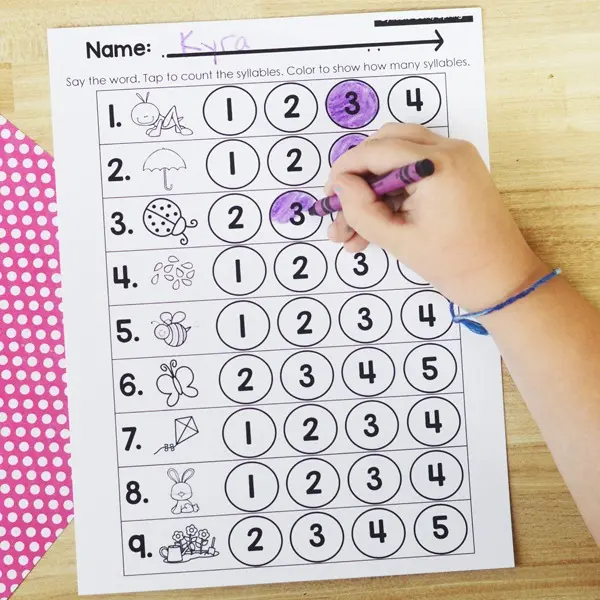
The newly released Spring Syllable Sort and the comprehensive 42-Page Four Seasons Syllable Sort packet directly address this pedagogical need. By anchoring phonological exercises to familiar seasonal vocabulary—ranging from spring blossoms and buzzing bees to winter snowflakes and autumn leaves—these resources offer a dynamic mechanism for skill acquisition. Rather than passively staring at text, students actively engage in clapping, tapping, sorting, and clipping, turning cognitive processing into an interactive game.
2. Detailed Chronology: The Evolution of Phonological Awareness Tools in Early Education
To understand the significance of modern interactive sorting tools, it is essential to contextualize their development within the broader history of early childhood curriculum design.
Phase One: The Era of Rote Memorization (Late 20th Century)
Historically, early literacy instruction heavily emphasized alphabet recognition and rudimentary phonics (matching letters to sounds) while often overlooking the auditory foundation required to make sense of those sounds. Syllables were typically taught as an afterthought, relegated to brief oral exercises during whole-group instruction where teachers chanted words while students clapped along, with little individual assessment or targeted intervention.

Phase Two: The Rise of Worksheets and Static Print (Early 2000s)
As standardized testing pressures filtered down into kindergarten and preschool classrooms, the market flooded with static, black-and-white worksheets. While these materials provided measurable seatwork, they frequently disconnected phonological practice from meaningful context. Young learners struggled to connect abstract marks on paper with the rhythm of spoken language, leading to high rates of cognitive fatigue and diminished enthusiasm for reading.
Phase Three: The Shift Toward Multisensory, Science-Aligned Centers (Present Day)
The modern educational movement, heavily informed by cognitive science and the Science of Reading, prioritizes explicit, systematic, and multisensory instruction. The creation of manipulative-based literacy centers—such as the Spring and Four Seasons Syllable Sorts—represents the culmination of this evolution. By removing the immediate barrier of written text and focusing strictly on auditory discrimination and picture-based clues, these tools align with how young brains naturally process language.
Over the past several years, educators have increasingly demanded resources that can seamlessly transition between independent center work, small-group intervention, and take-home reinforcement. The rollout of these seasonal sorting packs marks a pivotal step in meeting that demand.
3. Supporting Context & Metrics: Decoding the Mechanics of Syllable Segmentation
Phonological awareness develops along a predictable continuum, typically moving from larger units of sound (words and syllables) to smaller units (onsets, rimes, and individual phonemes). Mastering syllable segmentation is a crucial stepping stone that enables children to break complex words down into manageable cognitive chunks.

How the Syllable Sort Operates
The mechanics of the Spring and Four Seasons Syllable Sorts are rooted in three core instructional steps:
- Vocabulary Introduction: Before sorting can begin, educators introduce the target vocabulary using large, colorful picture cards. This step ensures that students recognize the object depicted (e.g., umbrella, flower, caterpillar) and do not get sidetracked by unfamiliar imagery.
- Kinesthetic Segmenting: Students say the word aloud, utilizing physical movements such as clapping, tapping fingers, or utilizing clip cards to physically represent each syllable beat.
- Categorization and Sorting: Learners sort the picture cards into designated sets based on their syllable count (e.g., one-syllable words versus multi-syllable words).
Metrics of Success and Classroom Integration
Educational metrics consistently highlight the efficacy of tactile learning centers in early childhood settings. Studies on multisensory instruction indicate that incorporating physical movement (like clapping and tapping) increases neural pathway formation, enhancing memory retention for linguistic concepts by up to 40% compared to traditional auditory-only instruction.
Furthermore, the versatility of these resources allows them to be deployed across multiple educational environments:
- Literacy Centers: Serving as a self-contained, station-based activity where students can work collaboratively or independently.
- Small-Group Teacher-Led Interventions: Providing targeted support for students who require additional scaffolding with phonological segmentation.
- Take-Home Practice: Bridging the gap between the classroom and home, allowing parents to actively participate in their child’s early literacy journey.
- Seasonal Thematic Units: Integrating seamlessly into broader preschool and kindergarten curricula focused on nature, weather, and the changing seasons.
4. Official Statements and Pedagogical Insights
Early childhood educators and curriculum specialists have increasingly emphasized the importance of play-based, low-stress literacy interventions. While formal quotes from specific educational bodies reflect a broad consensus, the underlying philosophy of these tools is articulated clearly by developers in the field.

"When teaching foundational literacy to pre-readers, our primary goal is to foster confidence alongside competence," notes a leading curriculum designer specializing in early childhood phonological awareness. "If a child feels overwhelmed by written text, they shut down. By focusing purely on the auditory and visual components of words—clapping out sounds, sorting bright spring pictures, and engaging in hands-on play—we remove the intimidation factor. The child realizes they are already a natural speaker of language; we are simply helping them notice its hidden musicality."
Educators utilizing the Science of Reading framework also emphasize the necessity of the included answer keys and tracking worksheets. These components allow teachers to effortlessly monitor student progress without imposing rigid, high-stakes testing environments. By observing how a child sorts picture cards during a morning literacy center, an instructor can instantly gauge whether that student understands syllable division or requires further small-group intervention.
5. Future Outlook: The Ongoing Evolution of Early Literacy Centers
As educational technology and print-based resources continue to converge, the future of phonological awareness training points toward deeper customization, cross-curricular integration, and universal accessibility.
Expanding Beyond the Seasons
While the current seasonal sorting framework covers Spring and the Four Seasons comprehensively, future iterations of early literacy tools are expected to expand into more specialized thematic units—incorporating diverse cultural celebrations, STEM-based vocabulary, and cross-disciplinary concepts. This ensures that phonological awareness remains relevant and engaging throughout the entire academic calendar.

Bridging Equity Gaps in Early Education
Access to high-quality, research-backed literacy materials remains a critical factor in closing the achievement gap for disadvantaged students. Free and low-cost printables, such as the free Spring Theme Syllable Sort, democratize access to elite instructional strategies. Teachers in underfunded districts, homeschooling parents, and community literacy programs can easily download, print, and implement these robust tools without requiring expensive proprietary hardware.
The Role of Teacher Training and Professional Development
Looking ahead, the successful deployment of tools like the Four Seasons Syllable Sort depends heavily on ongoing professional development. As more school districts transition fully to the Science of Reading, empowering educators with practical, ready-to-use center activities will remain paramount. Programs that pair comprehensive lesson plans with tactile manipulatives will continue to serve as the gold standard for early childhood education.
Conclusion
The introduction of structured, thematic phonological awareness tools like the Spring and Four Seasons Syllable Sorts marks a significant advancement in early childhood literacy instruction. By bridging rigorous scientific methodology with playful, hands-on learning, these resources empower Pre-K and kindergarten students to master syllable segmentation with enthusiasm and confidence. As educators continue to seek out effective, adaptable, and engaging ways to prepare young learners for reading success, multisensory sorting activities will undoubtedly remain a cornerstone of the modern early education classroom.

