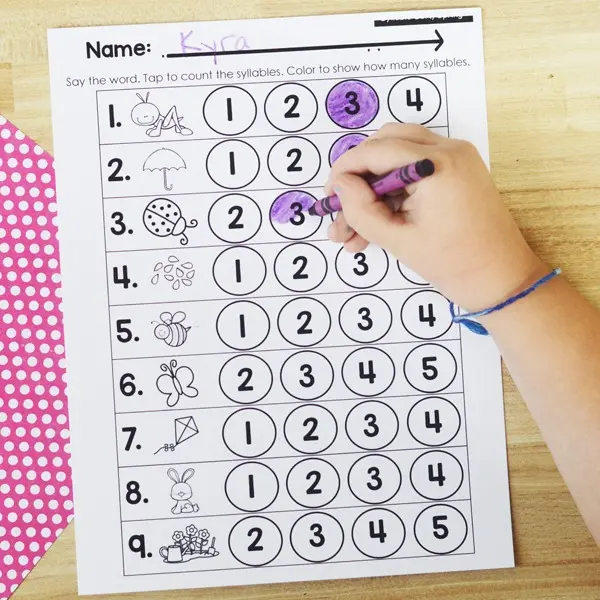
In the landscape of modern early childhood education, bridging the gap between foundational play and rigorous cognitive science remains a central mission for educators. As schools increasingly adopt frameworks aligned with the Science of Reading, phonological awareness has emerged as a cornerstone of early literacy success. Enter the Spring Syllable Sort and its comprehensive counterpart, the Four Seasons Syllable Sort—two innovative, hands-on instructional tools designed to transform how pre-kindergarten and kindergarten students process sounds.
Developed as dynamic additions to seasonal literacy centers, these print-and-play resources bridge the cognitive gap between spoken language and structural word analysis. By leveraging visual vocabulary clues alongside multisensory techniques like clapping, tapping, and sorting, these activities allow young learners to isolate word parts naturally. Far from a mere seasonal craft, this curriculum integration supports critical executive function and auditory discrimination skills, offering educators a turnkey solution for vibrant, standards-aligned classroom engagement.
Detailed Chronology: The Evolution of Seasonal Phonological Instruction
To understand the significance of the Spring and Four Seasons Syllable Sorts, one must trace the recent evolution of early childhood literacy frameworks.
Phase 1: The Shift Toward Auditory Foundations (Pre-2020)
For decades, early reading instruction often leaned heavily on sight-word memorization and early alphabet identification. While these remained important, cognitive scientists emphasized that children must first master phonological awareness—the ability to recognize and manipulate the spoken parts of sentences and words, including syllables, onsets, and rimes—before successfully decoding printed text.
Phase 2: Post-Pandemic Learning Gaps and Multisensory Demand (2021–2023)
As educators confronted widening foundational learning gaps following pandemic-era disruptions, the demand for high-engagement, low-barrier instructional tools skyrocketed. Teachers required resources that did not rely purely on worksheets, but instead incorporated movement, peer collaboration, and tactile manipulation to keep young children engaged.
Phase 3: The Integration of Science of Reading Principles (2024–Present)
The widespread adoption of the Science of Reading framework placed renewed emphasis on explicit, systematic phonological instruction. Educators began moving away from whole-word guessing strategies toward explicit sound-segmentation practices. It was within this climate that developmental literacy specialists conceptualized the Spring Syllable Sort. By decoupling syllable segmentation from written spelling, the activity allowed non-readers and early readers alike to focus purely on auditory processing and segmenting words using physical picture clues. Building on this momentum, the curriculum expanded into a comprehensive 42-page, year-round "Four Seasons Syllable Sorts" pack, addressing literacy milestones across autumn, winter, spring, and summer.
Supporting Context & Metrics: The Science Behind Syllable Segmentation
Phonological awareness is widely recognized by literacy experts as one of the strongest predictors of future reading and spelling success. According to developmental reading research, children who can easily segment words into syllables and phonemes experience fewer hurdles when learning to decode complex texts in later elementary grades.
Why Syllables Matter in Early Childhood
Cognitive Chunking: Syllables provide a natural "bridge" for young brains to break down long, intimidating words into manageable phonetic chunks.
Multisensory Engagement: When children utilize kinesthetic movements—such as clapping hands, tapping fingers, or moving physical picture cards into designated sorting bins—they engage multiple neural pathways simultaneously, enhancing memory retention.
Vocabulary Expansion: Seasonal themes introduce specialized vocabulary (e.g., daffodil, umbrella, caterpillar) that children might not encounter in everyday spoken conversation. Introducing these terms prior to sorting builds critical oral vocabulary banks.
Program Breakdown & Components
The newly released educational packages are structured to provide maximum flexibility for teachers, interventionists, and homeschooling parents:
Spring Syllable Sort (Freebie): Includes targeted syllable-counting cards, large colorful word/picture cards, a black-and-white independent practice response worksheet, and a complete answer key for rapid assessment.
Four Seasons Syllable Sorts (Comprehensive 42-Page Pack): Expands the framework to cover all four seasons, featuring robust clip cards, sorting mats, and structured recording sheets designed for independent literacy centers, small-group intervention, and take-home practice.
Official Statements & Pedagogical Perspectives
Early childhood education specialists and curriculum developers emphasize that play-based phonological tools are essential for maintaining student motivation while meeting rigorous academic standards.
"When we teach young children about language, we must start with what they can hear and say before we ask them to decode symbols on a page," notes a leading curriculum specialist specializing in early literacy intervention. "Tools like the Spring Syllable Sort strip away the frustration of reading text, allowing children to focus entirely on the rhythm of language. By clapping and sorting seasonal vocabulary, students build the auditory stamina required for lifelong reading comprehension."
Furthermore, educators utilizing the Science of Reading framework have praised the deliberate separation of picture clues from written words during initial phases.
"Pre-K and kindergarten learners thrive when instruction is concrete rather than abstract," states an elementary reading coach. "Using vibrant, seasonal imagery ensures that English language learners and struggling auditory processors can successfully participate alongside their peers. The transition from active sorting to independent worksheet practice creates a seamless feedback loop for teachers looking to track student progress."
Future Outlook: The Direction of Play-Based Literacy Centers
As educational standards continue to evolve, the integration of structured play into core academic subjects is gaining permanent traction. The success of seasonal phonological packs signals a broader shift away from static, rote-learning worksheets toward dynamic, thematic learning centers.
Key Trends Shaping the Future of Early Literacy:
Thematic Unit Integration: Educators are increasingly moving away from isolated subject instruction, weaving literacy skills directly into thematic units covering science, nature, and the changing seasons.
Differentiated Small-Group Work: With resources that include built-in answer keys and tiered options (ranging from large sorting cards to independent response sheets), teachers can easily differentiate instruction to support both remedial learners and advanced students within the same classroom environment.
Home-School Connection: Printable, low-prep formats allow schools to bridge the gap between classroom instruction and home practice, ensuring that parents are equipped with professional-grade tools to support early reading development outside of school hours.
Conclusion
The introduction of resources like the Spring and Four Seasons Syllable Sorts underscores a vital truth in modern education: academic rigor and joyful play are not mutually exclusive. By embedding essential phonological awareness training into engaging, hands-on seasonal activities, educators can cultivate confident, capable readers equipped with the foundational skills needed for a lifetime of academic achievement.