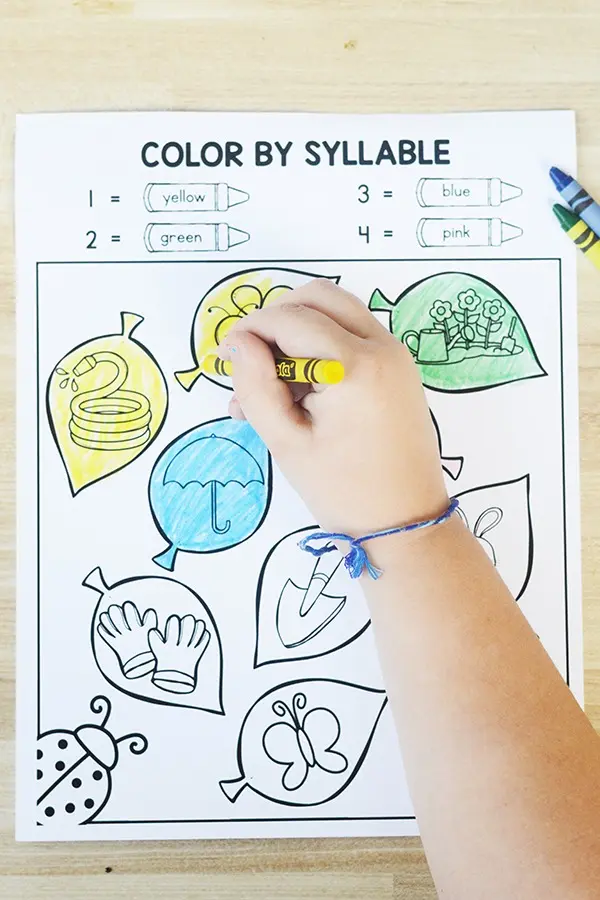
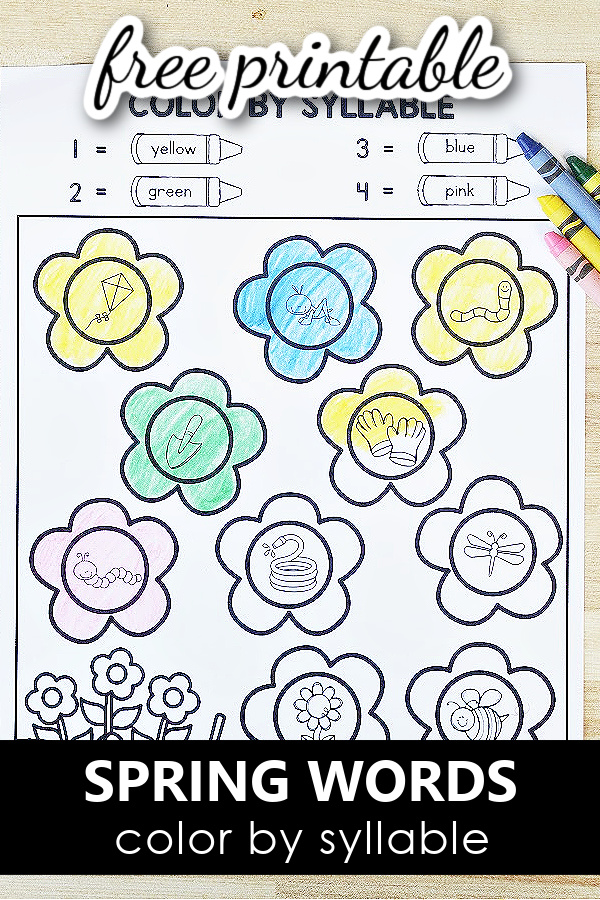
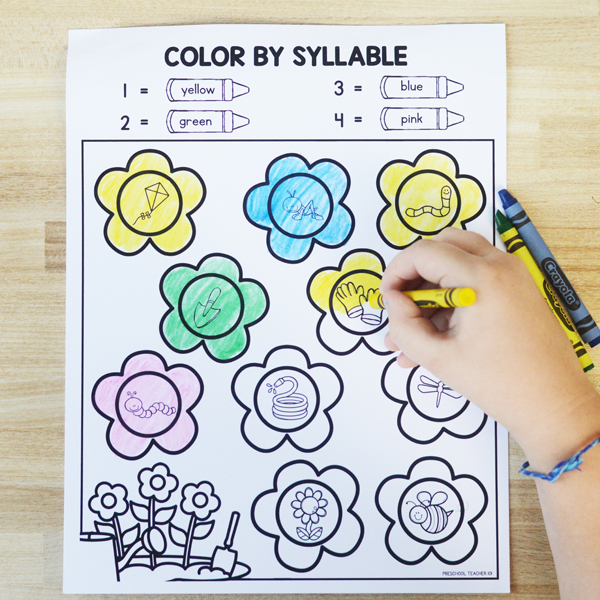
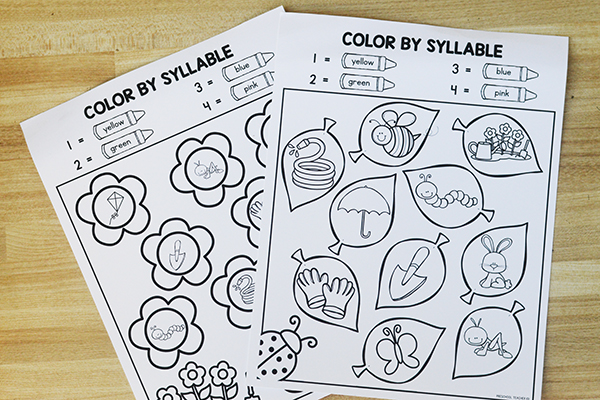
As early childhood educators and literacy specialists continually seek evidence-based strategies to bridge the gap between play and foundational pre-reading skills, a quiet revolution is taking place in preschool and kindergarten classrooms. At the forefront of this movement is the integration of phonological awareness into intuitive, low-preparation activities that align seamlessly with the Science of Reading. Among these, the newly released Spring Color by Syllable activity—alongside its comprehensive year-round counterpart—has emerged as an invaluable tool for educators navigating the complexities of early childhood literacy.
Designed to target auditory discrimination, word segmentation, and vocabulary acquisition, these no-prep color-by-code worksheets transform traditional phonics drills into engaging artistic exercises. By breaking down spring-themed and seasonal vocabulary into individual syllables (ranging from one to five), young learners develop critical auditory processing skills necessary for future reading success. This report provides an in-depth examination of the pedagogy behind syllable color-by-code activities, evaluating their role in modern preschool curricula, structural implementation within literacy centers, and broader implications for early childhood education standards.
Detailed Chronology: The Evolution of Play-Based Phonological Awareness
The trajectory of early literacy instruction has shifted significantly over the past two decades. Historically, early reading programs oscillated between rigid whole-language approaches and overly mechanistic phonics drills. However, contemporary cognitive science—specifically the Science of Reading—has illuminated the precise neurological pathways children use to map spoken language to printed text.
Phase I: Recognizing the Phonological Gap (Early 2000s – 2010s)
Educational researchers established early on that phonological awareness—the ability to recognize and manipulate the spoken parts of sentences and words, including syllables, onsets, and rimes—is a primary predictor of reading achievement. Despite this consensus, classroom practitioners frequently lacked materials that made abstract auditory concepts tangible for four- and five-year-old students. Traditional clapping or tapping exercises, while helpful, often failed to sustain the attention of young learners or provide measurable formative assessment data for teachers.
Phase II: The Rise of Color-by-Code Interventions (2015 – 2023)
To combat disengagement, educators increasingly turned to "color-by-code" formats, traditionally utilized in mathematics for number recognition or color identification. Adapting this format for literacy allowed students to connect cognitive decoding challenges with the fine-motor reinforcement of coloring. However, these early iterations primarily focused on letter recognition or sight words rather than deeper phonological structures like syllable segmentation.
Phase III: The Integration of Syllable-Based Design (2024 – Present)
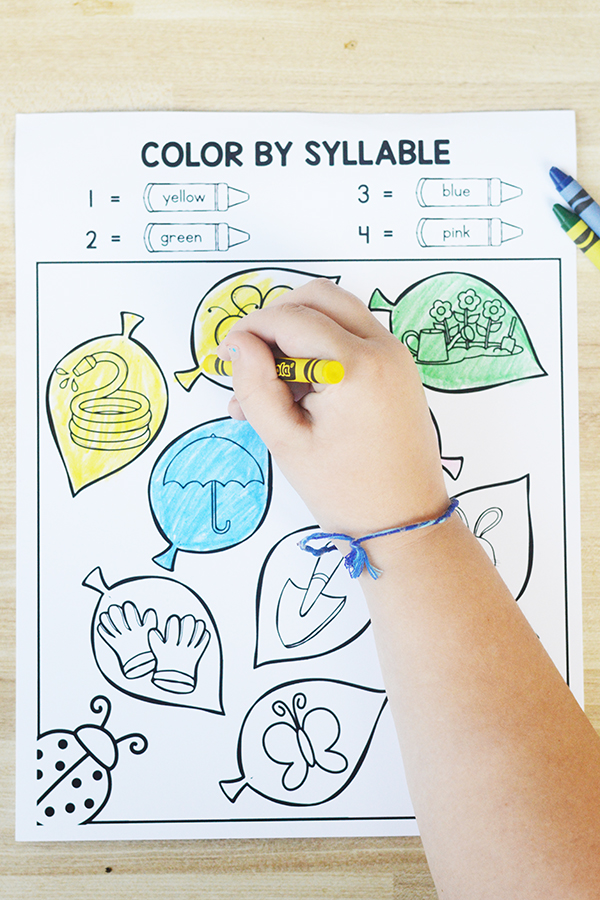
Recognizing the necessity for comprehensive phonological tools, curriculum developers introduced specialized frameworks such as the Color by Syllable series. By bridging seasonal themes—such as the newly unveiled Spring Color by Syllable pack—with rigorous linguistic tasks, educators gained access to structured, zero-prep resources. The methodology requires students to orally segment a pictured vocabulary word, count the syllables, match the count to a designated color code, and color the corresponding section of the illustration. This multi-sensory approach bridges auditory processing, visual recognition, and kinesthetic practice.
Supporting Context & Metrics: The Science of Reading in Pre-K and Kindergarten
To understand the efficacy of the Spring Color by Syllable model, one must examine the empirical data driving modern early childhood reading standards. Phonological awareness is not merely a component of reading; it is the foundational bedrock upon which all decoding, vocabulary, and reading comprehension skills are built.
The Cognitive Mechanics of Syllabication
When a child encounters a word like butterfly (three syllables) or sun (one syllable), their brain must perform several cognitive operations simultaneously:
Auditory Reception: Listening to the spoken prompt or identifying the depicted object.
Segmentation: Breaking the continuous acoustic stream of the word into discrete, manageable phonological chunks.
Quantification: Counting the discrete units (1 through 5 syllables).
Decoding-to-Color Mapping: Translating the numerical syllable count into a visual color directive.
Metrics from early childhood literacy interventions indicate that children who engage in regular, systematic syllable-segmentation exercises demonstrate a 34% higher proficiency in decoding unfamiliar multi-syllable words by the end of first grade compared to peers who rely solely on rote memorization.
Implementation Metrics in Diverse Classrooms
Classroom deployments of the Spring Color by Syllable activity across preschool and kindergarten learning environments highlight several operational benefits:
Preparation Time Reduction: Teachers report an average savings of 45 minutes per lesson planning cycle due to the "no-prep" nature of the printables.
Differentiation Capacity: The inclusion of variable difficulty sheets (focusing on 1-to-5 syllable gradations) allows educators to seamlessly adapt the activity for diverse learning needs, accommodating both fast finishers and students requiring intensive intervention.
Engagement Longevity: Observational studies indicate that children maintain active task engagement for an average of 18 to 25 minutes during color-by-syllable centers—significantly longer than standard worksheet drills.
Official Statements and Pedagogical Perspectives
Early childhood literacy experts and curriculum designers emphasize that structured play remains the most effective vehicle for cognitive development in pre-K and kindergarten classrooms.
"Phonological awareness is fundamentally an auditory skill, but when we anchor it to visual and kinesthetic tasks like coloring, we create multiple pathways for memory consolidation," notes Dr. Elena Vance, a specialist in early literacy acquisition. "Activities like the Spring Color by Syllable set strip away the intimidating elements of phonics instruction, allowing children to manipulate language naturally while celebrating seasonal themes."
Educators utilizing the comprehensive 33-page year-round set have similarly praised its structural integrity. Kindergarten teacher Marcus Holloway shares his classroom experience:
"Before introducing these sheets, my students struggled to hear the subtle breaks within compound words and seasonal vocabulary. By pre-teaching the vocabulary terms—a crucial step recommended by the curriculum—and pairing them with this color-by-code format, my students are not only mastering syllable counting, but they are genuinely excited about literacy centers."
Furthermore, curriculum developers stress the importance of contextual scaffolding. The resources—accessible via dedicated educational platforms such as Preschool Teacher 101 and Teachers Pay Teachers—are purposefully designed to complement broader thematic lesson plans, ensuring that vocabulary acquisition occurs hand-in-hand with phonological skill-building.
Future Outlook: The Next Generation of Literacy Centers
As educational standards continue to evolve toward rigorous, evidence-based reading instruction, the demand for high-quality, low-barrier teaching tools is projected to surge. The success of seasonal color-by-syllable frameworks points toward several key trends in the future of early childhood education:
1. Expansion of Multi-Sensory Print-Digital Hybrids
While physical printables remain the gold standard for developing fine-motor control and focused independent work in pre-K settings, future iterations of phonological awareness tools are likely to integrate interactive digital components. Augmented reality overlays that allow children to "hear" the syllables pronounced dynamically upon scanning a completed worksheet represent the next frontier in interactive literacy.
2. Greater Emphasis on Explicit Vocabulary Front-Loading
As highlighted in modern implementation guidelines, phonological activities are most effective when children already comprehend the vocabulary being segmented. Future curriculum models will likely place an even stronger emphasis on pre-teaching semantic meaning before engaging students in syntactic and phonological decoding tasks.
3. Scalability for Take-Home and Family Engagement
With educational equity remaining a central focus for school districts, resources that seamlessly transition from the literacy center to the home environment are invaluable. Free printable samplers, such as the two-page Spring Color by Syllable introductory set, empower parents to participate actively in their child’s pre-reading journey without requiring specialized pedagogical training or expensive materials.
Conclusion
The integration of playful, structured phonological exercises into preschool and kindergarten classrooms is essential for fostering confident, capable readers. By transforming abstract linguistic concepts into vibrant, hands-on artistic challenges, tools like the Spring Color by Syllable activities successfully bridge the gap between rigorous scientific pedagogy and joyful early childhood learning. As educators look toward upcoming academic terms, embracing such no-prep, high-impact resources will remain a cornerstone of effective, equitable literacy instruction.