
Executive Overview
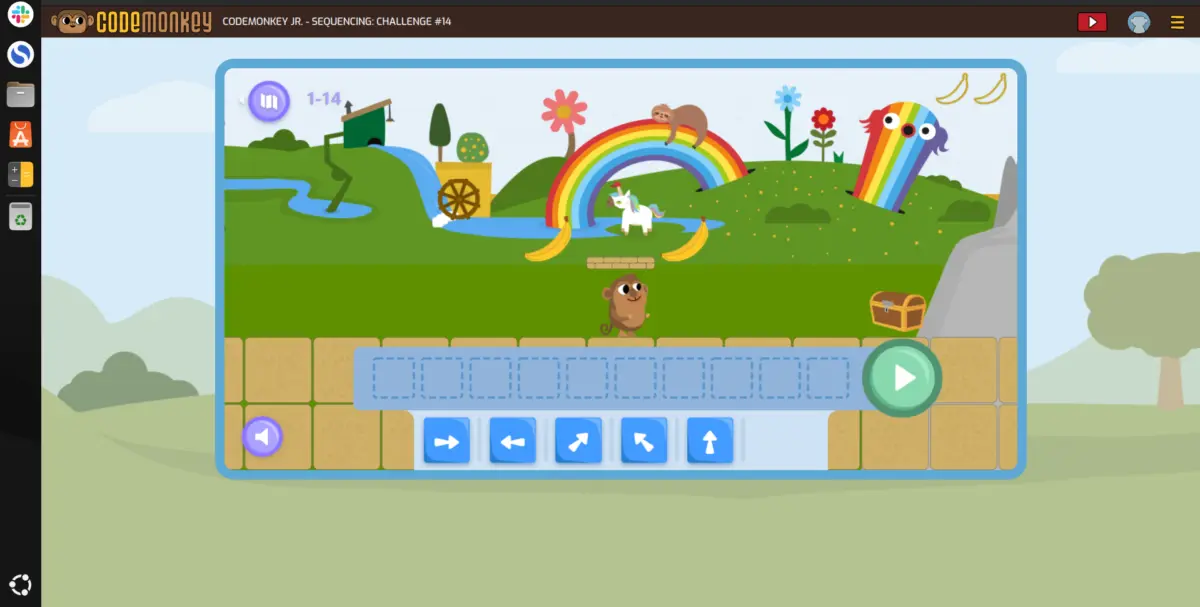
In the rapidly evolving digital landscape, computer science literacy has transitioned from an elective luxury to a fundamental pillar of modern education. Educators, parents, and policymakers alike face the continuous challenge of introducing children to programming concepts early, effectively, and without the intimidation factor traditionally associated with text-based code. Enter CodeMonkey, an award-winning, gamified educational platform designed to bridge the gap between playful engagement and rigorous computer science instruction.
By transforming abstract syntax into an intuitive, narrative-driven adventure where students guide a virtual monkey to collect bananas, CodeMonkey has redefined how children from preschool through the eighth grade interact with programming. Moving far beyond static instructional books or passive video tutorials, the platform immerses learners in nearly 400 interactive challenges that seamlessly scale from visual, block-based coding to industry-standard textual languages such as CoffeeScript, Python, and JavaScript.
This comprehensive report examines the structural framework, pedagogical mechanics, curriculum design, and real-world applicability of CodeMonkey. Designed for deployment both within traditional classrooms and progressive homeschool environments, CodeMonkey offers a structured, scalable approach to cultivating critical thinking, computational logic, and future-proof technical competencies.
Detailed Chronology: The Evolution of Play-Based Programming Education
The pedagogical approach underpinning CodeMonkey did not emerge in a vacuum; it represents the culmination of decades of research into gamified learning and constructivist education theory.
The Shift from Passive to Active Learning
Historically, learning to code meant sitting before rigid command-line interfaces or poring over dense instructional manuals—barriers that frequently discouraged younger demographics. Over the past decade, educational technology pioneers recognized that children acquire complex cognitive skills most effectively when instruction is intrinsically tied to play.
- Early Innovations (Pre-2010s): Early initiatives relied heavily on syntax-heavy environments or basic robotics kits. While effective for older teenagers, these tools often alienated early-elementary and middle-school students who lacked foundational typing skills or formal algebraic comprehension.
- The Rise of Block-Based Logic: Platforms such as Scratch popularized visual, drag-and-drop programming. While revolutionary, educators sought tools that could bridge the chasm between block-based logic and real-world, text-based programming languages used by software engineers.
- The CodeMonkey Paradigm: CodeMonkey was engineered to solve this exact transitional dilemma. By introducing a narrative ecosystem—helping a monkey secure its bananas through procedural logic—the platform established a continuous runway. Students could begin with basic visual puzzles and effortlessly ascend to writing genuine CoffeeScript, Python, and JavaScript.
Throughout its development lifecycle, CodeMonkey has continually refined its curriculum. The platform expanded its footprint by introducing CodeMonkey Jr. for pre-literate preschoolers, incorporating robust learning management dashboards for educators, and embedding automated assessment tools to provide instant feedback without slowing down the learning momentum.

Supporting Context & Metrics: Curriculum, Mechanics, and Technical Architecture
To understand why CodeMonkey has garnered widespread acclaim from both teachers and homeschooling parents, one must examine the specific mechanics that govern its educational ecosystem.
The Core Curriculum: From Puzzles to Game Building
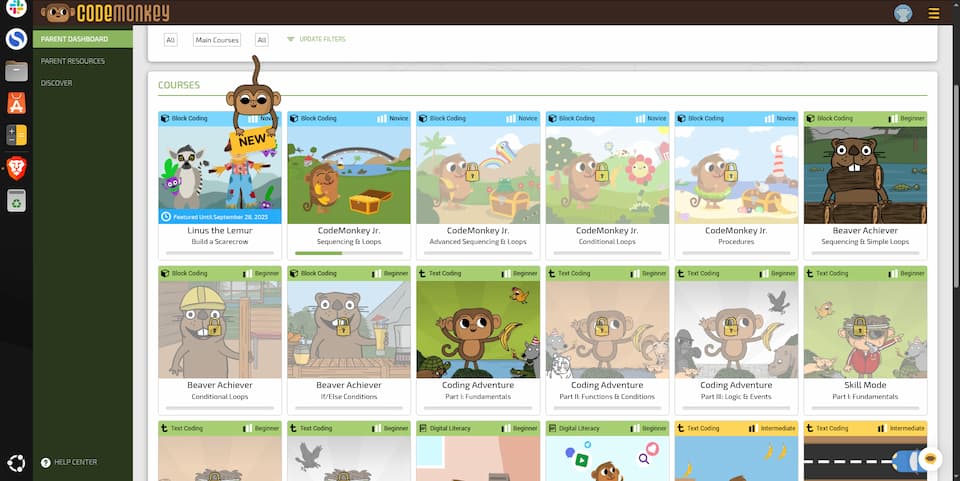
CodeMonkey’s curriculum is structured around distinct tracks designed to accommodate various developmental stages:
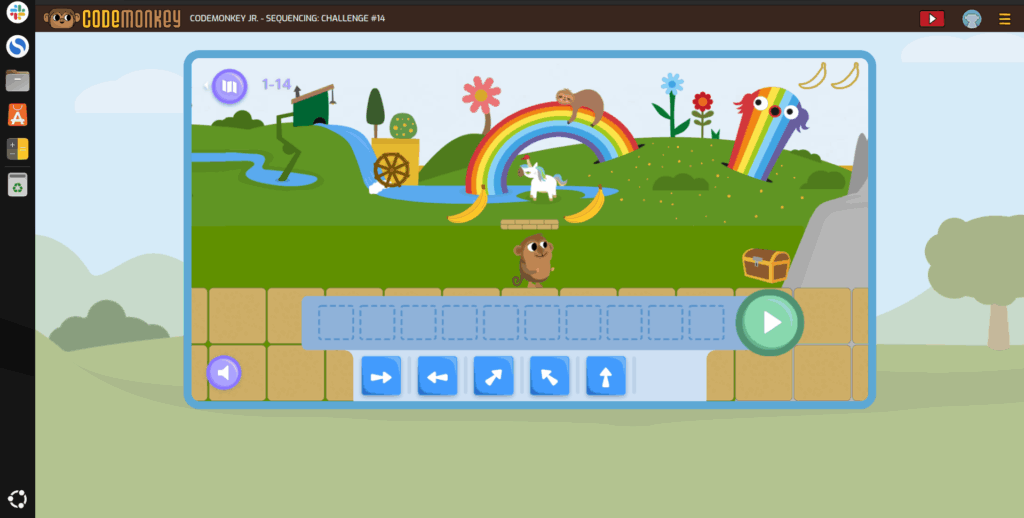
- CodeMonkey Jr.: Tailored specifically for younger children, this module utilizes a visual, block-based methodology. It introduces basic algorithmic thinking and directional logic through age-appropriate puzzles, establishing a strong cognitive foundation without requiring reading proficiency.
- Coding Adventure: Serving as the flagship attraction, this module comprises nearly 400 progressively challenging levels. Students write lines of code to navigate obstacles and secure bananas, earning up to three stars per completed puzzle based on efficiency and accuracy.
- Game Builder: Once foundational concepts are mastered, the Game Builder empowers students to transition from consumers of educational content to creators. Utilizing the programming skills they have acquired, learners design and build their own functional video games, fostering creativity alongside technical execution.
Programming Concepts Explored
Rather than relying on superficial tutorials, CodeMonkey introduces foundational computer science principles that mirror real-world software engineering:
- Loops: Students quickly learn the inefficiency of repetitive commands (e.g., writing "pick up toy" one hundred times) and instead implement loops to automate recurring actions.
- Functions and Function Calls: Comparable to programmatic recipes, functions allow learners to write multi-step procedures once and execute them repeatedly, streamlining code readability.
- Objects and Arrays: Learners interact with data containers (objects) and organized lists (arrays), understanding how professional programmers manage complex datasets.
- Variables and Conditional Logic: By introducing boolean conditions and if-else statements, CodeMonkey teaches students how programs make decisions based on dynamic inputs (e.g., evaluating whether a player’s score has exceeded a specific threshold).
Gamification, Analytics, and Data Privacy
The platform’s architecture heavily relies on gamification to maintain student engagement. Puzzles scale in difficulty organically, while integrated leaderboards, point systems, and achievement trackers—such as the specialized "skill mode"—provide transparent milestones.
Furthermore, CodeMonkey incorporates automated grading. When a student completes a challenge, the platform evaluates the code instantaneously, allowing learners to iterate and advance immediately. For educators and parents, the dedicated dashboard aggregates performance reports, highlighting mastered concepts and identifying areas requiring targeted intervention.
Regarding digital infrastructure, CodeMonkey operates as a cloud-based platform utilizing general-purpose session cookies. These strictly functional cookies maintain user authentication and track progress across sessions, distinct from intrusive third-party advertising trackers. Families retain full autonomy to manage or opt-out of these cookies via standard browser configurations.
Official Statements and Community Feedback
The efficacy of CodeMonkey is best evaluated through the lens of its user base—comprising classroom educators, homeschool facilitators, and the students themselves.
Educator and Parent Perspectives
Feedback aggregated from platforms like Trustpilot and educator forums highlights several core strengths:
- Engagement and Motivation: Teachers frequently utilize CodeMonkey modules for specialized initiatives like the global Hour of Code events. The star-rating system and narrative-driven challenges consistently capture student attention.
- Homeschool Adaptability: Parents navigating virtual learning or homeschooling praise the platform’s autonomous structure. The inclusion of comprehensive lesson plans, video tutorials, and automated progress reports allows non-technical parents to confidently guide their children’s STEM education.
- Smooth Transitions: Users note that while children may have prior exposure to coding through YouTube tutorials or instructional books, CodeMonkey solidifies theoretical knowledge by forcing practical application in a controlled, responsive environment.
Frequently Addressed Considerations
- Accessibility for Beginners: No prior coding experience is required. The intuitive progression model ensures absolute beginners can start successfully.
- Subscription Framework: CodeMonkey operates on tiered subscription models customized for individual home use and institutional deployment, offering flexible monthly and annual billing cycles.
- Age Appropriateness: Spanning from preschool (via CodeMonkey Jr.) through the eighth grade, the platform provides scalable content that adapts to maturing cognitive abilities.
Future Outlook: The Role of Gamified Coding in Modern Education
As automation and artificial intelligence reshape the global workforce, computer science fluency is projected to remain one of the most critical skill sets for future generations. However, the pedagogical challenge remains: how to teach complex logic without inducing cognitive fatigue.

Platforms like CodeMonkey point the way forward by proving that rigor and play are not mutually exclusive. By embedding high-level programming languages—Python, JavaScript, and CoffeeScript—within engaging, narrative-driven puzzle games, the platform demystifies software engineering.
Looking ahead, the integration of advanced diagnostic analytics, AI-assisted tutoring chatbots, and expanded game-building suites will likely further personalize the learning experience. For parents and educators seeking a proven, structured, and thoroughly engaging entry point into STEM education, CodeMonkey stands out as an exemplary model of modern educational technology.
For educators and parents interested in exploring the platform, trial options and structured curriculum plans are accessible directly through the official CodeMonkey portal.

