In an educational landscape increasingly dominated by standardized testing, digital distractions, and institutional pressures, the fundamental human need for recognition often goes unmet. High school classrooms can easily become transactional spaces where students pass through periods, complete assignments, and leave without feeling truly seen by their peers or educators. However, innovative pedagogical strategies are emerging to combat this systemic disconnection.
Marcus Luther, a veteran high school educator and writer behind The Broken Copier, has spent over a decade refining a remarkably simple yet transformative system of peer affirmation. Centered around a sprawling, evolving wall installation affectionately known as "the octopus," Luther’s framework invites high school students to anonymously nominate their classmates for embodying core community values.
Far from being a fleeting elementary school gimmick, this structured ritual has proven resilient across diverse cohorts—from energetic freshmen to cynical Advanced Placement seniors. By combining intentional value-setting, anonymous peer nominations, and a celebratory classroom ritual called "signing the wall," Luther has demonstrated that students will actively engage in recognizing and uplifting one another when educators intentionally carve out the space for them to do so. This report examines the mechanics, psychology, outcomes, and broader implications of Luther’s peer affirmation model, offering a blueprint for educators seeking to foster deeper empathy and belonging in secondary schools.
Detailed Chronology: The Evolution of a Practice
The conceptual roots of Luther’s peer affirmation system trace back to an observation he made early in his career while visiting his wife’s fifth-grade classroom. Witnessing her intentionality in posting core community values and prompting students to write brief, positive notes to one another planted a seed. Luther recognized that while older students in high school desperately crave validation and community, traditional secondary school structures rarely provide organic, low-stakes avenues for adolescents to authentically praise their peers.
Phase One: The Pyramid Era
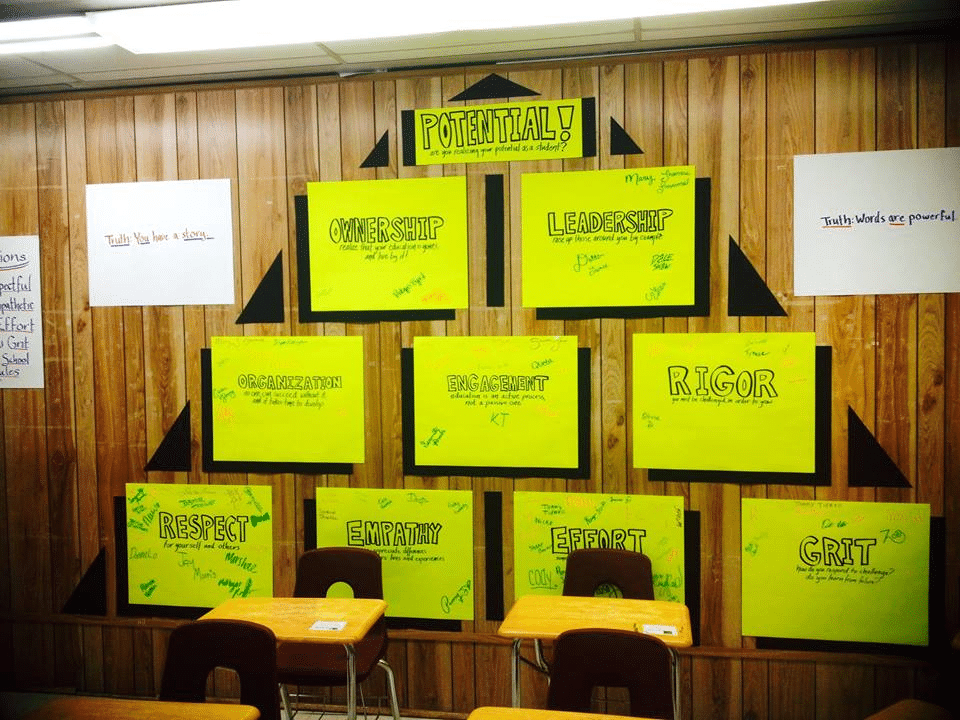
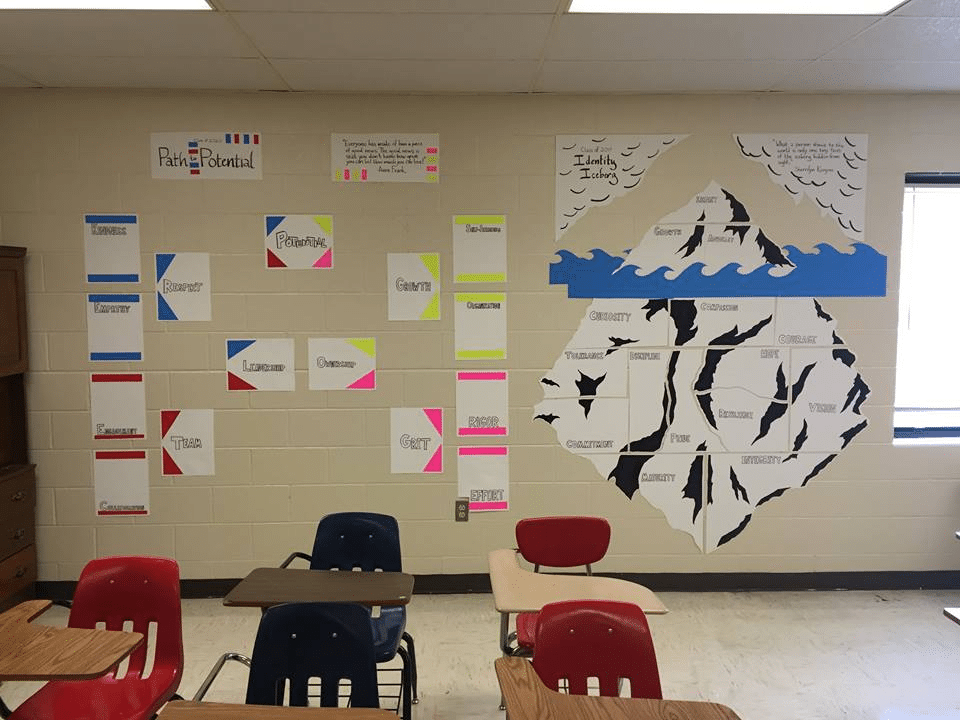
In his early years as a high school teacher, Luther drew inspiration from legendary basketball coach John Wooden’s famous "Pyramid of Success." Seeking a structured way to instill character traits in his classroom, he designed a pyramid-shaped display on his wall. Students were encouraged to acknowledge behaviors that mirrored these pillars. While rudimentary in organization—often managed via makeshift clipboards and loose paper systems—the core philosophy took root: students responded positively when given explicit permission and structure to look for the good in their classmates.
Phase Two: Iterative Growth and Digitization
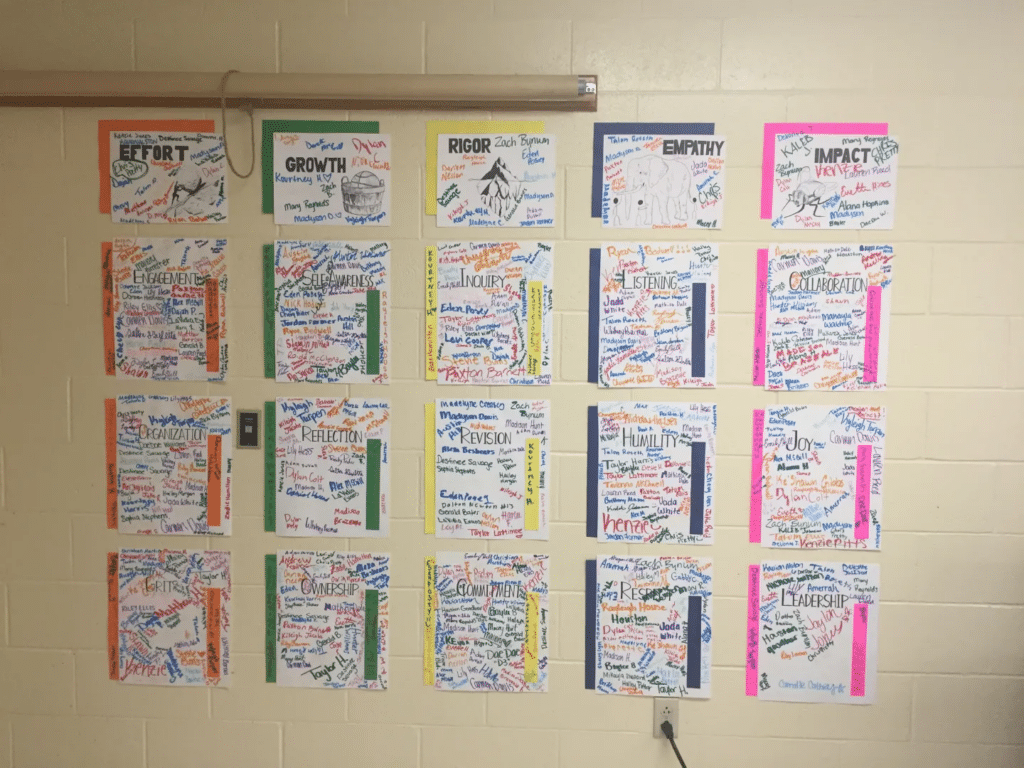
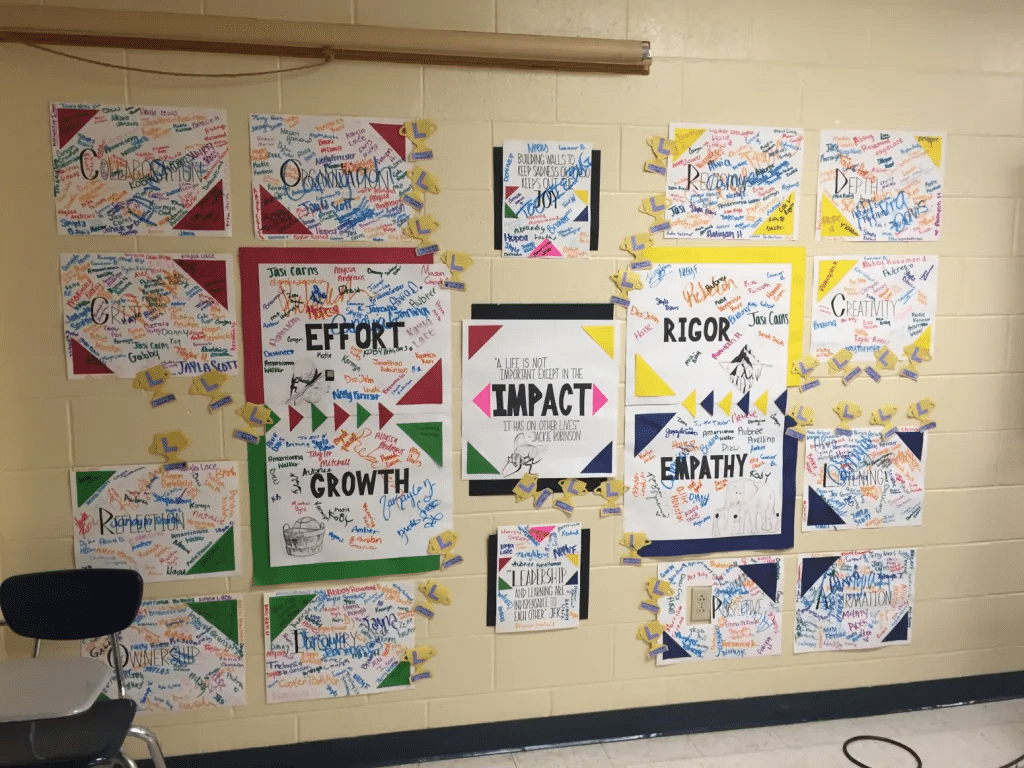
As Luther’s pedagogical approach matured, so did the physical representation on his wall. Recognizing that static lists or rigid shapes failed to capture the dynamic nature of a growing classroom community, the display underwent several iterations. Crucially, the administrative backbone of the system evolved. Moving away from scattered paper notes, Luther integrated digital tools—specifically Google Forms and comprehensive Google Sheets—to track, sort, and organize student nominations across multiple class periods. This technological shift streamlined the collection process, turning a chaotic administrative chore into a seamless weekly ritual and providing the teacher with invaluable longitudinal data on classroom dynamics.
Phase Three: The Octopus and Modern Implementation
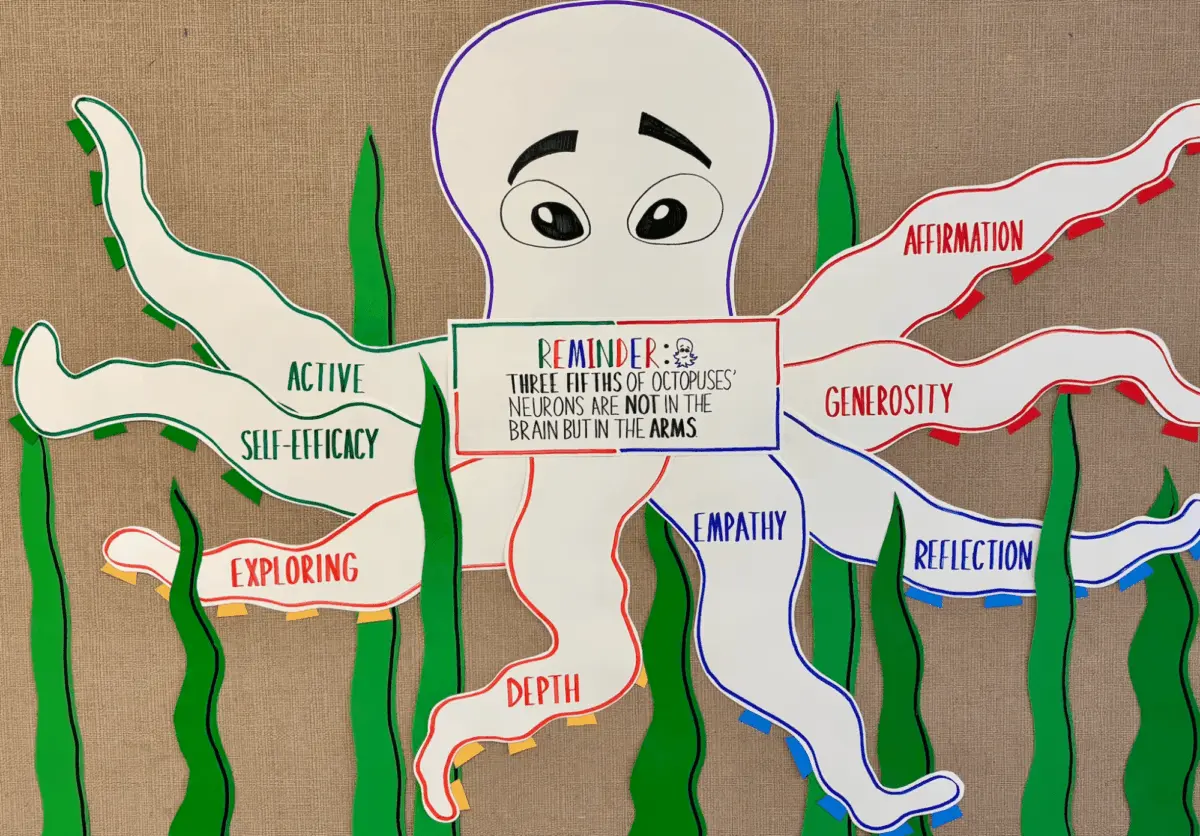
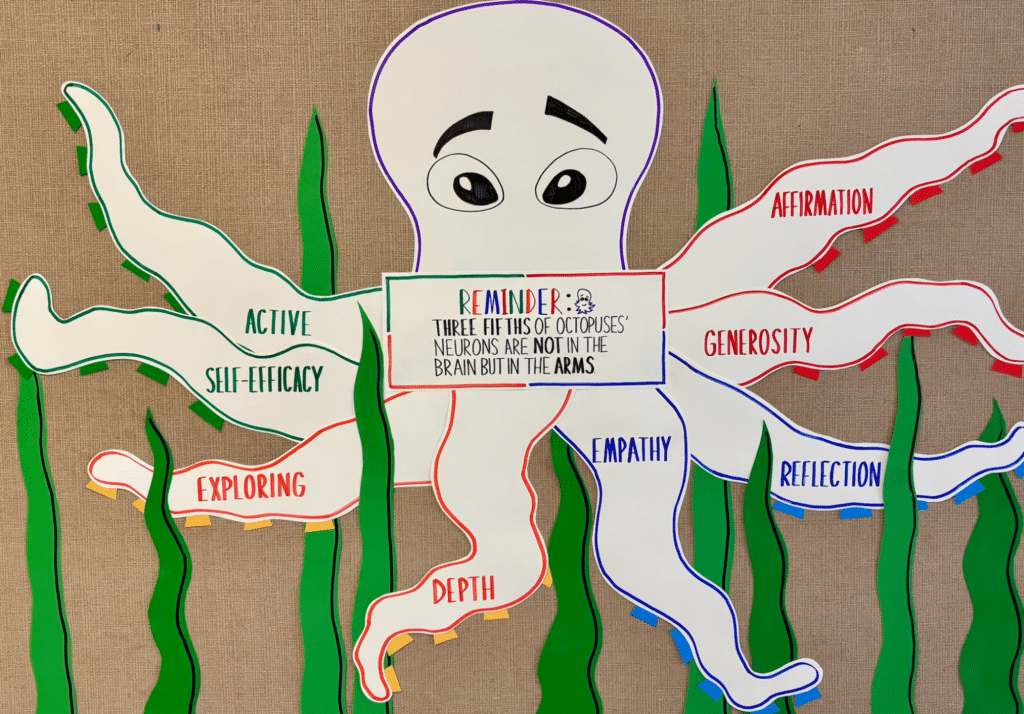
In its current iteration, the classroom wall features an enormous, initially blank illustration of an octopus, with each of its eight appendages representing a distinct core value of the classroom community. Over the course of the school year, the octopus fills with student signatures. What began as an experiment in elementary school-style encouragement has solidified into a robust, high school-tested framework that bridges the gap between character education and academic community-building.
Supporting Context & Metrics: The Mechanics of the System
Implementing a peer affirmation system in a secondary classroom requires careful planning, structural scaffolding, and consistency. Luther’s framework operates on three foundational pillars: establishing clear core values, executing a thoughtful nomination process, and celebrating the results through a structured classroom ritual.
+-----------------------------------------------------------------+
|                     THE 3-STEP AFFIRMATION SYSTEM               |
+-----------------------------------------------------------------+
  [Step 1: Preparation]       [Step 2: Nomination]       [Step 3: Celebration]
  • Define 8 core values      • Anonymous Google Form    • Weekly classroom ritual
  • Display via "Octopus"     • Tied to specific actions • Read anonymous quotes
  • Co-reflect annually       • Scaffold with models     • Publicly "Sign the Wall"
1. Preparing the Classroom: Choosing the Values
The foundation of the system rests on deciding which values to center. While some educators advocate for co-creating classroom norms during the first week of school, practical constraints—such as teaching multiple class periods comprising 150 to 180 total students—often make exhaustive co-creation difficult amidst back-to-school chaos.
Luther solves this by engaging his students at the end of each school year, asking them to reflect on which values meant the most to them and to suggest modifications for the next cohort. This feedback loop allows incoming students to inherit a refined set of community expectations.
Key considerations when designing the value structure include:
Quantity: Luther settled on eight values, a number heavily influenced by the octopus motif. While fewer values offer sharper clarity (often recommended for younger learners), a higher number provides a broader range of behavioral "look-fors" and ensures students do not exhaust the poster spaces too early in the term.
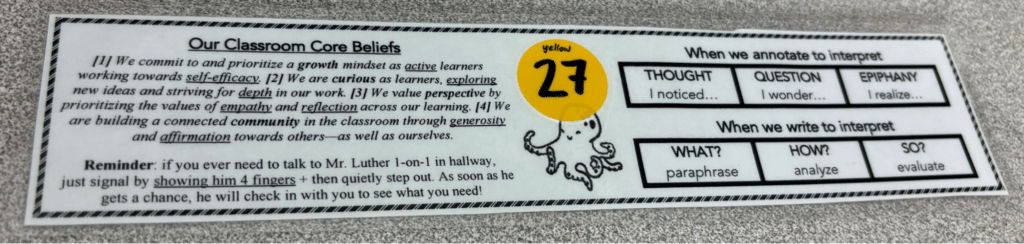
Visibility: Values are reinforced daily, appearing not just on the wall but integrated into physical artifacts like desk decals, ensuring they remain front-of-mind.
2. The Peer Nomination Process
Getting high school students to thoughtfully nominate their peers can feel intimidating to educators attempting this for the first time. To mitigate anxiety and ensure high-quality participation, Luther delays the first nomination round until two to three weeks into the term, allowing foundational community-building activities to take root first.
Anonymity: Nominations are strictly anonymous. This removes social friction, allowing introverted or socially anxious students to participate without fear of peer judgment.
Scaffolding: Educators must model expectations. Providing exemplar nominations from previous years or casting a teacher-led nomination during the first round establishes the expected depth and tone.
Digital Integration: Utilizing a simple Google Form enables students to input the nominee’s name, select the specific value, and write a brief explanatory rationale. Because the form links directly to a spreadsheet, it can easily be embedded into exit tickets or quizzes as the year progresses, keeping the friction of submission remarkably low.
3. "Signing the Wall": The Ritualized Celebration
The culmination of the system occurs weekly through a deliberate classroom ritual. Luther utilizes designated pen colors for different class periods (e.g., blue for first period, green for second) to foster a sense of collective identity.
During this ritual, the educator opens the master spreadsheet, selects a nomination, and reads the explanatory rationale without revealing the student’s name:
"Every time I see them get called on or we go over answers they always have an answer and go into great detail explaining their answer."
After a theatrical pause, the teacher announces the recipient and the corresponding value:
"Signing the wall for self-efficacy… round of applause for Jose!"
The classroom erupts in cheers, the student approaches the wall to sign their name in their class color, and the process repeats. This public acknowledgment transforms abstract character traits into tangible, celebrated milestones.
Official Perspectives and Educational Philosophy
The success of "the octopus" and similar peer affirmation structures challenges long-held assumptions about adolescent detachment. A common critique of secondary education interventions is that older students are too cool, cynical, or self-conscious to engage in heartfelt recognition exercises.
Luther’s longitudinal observations challenge this notion directly. While initial eye rolls or hesitant participation occasionally surface—particularly in quieter or newly formed classes—they consistently yield to the gravitational pull of genuine, teacher-backed enthusiasm. As Luther notes: "If you as a teacher show that you care about it, then they will almost always follow suit."
Psychological and Social Benefits
The framework yields multifaceted benefits for both educators and students:
Uncovering Quiet Impact: Teachers gain deep insight into peer dynamics, frequently discovering that quiet, unassuming students are making profound, positive impacts on their classmates—contributions that might otherwise go unnoticed in a busy high school environment.
Targeted Intervention and Parent Communication: The accumulated spreadsheet of nominations serves as a rich repository for pastoral care. Teachers can pull a student aside for a private conversation to share specific praise from peers, or reach out to parents with unsolicited, joyful emails detailing how their child enriches the school community.
Streamlining Recommendations: When the time arrives to write college recommendation letters, educators no longer have to guess or rely solely on academic metrics; they can consult the nomination logs to cite authentic examples of character, leadership, and collaboration.
Ultimately, the philosophy underpinning the system boils down to a fundamental educational axiom: You value what you make space for. When educators construct deliberate physical and temporal spaces for affirmation, students notice, respond, and internalize the practice of recognizing strengths in one another.
Future Outlook: Replicability and Scaling Peer Affirmation
As schools grapple with post-pandemic social-emotional learning challenges, structured community-building tools are more critical than ever. The primary strength of Luther’s peer affirmation system lies in its high replicability and adaptability.
Educational leaders and teachers looking to implement a similar model do not necessarily need an octopus mural or a high-tech spreadsheet setup. The core mechanics—defining shared values, establishing a safe and anonymous feedback loop, and dedicating ritualized time for public celebration—can be scaled across grade levels, from elementary classrooms to university lecture halls.
Future trajectories for this pedagogical approach point toward deeper integration with digital portfolio platforms and restorative justice frameworks. By teaching adolescents how to actively look for the good in their peers and articulate those observations, educators are not merely decorating classroom walls; they are equipping students with relational competencies that extend far beyond the high school diploma.
In an era where technology frequently isolates young people, systems like "the octopus" offer a compelling reminder of the power of community, proving that with the right framework, even the most guarded teenagers are eager to lift each other up.