
Executive Overview
In the landscape of modern early childhood education, the transition from spoken language to foundational reading is one of the most critical developmental bridges a child can cross. As educators and policymakers increasingly align early learning frameworks with the Science of Reading, phonological awareness has taken center stage. Among the core competencies required for future literacy success is the ability to segment words into individual syllables—a skill that has historically relied heavily on rote repetition and traditional flashcard drills.
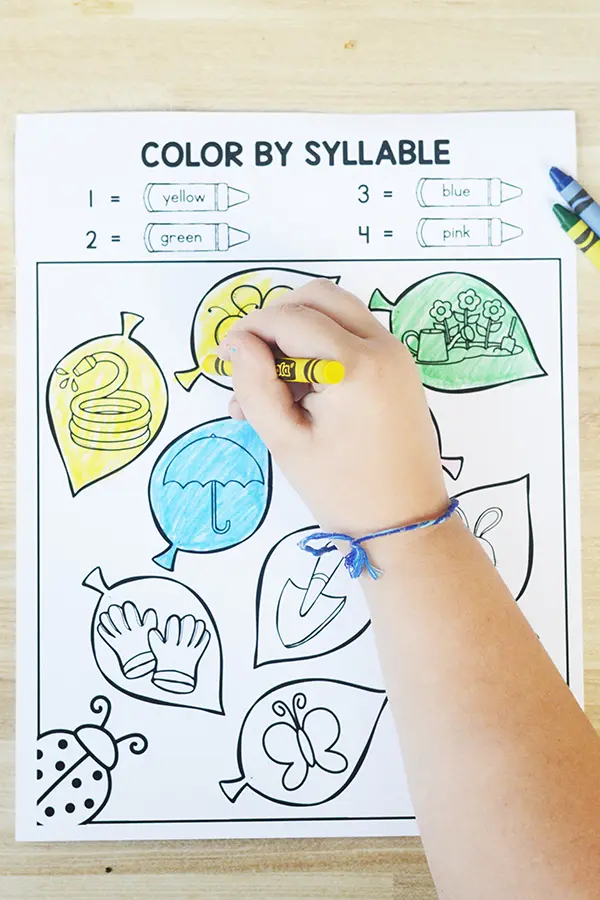
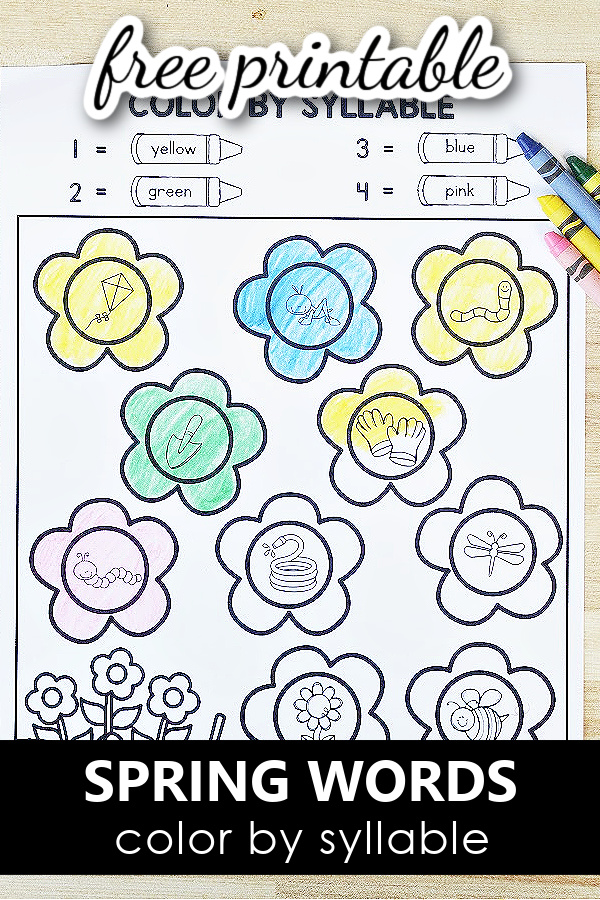
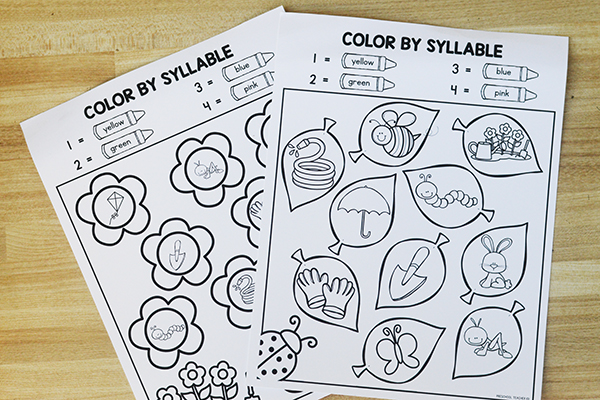
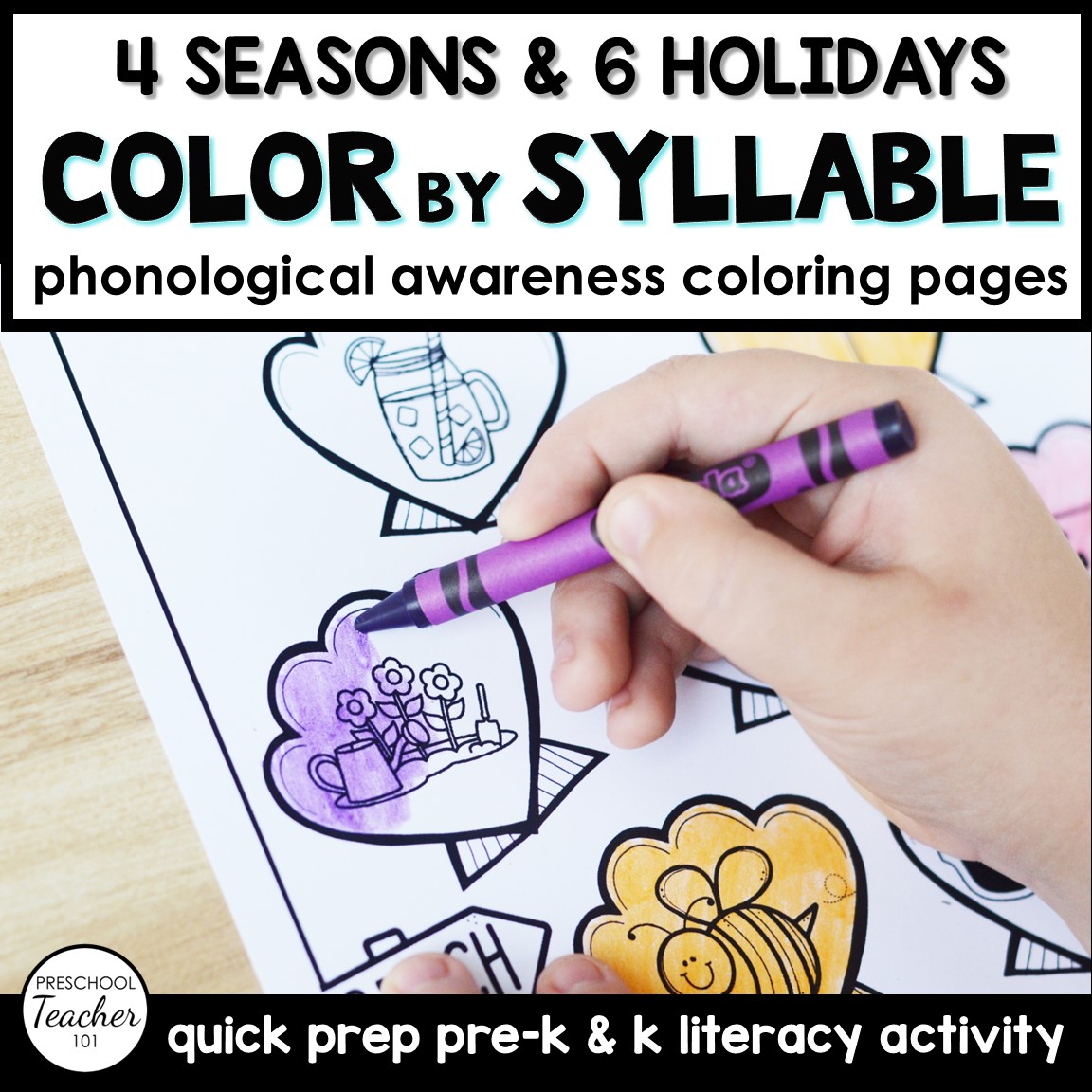
However, a pedagogical shift is quietly taking place in preschool and kindergarten classrooms across the country. Educators are pivoting toward interactive, play-based methodologies that merge cognitive science with creative expression. A prominent example of this movement is the newly released Spring Color by Syllable literacy initiative, alongside its comprehensive year-long counterpart. Designed specifically for Pre-K and kindergarten students, these no-prep resources combine the familiar engagement of "color-by-code" art activities with rigorous phonological awareness training.
By challenging young learners to break down seasonal vocabulary words into one to five distinct syllables and color-code their worksheets accordingly, these tools offer a multimodal learning experience. This article provides an in-depth examination of the Spring Color by Syllable initiative, exploring the underlying science of reading, classroom implementation strategies, the broader ecosystem of year-round phonological tools, and the future outlook for play-centric literacy development.
Detailed Chronology: The Evolution of Play-Based Phonological Tools
The journey toward modern, accessible phonological awareness resources like the Spring Color by Syllable set reflects a broader evolution in educational publishing and instructional design.
Phase One: The Shift Toward No-Prep Literacy Centers
For decades, early childhood educators spent countless hours curating, cutting, and laminating hands-on centers. While tactile materials remain vital, the demand for efficient, high-impact, "no-prep" materials grew exponentially as teachers faced increasing administrative burdens and crowded classrooms. Developers recognized that literacy resources needed to bridge a crucial gap: they had to be immediately printable for teachers while remaining deeply engaging for young children who learn best through visual and kinesthetic modalities.
Phase Two: Integration with the Science of Reading
In recent years, the educational community has experienced a profound shift toward the Science of Reading—an extensive, multidisciplinary body of scientifically-based research about how children learn to read. This movement emphasized that phonological awareness (the ability to recognize and manipulate the spoken parts of sentences and words, including syllables, onsets, and rimes) is a non-negotiable precursor to phonics and decoding.
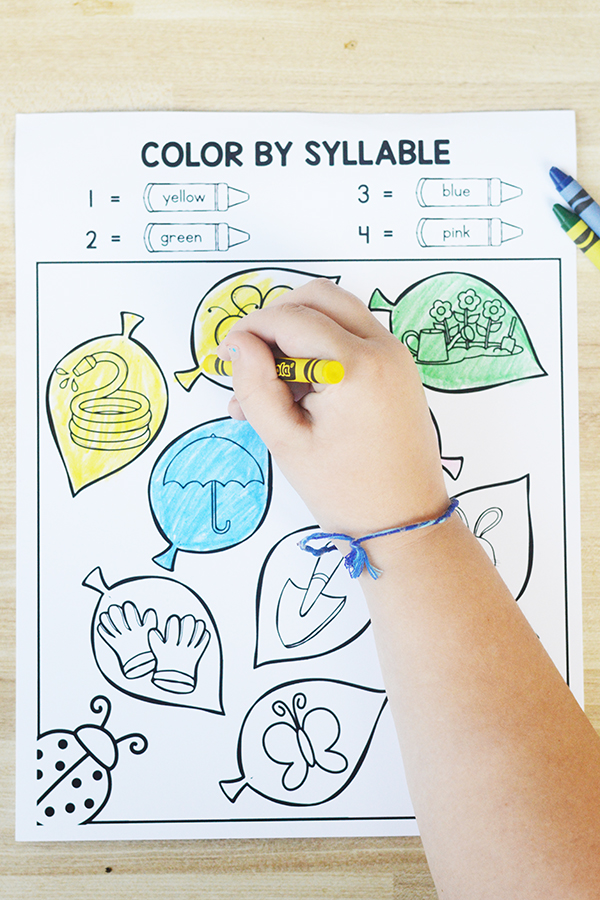
Recognizing this, curriculum designers began adapting traditional classroom pastimes—such as color-by-number or color-by-letter worksheets—into sophisticated linguistic tools. The color-by-syllable framework was born out of this necessity, transforming passive coloring pages into active auditory and visual segmentation exercises.
Phase Three: Seasonal and Thematic Expansion
To maintain student engagement throughout the academic year, educational developers expanded single-concept worksheets into comprehensive, thematic units. The introduction of the Spring Color by Syllable freebies marked a milestone in this timeline, offering educators hyper-relevant, seasonal vocabulary (such as blooming flowers, spring animals, and weather phenomena) that resonates with children’s immediate sensory experiences. This was quickly followed by the launch of an expansive 33-page, year-round color-by-syllable collection designed to support educators through every holiday, season, and curriculum shift.
Supporting Context & Metrics: The Science Behind Syllable Segmentation
To understand the impact of tools like the Spring Color by Syllable worksheets, one must examine the cognitive mechanics of early literacy.
Why Syllables Matter in Pre-K and Kindergarten
Syllables are natural phonological units of spoken language. For a young child, hearing a word as an unbroken stream of sound ("butterfly") is standard. Learning to parse that stream into discrete parts ("but-ter-fly") is a cognitive breakthrough. Research indicates that syllable awareness is typically easier for young children to master than phoneme awareness (manipulating individual sounds or phonemes), making it an essential stepping stone in the phonological awareness continuum.
- Auditory Discrimination: Children learn to listen closely to the rhythm and beats of words.
- Vocabulary Reinforcement: Seasonal vocabulary expansion directly correlates with reading comprehension later in life.
- Segmenting and Blending: These two operations are foundational for encoding (writing) and decoding (reading).
Classroom Integration and Flexibility
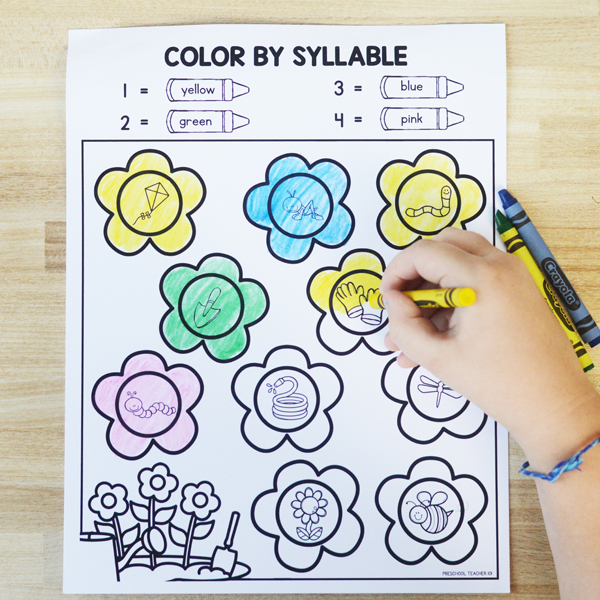
Modern early childhood classrooms are rarely homogeneous; educators manage diverse cohorts of learners with varying entry points. The design of the Spring Color by Syllable set addresses this diversity through multiple implementation formats:
- Literacy Centers: Positioned as an independent station where students can reinforce skills introduced during direct instruction.
- Fast Finisher Tasks: Providing educationally rich, meaningful work for students who complete core assignments ahead of their peers, thereby mitigating classroom management challenges.
- Take-Home Practice: Extending learning beyond the classroom walls, allowing parents to participate directly in their child’s pre-reading development.
- Differentiated Instruction: Because the printable packs include varied sheets focusing on different syllable counts (ranging from single-syllable words up to complex five-syllable terms), educators can easily tailor assignments to match individual developmental stages.
Official Statements and Pedagogical Insights
Leading voices in early childhood education and curriculum development have emphasized the necessity of balancing academic rigor with joyful, stress-free learning environments.
The Importance of Vocabulary Pre-Teaching
Experts caution that color-by-syllable activities should not be deployed as isolated testing mechanisms. Educational specialists stress a fundamental best practice: educators must introduce and review all vocabulary terms before expecting students to recognize and segment them independently.
When a child encounters a seasonal word—such as "umbrella," "caterpillar," or "tulip"—on a worksheet, they must first understand the semantic meaning of the term and hear it spoken correctly. Once the vocabulary is anchored in their working memory, the cognitive load shifts successfully toward auditory segmentation and color-matching.
Bridging Play and Assessment
"Teachers are constantly searching for ways to meet rigorous phonological awareness standards without sacrificing the joy of early childhood," notes an instructional design lead familiar with the color-by-code series. "When a child sits down with a Spring Color by Syllable page, they aren’t thinking about standardized benchmarks or reading metrics. They are focused on matching a syllable count to a vibrant color, revealing a hidden picture. That intrinsic motivation is where true, lasting learning happens."
Future Outlook: The Trajectory of Play-Centric Literacy Resources
Looking ahead, the market for play-centric, scientifically grounded early literacy materials is poised for significant expansion. As schools continue to refine their reading curricula to reflect the Science of Reading, the demand for ready-to-use, low-preparation resources that target specific cognitive sub-skills will only increase.
Trends in Early Literacy Development
- The Rise of Hybrid Learning Packets: Educators increasingly value resources that can seamlessly transition between physical printouts in a traditional classroom and digital formats for hybrid or remote learning environments.
- Comprehensive Year-Long Frameworks: Rather than relying on disjointed worksheets, teachers prefer cohesive, year-long systems—such as the 33-page comprehensive syllable pack—that ensure continuous, spiral review of phonological concepts from the first day of school to the last.
- Multisensory Integration: Future iterations of phonological tools are expected to integrate even more tactile elements, pairing visual color-by-code worksheets with physical manipulation tools like clapping, tapping, or counter chips to address diverse learning styles (visual, auditory, and kinesthetic).
Conclusion
The introduction and widespread adoption of resources like the Spring Color by Syllable activities underscore a vital truth in education: rigor and engagement are not mutually exclusive. By embedding essential phonological awareness training into a familiar, artistic format, these tools empower preschool and kindergarten educators to foster a genuine love for language. As children color their way through spring-themed vocabulary—counting beats, clapping out syllables, and watching seasonal images emerge—they are building the cognitive foundation necessary to become confident, proficient readers for life.

