
Executive Overview
In the landscape of early childhood education, the transition from spoken language to written literacy remains one of the most critical milestones a child achieves. Educators, literacy specialists, and cognitive scientists continually search for innovative, evidence-based tools that bridge the gap between phonemic awareness—the ability to hear, identify, and manipulate individual sounds—and phonics, the understanding of how those sounds correspond to letters.
Against this backdrop, This Reading Mama has released a targeted educational intervention: the FREE Beginning Digraph Puzzles. Designed to address fundamental hurdles in early reading acquisition, this resource provides a hands-on, multi-sensory approach to mastering consonant digraphs such as ch, sh, th, wh, wr, kn, ph, and gn.
This report provides an in-depth examination of the pedagogy behind the new puzzle set, exploring the cognitive mechanics of phonemic awareness, the precise methodology for classroom and home implementation, the distinction between blends and digraphs, and the broader implications of utilizing gamified, tactile learning tools to combat early reading deficits.
Detailed Chronology: The Evolution and Implementation of Digraph Puzzles
The development of the Beginning Digraph Puzzles did not happen in a vacuum. It represents the culmination of years of iterative educational design focused on early reading intervention.
Phase 1: Identifying the Pedagogical Gap
Early literacy assessments consistently show that while children readily grasp single-letter sounds (the alphabetic principle), they stumble when two letters combine to create a singular, distinct phoneme—a digraph. Traditional worksheets often present these concepts in abstract, two-dimensional formats that fail to engage pre-readers or struggling learners. Educators noted a clear demand for an interactive medium that could isolate auditory sounds and visually anchor them to graphemes.

Phase 2: Design and Prototyping
The curriculum design phase focused heavily on cognitive load theory. By breaking down complex letter combinations into puzzle pieces, creators ensured that students were not overwhelmed. The focus was restricted to nine essential beginning digraphs:
- /tʃ/ (ch as in chalk, cheese)
- /ʃ/ (sh)
- /θ/ or /ð/ (th)
- /w/ or /hw/ (wh)
- /r/ (wr as in write)
- /n/ (kn as in knot)
- /f/ (ph as in phone)
- /n/ (gn as in gnat)
Phase 3: Field Testing and Refinement
Before public release, early prototypes were tested in small-group settings. Teachers observed that children responded exceptionally well to the two-step tactile process: first identifying the picture and isolating the initial sound, and second, matching the corresponding letter puzzle piece. This mechanical act of putting the puzzle together physically reinforced the cognitive connection between sound (phoneme) and symbol (grapheme).
Phase 4: Public Distribution and Digital Access
With the official release of the digital download pack, educators and parents gained immediate access to the materials. To streamline the user experience, developers integrated direct download pathways alongside supplementary resources, such as specialized guides clarifying the difference between blends and digraphs, as well as broader phonological awareness assessments.
Supporting Context & Metrics: The Science of Reading and Digraph Mastery
To understand the value of the Beginning Digraph Puzzles, one must examine the empirical data surrounding early literacy and the Science of Reading movement.
Phonemic Awareness vs. Phonics: The Dynamic Duo
A common pitfall in early education is treating phonemic awareness and phonics as interchangeable terms. They are distinct, yet deeply interdependent:

- Phonemic Awareness (The Ear): This is strictly auditory. A child practicing phonemic awareness can close their eyes and isolate the /ch/ sound at the beginning of the word cheese without ever seeing the letters c and h.
- Phonics (The Eye and Hand): This involves the written code. When the child connects that heard /ch/ sound to the printed grapheme "ch," they are engaging in phonics.
The Beginning Digraph Puzzles uniquely bridge these two domains. The process begins with auditory and oral practice (naming the picture and listening for the leading sound) and culminates in visual-spatial integration (matching the picture piece to the letter piece).
Cognitive Benefits of Tactile Learning in Literacy
According to cognitive development studies, tactile manipulation significantly enhances memory retention and concept mastery in young children. Puzzles require spatial reasoning, problem-solving, and fine motor skills. When these physical processes are paired with linguistic tasks, multiple neural pathways are activated simultaneously.
- Error Correction: Puzzles offer self-correcting mechanisms. If a child attempts to match a sh picture to a ch puzzle piece and it fails to fit or make logical sense, they receive immediate physical feedback, allowing for autonomous error correction.
- Engagement Metrics: Gamified learning tools reduce frustration levels in reluctant readers. By transforming phonics drills into a puzzle-solving game, anxiety is replaced with exploratory play.
Official Statements and Educational Insights
Educators and reading specialists have long emphasized the necessity of explicit, systematic instruction when teaching complex letter teams.
"When children learn to read, they are cracking a code. Digraphs represent one of the first major hurdles where the 1:1 letter-to-sound correspondence breaks down. Giving students a concrete, manipulable tool to see that two letters can join forces to make one brand-new sound is transformative for early readers."
— Early Literacy Curriculum Specialist
Furthermore, creators behind the resource emphasize the importance of scaffolding instruction. Becky, the creator behind This Reading Mama, notes:

"You can use these puzzles to practice phonemic awareness—specifically isolating and segmenting individual sounds—alongside core phonics principles. By having learners complete the puzzle piece by piece, you are reinforcing the vital link between phonemes and graphemes in a way that traditional worksheets simply cannot achieve."
Educators struggling to differentiate between consonant blends (where individual sounds are still slightly heard, such as the /bl/ in blue) and digraphs (where the letters merge into a completely new sound, such as the /sh/ in ship) are encouraged to utilize supplementary instructional videos and guides provided alongside the free download package. This ensures that instructors possess absolute clarity before introducing the concepts to their classrooms or living rooms.
Future Outlook: The Direction of Accessible Early Literacy Resources
As educational paradigms shift toward more equitable, digital-first yet hands-on learning environments, the demand for high-quality, free pedagogical resources is skyrocketing.
The Rise of Barrier-Free Educational Content
Initiatives that offer ad-free, easily accessible printables—such as The Library membership portals and direct-download freebies—represent a democratization of teaching resources. Teachers and parents often spend out-of-pocket funds to equip learning environments; accessible, high-yield tools like the Beginning Digraph Puzzles alleviate financial burdens while maintaining rigorous academic standards.
Integration with Comprehensive Assessment Tools
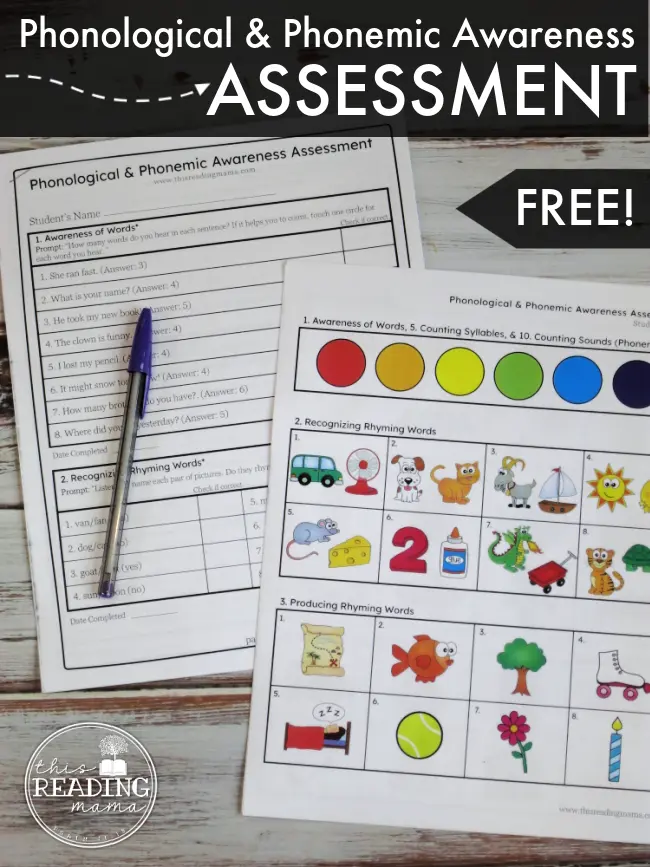
Looking forward, the integration of targeted puzzles with diagnostic tracking tools—such as Phonological and Phonemic Awareness Assessments—will become standard practice. Educators will no longer rely on generalized reading tests; instead, they will diagnose specific phoneme isolation weaknesses (e.g., struggling specifically with th versus sh) and deploy targeted puzzle interventions to close learning gaps rapidly.
Conclusion
The introduction of the Beginning Digraph Puzzles is a timely and valuable contribution to the early literacy toolkit. By seamlessly blending auditory phonemic awareness with tactile phonics practice, this resource addresses the core cognitive requirements of learning to read. Whether implemented in a bustling kindergarten classroom or at a kitchen table during homeschooling, these puzzles offer an engaging, evidence-based pathway for children to conquer digraphs and stride confidently toward reading fluency.

