
Executive Overview
In the modern educational landscape, gamification has long served as a vital bridge between rigorous academic content and student engagement. Platforms like Kahoot! have successfully turned routine quiz reviews into high-energy, interactive experiences for millions of students worldwide. However, traditional gamified learning models have historically possessed a critical limitation: an over-reliance on speed.
In standard leaderboard formats, the fastest correct clicker typically dominates, a dynamic that can inadvertently sideline students who require a moment longer to process information, analyze questions, and formulate thoughtful answers. For these students, the competitive edge can quickly fade into disengagement if they feel mathematically locked out of the podium early in a session.
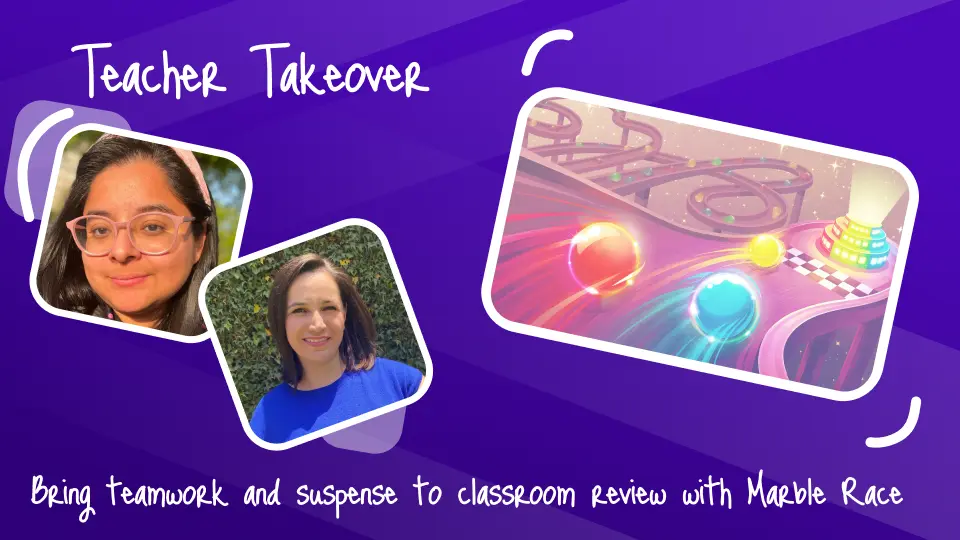
Enter Marble Race, a pioneering game mode developed by Kahoot! designed to fundamentally alter this classroom dynamic. By decoupling the pressure of rapid-fire clicking from the ultimate rewards of the game, Marble Race introduces a pinball-inspired, physics-driven competitive format. In this mode, students earn marbles for randomized teams by answering questions accurately. Between question rounds, the entire classroom pauses to watch those accumulated marbles tumble through a dynamic, unpredictable obstacle course.
The pedagogical implications are profound. By shifting the classroom’s primary competitive focus from who clicked first to who actually understands the material, Marble Race creates a more inclusive, high-energy environment. Educators across the globe—from middle schools in Indonesia and primary classrooms in South Korea to STEM labs in New York City and innovation hubs in Mexico City—are reporting a paradigm shift in how students interact with review material. Crucially, because Marble Race integrates seamlessly with pre-existing teacher-created content libraries without requiring any redesign or extra preparation time, it represents an immediately accessible upgrade to instructional delivery.
Detailed Chronology and Evolution of Classroom Gamification
To understand the significance of the Marble Race mode, it is necessary to examine the trajectory of digital gamification in education over the past decade.
Phase 1: The Emergence of Digital Speed-Based Competitions
When interactive quiz platforms first gained widespread adoption in K-12 and higher education, the novelty of live, synchronized classroom competition was revolutionary. Teachers transitioned away from static paper quizzes toward vibrant, projected scoreboards. The core mechanic of these early iterations was straightforward: answer correctly, and answer as fast as possible to maximize points.
While this model successfully captured student attention and injected vitality into otherwise static review sessions, educators soon identified unintended psychological consequences. The emphasis on speed inadvertently penalized analytical thinkers, students with processing differences, and language learners who needed extra time to comprehend complex prompts. Consequently, a distinct stratification often occurred early in a session: a handful of rapid-fire competitors dominated the top of the leaderboard, while struggling or cautious students lost motivation, feeling the game was mathematically out of reach long before the final question.
Phase 2: The Quest for Inclusion and Strategic Play
Recognizing these pain points, educational technologists began experimenting with alternative game modes that rewarded strategy, collaboration, or prolonged persistence rather than purely instantaneous reactions. Game designers sought ways to maintain the electrifying adrenaline of competitive play while mitigating the anxiety associated with traditional leaderboards.
The core challenge lay in designing a mechanic that decoupled the reward structure from raw speed without sacrificing excitement. Educators wanted a system that rewarded academic accuracy and comprehension above all else, ensuring that a student who carefully reasoned through a complex algebra problem or a nuanced historical prompt felt equally valued compared to someone who guessed instantly.
Phase 3: The Launch and Adoption of Marble Race
The introduction of Marble Race marked a mature evolution in educational game design. By synthesizing team-based randomized grouping with a visually arresting, physics-based race mechanic, Kahoot! solved a central paradox of gamified learning: how to maintain intense, high-stakes excitement while leveling the playing field.
Following its rollout, global educators serving as Kahoot! Ambassadors immediately integrated the mode into diverse curricula. Rather than serving as a replacement for standard instruction, Marble Race was embraced as a versatile pedagogical instrument suited for formative assessments, pre-assessment reviews, concept reinforcement, and breaking up the monotony of traditional lecture formats. Its rapid global uptake underscored a universal demand among teachers for tools that foster genuine, inclusive collaboration rather than hyper-individualized speed trials.
Supporting Context & Metrics: The Mechanics of Inclusive Engagement
To fully appreciate why Marble Race resonates so deeply within modern classrooms, one must analyze the specific psychological and structural mechanisms at play during a session.
1. Accuracy over Agility
In a standard Kahoot! game, a correct answer submitted in 0.5 seconds yields significantly more points than a correct answer submitted in 4.5 seconds. Marble Race re-engineers this equation. While accurate answers remain the sole currency for earning marbles, the temporal advantage of fast clicking is neutralized.
[Student Answers Accurately]
         │
         ▼
[Earns Marbles for Randomized Team]
         │
         ▼
[Intermission: Physics-Based Marble Course]
         │
         ▼
[Unpredictable Bounces & Turns Shift Rankings]
         │
         ▼
[Sustained Suspense & Inclusive Celebration]
When the questions conclude and the race begins, the accumulated marbles enter a randomized, physics-simulated obstacle course. Because the course features unpredictable turns, drops, and barriers, the initial volume of marbles a team possesses influences their probability of winning, but does not guarantee a static outcome. This design validates the efforts of students who take their time to think critically, ensuring that deep cognitive processing is directly rewarded.
2. Randomized Team Dynamics and Collaborative Synergy
Marble Race pairs students into randomized teams rather than forcing isolated individual competition or fixed peer groups. This structural choice transforms the emotional tone of the classroom.
- Shared Accountability: Students realize that every correct answer they submit contributes directly to a communal objective. This fosters a sense of positive peer pressure; students encourage one another to focus and do their best.
- Reduced Performance Anxiety: Because individual scores are subsumed into a collective team effort, the fear of public embarrassment—often cited as a barrier to participation in traditional classrooms—is significantly diminished.
3. Sustained Attention Spans Across Long Lessons
Attention fatigue is a persistent challenge for educators navigating extended instructional blocks. Traditional lectures or repetitive review sheets frequently result in behavioral drift during the final third of a class period.
Feedback from STEM and primary educators indicates that Marble Race effectively resets classroom energy levels. Because the incentive structure ties question performance directly to an upcoming visual payoff (the marble descent), students remain cognitively invested from the opening inquiry to the final question. The anticipation of the race acts as a powerful pacing mechanism, transforming what might otherwise feel like a tedious drill-and-practice session into an anticipated classroom event.
Official Statements and Global Perspectives
The transformative impact of Marble Race is best illustrated through the firsthand accounts of educators operating across vastly different cultural, linguistic, and institutional frameworks.
Leveling the Playing Field in Indonesia
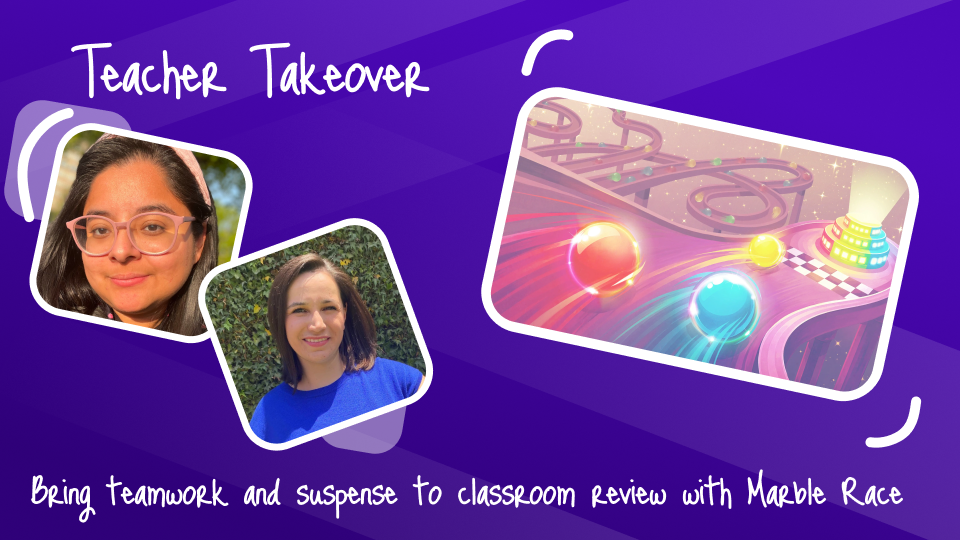
Ika M., a middle school educator and Kahoot! Ambassador based in Indonesia, highlighted how the game mode redefines competitive classroom dynamics:
"The best part is that it levels the playing field. It successfully captures the excitement of a live game while shifting the focus from ‘who is the fastest clicker’ to ‘who actually understands the material.’ It creates a healthy, high-energy competition where everyone feels they still have a chance to catch up."
Ika further emphasized the operational efficiency for teachers:
"Teachers will love it because it transforms abstract scores into a dynamic visual narrative. Instead of students just staring at shifting numbers on a leaderboard, they see a live race driven by their knowledge. It naturally promotes healthy competition, turns repetitive review sessions into an exciting classroom event, and requires zero extra prep time from the teacher since it applies to any existing quiz."
Maintaining STEM Focus in New York City
In the high-stakes environment of New York City public schools, STEM educator Elisabeth Lainez observed marked improvements in student concentration and participation metrics:
"The most beneficial aspect of Marble Race was its ability to motivate students to participate and stay focused on answering questions. Students were excited by the marble racing theme and were eager to see how their performance would influence the outcome of the race."
Lainez advocates for deploying the mode across multiple instructional touchpoints, noting its efficacy in pre-assessment reviews, concept reinforcement, and formative checks for understanding during complex scientific units.
Transforming the Concept of Leadership in Mexico City
Carla C., a Director of Innovation based in Mexico City, addressed the profound psychological shift away from traditional, exclusionary ranking systems:
"It changes the traditional concept of the leaderboard and podium… it shifts students’ attention away from points and winning while they are answering the questions, allowing them to focus more on participation and accuracy."
Unpredictability and Joy in South Korea and the United States
International perspectives converge on the sheer joy and suspense generated by the course mechanics. Jisun Lee, a primary school educator in South Korea, noted:
"The fun part is that it’s hard to predict the outcome because the rankings change depending on where the beads land."
Echoing this sentiment, New York-based educator Alex L. captured the visceral classroom reaction at the conclusion of sessions:
"They have so much fun at the end when the marbles fall."
Future Outlook: The Next Generation of Pedagogical Gamification
As educational technology continues to mature, the lessons learned from the widespread adoption of Marble Race point toward a clear trajectory for future instructional design. The industry is moving decidedly away from raw, reductionist metrics—such as sheer speed or isolated score accumulation—toward holistic, narrative-driven experiences that prioritize conceptual mastery and collaborative community building.
1. Integration of Adaptive Learning Pathways
Future iterations of physics-based and narrative-driven game modes will likely incorporate adaptive learning algorithms. Imagine a variation of Marble Race where the complexity of the obstacle course or the bonus multipliers for marbles dynamically adjust based on real-time classroom analytics. If an entire cohort struggles with a specific foundational concept, the platform could subtly reinforce those specific competency areas while maintaining the engaging visual narrative of the game.
2. Expanding Beyond STEM and Quiz Reviews
While modes like Marble Race have found a natural home in vocabulary drills, historical trivia, and STEM concept checks, forward-thinking educators are beginning to explore their utility in qualitative disciplines. From analyzing literary themes in English language arts to debating philosophical ethical dilemmas, structuring discussion prompts within a collaborative, randomized team game mode helps scaffold complex critical thinking exercises without sacrificing the joyful engagement students crave.
3. The Enduring Value of Shared Classroom Moments
Ultimately, the success of innovations like Marble Race serves as a reminder of why educators enter the profession: to foster moments of genuine connection, shared discovery, and collective celebration. When a classroom full of students leans forward in unison, eyes fixed on a projected screen as colorful marbles weave through an unpredictable maze, the digital boundary dissolves.
Technology ceases to be a mere delivery mechanism for multiple-choice queries and instead becomes a catalyst for shared human experience. By rewarding intellectual accuracy, embracing healthy unpredictability, and ensuring that no student is left behind at a static starting line, Marble Race establishes a new benchmark for how interactive digital tools can enrich the modern educational ecosystem.

