

Executive Overview
For decades, the standard opening act of any school year has followed a predictable, exhausting script. Faculty members file into the auditorium for their first meeting of the term, exchange weary pleasantries, and listen as administrators unveil the district’s latest grand initiative. Whether it is a rebranded instructional framework, a sweeping new technological platform, or a prepackaged curriculum guaranteed to close achievement gaps, the promise is always the same: this is the year everything changes.
Yet, within a few short cycles, the initiative quietly fades away, replaced by the next shiny object handed down from above. This relentless educational churn leaves teachers burned out, districts financially strained, and underlying student learning challenges stubbornly intact.
In their groundbreaking new book, A Chance to Solve Their Own Problems, educational researchers Jal Mehta and Max Yurkofsky investigate why well-intentioned school improvement efforts fail with such striking regularity. Rather than placing the blame solely on educator resistance or poor execution, Mehta and Yurkofsky argue that the entire architecture of traditional school improvement is fundamentally flawed. Schools routinely rely on top-down mandates, obsess over rigid program "fidelity" rather than authentic learning, and confuse individual teacher shortcomings with systemic failures.
However, the authors’ research is not a catalog of despair. By examining schools and districts where improvement efforts actually succeed, Mehta and Yurkofsky have mapped out the essential building blocks—spanning shared mindsets, operational routines, and expert practices—that allow educators to tackle meaningful problems together. This deep-dive report explores the fatal pitfalls of traditional reform, the anatomy of successful problem-solving, and the foundational conditions that leaders must cultivate to transform school improvement from an exhausting administrative chore into a sustainable, organic practice.
Detailed Chronology: The Evolution of School Reform and Where It Lost Its Way
To understand the current crisis of reform fatigue in American education, one must trace the historical trajectory of how schools have attempted to better themselves over the past half-century.
The Era of Top-Down Mandates
For much of the late 20th century, school improvement was treated as a mechanical, regulatory compliance issue. District offices and state departments of education operated on an industrial model of change: policy leaders formulated strategies, and front-line educators were expected to implement them without deviation. If student test scores stagnated, the standard response was to apply external pressure, introduce standardized pacing guides, or mandate punitive accountability metrics.
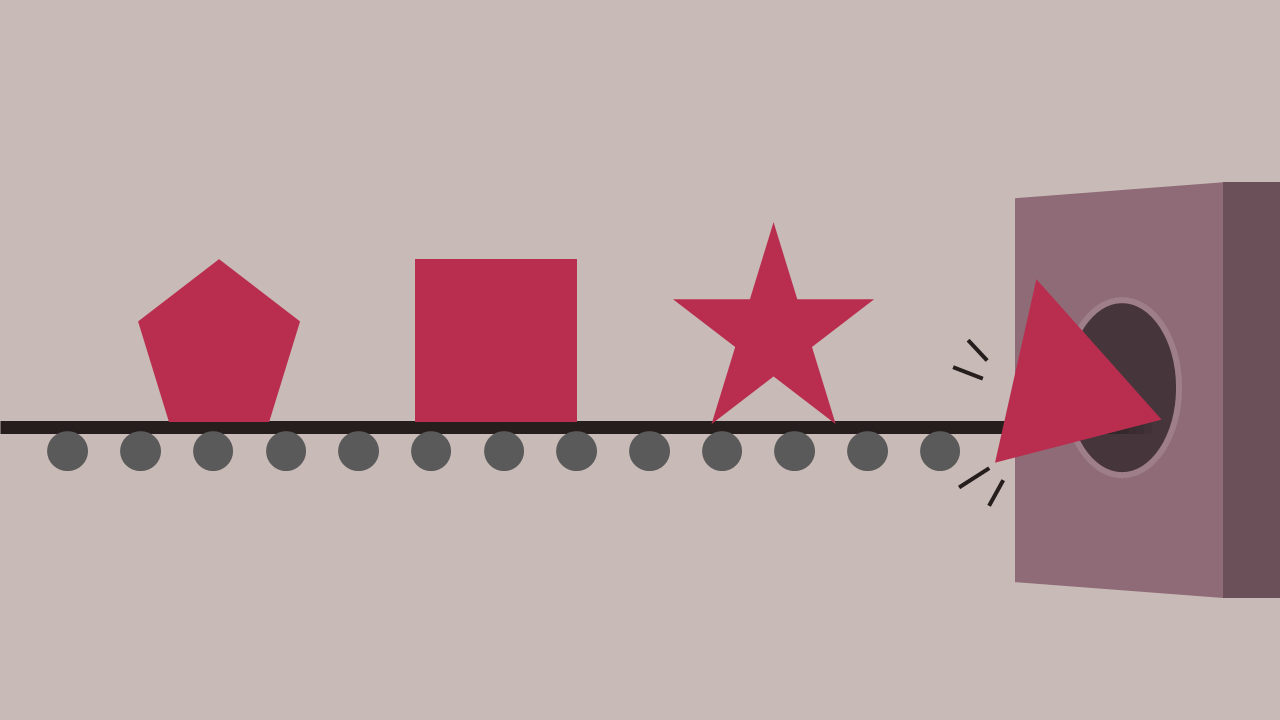
By the turn of the 21st century, this rigid paradigm began to show catastrophic cracks. Schools are intensely complex, human-centric ecosystems rather than uniform assembly lines. Treating complex pedagogical challenges as mere engineering problems guaranteed widespread resistance and superficial compliance.
The Rise—and Stumble—of Improvement Science
Recognizing the limitations of heavy-handed mandates, the educational sector eventually pivoted toward more collaborative, process-driven frameworks. Influenced heavily by improvement science and design thinking—such as Plan-Do-Study-Act (PDSA) cycles—districts began encouraging teachers to study problems locally, test small-scale changes, and iterate based on real-time feedback.
In theory, this was a revolutionary democratization of reform. In practice, however, these frameworks frequently devolved into bureaucratic theater. Instead of being handed a curriculum package, teachers were suddenly handed a new methodology, complete with rigid terminology and prescribed steps. The focus shifted from solving actual, localized problems of practice to meticulously following the improvement process itself. The tool had become the master, and the original promise of teacher-led inquiry was obscured by red tape.
The Modern Reckoning
Today, schools find themselves at a historic crossroads. The exhaustion of pandemic-era schooling, coupled with chronic educator shortages, has made the traditional cycle of top-down reform entirely unsustainable. Teachers have zero tolerance for initiatives that feel disconnected from their daily reality. Mehta and Yurkofsky’s research arrives at a vital inflection point, offering empirical insight into why some systems are finally breaking this destructive cycle by returning agency to the people closest to the ground.
Supporting Context & Metrics: Unpacking the Four Fatal Flaws of School Reform
Mehta and Yurkofsky’s extensive fieldwork revealed four recurring systemic pathologies that consistently derail school improvement efforts. Identifying these traps is the first step toward correcting them.
1. The Marginalization of Frontline Educators
In the vast majority of school improvement architectures, problems are diagnosed at the district headquarters or administrative suite and then assigned to teachers. This approach fundamentally misreads where institutional wisdom resides.
As Jal Mehta notes, reform efforts falter when they fail to trust the people closest to the classroom. When leaders impose problems that they think educators should care about—rather than addressing the friction points teachers experience every day—buy-in evaporates. Educators are far more likely to invest their scarce emotional and intellectual energy when an inquiry directly targets a barrier they face in their own daily practice.
2. The Fallacy of Individualizing Systemic Failure
When student performance lags or instructional goals are missed, conventional accountability systems reflexively zoom in on individuals. Data dashboards are deployed to isolate struggling teachers, individual grade-level teams, or specific classrooms for targeted intervention.
Max Yurkofsky argues that this laser-focus on individuals misses the forest for the trees. Instead of asking why a single teacher is struggling with a set of academic standards, effective improvement requires looking one layer deeper into the ecosystem. Why is the curriculum falling short? How are onboarding and coaching structured? Where is the instructional support system breaking down? Shifting the gaze from personal blame to systemic design not only yields durable, scalable solutions, but it also creates psychological safety, liberating educators to admit openly where institutional supports are failing them.
3. The Cult of "Fidelity" Over Adaptive Learning
When schools invest in new programs or curricula, immense institutional pressure is brought to bear on "fidelity"—the degree to which educators implement the program exactly as designed by its outside creators.
Yurkofsky offers a provocative counter-thesis: "Fidelity means we’re not learning." Because no external program is ever pre-calibrated to fit the unique cultural, demographic, and operational nuances of a specific school, strict adherence to a manual guarantees friction. Real improvement demands adaptive integration. Educators must utilize instructional tools, continuously monitor where they fall short in their specific context, and actively reshape them through ongoing iteration.
4. Premature Solution-Jumping
A pervasive psychological trap in organizational leadership is falling in love with a solution before taking the time to precisely define the problem. Once a district commits capital, time, and political capital to a specific program or technology, the institutional incentive shifts toward defending that investment. Consequently, leaders begin twisting local symptoms to fit the pre-chosen cure.

Mehta illustrates this through a design-thinking exercise with his university students. Challenged with improving a physical education building, students quickly concluded that the school needed "phone booths for Zoom calls." Mehta challenged this assumption: the phone booth was a solution masquerading as a problem. The actual underlying problem was a lack of private space for confidential digital communication. By broadening the problem statement, a multitude of creative, cost-effective architectural and scheduling solutions suddenly emerged.
Official Statements & Core Frameworks: Mindsets, Routines, and Practices
When school improvement actually succeeds, Mehta and Yurkofsky observed that it is never the result of a single isolated intervention. Sustainable success requires the harmonious alignment of three indispensable building blocks: Mindsets, Routines, and Practices.
+-------------------------------------------------------------+
|               THE TRIAD OF EFFECTIVE REFORM                 |
|                                                             |
|   [MINDSETS]       -->  Shared beliefs, ownership, and      |
|                         cultural assumptions.               |
|                                                             |
|   [ROUTINES]       -->  Structured, recurring spaces for    |
|                         collaborative inquiry.              |
|                                                             |
|   [PRACTICES]      -->  Expert pedagogical strategies       |
|                         and disciplinary tools.             |
+-------------------------------------------------------------+
1. Cultivating Collaborative Mindsets
Mindsets encompass the deep-seated beliefs and professional identities that educators bring to their work. For instance, a high school may purchase a world-class literacy intervention program and provide extensive professional development, but if secondary content-area teachers cling to the mindset that "teaching reading is strictly an elementary school job," the initiative will stall. True reform requires participants to believe deeply in the legitimacy of the problem and view themselves as empowered agents capable of solving it.
2. Establishing Structured Routines
Routines provide the operational scaffolding that prevents innovation from becoming an isolated island. Without formalized, recurring structures—such as common planning time dedicated to examining student artifacts, peer observation protocols, or regular collaborative problem-solving sessions—innovative teachers quickly experience professional isolation. Routines turn individual insights into systemic organizational knowledge.
3. Infusing Disciplinary Practices
While process-oriented improvement frameworks (like improvement science cycles) are vital, they cannot substitute for substantive domain expertise. As Mehta points out, an educator cannot simply "PDSA cycle their way" from mediocre instruction to expert pedagogy. At critical junctures, systems must infuse real disciplinary expertise—whether sourced internally or externally—providing teachers with the robust instructional materials, theoretical frameworks, and content-area guidance required to master new ways of teaching.
Creating the Enabling Environment
Even when mindsets, routines, and practices are present, they will wither if planted in toxic or starved institutional soil. Educational leaders must intentionally construct an enabling environment characterized by three core pillars:

- Protecting Time and Space: Recognizing that time is the single most precious and scarce commodity in modern education, leaders must fiercely ring-fence time for educators to step off the daily hamster wheel of lesson preparation and engage in genuine systemic inquiry.
- Engineering Psychological Safety: True learning requires experimentation, and experimentation inherently involves false starts and failures. If leaders maintain a zero-tolerance culture for error, educators will default to compliance and concealment rather than honest problem-solving.
- Anchoring in Broader Strategy: Improvement methodologies must never become bureaucratic ends in themselves. They must serve as tactical components within a coherent, purpose-driven strategic vision for the school or district.
Future Outlook: The "Gift" of Problems and Where Leaders Must Begin
For administrators and teachers reading these findings, the sheer scope of systemic transformation can feel daunting. Rebuilding mindsets, redesigning organizational routines, and overhauling instructional practices cannot be accomplished overnight, nor can any school afford to tackle every dimension simultaneously.
So, where should educational leaders begin? Max Yurkofsky offers a paradigm-shifting starting point for institutional culture: View problems as a gift.
In dysfunctional educational systems, problems are treated as embarrassments to be swept under the rug or liabilities that trigger punitive administrative reviews. In thriving, high-performing systems, the surfacing of a problem is celebrated as a manifestation of profound organizational trust. When educators feel safe enough to articulate precisely what is broken, they are signaling faith that their leadership will respond with curiosity rather than defensiveness.
Moving forward, the future of American education hinges on this precise cultural pivot. The path forward does not lie in waiting for the next silver-bullet curriculum package to drop from a corporate headquarters or a state agency. Instead, sustainable reform begins when we dismantle the culture of compliance, make it psychologically safe for educators to tell the truth about what is failing, and finally give them a genuine chance to solve their own problems.
Further Reading & Professional Resources
For educators, coaches, and administrators seeking to deepen their understanding of systemic school improvement, the following resources provide actionable pathways:
- Max Yurkofsky’s Substack: Explore ongoing essays and field research on educational reform via Max Yurkofsky’s Substack.
- Harvard’s Deeper Learning Institute: Access professional development tools, research briefs, and register for annual events such as the Deeper Learning Educator Camp hosted by Harvard University.
- Recommended Reading: Order Jal Mehta and Max Yurkofsky’s seminal text, A Chance to Solve Their Own Problems, to access comprehensive case studies on successful school transformation.

