
The landscape of early childhood education has experienced a quiet yet profound transformation over the past decade, heavily influenced by digital accessibility, homeschool co-op expansions, and the resurgence of classic literature-based learning. At the center of this movement is a growing demand for high-quality, supplemental literacy resources that seamlessly bridge the gap between playful engagement and foundational cognitive development.
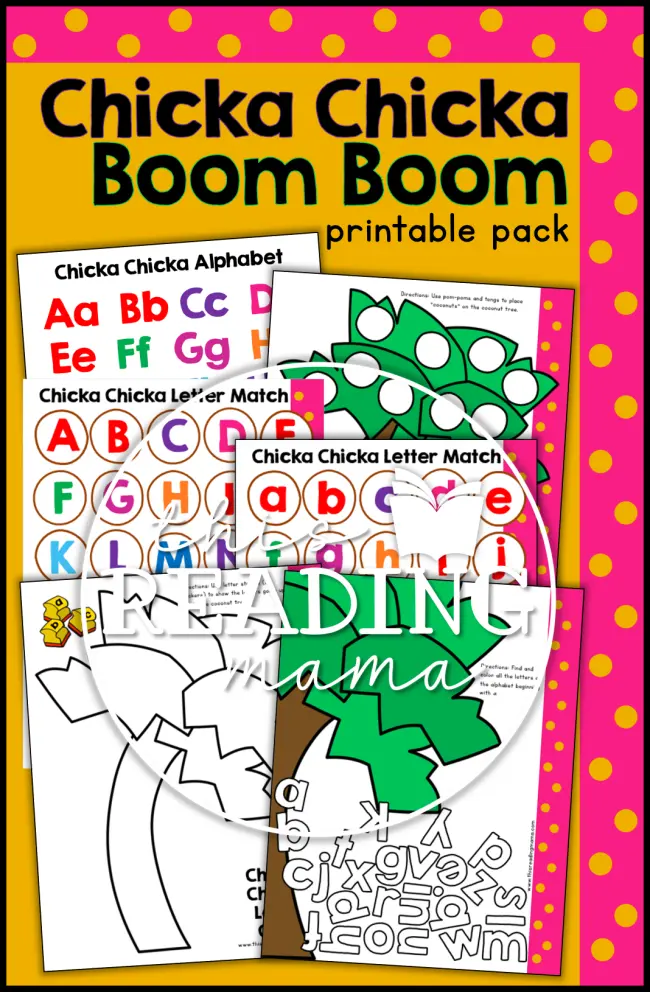
Recently, literacy specialist and educator Becky—widely recognized through her platform This Reading Mama—released a comprehensive, highly anticipated educational asset: the Chicka Chicka Boom Boom Printable Pack. Designed to accompany Bill Martin Jr. and John Archambault’s timeless, rhythm-driven children’s classic, Chicka Chicka Boom Boom, this free resource targets preschool and kindergarten-aged children. It focuses explicitly on two critical pillars of early learning: comprehensive letter recognition and the refinement of foundational fine motor skills.
This report provides an in-depth examination of the newly released printable pack, analyzing its pedagogical value, alignment with modern early childhood education standards, and its broader impact on homeschool co-op curricula and remote learning environments. Through an exploration of structural design, expert instructional strategies, and future outlooks for literacy tools, we unpack why this resource has rapidly become a staple for educators and parents navigating early alphabet mastery.
Detailed Chronology of the Resource Development
To understand the practical application and meticulous design of the Chicka Chicka Boom Boom Printable Pack, one must examine the timeline and real-world testing environment that shaped its creation.
The Classroom Catalyst: Returning to In-Person Instruction
The genesis of this printable pack is rooted in practical, hands-on teaching environments. Earlier this academic year, Becky returned to the physical classroom environment, taking on the role of a preschool literacy instructor at a local homeschool co-op. Re-entering the shared classroom space provided a renewed opportunity to observe how young learners interact with alphabet literature in real time.

During the opening weeks of the curriculum, the class centered their instruction around Chicka Chicka Boom Boom. Recognized globally as one of the definitive modern alphabet books, the text uses rhythmic cadence, vibrant illustrations, and personified lowercase letters climbing a coconut tree to capture young imaginations.
Observation and Iterative Design
As children engaged with the text—chanting "A told B, and B told C, I’ll meet you at the top of the coconut tree"—the instructor identified specific developmental gaps that standard reading alone could not bridge. While children could memorize the rhythmic cadence of the book, translating that auditory engagement into visual letter recognition and tactile fine motor control required targeted, supplementary materials.
- Phase 1: Conceptualization (Early Term): Identifying the need for targeted alphabet charts and tracing guides that mirror the playful aesthetic of the book without overwhelming young learners.
- Phase 2: Drafting and Pilot Testing (Mid-Term): Introducing prototype worksheets within the homeschool co-op classroom. Educators monitored student engagement, tracking which activities successfully sustained attention spans and which required structural modifications.
- Phase 3: Digital Optimization and Expansion: Refining the pilot sheets into a cohesive, downloadable packet. The creator also curated an extended blackline printable series, housed within a specialized digital repository known as The Library, to offer educators more comprehensive, ink-friendly options.
- Phase 4: Public Release: Making the core printable pack freely accessible to the global homeschooling and teaching community via online distribution channels.
Supporting Context & Educational Metrics
The release of the Chicka Chicka Boom Boom Printable Pack arrives at a critical juncture in early education research. Understanding the mechanics of the pack requires a brief look at the cognitive and motor milestones it targets.
The Science of Letter Recognition
Alphabet knowledge is widely considered the single best predictor of a child’s later reading success. According to developmental literacy research, children must master four distinct components of letter knowledge:
- Letter Name Identification: Knowing the name of the visual symbol.
- Letter Shape Recognition: Discriminating one letter’s visual features from another (e.g., distinguishing b from d or p).
- Letter Sound Correlation: Connecting the grapheme to its corresponding phoneme.
- Letter Formation: Physically writing or constructing the letter form.
The printable pack directly addresses the first, second, and fourth components through structured letter charts and matching activities. By engaging with letter identification grids, children transition from passive listeners to active visual processors.

Fine Motor Integration
Cognitive development in early childhood cannot be decoupled from physical development. Fine motor skills—specifically the control of small muscles in the hands, fingers, and wrists—are prerequisites for handwriting, cutting with scissors, and manipulating classroom tools.
The fine motor components embedded within the Chicka Chicka Boom Boom pack are meticulously calibrated for preschool physiology. Activities such as tracing coconut tree trunks, guiding lowercase letters along designated pathways, and engaging in cutting or pasting exercises reinforce the mind-muscle connection. When children strengthen their pincer grasp and bilateral coordination through themed worksheets, they simultaneously build the physical stamina required for sustained writing tasks later in their academic careers.
Pedagogical Framework and Structural Components
The printable pack is bifurcated into two primary functional categories, ensuring a holistic approach to early childhood development:
1. Letter Recognition and Alphabet Charts
The visual components of the pack serve as dynamic reference points for young learners. Unlike static flashcards, the included letter charts contextualize the alphabet within a cohesive thematic framework inspired by the coconut tree narrative.
- Visual Discrimination: Children learn to isolate individual letters from a crowded field, reducing confusion between similarly shaped graphemes.
- Sequential Ordering: Alphabet charts reinforce the linear sequence of the English writing system, helping children grasp the directional flow from left to right and top to bottom.
2. Fine Motor Skill Enhancement
The fine motor modules within the packet bridge the gap between cognitive understanding and physical execution.

- Pencil Control Drills: Simple, engaging lines and curves encourage correct pencil grip and fluid wrist movement.
- Tactile Engagement: Educators are encouraged to pair these printables with sensory elements—such as using playdough to form letters along mat outlines or placing manipulative counters on chart spaces—to maximize multi-sensory retention.
Accessibility and Resource Architecture
Understanding the diverse needs of modern educators—ranging from institutional preschool teachers to independent homeschool parents—the distribution model of the pack emphasizes accessibility.
- The Free Tier: The core pack is made freely available via direct digital download, removing economic barriers to quality educational resources.
- The Extended Library: For educators seeking blackline (ink-saving) variants and exhaustive supplementary units, access is routed through a dedicated membership architecture (The Library), ensuring scalable solutions for varying classroom sizes and budgets.
Official Perspectives and Expert Insights
The reception of literature-based printables within the modern educational ecosystem highlights a shift toward holistic, thematic instruction.
In discussions surrounding the implementation of the Chicka Chicka Boom Boom pack, educators emphasize the importance of blending narrative engagement with explicit skill instruction. Becky notes that while reading aloud remains the cornerstone of literacy exposure, children deeply benefit from tangible extensions of the stories they love.
"No matter what time of year it is, it is ALWAYS a good time to review all the letters of the alphabet," notes the instructional designer. By anchoring abstract symbols (letters) to a beloved, high-energy narrative, anxiety around learning is replaced by playful curiosity.
Educational theorists support this approach, pointing out that constructivist learning—where children build knowledge through active engagement with their environment—yields higher retention rates than rote memorization. When a child traces a letter while chanting a rhyming couplet about falling out of a coconut tree, multiple neural pathways are activated simultaneously, cementing the learning experience in long-term memory.

Future Outlook: The Evolution of Early Literacy Resources
As we look toward the future of preschool and early elementary education, the demand for adaptable, hybrid-friendly teaching tools will only accelerate. The success of targeted printables like the Chicka Chicka Boom Boom pack offers a clear roadmap for the trajectory of supplemental curriculum development.
1. Integration of Multi-Sensory and Digital-Physical Hybrids
While printable paper assets remain vital for fine motor development (as digital touchscreens do not adequately build intrinsic hand strength), future iterations of these packs are expected to incorporate augmented reality (AR) triggers. Imagine scanning a printed alphabet chart with a tablet to see animated lowercase letters climb an interactive, 3D coconut tree.
2. Expansion of Homeschool Co-Op Curricula
With homeschool enrollment and community co-op participation sustaining historic highs, creators of educational content are increasingly tailoring resources for group learning environments. Printable packs that can be easily scaled, printed in bulk, or adapted for center-based station rotations will become standard currency among parent-educators.
3. Sustainable and Inclusive Design
Future developments in early literacy printables will likely place a heavier emphasis on universal design principles—incorporating high-contrast visuals, dyslexia-friendly fonts, and culturally inclusive imagery to ensure that every child sees themselves represented in their foundational learning materials.
Conclusion
The Chicka Chicka Boom Boom Printable Pack is more than a collection of free worksheets; it is a meticulously crafted pedagogical tool that honors the developmental needs of young learners. By marrying the infectious joy of a classic children’s book with rigorous fine motor and letter recognition exercises, it empowers educators, parents, and co-op instructors to lay a rock-solid foundation for a lifetime of literacy. As the educational landscape continues to evolve, resources that prioritize tactile engagement, narrative immersion, and universal accessibility will undoubtedly remain at the vanguard of early childhood success.

