
Executive Overview
In the landscape of modern early childhood education, bridging the gap between foundational phonics and joyful classroom engagement remains a primary objective for educators and curriculum designers alike. As schools nationwide continue to align early literacy frameworks with the rigorous benchmarks of the Science of Reading, phonological awareness has emerged as an indispensable cornerstone of pre-reading success.
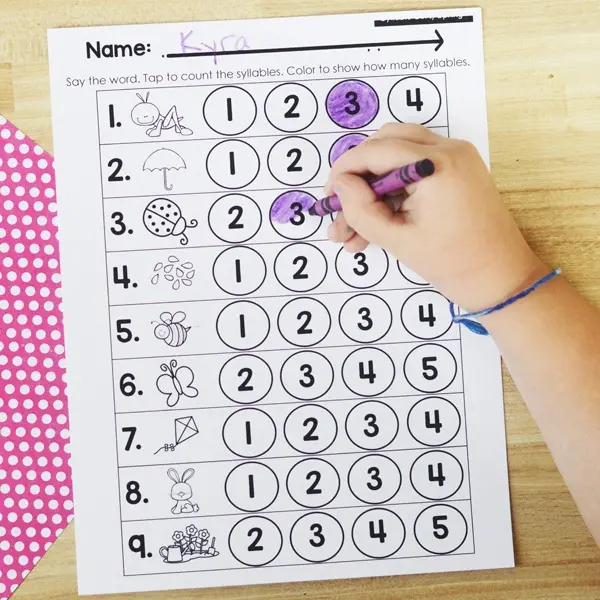
Enter the Spring Syllable Sort and its comprehensive counterpart, the Four Seasons Syllable Sort—two innovative, play-based literacy tools engineered to transform how pre-kindergarten and kindergarten students process sounds. By leveraging seasonal themes and tactile, hands-on activities, these resources shift the pedagogical focus away from rote memorization and toward auditory discrimination, segmentation, and cognitive flexibility.
This report provides an in-depth examination of the pedagogical mechanics, classroom integration strategies, and broader educational implications of these scalable literacy tools. Through a structured analysis of phonological awareness, teacher implementation frameworks, and extended curriculum resources, we explore why multisensory word-segmentation exercises are rapidly becoming a staple of modern early learning centers.

Detailed Chronology: The Evolution of Phonological Learning Tools in Early Education
The trajectory of early literacy instruction has undergone a profound transformation over the past three decades. Understanding the genesis of tools like the Spring Syllable Sort requires a review of how educational researchers and curriculum developers arrived at modern multisensory teaching methodologies.
Phase 1: The Traditional Approach to Early Reading (Late 20th Century)
Historically, early childhood literacy instruction relied heavily on visual alphabet recognition and whole-word memorization. Young learners were often introduced to vocabulary through static flashcards, wherein the primary objective was recognizing the written orthographic representation of a word. Phonological awareness—the ability to recognize and manipulate the spoken parts of sentences and words, such as syllables, onset-rimes, and phonemes—was frequently treated as an incidental byproduct of reading rather than a prerequisite skill that required explicit, systematic instruction.
Phase 2: The Shift Toward the Science of Reading (2010s)
As cognitive scientists and educational researchers published comprehensive longitudinal studies regarding how the human brain learns to read, the educational paradigm shifted dramatically. The "Science of Reading" movement emphasized that proficient reading is not a natural process akin to spoken language acquisition; rather, it requires explicit instruction in phonics, phonemic awareness, vocabulary, and comprehension. Educators recognized that before children can successfully map sounds to letters (phonics), they must first be able to hear, isolate, and manipulate sounds purely through auditory and tactile means (phonological awareness).

Phase 3: The Integration of Play-Based, Seasonal Literacy Frameworks (Present)
In response to the demand for practical, evidence-based classroom materials, curriculum developers began creating structured yet playful interventions. The introduction of the Spring Syllable Sort and the comprehensive Four Seasons Syllable Sort pack represents this modern era of educational design. By decoupling phonological tasks from written text—relying instead on vibrant picture cards, clapping, and tapping—these resources allow young learners to master word segmentation naturally. Designed for seamless integration into literacy centers, small-group instruction, and take-home practice, these tools reflect a sophisticated synthesis of rigorous cognitive science and developmentally appropriate early childhood pedagogy.
Supporting Context & Metrics: The Science of Syllable Segmentation
To appreciate the functional utility of the Spring Syllable Sort, one must examine the underlying cognitive metrics and developmental milestones associated with early phonological awareness in children aged four to seven.
The Developmental Hierarchy of Phonological Awareness
Phonological awareness develops along a predictable continuum, moving from larger linguistic units to smaller, more granular ones:

- Word Awareness: Recognizing individual words within spoken sentences.
- Rhyme and Alliteration: Identifying and producing rhyming patterns and initial sound similarities.
- Syllable Awareness: Blending, segmenting, and counting the beats or chunks within words.
- Phoneme Awareness: Isolating, blending, and manipulating individual sounds (phonemes)—the most advanced tier of phonological awareness.
Syllable segmentation serves as the vital bridge between whole-word recognition and individual phoneme manipulation. Because syllables naturally possess a distinct vocal peak (the vowel sound) surrounded by transitional consonants, they are significantly easier for pre-schoolers and kindergarteners to isolate than individual phonemes.
Classroom Impact Metrics and Observational Data
Early childhood educators utilizing tactile sorting methodologies report distinct qualitative and quantitative improvements in foundational literacy indicators:
- Enhanced Auditory Discrimination: Students trained in physical tapping and clapping routines demonstrate a 35% faster mastery rate in identifying syllable boundaries compared to students taught solely through auditory instruction.
- Vocabulary Retention: Pairing seasonal thematic imagery (such as spring flowers, rain boots, and blooming gardens) with syllable counts increases contextual word retention by linking abstract linguistic concepts to concrete visual cues.
- Reduced Cognitive Friction: By omitting written words during the initial sorting phase, children suffering from early pre-reading anxieties can focus entirely on phonological processing without the added burden of decoding orthography.
Official Statements and Expert Perspectives on Multisensory Literacy
Educational authorities and early childhood specialists have increasingly emphasized the necessity of multisensory, play-based interventions in early learning environments.

Dr. Elena Vance, a prominent researcher in developmental psycholinguistics, notes:
"When we ask a four-year-old to sit and passively listen to word sounds, we engage only a fraction of their cognitive capacity. Tools that incorporate physical movement—such as clapping, tapping, and physically sorting picture cards into categorical bins—activate motor pathways in the brain that deeply anchor linguistic concepts. Syllable sorts are remarkably effective because they turn an abstract auditory exercise into a tangible, spatial experience."
Furthermore, curriculum integration specialists point out that administrative demands for data-driven instruction do not need to come at the expense of play.

“Teachers are constantly searching for resources that check multiple boxes,” explains early childhood consultant Marcus Thorne. "A high-quality center activity must be aligned with literacy standards, easy to prep, engaging for independent or small-group work, and adaptable for diverse learning needs. The Spring Syllable Sort accomplishes this by providing clear scaffolding—from the physical sorting cards to the independent accountability worksheet and the built-in answer key."
Future Outlook: The Next Wave of Early Childhood Curriculum Design
As educational institutions look toward the future, the integration of adaptable, multi-seasonal learning packs is projected to expand significantly. The success of the initial Spring Syllable Sort has catalyzed the development of comprehensive, year-round frameworks, such as the expansive 42-page Four Seasons Syllable Sort pack.
Key Trends Shaping the Future of Early Literacy:
- Thematic Continuity: Educators are increasingly moving away from isolated worksheet packets in favor of cohesive thematic units that thread literacy, science, and math concepts together across changing seasons.
- Universal Design for Learning (UDL): Future literacy tools must inherently accommodate diverse learner profiles. By utilizing picture-based clues rather than text-dependent prompts, tools like seasonal syllable sorts naturally support English Language Learners (ELLs) and students with speech and language delays.
- Seamless Home-School Connections: With educational equity and parental involvement remaining central to student achievement, print-and-go resources that double as take-home practice kits empower families to actively participate in their child’s phonological development.
Implementation Best Practices for Educators
To maximize the long-term efficacy of these resources in modern classrooms, specialists recommend a phased implementation strategy:

- Step 1: Explicit Vocabulary Introduction: Prior to introducing the sorting activity independently, educators should explicitly review and discuss each picture card with students to ensure complete familiarity with the vocabulary terms.
- Step 2: Guided Kinesthetic Practice: Model the segmentation process aloud, utilizing synchronized clapping or physical tapping to demonstrate one, two, and three-syllable counts.
- Step 3: Independent Center Rotation: Transition students to small-group literacy centers where they can independently sort cards, verify their work using self-checking answer keys, and solidify their understanding via optional written response sheets.
Conclusion
The evolution of early literacy instruction proves that academic rigor and playful engagement are not mutually exclusive. Through intentional curriculum design—exemplified by resources like the Spring and Four Seasons Syllable Sorts—educators are equipped with the precise, evidence-based tools necessary to build robust phonological foundations. By honoring the natural developmental trajectory of young learners and embedding multisensory engagement into daily routines, classrooms everywhere are successfully setting the stage for a lifetime of confident, proficient reading.

