
Executive Overview
As the autumn leaves turn and the air grows crisp, classrooms, living rooms, and study groups undergo a seasonal transformation. October brings with it not only a cultural appetite for ghosts, ghouls, and things that go bump in the night, but also a unique pedagogical challenge: keeping students engaged during a period traditionally associated with distraction and sugar rushes. Enter the gamification of education, a methodology that leverages interactive platforms to turn passive listeners into active participants.
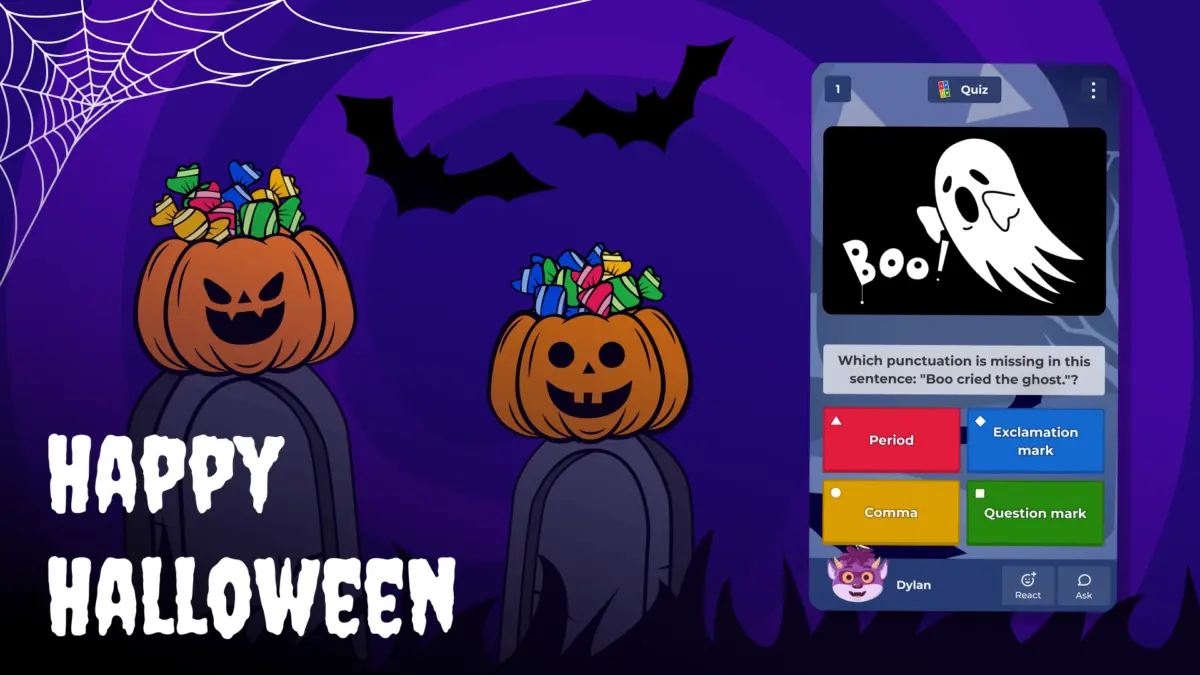
At the forefront of this movement is Kahoot!, the global game-based learning platform. This season, Kahoot! has rolled out an expansive, cross-curricular suite of Halloween-themed learning content. Designed for audiences ranging from kindergarteners mastering basic addition to university students preparing for midterms, the platform’s new offerings bridge the gap between entertainment and rigorous academic instruction.
By partnering with cultural powerhouses such as Disney, Marvel, Nickelodeon, TED-Ed, the Museum of Science, and the World Wildlife Fund (WWF), Kahoot! has weaponized pop culture and seasonal fascination in the service of literacy, STEM, and historical inquiry. This report investigates how these ready-made resources are reshaping study sessions, redefining classroom engagement, and providing parents and lifelong learners with innovative tools to make the spooky season "eerie-sistible."
Detailed Chronology: The Evolution of Seasonal Gamification in Digital Classrooms
To understand the significance of Kahoot!’s current Halloween rollout, it is helpful to trace how digital platforms have adapted to the academic calendar over the past decade.
-
Phase 1: The Era of Static Worksheets (Pre-2015)
Historically, holiday-themed education relied heavily on physical handouts—word searches containing spooky vocabulary, coloring pages of historical figures related to the Salem Witch Trials, or math worksheets featuring cartoon pumpkins. While festive, these resources suffered from low engagement metrics, offering little interactive feedback and failing to capture the collaborative energy of modern students. -
Phase 2: Early Digital Quizzing and Basic Gamification (2015–2019)
As schools adopted 1:1 device programs and cloud-based learning management systems, tools like Kahoot! emerged. Initial educational games were largely teacher-generated, requiring educators to manually input trivia questions about historical events or basic science concepts with a holiday overlay. While effective for immediate formative assessment, these user-generated games varied wildly in quality and pedagogical alignment. -
Phase 3: Institutional Partnerships and Curated Content Hubs (2020–2023)
Recognizing the demand for high-quality, pre-made digital assets, platforms began forging formal alliances with major content creators, media conglomerates, and educational institutions. TED-Ed, Disney, and scientific bodies began publishing verified educational modules directly onto digital platforms, ensuring that gamified quizzes met recognized curriculum standards. -
Phase 4: The Immersive, Multi-Media Seasonal Ecosystem (Present Day)
Today’s seasonal offerings represent a fully integrated multimedia approach. The current Kahoot! Halloween catalog does not merely attach a holiday skin to a math problem; it embeds core competencies within cinematic universes, scientific investigations, and linguistic explorations. From Star Wars-themed galactic trivia to deep dives into the lunar phases supported by SciShow Kids, contemporary gamification treats seasonal content as a vital engine for sustained academic momentum right before the high-stakes exam season.
Supporting Context & Metrics: The Science of Play-Based Learning
Educational researchers have long debated the efficacy of gamification in academic environments. Critics historically warned that competitive quizzes might induce anxiety or prioritize speed over deep comprehension. However, contemporary data paints a different picture, particularly when game mechanics are paired with familiar narrative frameworks.
The Neuroscience of Engagement
When students interact with gamified learning environments, several neurochemical processes occur that favor memory retention:
- Dopamine Release: Immediate feedback—seeing a score update or watching an avatar react to a correct answer—triggers dopamine pathways associated with reward and motivation.
- Reduced Cognitive Load through Familiarity: By framing abstract mathematical concepts within the context of beloved characters (such as Marvel’s Groot or Sanrio’s Hello Kitty), cognitive load is effectively managed. The brain uses existing emotional attachments to lower resistance to difficult subjects like subtraction or vocabulary acquisition.
- Social-Emotional Learning (SEL): Collaborative quiz formats encourage peer interaction, teaching students how to navigate both victory and collaborative problem-solving, a principle heavily emphasized in seasonal modules like the Peanuts-inspired "It’s the Great Pumpkin, Charlie Brown" collection.
Breakdown of Current Content Offerings
To accommodate its diverse user base, the platform’s seasonal catalog is systematically divided into four core pillars, each targeted at specific developmental milestones and learning environments:
1. For Teachers: K-12 Cross-Curricular Adventures
Teachers operating in traditional classrooms face the dual challenge of adhering to strict curriculum standards while managing student energy levels during high-excitement holidays. The current catalog addresses this by integrating history, science, and math into thematic frameworks:

- TED-Ed Collaboration: Allows students to investigate the historical and literary roots of the season, exploring everything from the factual history behind Bram Stoker’s Dracula to the socio-political dynamics of the Salem Witch Trials.
- Nickelodeon & Disney Channels: Brings iconic figures like SpongeBob SquarePants and Disney characters into language arts and science modules, proving that foundational skills can be practiced without sacrificing entertainment value.
2. For Parents: Early Childhood and Foundational Skills at Home
Parents seeking to maintain learning continuity outside of school hours often struggle to find tools that are both educational and self-directed.
- Hello Kitty and Friends: Focuses on cognitive development and foundational mathematics, guiding young learners through haunted house decoration puzzles and basic arithmetic.
- Marvel Midnight Monster Math: Employs Groot and his cosmic companions to turn counting, addition, and subtraction into an accessible home activity.
- Peanuts Emotional Literacy: Focuses on the psychological and emotional dimensions of the holiday, teaching children about resilience, imagination, and coping with disappointment through Charlie Brown’s perennial search for the Great Pumpkin.
3. For Students: Midterm Preparation and STEM Reinforcement
Autumn marks the approach of the mid-fall exam season—a critical juncture where student burnout can begin to manifest.
- Museum of Science & SciShow Kids: Offers interactive modules like "Why Does the Moon Change?", aligning directly with Earth and Space Science standards (1-ESS1-1) by breaking down lunar phases and orbital mechanics.
- WWF Wild Classroom: Challenges the trope of the "scary animal" by educating students on the vital ecological roles played by creatures traditionally associated with horror, such as bats, spiders, and owls.
- Wiktionary Advanced Vocabulary: Provides high-school and university-level students with rigorous linguistic challenges, exploring obscure, evocative, and archaic English words suitable for the literary ambiance of October.
4. For Lifelong Learners: Adult Trivia and Social Gatherings
Education does not stop at graduation. The platform has increasingly catered to adult users, corporate teams, and social groups looking for intellectually stimulating party activities.
- Wikipedia Historical & Cultural Traditions: Challenges participants on the deep anthropological origins of Samhain, the evolution of trick-or-treating, and global variations of harvest festivals.
- Star Wars "Ghoul-actic" Trivia: Blends pop-culture mastery with seasonal humor, testing participants’ knowledge of the Jedi Order under a festive, tongue-in-cheek lens.
Official Statements and Pedagogical Perspective
Industry leaders and educational experts emphasize that the success of seasonal gamification lies in its ability to transform passive consumption into active creation and participation.
"With the season’s mood of mystery, Halloween provides an organic opening to ignite students’ natural curiosity," notes a spokesperson for digital learning initiatives at Kahoot!. "When we combine trusted educational partners like the Museum of Science, TED-Ed, and the WWF with familiar characters from Marvel, Disney, and Peanuts, we remove the intimidation factor from difficult subjects. Learning becomes a treat rather than a chore."
Educational psychologists point out that seasonal learning interventions serve as mental checkpoints. By altering the routine of the standard school day or study session, these modules help prevent cognitive fatigue.
Furthermore, the integration of verified creators ensures that teachers and parents are not relying on unvetted internet trivia, but rather on curriculum-aligned content designed by institutions with decades of public education experience.
Future Outlook: The Trajectory of Gamified and Seasonal Education
As educational technology continues to evolve, the boundaries between entertainment, gaming, and formal instruction are becoming increasingly porous. Several trends are poised to shape the future of seasonal learning platforms:
1. Hyper-Personalization and Adaptive Difficulty
Future iterations of holiday-themed educational modules will likely incorporate machine learning algorithms that adjust question complexity in real-time. If a student struggles with subtraction during a Marvel-themed math game, the system will dynamically adapt, offering scaffolding support before ramping the difficulty back up.
2. Expanded Augmented Reality (AR) Integration
As hardware becomes more accessible in classrooms and homes, the next frontier for platforms like Kahoot! involves spatial computing. Imagine a classroom where a digital jack-o-lantern or a lunar phase model rendered in AR appears on every student’s desk, turning a standard multiple-choice quiz into an immersive spatial scavenger hunt.
3. Cross-Platform Continuity
The modern learner transitions fluidly between school-issued Chromebooks, home tablets, and mobile devices. Ensuring that study momentum generated during a classroom gamified session can be seamlessly continued at home—without loss of progress or engagement metrics—will remain a primary focus for digital education architects.
Conclusion
The convergence of gamification, pop culture partnerships, and seasonal themes offers a compelling blueprint for modern education. By turning the spooky season into an opportunity for scientific inquiry, mathematical practice, and historical exploration, platforms like Kahoot! demonstrate that academic rigor and playful engagement are not mutually exclusive. Whether utilized by a burnt-out high schooler preparing for STEM exams, a parent looking for constructive screen time, or an educator fighting October classroom fatigue, these digital resources prove that learning can, indeed, be both terrifyingly fun and profoundly effective.

