
Executive Overview
The landscape of holiday shopping has undergone a profound transformation. As retailers pivot toward early-season promotions, Black Friday is no longer confined to the frantic, post-Thanksgiving rush of brick-and-mortar storefronts. Instead, the holiday shopping window has expanded significantly, with major e-commerce platforms and toy manufacturers launching deep discounts on Science, Technology, Engineering, and Math (STEM) educational toys and learning kits as early as mid-November.
This strategic shift is largely driven by evolving consumer habits and supply chain considerations, with retailers placing a heavy emphasis on online-only purchases. For parents, educators, and gift-givers, this prolonged promotional window presents a unique opportunity. Rather than scrambling for limited inventory on a single day, shoppers can carefully curate educational gifts that foster critical thinking, problem-solving, and foundational coding skills.
This comprehensive guide examines the best STEM toy and learning kit deals available this season, highlighting top-tier products ranging from DIY coding robots and hands-on chemistry labs to advanced logic games and modular marble runs. By combining play with fundamental academic principles, these toys offer long-term developmental value that extends far beyond the holiday season.
Detailed Chronology: The Evolution of the Extended Holiday Shopping Season
To understand the current retail environment, one must look at how Black Friday and Cyber Monday have evolved over the past decade. The timeline of holiday shopping has systematically shifted from a single-day event into a multi-week retail phenomenon.
Phase One: The Traditional Post-Thanksgiving Rush (Historical Context)
Historically, Black Friday marked the official kickoff of the holiday shopping season, occurring the day immediately following Thanksgiving. Consumers would camp outside physical storefronts in anticipation of doorbuster deals, creating immense pressure on retail staff and logistics networks. Educational toys, while popular, were often subjected to sudden stockouts, leaving parents with limited options.
Phase Two: The Rise of Cyber Monday and E-Commerce Integration
As online retail matured in the 2010s, Cyber Monday emerged as a digital counterpart to Black Friday, capturing the overflow of consumer demand. Retailers quickly realized that the digital landscape allowed for greater inventory visibility and more flexible pricing structures. This era laid the groundwork for discounting high-ticket items, such as robotics kits and advanced science sets, earlier in the season.
Phase Three: The Shift to Mid-November Digital-First Retail (Current Paradigm)
Today, the shopping timeline has shifted significantly forward. Recognizing the logistical challenges of in-store crowding and the soaring consumer preference for online shopping, major retailers now initiate deep discounts by mid-November. This deliberate pacing allows manufacturers of popular STEM brands—such as Sphero, Makeblock, and LEGO—to sustain promotional momentum across both Black Friday and Cyber Monday. Consequently, shoppers are empowered to make informed, stress-free purchasing decisions well ahead of the December holidays.
Supporting Context & Metrics: The Cognitive and Economic Value of STEM Toys
Investing in STEM toys is more than a seasonal trend; it is an investment in a child’s cognitive development. Educational psychologists and childhood development experts consistently emphasize that tactile, hands-on learning accelerates the acquisition of complex scientific and mathematical concepts.
Economic and Market Dynamics
The global educational toy market has experienced exponential growth, fueled by an increasing parental focus on early-career preparedness. Toys that bridge the gap between entertainment and education—often referred to as "edutainment"—command significant market share during the fourth-quarter shopping period. Retail analytics indicate that discounts on these items during Black Friday routinely range from 15% to 40%, making high-end robotics and laboratory kits far more accessible to the average household.
Developmental Benefits Across Age Groups
- Early Childhood (Ages 3–6): Tactile building sets and screen-free coding toys (such as Botley or chunky construction kits) help develop fine motor skills, spatial awareness, and basic sequential logic.
- Middle Childhood (Ages 7–10): Intermediate robotics, circuit-building kits, and chemistry sets introduce foundational programming logic, electrical circuitry, and the scientific method in a controlled, engaging environment.
- Early Adolescence (Ages 11+): Advanced mechanical engineering kits, complex logic mazes, and sophisticated coding platforms challenge older children to troubleshoot, iterate, and refine their problem-solving strategies.
Top 15 STEM Toys and Learning Kits to Watch This Season
Navigating the vast array of educational toys can be daunting. Below is an authoritative breakdown of the top-performing STEM toys, robotics kits, and science sets featured in this season’s promotional lineups.
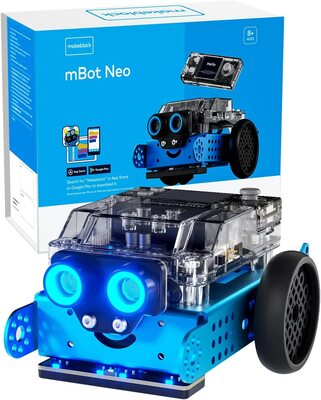
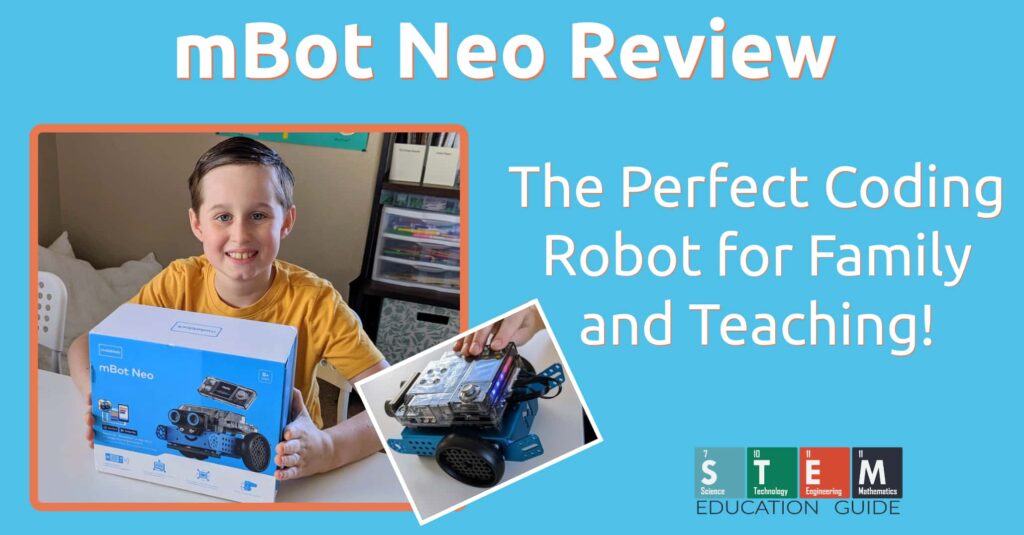
1. mBot Neo (Makeblock)
The mBot Neo stands out as a premier DIY coding robot designed to introduce children to the fundamentals of robotics and programming. Built from robust aluminum and thick plastics, this kit requires young learners to assemble the physical hardware before using a companion app to program its movements, lights, and sounds.
- Key Features: App-based coding, pre-programmed controller activities, durable construction.
- Educational Value: Excellent bridge between physical mechanical assembly and digital software logic.
2. Sphero BOLT
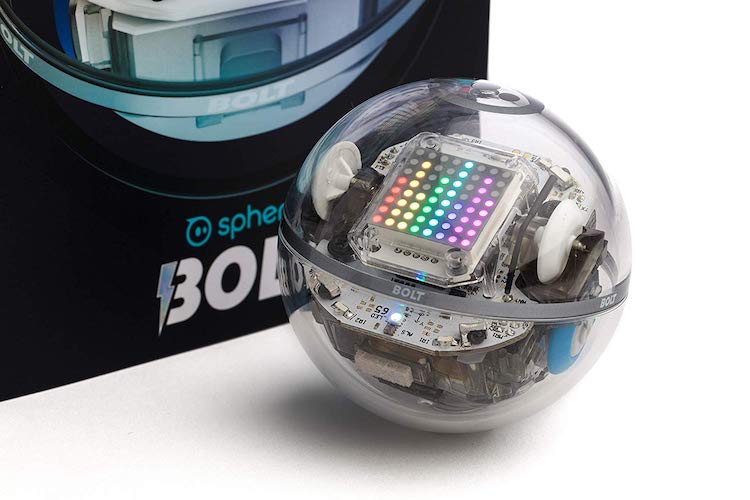
The Sphero BOLT is a shock-proof, waterproof, and highly durable programmable robotic ball. Designed to withstand rigorous play, it empowers users to write custom code that dictates the robot’s trajectory, matrix LED display, and sensor interactions.
- Key Features: Programmable LED matrix, advanced sensors, robust waterproof housing.
- Educational Value: Fosters advanced coding capabilities and algorithmic thinking across multiple age groups.
3. Wonder Workshop Dash (STEAM Creativity Bundle)
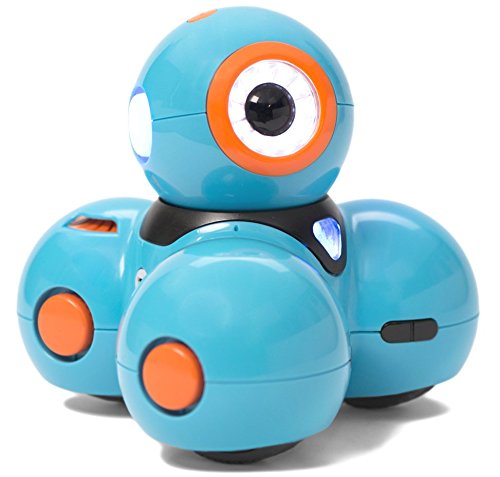
Targeted at children ages 6 and older, Dash is an agile, responsive robot equipped with a built-in microphone for interactive audio playback and voice commands. The accompanying STEAM Creativity Bundle expands the play experience with structured flashcards and challenges.
- Key Features: Voice recognition, multi-bot interactivity, progressive in-app challenges.
- Educational Value: Encourages collaborative play and sequential problem-solving without requiring prior coding experience from parents.
4. Makey Makey
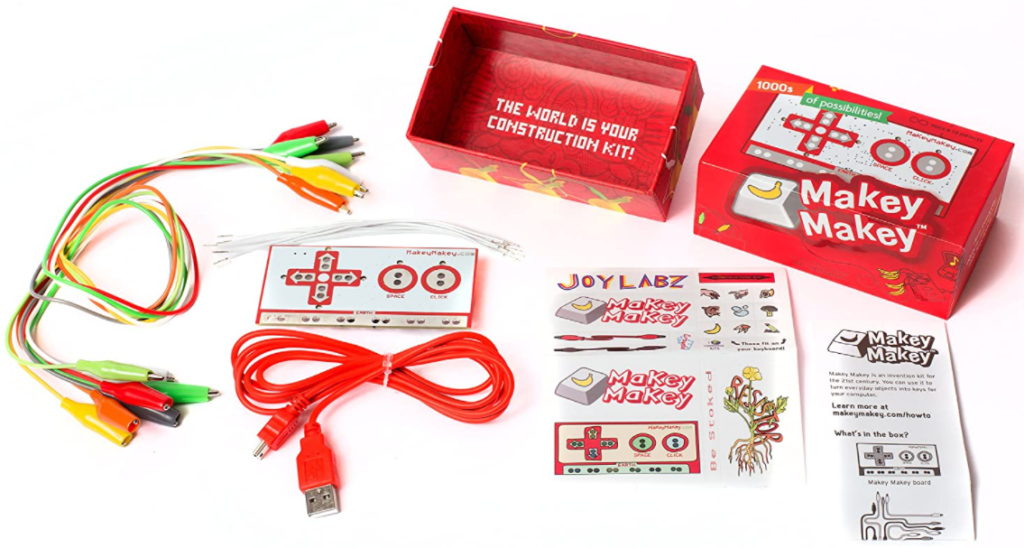
For a truly unique, hands-on technology experience, Makey Makey transforms everyday objects—such as bananas, Play-Doh, or aluminum foil—into computer keys and touchpads.
- Key Features: Simple board setup, alligator clips, USB connectivity.
- Educational Value: Demonstrates electrical conductivity and circuit completion while sparking creative invention.
5. Kaboom Explosive Science Lab Kit (Playz)
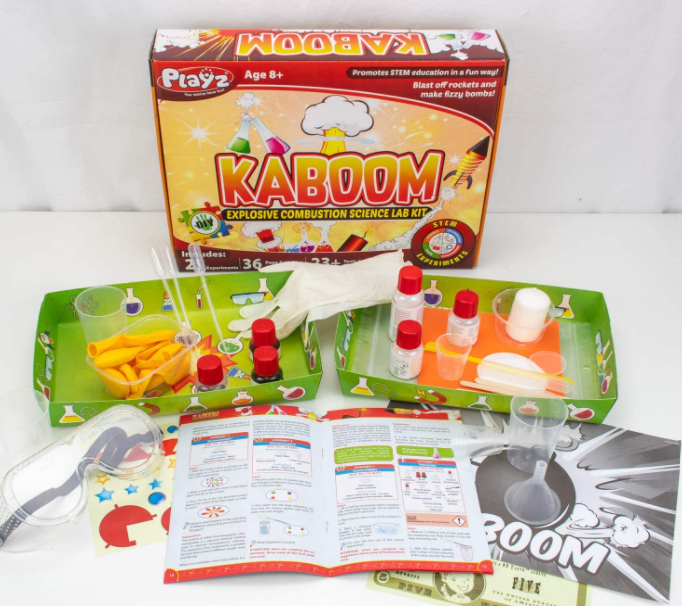
Science comes alive with the Kaboom Explosive Science Lab Kit, which offers over 25 distinct experiments focused on chemical reactions, combustion, and physics.
- Key Features: Rocket launches, fireproof balloon experiments, comprehensive educational guide.
- Educational Value: Translates abstract chemical principles into safe, high-energy demonstrations while explaining the underlying "why" behind each reaction.
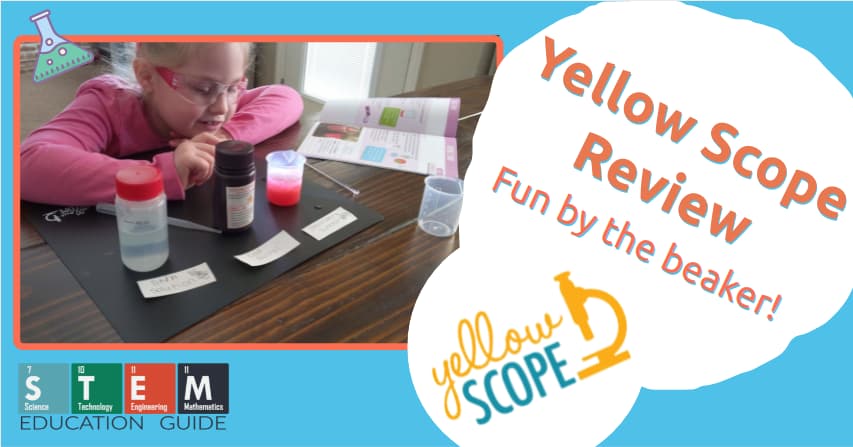
6. YELLOW SCOPE Foundation Chemistry Kit (Beakers & Bubbles)
Designed specifically to encourage girls in STEM fields, the YELLOW SCOPE Foundation Chemistry Kit explores the fascinating intersection of chemistry and everyday consumer products, such as cosmetics and body care.
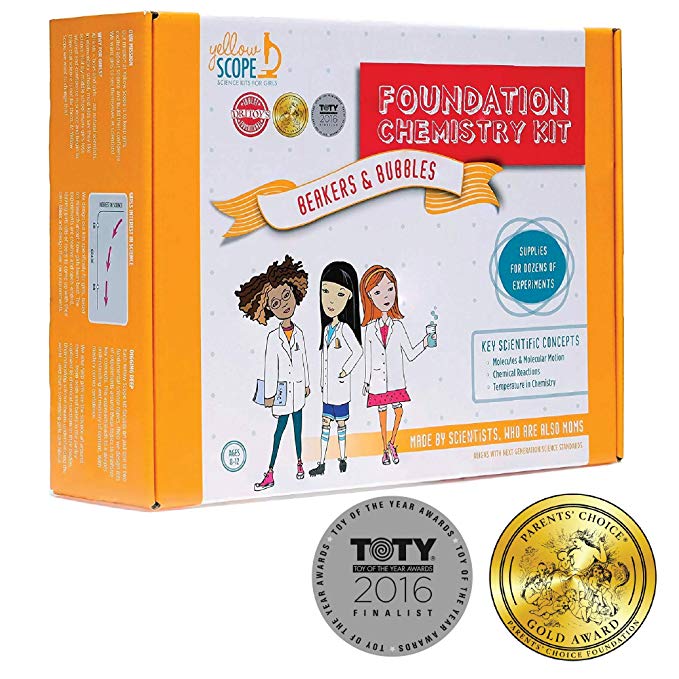
- Key Features: Professional-grade beakers, high-quality reagents, rigorous scientific curriculum.
- Educational Value: Highlights non-traditional career paths in science while promoting gender equity in STEM education.
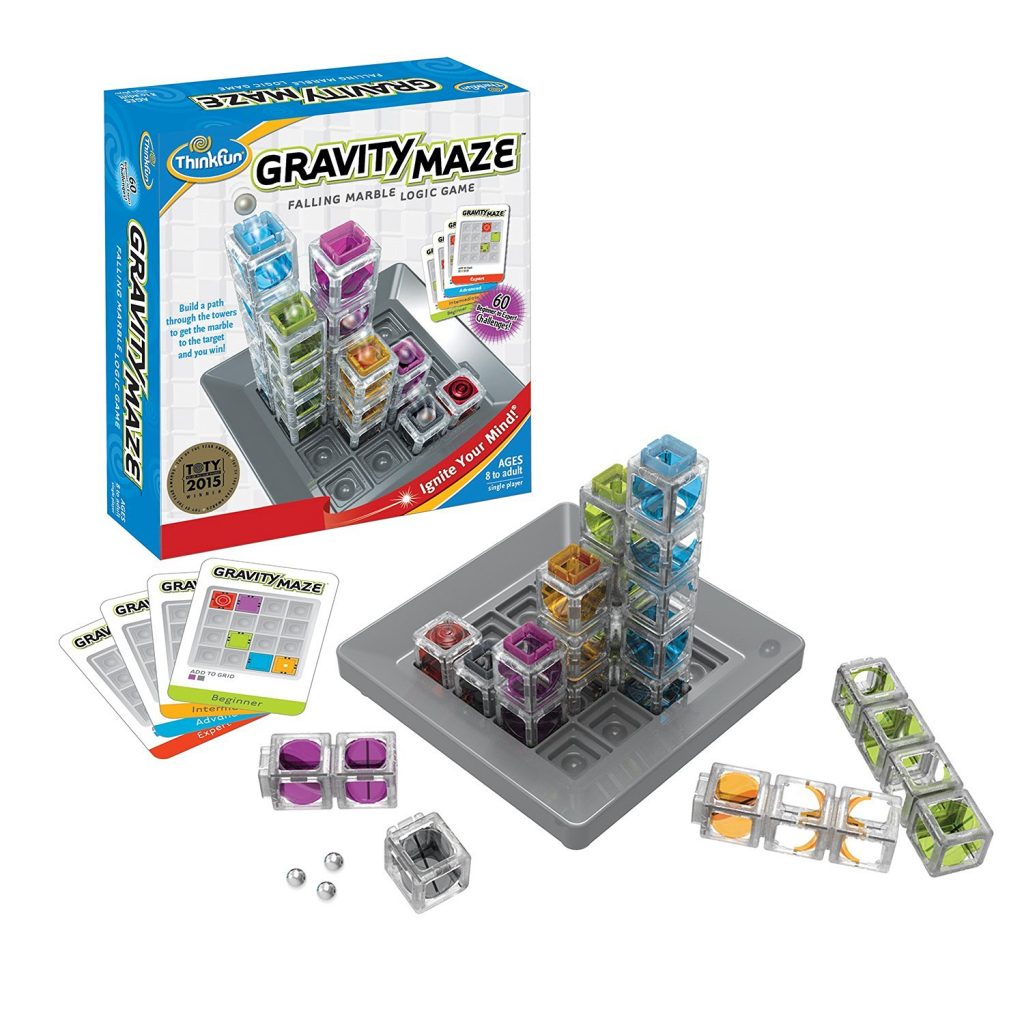
7. ThinkFun Gravity Maze Marble Run
Combining a traditional marble run with a logic puzzle, ThinkFun Gravity Maze challenges players to arrange towers to guide a marble from start to finish using gravity and spatial reasoning.
- Key Features: 60 beginner-to-expert challenge cards, modular towers, stainless steel marbles.
- Educational Value: Sharpens deductive reasoning, spatial perception, and engineering design skills.
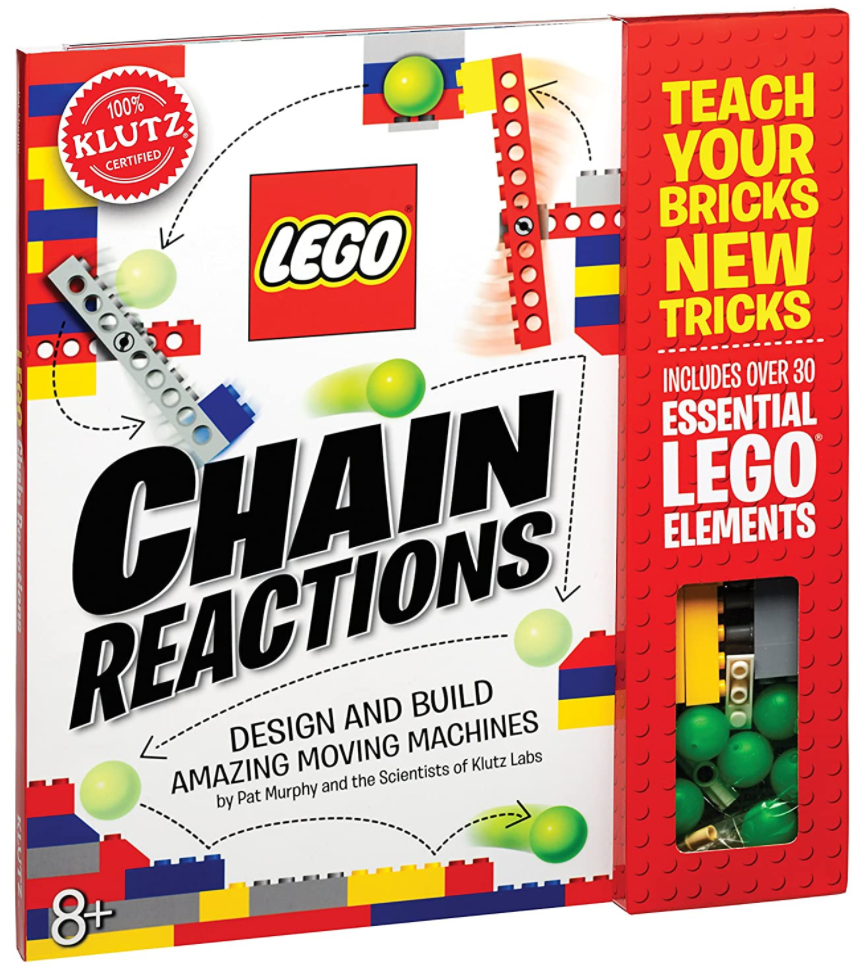
8. LEGO Chain Reactions
Published by Klutz, LEGO Chain Reactions teaches children the basics of physics and mechanical engineering through the creation of moving contraptions and Rube Goldberg-style machines.
- Key Features: Specialized LEGO components, instructional guidebook, interconnected mechanical modules.
- Educational Value: Demonstrates cause-and-effect relationships and introduces structural engineering concepts.
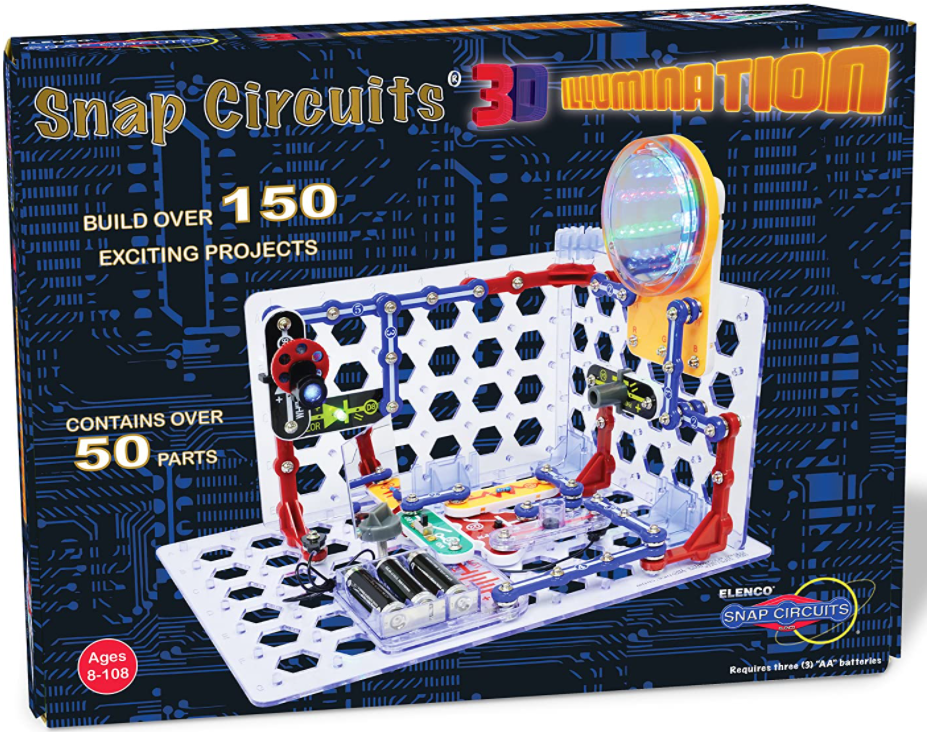
9. Snap Circuits 3D Illumination Electronics Exploration Kit
Snap Circuits remain a gold standard for teaching electrical engineering. The 3D Illumination kit allows children to build vertical, multi-layered electronic circuits that illuminate and interact with their environment.
- Key Features: Snap-together modular components, color-changing lights, clear pictorial manuals.
- Educational Value: Teaches current flow, voltage, resistance, and basic circuit design safely and intuitively.
10. Elenco Teach Tech HydroBot Hydraulic Arm Kit
Introducing children to the power of fluid dynamics, the Elenco HydroBot Arm allows young engineers to build a fully functional robotic arm powered entirely by water-filled hydraulic plungers.
- Key Features: 270-degree rotation, multi-axis grip control, zero-battery hydraulic operation.
- Educational Value: Provides a tangible demonstration of Pascal’s Law and mechanical advantage.
11. Botley The Coding Robot Activity Set (Learning Resources)
For parents seeking a screen-free coding option for younger children, Botley offers a robust remote-programmer interface that teaches coding logic through hands-on obstacle courses and challenges.
- Key Features: 100% screen-free operation, object detection, looping commands.
- Educational Value: Introduces computational thinking and directional logic to early learners without digital device fatigue.
12. Elenco Teach Tech Mech-5 Robot Kit
The Mech-5 is a programmable mechanical robot that can be configured to kick, throw, draw, and lift objects. Its unique coding wheel allows children to program physical actions mechanically.
- Key Features: Coding wheel interface, multi-functional tool attachments, modular assembly.
- Educational Value: Blends mechanical engineering with fundamental programming logic in a battery-free package.
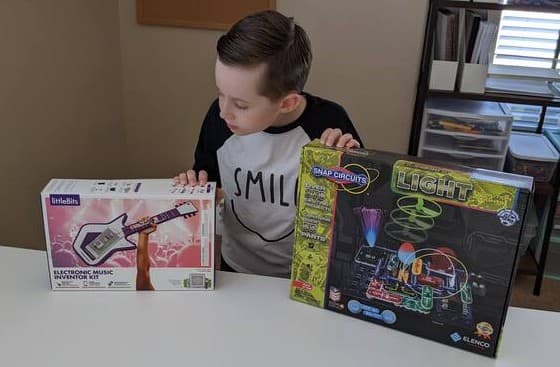
13. littleBits Electronic Music Inventor Kit
Merging technology with the arts, the littleBits Electronic Music Kit enables children to build and customize their own electronic guitars and sound devices using modular circuit blocks and a companion app.
- Key Features: Magnetic snap-together bits, custom instrument chassis, app integration.
- Educational Value: Exemplifies the transition from STEM to STEAM (Science, Technology, Engineering, Arts, and Mathematics) by integrating musical creativity with electronics.
14. Kid K’NEX (Build-A-Bunch Set)
Designed for toddlers and younger children, Kid K’NEX features soft, chunky, colorful plastic pieces that snap and connect safely to form animals, vehicles, and abstract structures.
- Key Features: Oversized safety pieces, flexible connection points, varied project templates.
- Educational Value: Develops fine motor skills, early spatial awareness, and foundational design thinking.
15. Ravensburger GraviTrax XXL Marble Run
The GraviTrax XXL system utilizes a unique hexagonal grid layout and modular tracks to explore gravity, magnetism, and kinetic energy without any electronic components.
- Key Features: Expansion-friendly modular design, magnetic cannon accessories, extensive track pieces.
- Educational Value: Promotes trial-and-error experimentation, structural stability planning, and physics comprehension.
Future Outlook: What Lies Ahead for Educational Retail
As the retail sector continues to adapt to consumer demands, the trajectory of holiday shopping for educational toys points toward increased personalization, augmented reality (AR) integration, and sustainable manufacturing practices.
Industry analysts project that future STEM toy releases will increasingly incorporate cross-platform learning, blending physical building blocks with immersive digital environments. Furthermore, manufacturers are facing heightened consumer demand for eco-friendly materials and durable construction that minimizes environmental impact while maximizing product lifespan.
For shoppers, the shift toward early-season promotions is here to stay. By taking advantage of mid-November price drops and leveraging online resources to compare product capabilities, consumers can secure high-quality educational tools that inspire the next generation of scientists, engineers, and innovators.

