
Executive Overview
In the landscape of early childhood education, mastering phonological awareness remains a foundational milestone for young learners. Recognizing sounds, isolating word parts, and understanding syllable structures are essential precursor skills that directly correlate with future reading success, aligning closely with modern Science of Reading frameworks. To bridge the gap between abstract phonological concepts and engaging classroom practice, educators increasingly rely on interactive, multisensory tools.
Among the latest pedagogical innovations is the Spring Syllable Sort and its comprehensive counterpart, the Four Seasons Syllable Sort. Developed to support Pre-K and Kindergarten literacy initiatives, these structured classroom tools transform traditional phonetic drills into dynamic, tactile learning experiences. By utilizing rhythmic movement—such as clapping and tapping—alongside vibrant picture cards, young students learn to segment words and sort them by syllable counts without the premature pressure of decoding written text.
This report provides an in-depth examination of the pedagogical value behind seasonal syllable sorting activities, exploring their structural components, classroom integration strategies, developmental benefits, and broader implications for early childhood literacy curricula.

Detailed Chronology and Evolution of Phonological Awareness Tools
The journey toward modern, scientifically aligned reading instruction has evolved significantly over the past few decades. Historically, early reading programs leaned heavily on whole-word memorization or unstructured phonetic exposure. However, extensive educational research consistently highlights phonological awareness—specifically the ability to recognize and manipulate spoken parts of sentences and words, such as syllables, onsets, and rimes—as the true bedrock of literacy development.
The Shift Toward Multisensory Segmenting
In early developmental psychology and educational theory, researchers recognized that young children process auditory and visual stimuli more effectively when engaged in multisensory learning.
- Phase 1: Auditory Recognition (Ages 3–4): Children learn to listen for distinct sounds in their environment and simple spoken words. Traditional methods relied solely on verbal call-and-response exercises.
- Phase 2: Kinesthetic Integration (Ages 4–5): Educators introduced physical movements—such as clapping, tapping fingers, or stomping feet—to help children physically feel the breaks within words. This gave rise to word segmentation techniques.
- Phase 3: Visual Sorting and Categorization (Ages 5–6): Modern pedagogical tools bridge the gap between kinesthetic movement and analytical categorization. Activities like the Spring Syllable Sort emerged to provide structured visual representations (picture cards) that students actively group by syllable count.
The Integration of Seasonal Themes
To maintain high engagement levels among Pre-K and kindergarten students, curriculum developers increasingly anchor literacy skills to thematic units. The transition from generic word lists to seasonal vocabulary—spanning spring blooms, summer sun, autumn leaves, and winter snow—ensures that children are simultaneously expanding their oral vocabulary while practicing phonological segmentation. The introduction of resources like the Four Seasons Syllable Sort represents a systematic evolution, offering year-round continuity for early childhood educators seeking cohesive literacy center materials.

Supporting Context, Methodology, and Metrics
Understanding why syllable sorting works requires a closer look at the cognitive processes involved in early childhood language acquisition. The Science of Reading emphasizes explicit, systematic instruction in foundational skills. Syllable awareness sits comfortably within this domain, serving as a stepping stone toward advanced phonics and decoding.
The Mechanics of Syllable Sorting
The core methodology of the Spring and Four Seasons syllable activities relies on a three-step cognitive loop:
- Vocabulary Introduction: Before any sorting occurs, educators introduce the target vocabulary using picture cards. This guarantees that children recognize the object or concept depicted, removing vocabulary deficits as a barrier to phonological processing.
- Kinesthetic Segmenting: Students say the word aloud, utilizing physical cues (clapping or tapping) for each distinct sound segment or syllable heard.
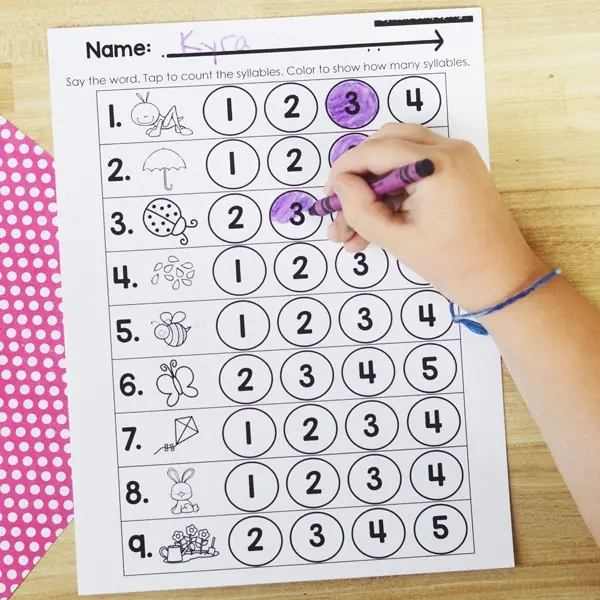
- Categorization and Verification: Learners place the picture card into designated numerical groups (e.g., 1-syllable, 2-syllable, or 3-syllable columns/bins). Optional worksheets and answer keys allow for independent verification and formative assessment.
Measurable Educational Impact
Classrooms implementing structured phonological sorting activities typically report notable improvements across several core developmental metrics:

- Phonological Working Memory: Children become more adept at holding auditory information in their minds while analyzing its components.
- Expressive Vocabulary Growth: Exposure to themed seasonal sets (ranging from "bee" and "flower" to "umbrella" and "caterpillar") expands everyday lexicon.
- Independent Task Persistence: Because the materials utilize colorful, intuitive designs and picture-based clues, young learners demonstrate higher engagement and longer periods of focused, independent center work.
Pedagogical Frameworks and Official Educational Guidelines
Modern early childhood frameworks emphasize that literacy instruction should be both rigorous and developmentally appropriate. The integration of play-based, hands-on sorting tasks aligns seamlessly with established educational standards across North America and international early learning guidelines.
Alignment with the Science of Reading
The Science of Reading advocates for explicit instruction in phonics, phonemic awareness, vocabulary, fluency, and comprehension. While phonemic awareness deals with individual phonemes (the smallest units of sound), phonological awareness encompasses larger chunks of language, including words, onset-rimes, and syllables.
By engaging students in syllable sorting prior to heavy reliance on orthographic text, educators build essential auditory processing pathways. As early learning specialists note:

"When children can successfully hear, isolate, and count the syllables within familiar spoken words, they build the cognitive scaffolding required to decode complex, multisyllabic words later in their academic careers."
Flexibility Across Learning Environments
Printable literacy resources, such as the Spring Syllable Sort kit and the comprehensive 42-page Four Seasons pack, are designed for versatile implementation. Educational frameworks support their use across multiple instructional formats:
- Literacy Centers: Small-group stations where children collaborate, check each other’s work, and practice peer-to-peer teaching.
- Take-Home Literacy Practice: Bridging the gap between the classroom and the home environment, enabling parents to support foundational reading skills using simple household items and printable cards.
- Intervention Groups: Providing targeted, multisensory support for students who require additional reinforcement in phonological segmentation.
Future Outlook and Best Practices for Educators
As early childhood education continues to embrace evidence-based practices, the demand for adaptable, high-engagement literacy tools will only accelerate. Integrating seasonal themes into foundational skills instruction represents a sustainable model that keeps classrooms dynamic throughout the academic year.

Recommended Implementation Strategies for Teachers
To maximize the efficacy of tools like the Spring and Four Seasons Syllable Sorts, educators should consider the following best practices:
- Explicit Modeling: Always demonstrate the clapping/tapping technique aloud before releasing students to independent centers. Model how a two-syllable word (rain-bow) differs from a one-syllable word (sun).
- Scaffolded Vocabulary Instruction: Never assume students recognize every picture. Spend a few minutes during morning meeting previewing the vocabulary cards to ensure equity among English Language Learners (ELL) and children from diverse linguistic backgrounds.
- Transition to Independent Worksheets: Use the included black-and-white response sheets as a low-stakes formative assessment tool. This helps educators track individual student progress in segmenting without introducing test anxiety.
- Year-Round Continuity: Expand upon spring activities by cycling through the full calendar year with seasonal sorting packs, reinforcing core concepts while maintaining high student interest through changing imagery.
Conclusion
Foundational literacy is built upon small, intentional steps that transform auditory speech into structured mental frameworks. Resources like the Spring Syllable Sort and the Four Seasons Syllable Sort provide teachers with the practical, research-aligned instruments needed to make these crucial steps engaging and accessible. By blending kinesthetic movement, visual picture clues, and thematic vocabulary, early childhood educators can foster a lifelong love for language while securing the essential building blocks of reading success.

