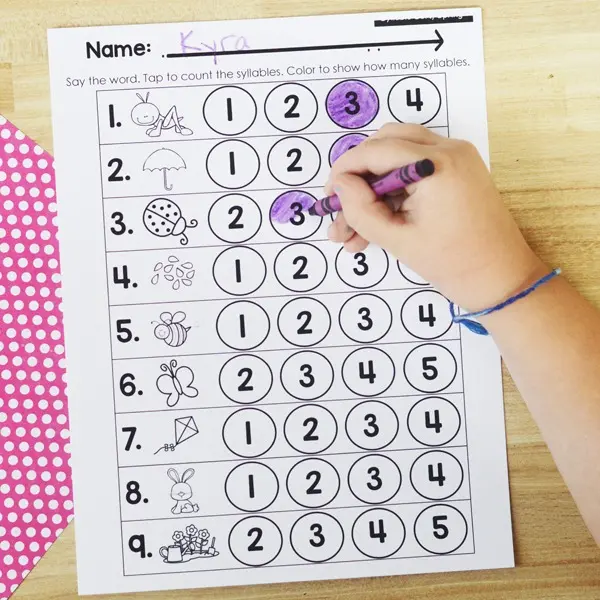
As early childhood educators continually seek dynamic, research-backed methodologies to foster foundational reading skills, phonological awareness remains a cornerstone of early education. In response to the growing emphasis on the Science of Reading, innovative pedagogical tools are emerging to bridge the gap between abstract phonics concepts and engaging classroom practice. Among the latest developments is a comprehensive suite of seasonal literacy resources, headlined by the Spring Syllable Sort and expanded into a comprehensive Four Seasons Syllable Sort collection.
Designed specifically for preschool, pre-kindergarten, and kindergarten students, these printable literacy activities transform the often challenging task of word segmenting into an interactive, multi-sensory game. By combining auditory exercises—such as clapping and tapping—with vibrant picture clues and structured sorting mechanisms, educators can effectively cultivate critical auditory discrimination skills. This report provides an authoritative overview of these literacy tools, detailing their structural methodology, alignment with modern educational standards, and broader implications for early childhood curricula.
Detailed Chronology and Resource Evolution
The journey toward developing these targeted phonological awareness tools reflects an ongoing shift in early childhood pedagogy. Over the past decade, educational researchers and curriculum designers have recognized that traditional, worksheet-heavy approaches to reading readiness frequently fail to engage young learners.
The Shift to Multi-Sensory Phonics: Early milestones in the evolution of modern literacy centers emphasized whole-word memorization. However, contemporary educational frameworks prioritize phonological awareness—specifically the ability to isolate and manipulate individual parts of spoken words—long before formal text decoding begins.
Introduction of the Spring Syllable Sort: Building upon the need for seasonal, high-engagement material, educators introduced the Spring Syllable Sort as a targeted pre-spring and spring-themed literacy intervention. This tool was engineered to immerse students in seasonal vocabulary while simultaneously reinforcing the mechanical process of syllable counting.
Expansion into the Four Seasons Framework: Recognizing the immediate success and pedagogical utility of the spring-themed module, developers expanded the concept into a comprehensive 42-page comprehensive pack. This holistic framework covers all four seasons, allowing teachers to seamlessly integrate syllable sorting throughout the entire academic calendar.
Supporting Context & Educational Metrics
Phonological awareness is widely recognized by reading specialists as one of the most reliable predictors of future reading and spelling success. According to frameworks aligned with the Science of Reading, children must first master the ability to hear, identify, and manipulate the sound structures of spoken language before they can successfully map those sounds to print.
The Mechanics of Syllable Segmentation
The Spring Syllable Sort and its broader seasonal counterparts utilize a tactile, auditory approach to word segmentation. Rather than immediately presenting young learners with written text—which can overwhelm cognitive processing capacity—the activities rely on vivid picture cards paired with intentional oral exercises:
Auditory Introduction: Educators introduce seasonal vocabulary terms using visual aids to ensure complete comprehension of the depicted objects.
Kinesthetic Engagement: Students segment words by physically clapping out or tapping out the beats, engaging motor skills alongside auditory processing.
Quantitative Sorting: Learners count the total number of syllables and systematically sort the picture cards into designated categories (e.g., one-syllable, two-syllable, or three-syllable sets).
Independent Reinforcement: Optional black-and-white response worksheets provide teachers with immediate assessment data, allowing them to gauge individual student mastery.
Comprehensive Resource Breakdown
The expanded 42-page Four Seasons Syllable Sorts pack and the complementary free spring printables include an array of specialized components designed for diverse learning environments:
Syllable Counting Cards & Clip Cards: Ideal for fine-motor development and independent literacy centers.
Large Colorful Word Cards: Perfect for whole-group instruction and pocket chart activities.
Response Worksheets: Tailored for independent practice, take-home literacy packets, and portfolio assessments.
Comprehensive Answer Keys: Streamlining grading and self-checking stations for classroom use.
Official Statements and Pedagogical Insights
Early childhood literacy experts emphasize that learning must remain contextualized and playful to maximize cognitive retention in young children.
"When we teach phonological awareness through active engagement—such as clapping, sorting, and connecting sounds to familiar seasonal themes—we lay a neural foundation that makes complex decoding infinitely more manageable down the road," notes a leading voice in early childhood literacy curriculum development. "Tools that isolate the auditory component of language without the immediate pressure of reading text remove anxiety and build deep-seated linguistic confidence."
Educators utilizing the Spring Syllable Sort in preschool and kindergarten classrooms report high levels of student engagement. By transforming vocabulary acquisition into a puzzle-like sorting activity, children naturally internalize the rhythm of language.
Furthermore, curriculum specialists stress the importance of the preliminary vocabulary introduction phase. Because the activities rely entirely on picture clues rather than written words, ensuring that every student understands the pictured item beforehand is critical to maintaining accurate assessment metrics. When children clearly recognize the target vocabulary word—whether it be a spring tulip, a summer sun, an autumn leaf, or a winter snowflake—they can accurately direct their cognitive energy toward segmenting the syllables rather than guessing the object’s identity.
Future Outlook and Implementation Strategies
As schools increasingly adopt structured literacy models, the demand for versatile, low-prep, high-impact center activities will continue to rise. The scalable nature of seasonal syllable sorts positions them as staple resources for early childhood educators navigating diverse classroom needs.
Implementation Best Practices for Educators
To maximize the efficacy of these tools in modern learning environments, literacy coordinators recommend the following integration strategies:
Literacy Centers: Incorporate the clip cards and sorting mats into independent rotation stations, allowing small groups of students to collaborate and cross-check their work using the provided answer keys.
Take-Home Literacy Practice: Utilize the black-and-white response worksheets for family-school connection packets, empowering parents to participate actively in their child’s phonological development.
Differentiated Instruction: Adjust the complexity of the sorting sets based on individual developmental readiness—starting with distinct one-syllable versus three-syllable contrasts before introducing more nuanced two-syllable words.
Conclusion
The integration of systematic phonological awareness activities like the Spring Syllable Sort and the Four Seasons Syllable Sort collection represents a vital step forward in early childhood education. By merging seasonal exploration with rigorous, research-aligned literacy practices, these resources equip pre-K and kindergarten students with the essential auditory tools they need to become confident, capable readers.