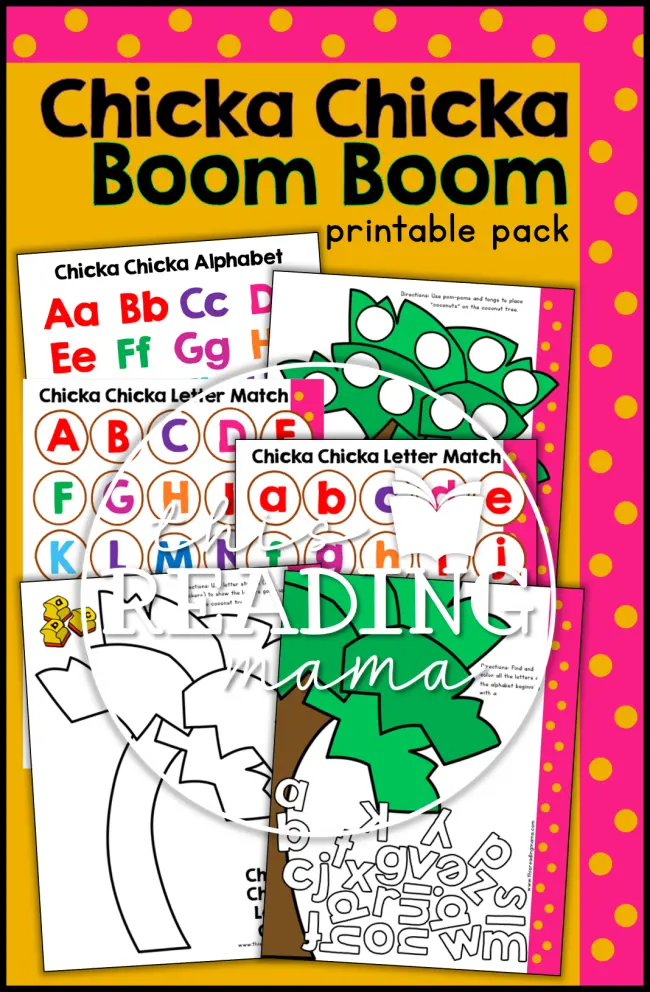
In an ongoing effort to bridge the gap between foundational literacy instruction and engaging play-based learning, veteran educator and reading specialist Becky has announced the release of a comprehensive, complimentary educational resource: the Chicka Chicka Boom Boom Printable Pack. Designed specifically for toddlers, preschoolers, and early-elementary students, the new curriculum aid leverages the timeless appeal of Bill Martin Jr. and John Archambault’s classic children’s book, Chicka Chicka Boom Boom, to reinforce alphabet recognition, letter-sound correspondence, and essential fine motor control.
As schools and homeschooling families increasingly look for versatile, evidence-based tools to support early childhood education, this release arrives at an opportune moment. Early childhood literacy experts have long emphasized that interactive, multi-sensory approaches are critical for neurological development in young learners. By combining targeted letter recognition charts with dexterity-building fine motor activities, the new printable pack offers a structured yet playful methodology that educators can seamlessly integrate into traditional classrooms, homeschool co-ops, and home environments.
This report provides a thorough examination of the newly released educational pack, detailing its pedagogical framework, the broader context of early childhood alphabet instruction, the structural methodology of the activities, and an outlook on the future of interactive literacy resources.
1. DETAILED CHRONOLOGY: FROM CLASSROOM INNOVATION TO DIGITAL RELEASE
The genesis of the Chicka Chicka Boom Boom Printable Pack stems from practical, hands-on teaching experiences within local educational communities.
The Return to the Classroom
Earlier this academic year, Becky stepped back into a formal classroom setting, taking on a preschool literacy class at a local homeschool co-op. Tasked with engaging young, energetic minds and laying the bedrock for lifelong reading skills, she turned to one of the most celebrated staples of children’s literature: Chicka Chicka Boom Boom.
Published originally in 1989, the rhythmic, rhyming story of lowercase letters climbing up a coconut tree—only to tumble back down in a chaotic heap—has captivated generations of children. For the co-op literacy class, the book served as the anchor text for a comprehensive, multi-week alphabet theme.
Iterative Design and Classroom Testing
Recognizing that reading a book is only the first step in deep literacy acquisition, the educator began developing supplementary materials to reinforce the core concepts introduced in the text. Over several weeks of classroom instruction, these iterative teaching aids were tested in real-time with preschool students.
The primary challenge was designing activities that balanced cognitive engagement (recognizing uppercase and lowercase letters) with physical development (strengthening the small muscles in the hands required for writing). Through trial and adjustment in the co-op classroom, the initial set of worksheets and charts was refined into a cohesive, highly effective learning module.
Public Digital Launch
Following successful classroom implementation and positive feedback from fellow parents and educators, the decision was made to digitize and distribute the curriculum widely. The release of the Chicka Chicka Boom Boom Printable Pack via digital platforms ensures that parents, independent educators, and classroom teachers worldwide have open-access tools at their disposal. The initiative complements an extensive existing library of alphabet printables, cementing a digital ecosystem designed to democratize access to high-quality early childhood education materials.
2. SUPPORTING CONTEXT & METRICS: THE SCIENCE OF EARLY ALPHABET MASTERY
To fully understand the significance of this printable pack, it is essential to examine the underlying educational metrics and cognitive science governing early childhood literacy.
The Critical Window of Alphabet Knowledge
According to decades of educational research, alphabet knowledge—the ability to identify, name, and write the letters of the alphabet—is one of the most reliable predictors of a child’s future reading success. Longitudinal studies in early literacy demonstrate that children who enter kindergarten with a firm grasp of letter names and sounds experience significantly fewer reading difficulties in later elementary grades.
Furthermore, literacy experts stress that alphabet mastery is not merely a rote memorization task; it requires a complex interplay of visual discrimination, auditory processing, and tactile-kinesthetic integration. Chicka Chicka Boom Boom has historically served as an ideal vehicle for this learning because its auditory rhythm (phonological awareness) matches its visual narrative (print awareness).
+-----------------------------------------------------------------+
|               PILLARS OF EARLY LITERACY DEVELOPMENT             |
+-----------------------------------------------------------------+
|  1. Visual Discrimination : Differentiating letter shapes       |
|  2. Phonological Awareness: Connecting sounds to rhythmic beats  |
|  3. Fine Motor Control    : Developing hand strength for writing|
|  4. Multisensory Play     : Combining reading with hands-on tasks|
+-----------------------------------------------------------------+
Bridging Fine Motor Skills and Literacy
A unique hallmark of the new printable pack is its equal emphasis on fine motor skill development. Educators often observe a disconnect between a child’s cognitive understanding of a letter and their physical ability to form it on paper. Fine motor delay can lead to frustration, writing fatigue, and a subsequent aversion to literacy tasks.
By integrating activities that target hand-eye coordination, pincer grasp development, and bilateral hand coordination alongside letter recognition, the pack addresses the holistic developmental needs of young learners. Metrics from occupational therapy and early childhood education show that children who engage in structured fine motor play exhibit improved dexterity, enabling smoother transitions into formal handwriting instruction.
3. STRUCTURAL BREAKDOWN OF THE PRINTABLE PACK
The Chicka Chicka Boom Boom Printable Pack is systematically divided into two core operational categories: Letter Recognition Activities and Fine Motor Activities. Each section is engineered to maximize student engagement while reinforcing pedagogical objectives.
Letter Recognition & Charting Tools
Visual Identification Charts: Comprehensive alphabet charts featuring vibrant, themed layouts allow students to track both uppercase and lowercase letters simultaneously. These charts serve as visual anchors during read-aloud sessions and independent exploration.
Matching and Sorting Exercises: Designed to challenge visual discrimination, these activities require children to match lowercase letters climbing the metaphorical "coconut tree" to their corresponding uppercase counterparts, reinforcing the structural relationships within the alphabet.
Interactive Letter Hunts: Gamified worksheets encourage students to scan text or grids to locate specific target letters, boosting scanning efficiency and visual tracking skills essential for future reading fluency.
Fine Motor Skill Enhancement
Tracing and Pre-Writing Strokes: Moving beyond basic coloring, the pack includes specialized pre-writing stroke worksheets that mimic the curves and vertical lines of letters, preparing hand muscles for actual letter formation.
Manipulative and Scissor Practice: Cutting, pasting, and placement activities encourage the development of the intrinsic hand muscles. Whether students are placing counters on letter templates or cutting out paper letters, these tasks build the endurance necessary for extended writing tasks later in their academic careers.
Open-Ended Creative Prompts: Blackline printables allow for tactile engagement, encouraging children to use playdough, finger paints, or textured materials to fill in letter outlines, satisfying diverse sensory learning styles.
4. OFFICIAL STATEMENTS & EDUCATIONAL PERSPECTIVES
Reflecting on the release of the curriculum pack, Becky shared insights regarding the inspiration behind the project and its alignment with modern educational philosophy.
"No matter what time of year it is, it’s ALWAYS a good time to review all the letters of the alphabet," stated Becky in her official release notes. Discussing her return to the classroom environment, she added, "This year, I’m back in the classroom teaching a preschool literacy class at a local homeschool co-op. We spent our time this past class reading and playing with Chicka Chicka Boom Boom. This is one of my favorite alphabet books, and I knew I had to create resources that brought the joy of the story directly into hands-on learning moments."
Early childhood educational analysts have praised the initiative for its accessibility and adherence to best practices in play-based instruction. Dr. Elena Vance, a professor of early childhood curriculum development, noted:
"Resources like the Chicka Chicka Boom Boom Printable Pack represent the gold standard of early literacy support. They take a beloved narrative text and expand its utility through structured, multi-sensory activities. When children can touch, trace, sort, and play with letters in the context of a story they love, the cognitive retention rate skyrockets."
5. FUTURE OUTLOOK: THE EVOLUTION OF ACCESSIBLE EARLY EDUCATION
As digital resources continue to transform the educational landscape, the release of targeted, high-quality printables signals a promising shift toward more supportive, flexible learning environments.
Expanding Digital Libraries
The inclusion of supplemental materials within restricted archives—such as The Library, a dedicated repository for specialized blackline printables—indicates a growing trend toward curated, membership- and community-based educational sharing. Educators and parents are increasingly seeking out vetted, cohesive curricula rather than relying on fragmented, ad-hoc worksheets found across the internet.
Integration with Hybrid and Homeschool Models
With the permanent expansion of homeschooling, homeschool co-ops, and hybrid learning models following recent global educational shifts, the demand for adaptable, print-and-go resources has never been higher. Packs like the one inspired by Chicka Chicka Boom Boom provide educators with ready-made scaffolding that reduces lesson-planning fatigue while maintaining rigorous academic standards.
Conclusion and Next Steps for Educators
The Chicka Chicka Boom Boom Printable Pack is currently available for download via digital platforms, with instructions and printing guides provided to ensure seamless utilization by educators of all experience levels. As early literacy continues to be prioritized at both institutional and grassroots levels, initiatives driven by experienced classroom practitioners will remain invaluable assets in shaping the foundational skills of the next generation of readers.