
By the Mothering America Editorial Desk, in partnership with Chamber of Mothers
Executive Overview
For expectant parents, the third trimester is typically a season of frantic nursery preparation, childbirth classes, and quiet anticipation. But for nearly 400,000 families each year in the United States, the script of parenthood is suddenly and violently rewritten by premature birth.
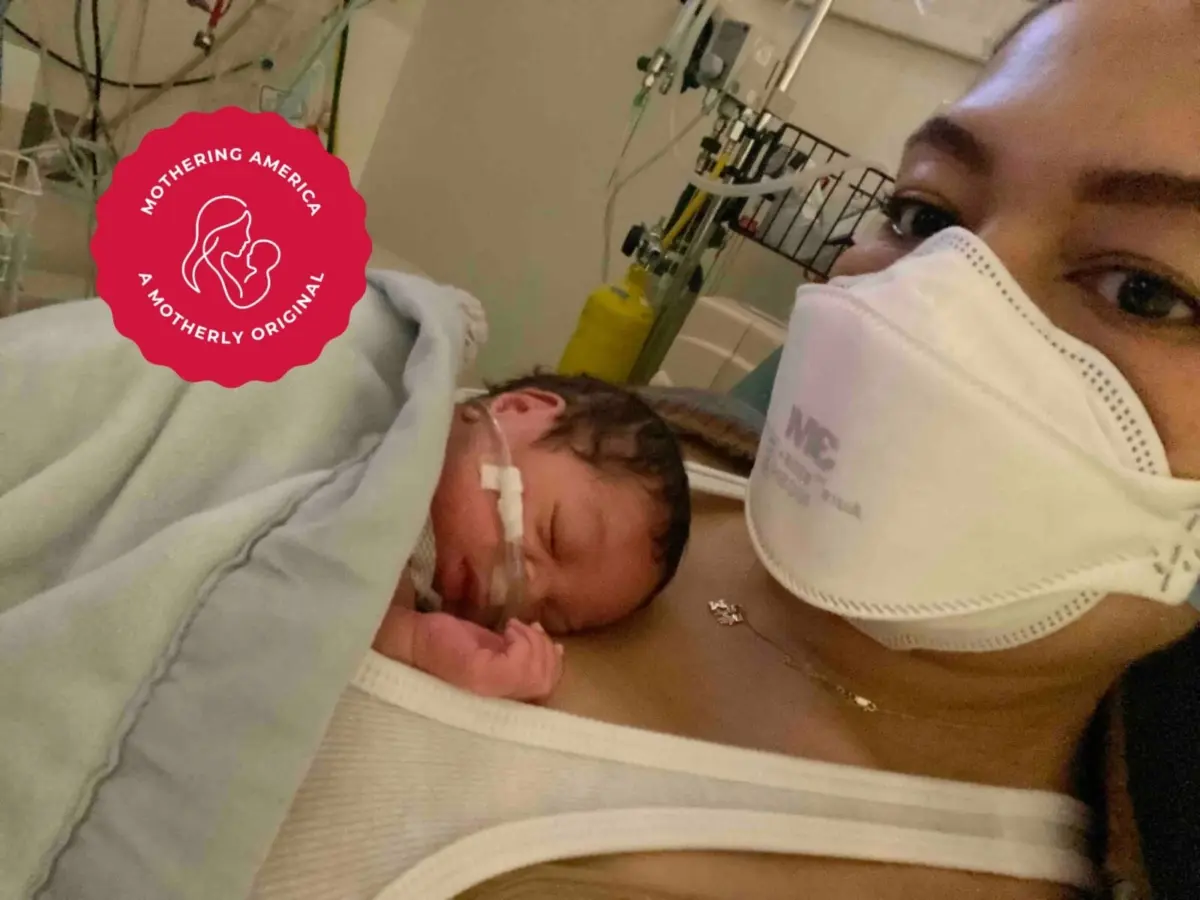
This is the harrowing reality at the center of Stephanie Roberson’s story—a narrative that mirrors the silent, systemic struggles of countless American families navigating the Neonatal Intensive Care Unit (NICU). Roberson’s journey from a completely normal, low-risk pregnancy to an abrupt, midnight rupture of membranes at 24 weeks exposes the profound fragility of maternal and infant health infrastructure in the United States.
While Roberson’s son, Myles, survived an 87-day NICU stay to become a thriving, milestone-exceeding four-year-old, the path to his recovery lays bare a deeply fractured national landscape. It is a landscape defined by the absence of federal paid family leave, astronomical out-of-pocket medical debt, pervasive perinatal mental health crises, and a glaring disparity between the care families need and the care they can access.
This investigative piece examines Roberson’s deeply personal trauma, contextualizes the staggering economic and emotional toll of high-level neonatal care, and highlights the rising tide of maternal advocacy sweeping the nation to rewrite policy before the next generation pays the price.
Detailed Chronology: From Bed Rest to the 87-Day NICU Odyssey
The Unthinkable Midnight Transition
Stephanie Roberson’s second pregnancy had been textbook. Every ultrasound screening returned clear metrics; every routine blood panel and prenatal test yielded healthy results. There was no clinical indicator to suggest that her body would prematurely trigger labor.
Then came the night that changed everything. Lying quietly next to her two-year-old toddler to put him to bed, Roberson felt her water break. She was exactly 24 weeks pregnant.
Moving with the calm precision of someone in shock, she walked to the bathroom and placed a towel under her legs before dialing her obstetrician. The physician delivered an immediate, chilling directive: she needed to be transported instantly to a tertiary care hospital equipped with a high-level Neonatal Intensive Care Unit.
Recalling the surreal nature of those moments, Roberson shares a haunting core memory: "I have this core memory of stepping off the towel, and it was completely soaked except for two dry footprints where I was standing."
With her husband traveling out of state for work, logistics became an immediate crisis. Roberson scrambled to call a neighbor to supervise her sleeping toddler while her mother—who happened to be visiting at the time—rushed her through the dark streets toward the hospital. Packing her bags, she fought back waves of panic. The existential dread of extreme prematurity loomed large: How could a human baby, barely formed at 24 weeks, possibly survive outside the womb?
The Hospital Standoff and the Math of Survival
Upon admission, medical teams confirmed the sobering reality: Roberson would not be leaving the hospital until she gave birth. Confined to strict inpatient bed rest, she entered a state of clinical limbo.
A neonatologist visited her bedside to walk her through survival rates and long-term neurological, respiratory, and developmental statistics. "They try to present the information in a positive way, but it’s still very scary," Roberson reflects. At 25 weeks of gestation, infant survival hovers around 80 percent, but statistics offer cold comfort when weighed against the profound uncertainty of lifelong medical fragility.
Roberson was forced to mentally process a terrifying spectrum of outcomes: infant mortality, chronic lung disease, severe retinopathy of prematurity, hearing impairment, and profoundly compromised immune systems.
"Your mind is focused on survival," she notes, "but also how will your life change if you have a child who is going to have all of these additional needs?"
True to her meticulous nature, Roberson weaponized information to regain a semblance of control. She immediately ordered textbooks on extreme prematurity, devoured medical literature regarding lung surfactant therapy and brain bleeds, and immersed herself in clinical terminology.
"I was just trying to learn as much as I possibly could, to be the best advocate that I could for him." Beneath the intellectual armor, however, corrosive self-doubt took root. She battled deep, unfounded shame, questioning whether her body had failed her son and searching her mind for any action she might have taken to prevent the rupture.
Labor, Delivery, and the First Cry
After enduring 13 grueling days of inpatient bed rest, Roberson’s body finally gave way to active labor at 25 weeks and 6 days. Fortuitously, her husband had returned home and was present with their older son when the labor progressed with lightning speed.
"We exited the room at 11:22, and he was born at 11:36," she recalls.
The delivery room was a choreography of high-stakes medical intervention. The entire multidisciplinary NICU team stood at the ready. As they stabilized and assessed the tiny newborn, Roberson heard a sound that offered her the first glimmers of hope: a cry.
"The cry was so tiny that it sounded like a baby a couple of rooms away," she remembers. Myles scored well on his Apgar assessments. The medical team briefly pressed the fragile infant against her cheek before whisking him away into the sterile, high-tech sanctuary of the NICU.
Surviving the NICU: Monitors, Caffeine, and Grief
Myles’s ensuing 87 days in the NICU were defined by a relentless cycle of anxiety. For his first 77 days of life, Myles suffered from frequent episodes of apnea—stopping breathing multiple times a day. This terrifying phenomenon, common in extreme prematurity due to an underdeveloped brain stem, was managed with regular doses of caffeine citrate to stimulate his respiratory drive, occasionally requiring physical tactile stimulation from nurses to restart his breathing.
The psychological atmosphere of the NICU was unrelenting. The constant symphony of alarms, monitors, and ventilator hisses formed a tense backdrop to daily life. Worse still was bearing witness to the unvarnished grief of neighboring families.
"You’re hearing everything that’s going on, and you wind up sitting in a whole lot of grief," Roberson explains. She watched helplessly as another family brought in extended relatives to say a final, agonizing goodbye to an infant who could not be saved.
Miraculously, Myles avoided many of the most devastating complications of prematurity. He required no invasive surgeries and never needed intubation. Upon his discharge, the chief of neonatology offered a parting validation: "I hope you know that he’s a one-in-a-million miracle baby."
By his first birthday, Myles had fully closed developmental gaps, matching and in some cases exceeding standard milestones. Today, he is a vibrant, healthy four-year-old. Yet, the memories of those 87 days cast a long shadow over his mother’s worldview.
Supporting Context & Metrics: How the U.S. Fails NICU Families
As Roberson transitioned from the hospital to home life with her son, a stark realization set in: her survival story was largely a product of systemic privilege. She possessed a supportive partner, stable employment, health insurance, and access to paid family leave. Without those structural cushions, her family’s trajectory would have broken entirely.
The Paid Leave Desert
Roberson was fortunate enough to utilize nine and a half months of combined medical leave, maternity leave, and state-funded family leave to heal physically and emotionally. Her reality, however, is an extreme statistical outlier in the United States.
- A National Shortage: Only 14 states and Washington, D.C. have enacted statutory paid family and medical leave programs.
- The Worker Divide: Nationally, approximately 27% of American workers have access to employer-sponsored paid family leave.
- The FMLA Trap: While the federal Family and Medical Leave Act (FMLA) guarantees eligible employees 12 weeks of job-protected leave, it is strictly unpaid. For NICU parents, utilizing FMLA means exhausting the entirety of their protected time off while their child is still hooked up to hospital monitors, leaving them with zero job security when the baby finally comes home.
- Global Isolation: The United States remains virtually alone among developed nations in refusing to institute a federal paid family and medical leave policy.
The Million-Dollar Bill and Out-of-Pocket Ruin
The financial shockwaves of extreme prematurity match the emotional trauma. The total hospital billing for Myles’s care reached nearly $1.5 million.
While Roberson’s private insurance absorbed the vast majority of the cost—leaving her with a $1,300 deductible—her experience was comparatively merciful. Data from the Peterson-KFF Health System Tracker reveals that infants admitted to the highest-level NICU units average over $3,000 in direct out-of-pocket spending during their first two years of life under private insurance alone.
This figure excludes the crushing ancillary costs of prolonged hospitalizations:
- Daily hospital parking fees
- Specialized hotel lodging for out-of-town families
- Emergency childcare for siblings left at home
- Meals eaten out of vending machines and hospital cafeterias
Cumulatively, these hidden expenses can easily tally hundreds of dollars per day, driving working-class families into bankruptcy during an already vulnerable window.
The Maternal Mental Health Epidemic
The trauma of watching a fragile infant fight for survival leaves deep psychological scars. NICU parents face exponentially increased risks for perinatal mental health conditions, including postpartum depression, generalized anxiety disorder, and Post-Traumatic Stress Disorder (PTSD).
Roberson processed her trauma through months of specialized cognitive therapy. Yet, structural barriers—including severe shortages of trained maternal mental health professionals and restrictive insurance networks—leave roughly 75% of mothers with perinatal mental health conditions completely untreated. The societal cost of this inaction ripples through broken families, lost workforce productivity, and strained healthcare systems.
"I could recognize the privilege that I had in the situation," Roberson reflects. "It really sort of tore something open, seeing how that didn’t apply to everyone."
Official Perspectives & Grasspower: The Rise of Chamber of Mothers
Witnessing mothers weeping into cell phones as health insurance providers denied coverage, and watching out-of-town families agonizing over how to maintain jobs four hours away while their baby languished in an incubator, transformed Roberson from a private survivor into a public crusader.
In 2024, she aligned herself with Chamber of Mothers, a prominent national, nonpartisan nonprofit organization dedicated to securing paid family leave, affordable and accessible childcare, and systemic investments in maternal healthcare across the United States.
Turning Lived Experience Into Policy
Driven by a fierce moral clarity, Roberson stepped into formal leadership, becoming the chair of the board in July. Under her guidance, Chamber of Mothers leverages its network of 52 regional chapters nationwide, mobilizing everyday mothers to convert their harrowing personal narratives into tangible cultural and legislative reforms.
Grassroots mobilization is already yielding legislative fruit. States such as Colorado and Illinois have successfully expanded their state-level paid family leave policies to explicitly include provisions for NICU families.
On the federal front, momentum is building. This past winter, Roberson traveled to Washington, D.C., joining forces with Chamber of Mothers advocates to lobby lawmakers and throw institutional weight behind newly drafted federal legislation designed to mandate specialized NICU leave protections for working parents.
Future Outlook: A Call for Systemic Reform
The narrative of Stephanie and Myles Roberson is ultimately a tale of two realities: the miracle of modern neonatology on one hand, and the archaic cruelty of American social policy on the other.
As maternal advocacy groups scale their operations ahead of upcoming legislative cycles, the core message delivered by leaders like Roberson is simple, uncompromising, and urgent: survival cannot be a luxury good.
"There are basic things that we all deserve to have," Roberson asserts. "Once my eyes were open to it, I couldn’t unsee it, and it pushed me hard to say: Everybody deserves better."
Fixing the broken architecture of American maternal and neonatal care will require a multi-pronged legislative commitment:
- Federal Paid Family and Medical Leave: Establishing a universal, paid leave program that accounts for extended medical complications like premature birth.
- NICU Insurance Protections: Banning predatory out-of-pocket denials and capping catastrophic ancillary expenses for families with hospitalized infants.
- Subsidized Mental Health Infrastructure: Expanding Medicaid and private insurance reimbursement for perinatal and PTSD-focused psychiatric care.
Until these systemic pillars are erected, thousands of American families will continue to walk the high wire of the NICU—praying for a miracle in the nursery while fighting for survival in the economy outside.
To learn more about how you can support these initiatives, or to find a local chapter, visit the Chamber of Mothers Substack and join a movement of over 100,000 members dedicated to changing the culture of motherhood in America.

