
Executive Overview
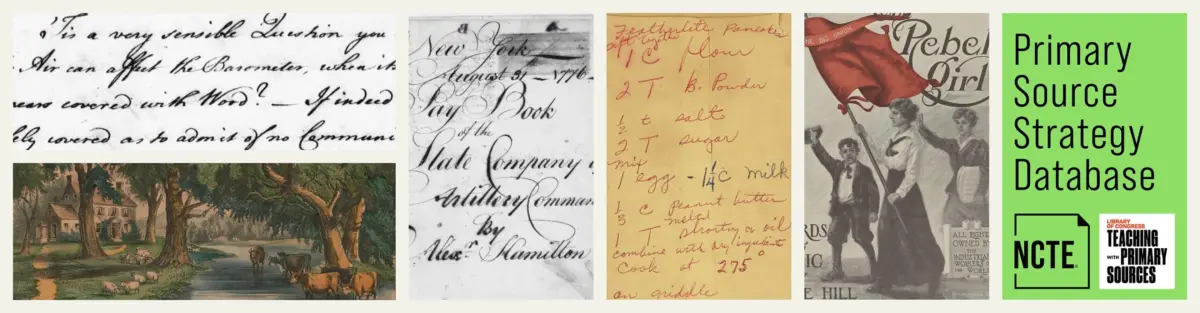
In an era defined by an overwhelming digital information ecosystem, the ability to critically analyze source material has never been more vital. Recognizing this pedagogical imperative, the National Council of Teachers of English (NCTE) has forged a dynamic, ongoing partnership with the Library of Congress. Operating as an active member of the Teaching with Primary Sources (TPS) Consortium, NCTE is spearheading initiatives designed to fundamentally integrate primary sources into the daily teaching and learning habits of literacy educators and their students nationwide.
At the heart of this collaboration is a robust, searchable digital database housing instructional strategies for more than 150 specific artifacts drawn directly from the Library of Congress’s vast digitized collections. Conceived and curated by over two dozen distinguished educators and leaders in English Language Arts (ELA) education, these strategies do more than simply introduce historical artifacts into the classroom. They articulate clear instructional and literacy merits, link materials to specific state standards, and suggest thematic units ranging from picture books to advanced argumentative writing.
By bridging raw historical data with modern ELA curricula, this partnership equips teachers to tackle complex social issues, foster empathy, and cultivate deep critical thinking skills. Among the many curated resources in the database, materials addressing systemic racism, cultural identity, and historical advertising—such as early-20th-century advertisements for Black hair care products—demonstrate the profound capacity of primary sources to engage students in rigorous, real-world inquiry.
Detailed Chronology: The Evolution of the NCTE-Library of Congress Partnership
The integration of Library of Congress archives into standard English Language Arts classrooms represents a strategic evolution in modern American education. For decades, primary sources were largely sequestered within the domains of history and social studies departments. ELA classrooms, by contrast, traditionally emphasized canonical literature, creative writing, and foundational grammar.
Phase One: Recognizing the Interdisciplinary Need for Literacy in Archives
As educational standards shifted toward cross-disciplinary literacy in the early 2010s, educational leaders recognized that texts extend far beyond bound books. Historical newspapers, photographs, broadsides, advertisements, and personal letters demand the same—if not heightened—levels of critical textual analysis as traditional literature. The NCTE recognized that English language arts teachers needed structured, standards-aligned pathways to bring these rich archival materials into their instructional routines.
Phase Two: Establishing the TPS Consortium Collaboration
Through its alignment with the Library of Congress Teaching with Primary Sources Consortium, NCTE mobilized a specialized task force. More than two dozen ELA teachers, curriculum coordinators, and instructional leaders were recruited to pilot and develop pedagogical frameworks. Their mission was clear: translate raw historical artifacts into high-yield instructional strategies equipped with explicit learning outcomes, targeted focus questions, and rigorous academic standards connections.
Phase Three: Launching the Searchable Database
The culmination of this collaborative curriculum design is a continuously expanding, searchable digital repository hosted via NCTE’s digital platforms. By implementing intuitive tagging mechanisms—such as picturebook, argument, comprehension, grammar, and spelling—the database allows educators to locate items that seamlessly match their specific curricular goals. Furthermore, the repository includes comprehensive pedagogical rationales, detailing not only how to present the material, but why specific artifacts carry immense value for adolescent cognitive and social-emotional development.
Supporting Context & Metrics: Case Study of a Primary Source
To understand the practical application of the NCTE-Library of Congress database, one must examine the specific instructional modules developed for the repository. A prime example is the inclusion of a historical advertisement for PORO Hair Grower, published in Franklin’s The Statesman.
The Artifact: PORO Hair Grower Advertising
The primary source in question features an advertisement highlighting founder Annie Malone Pope-Turnbo alongside a woman identified as L.L. Roberts, both showcasing long, straight hair. Accompanying captions record personal testimonies: Pope-Turnbo’s reads, "4 years ago my hair was only a finger-length, and my temples were bald halfway up my head," while Roberts’s states, "4 years ago my hair just covered my shoulders." Crucially, the advertisement warns consumers against counterfeit hair growth products circulating on the market, instructing readers to verify official PORO goods.
Deconstructing Systemic Racism and Cultural Identity
While advertisements are frequently studied solely through the lens of rhetoric and consumer persuasion, ELA educators utilizing this module are encouraged to guide students deeper. The instructional framework highlights how seemingly mundane aspects of personal appearance—such as hair texture and styling—are deeply intertwined with historical power structures and systemic racism.
Talking about Black hair in a classroom setting illuminates how historical beauty standards aimed to enforce conformity to dominant white cultural norms and systematically erase minority cultural identities. By analyzing this artifact, students learn to:
- Examine historical impact: Understand the psychological and emotional toll that institutionalized hair discrimination has inflicted on individuals and entire communities.
- Build empathy and compassion: Cultivate a nuanced understanding of marginalized experiences, fostering a supportive classroom environment.
- Challenge structural inequality: Critically question how societal standards are socially constructed, perpetuated, and weaponized to maintain inequality.
For students who have personally experienced discrimination, engaging with this primary source offers historical validation. It provides critical context that helps students appreciate their cultural heritage, embrace their natural beauty, and actively resist internalized or externalized harmful stereotypes.
Standards Alignment: New Mexico Content Standards as a Blueprint
To ensure academic rigor, the curriculum strategies mapped to these primary sources are tied directly to state-adopted content standards. For instance, the PORO advertisement module explicitly aligns with high school literacy standards, as demonstrated by the New Mexico Adopted Content Standards framework:
- Speaking & Listening (SL.11-12.3): Students evaluate a speaker or creator’s point of view, reasoning, and use of evidence and rhetoric. They assess stance, premises, links among ideas, word choice, points of emphasis, and tone used in historical promotional materials.
- Literacy in History/Social Studies (RH.11-12.1 & RH.11-12.2): Students cite specific textual evidence to support comprehensive analyses of primary sources, connecting insights gained from fine details to an understanding of the text as a whole. They determine central ideas and map the complex relationships among key details.
Official Statements & Navigating Pedagogical Challenges
Introducing culturally and historically complex primary sources into contemporary classrooms is not without its hurdles. Recognizing the socio-political landscape of modern American education, the NCTE and its contributing educators have proactively addressed potential areas of friction within the database’s instructional guides.
Anticipating Community and Administrative Pushback
The policing of Black hair and discussions surrounding systemic racism remain subjects of public debate. The instructional documentation openly acknowledges that some parents, community members, or school administrators may exhibit resistance. Common objections typically stem from:
- The "Colorblind" Ideology: Some stakeholders argue that race should play no role in education, believing that drawing attention to discrimination or hair policing unnecessarily creates division.
- Political Sensitivities: Conservative critics may mischaracterize discussions of systemic racism or historical institutional bias as implementations of Critical Race Theory (CRT) within standard ELA instruction.
- Curricular Prioritization: Others may express concern that social-justice-oriented topics divert instructional time away from traditional "core" academic skills like foundational grammar and standardized test preparation.
- General Misunderstanding: A lack of awareness regarding the profound historical and contemporary significance of hair discrimination within marginalized communities often fuels skepticism.
The Educator’s Response: Grounding Instruction in Rigorous Literacy
In response to these potential challenges, the NCTE framework empowers teachers to ground their lessons firmly in verifiable text analysis and state standards. By framing discussions around rhetoric, advertising claims, historical context, and authorial purpose, educators can successfully navigate sensitive themes while maintaining absolute fidelity to rigorous ELA skill-building. The database continues to curate supplemental resources designed to help teachers constructively communicate the value of these lessons to administrators and parents alike.
Future Outlook: The Expanding Horizon of Digital Literacy
As the NCTE-Library of Congress partnership moves forward, the primary source database is poised for continuous expansion. With more than 150 items already cataloged with comprehensive teaching strategies, the project serves as a living model for modern curriculum development.
Scaling Interdisciplinary Instruction
Future phases of the initiative aim to bridge the persistent gap between English Language Arts, History, and Media Literacy. As algorithms increasingly dictate the information diet of modern students, the ability to interrogate a 20th-century print advertisement serves as a vital cognitive stepping stone toward evaluating 21st-century digital media. By learning how early commercial enterprises shaped identity, beauty standards, and consumer trust, students develop sophisticated analytical shields against contemporary misinformation and targeted manipulation.
Empowering the Next Generation of Critical Thinkers
Ultimately, the collaboration between the National Council of Teachers of English and the Library of Congress proves that archives are not dusty relics of the past, but active tools for liberation and intellectual growth. By placing rich, digitized primary sources directly into the hands of ELA educators, the initiative ensures that students do not merely read history—they interrogate it, learn from it, and use their insights to build a more equitable future.
To explore the searchable database, access comprehensive teaching strategies, and discover additional resources provided by the NCTE and the Library of Congress Teaching with Primary Sources Consortium, educators and researchers can visit the official NCTE portal.

